Sponsored Partner Content
You notice your dog waiting at the bottom of the stairs. He comes up when you call, so you carry on with the laundry. By the time you mention it to the vet, you’re trying to remember whether it started last Tuesday or a month ago.
You bought a tracker for the day he slips out of the gate. Its activity history has another use on the days he stays home: helping you remember how his routine has changed.
Our pets can’t speak for themselves, in spite of their vocal complaint system for late dinners. We aren’t veterinary professionals. We love anything that helps us track all the daily idiosyncrasies we might otherwise struggle to remember.
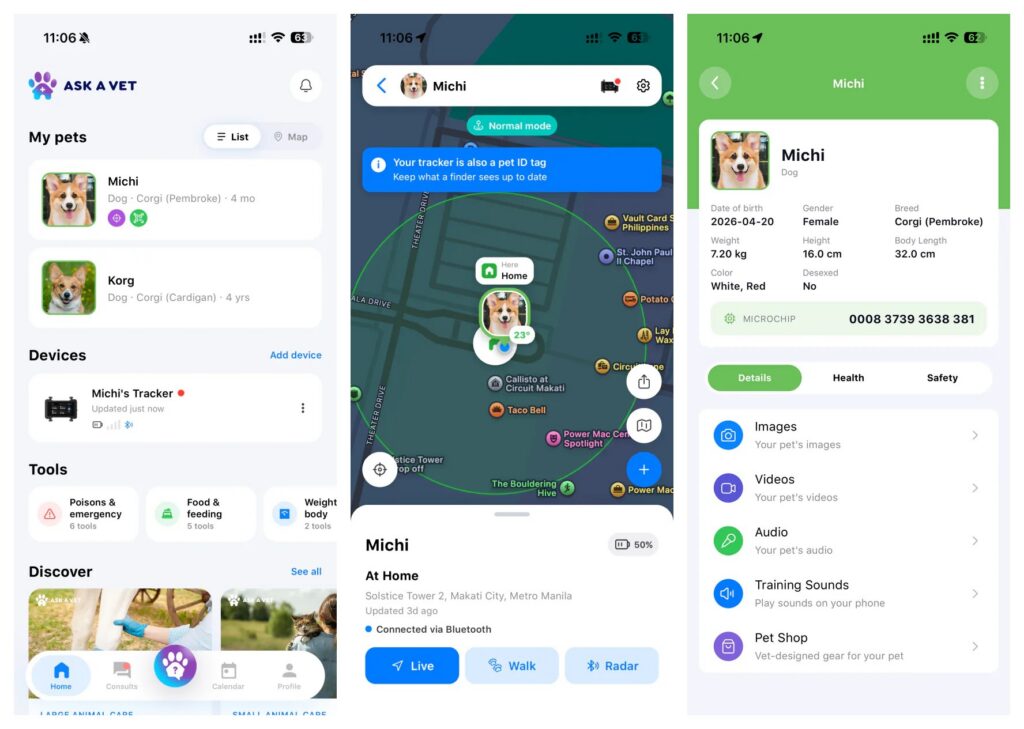
That’s why we’re into the ASK A VET™ Premium GPS, Health & Training Tracker. It was designed by emergency veterinarian Dr Duncan Houston, founder of ASK A VET™. His tracker puts location, activity, rest, and sleep data into your dog’s profile in the ASK A VET™ app. With Premium, the same app adds health logging and certified-vet chats. That combination is what makes the ASK A VET™ tracker stand out to us.
The ASK A VET™ app and the Lost Pet ID on the tracker’s screen are free. Live GPS and the activity and sleep trends run on the Tracker Plan; health logging and certified-vet chats come with Premium. The tracker’s temperature alerts concern the air around your dog, not body temperature.
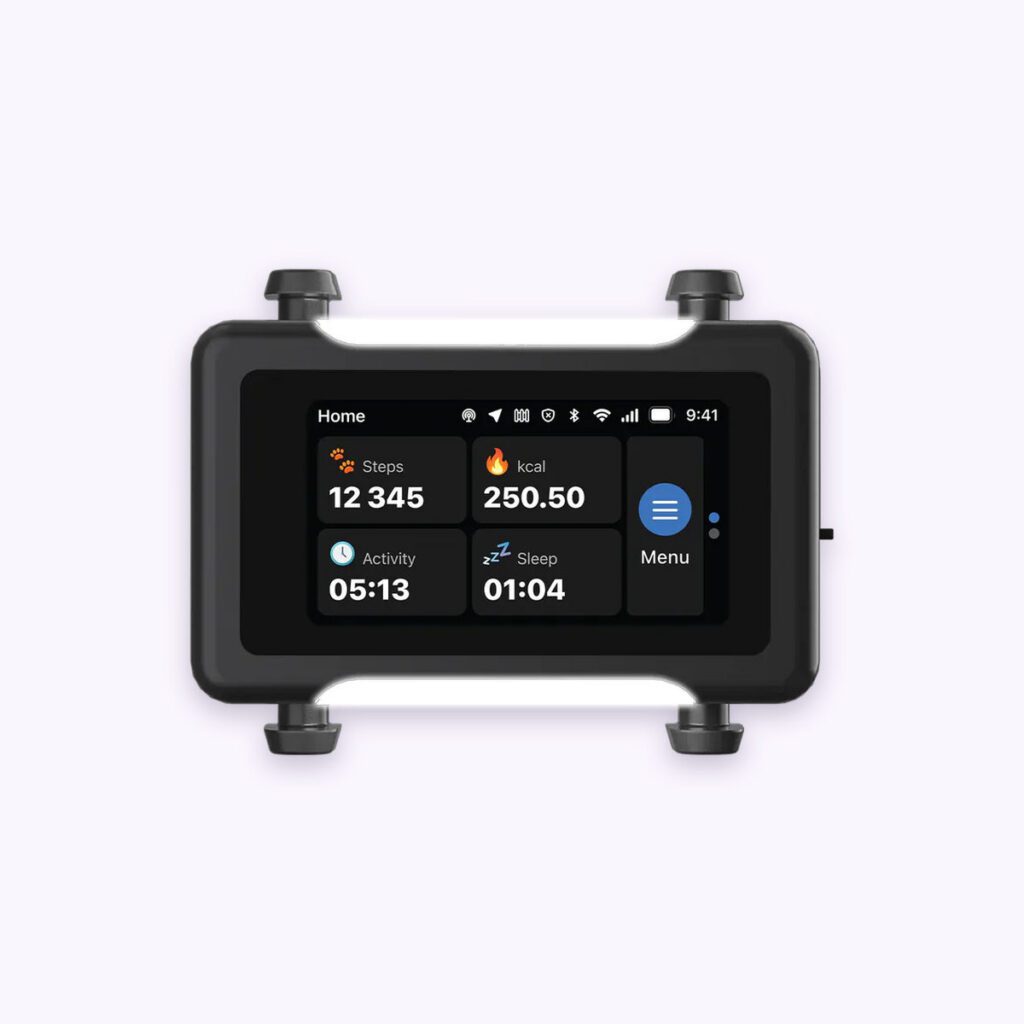
Take a look at the ASK A VET™ tracker and what it records.
What dog tracker health data can tell you
A sudden limp tends to get your attention. A walk that gets a little shorter each week is easier to absorb into everyday life. You start turning home sooner because your dog seems ready. Before long, that’s just “our walk.” You’ve adjusted around him without quite realizing it.
The AAHA senior-care guidelines explain that families can mistake small changes caused by ongoing pain for their pet just getting older. Cornell University’s veterinary college describes osteoarthritis as a progressive condition whose signs can include slowed down activity and difficulty with stairs or getting up.
Dr Duncan knows that scene at the bottom of the stairs firsthand. His golden retriever Bridie has had both hips replaced. “Spotting the slow changes early is why I built the activity tracking into this,” he says.
A digital record can remind you what happened on those earlier days without you needing to hold everything in your head. The tracker’s activity and sleep history gives you a way to compare then with now. If the walks, rest, or interest in play have shifted, you have dates to bring to your vet, who can investigate the cause.
Tuesday’s canceled dog walker and Saturday’s extra-long park visit will leave different records. A few notes in an app about what happened those days make it easier to see whether a change was because you were up to something different or if it is something that keeps happening despite the usual routine. When you remove the tracker for a bit, that detail belongs in the tracker notes, too.
The walk with all the sniffing
The tracker’s route history helps you see where a walk went. The reason it ended is something you can add.
Perhaps you turned home early to take a work call. Compare that with an outing when you had time for the full loop, but your dog repeatedly wanted to head back. Both can leave a short route in the app, with different observations to bring to your vet.
Then there’s the walk where your dog spends ages investigating one especially fascinating hedge. Apparently, the hedge had breaking news about upcoming squirrel fest. Sniffing and mental stimulation are part of his day, even when there isn’t much distance to show for them.
The advantage of an app record is that you get to compare your dog with himself over time. The Labrador down the street can keep his impressive totals.
The nap after the walk
A dog who naps through your video calls has arguably found the best use for the hour. If that’s his usual routine after a walk and some sniffing, those naps belong in the record, too.
A new habit of pacing or repeatedly getting up is a different observation to bring to the vet. Sleep and rest trends help you look back alongside what you saw at home, especially when you’re trying to remember the dates and times for a run of unsettled nights or odd napping days.
Dr Duncan writes in the tracker’s vet note: “Activity, sleep and temperature data are context for a conversation with a vet, not a diagnosis.”
Make the vet conversation easier
A few dated screenshots from the app give you something concrete to discuss. Add the things you saw yourself, such as a change in eating, drinking, or getting up. You won’t struggle to reconstruct the whole month while your dog investigates the clinic’s treat cupboard.
For example, you might tell the clinic: “He’s been waiting downstairs for the last few evenings instead of bounding up the stairs like he used to. He also wanted to turn home early on four walks this month. He’s still eating as usual.” The app can supply the corresponding dates while you explain what happened.
The most useful details are often simple:
- When you first noticed the change and whether it’s continuing.
- What happened during walks, play, rest, or getting up.
- Changes in eating, drinking, bathroom habits, or the day’s routine.
An unexplained change that continues or happens again is a reason to get in touch with your vet. The American Animal Hospital Association lists stiffness, reluctance to move, unusual tiredness, restlessness, and appetite changes among possible pain signs. Just because the activity record looks normal, that cannot rule out illness. The point of a tracker is to help you notice things you otherwise might not and get to the vet sooner. Of course, for anything acute, such as labored breathing, collapse, not bearing weight on a leg, or repeated vomiting, you’re not sitting around collecting data. You seek veterinary attention immediately.
If you need more research on how trackers work, our Complete Guide to GPS Pet Trackers explains more about the types of tracking options.
Regardless, because we all obsess over our pets’ behavior, you’ll still probably notice things a collar can’t explain, like your dog waiting downstairs while you take up the laundry. With a record of his routine, you can bring that observation to the vet with some actual dates attached. You don’t have to arrive with an explanation. That’s what your vet is there to help you figure out.
The tracker also covers the safety jobs:
- Live GPS over 4G/LTE.
- Virtual fences around the yard or the park.
- A touchscreen Lost Pet QR ID that any finder can scan with a phone.
- Bark detection for the hours you’re out.
At the time of writing, it’s half price in the ASK A VET™ shop at $49.99 (usually $99.99), and our code STEVE04104 takes another 10% off. Dr Duncan also sells it on WOOPF™, his dog-gear store.