Your cat has been beside you for years, keeping you company in the evenings and enforcing a few surprisingly firm rules about dinner and your share of the bed. You know their habits. So when they begin hesitating before a jump onto the duvet, or leave food they usually finish, you notice.
Plenty of cat gadgets are made for a cat who still sprints and leaps. Gadgets for senior cats help you respond when yours starts slowing down. An easier entrance to the litter box spares them an awkward climb; a feeder that keeps the younger cat out leaves dinner waiting when they’re ready for another bite. You get to do something practical for the companion you love.
Some changes need more than a new purchase. AAHA’s guidance on senior cats’ changing behavior explains that reduced jumping and different toilet habits can have medical causes. Tell your vet what you’ve noticed. The best technology for senior cats will then help you carry that care into an ordinary day at home.
Gadgets for senior cats start with a usable bathroom
A smaller cat doesn’t necessarily need a smaller litter box. An older cat who has lost some weight may still need extra room to turn and dig, especially if stiff joints make it awkward to lower themselves into position or climb over a high rim when they’re finished.
Give them space. FelineVMA includes easy-entry boxes in its home adaptations for cats with chronic pain, and a low doorway, secure footing, and room to turn are good starting points for your cat’s bathroom. With an automatic litter box, consider the whole route in and out. A broad step or stable ramp can ease the climb, provided your cat has a steady landing rather than a wobbling stool or slippery floor. Inside, they still need to be able to move comfortably. Adding a ramp won’t fix a cramped interior.
Posture can change, too. A cat who struggles to squat low may pee over the edge despite getting into the tray, so look for a low entrance with better containment around the other sides. After years of reliable toilet habits, an accident is a reason to help your cat and talk to the vet. Be patient with them.
The appeal of automatic cleaning
If kidney disease or another condition increases your cat’s urine output, the tray can get dirty much faster than it used to. You scoop before work; your cat may need it several times before you’re home. Automatic cleaning removes clumps between visits, giving them a cleaner place to return to.
The optional model-specific ramp on Litter-Robot 4 can help your cat approach its 15.75-inch-wide opening, but the measurements we would pay particular attention to are inside: Whisker lists the globe as 19 inches wide by 18 inches deep. Picture your cat turning around in that space. A machine can look enormous from the outside and still feel cramped to its occupant. The ramp also increases the overall depth from 27 to 38 inches, so include that approach when deciding where it will go.
Cleaning and monitoring can come together: this model records visits and weight in the Whisker app. The Litter-Robot review covers the option in more detail.
Comfort still decides whether it’s a good bathroom for your cat. Listen to the motor and watch how they enter, turn, and leave. Whisker sets a three-pound minimum for automatic mode on Litter-Robot 4, and you should keep an accessible alternative available while you establish whether your cat is comfortable using the machine.
Keeping an open tray with Petivity
Perhaps your cat needs a particularly roomy open tray or a very low entrance. Petivity’s Smart Litter Box Monitor sits underneath a compatible conventional box, recording weight and visits while you keep the bathroom that works for them.
You’ll still be scooping.
That tradeoff can be worthwhile if it gives your cat more comfortable access. Petivity excludes self-cleaning and triangular boxes, so its monitor is an alternative to a robot, rather than an accessory to put underneath one. It also needs training to distinguish cats; similar weights can make identification difficult. Unusual toilet postures, including trouble flexing the hips, can affect how the software classifies events, according to Petivity.
For a cat who comfortably uses an automatic box, cleaning plus records may solve both problems. For one who needs the open tray, we would keep that access and add the monitor. Continue looking at the litter itself whichever route you take.
Dinner belongs to the cat it’s meant for
Your older cat takes a few bites and wanders off. The younger one spots the leftovers. Apparently, dinner service has reopened.
Selective access helps the slower eater return to their own meal, which becomes especially important when your vet prescribes a particular diet. Separate bowls do little to stop cats swapping dinners, and the food intended for a health condition may be quite different from what the other cat needs.
A microchip feeder opens for an enrolled cat’s implanted chip or compatible collar tag. Your senior can leave food for later without offering the whole house a buffet. Place it somewhere easy to reach, with enough peace to eat; a younger cat hovering beside the lid can still make mealtimes difficult.
The basic SureFeed microchip feeder provides that selective access. The Microchip Pet Feeder Connect version of the SureFeed feeder adds food-weighing scales and app records through a separate Hub, allowing you to follow when your cat visits and how much food is disappearing.
You fill the bowl yourself. If you’d like meals served at set times as well, a timed automatic pet feeder can take care of that for you. For a senior who likes to graze on wet food, a wet food cat feeder can keep their dinner cool and fresh until they wander back for another bite. Check how it keeps things cool: an ice-pack tray and an actively cooled bowl work differently, and a closing lid only covers the food.
We’d choose around the problem you’re seeing at dinner. A cat feeder for multiple cats may need to protect one cat’s food, serve meals on schedule, or do both. Getting the right portion into the right cat matters more than a punctual notification on your phone.
What does the water bowl tell you?
With two cats sharing a bowl, an emptier dish leaves you guessing. Did your senior drink more? Did the younger cat? Having a record of individual visits and amounts can make that question much easier to answer.
It is worth paying attention. Kidney disease and other conditions can alter thirst and urine output; Cornell explains the significance of changes in drinking and urination. Bring a sustained change to your vet rather than trying to interpret it from an app alone.
Access comes before the records, though. A fountain in a room your cat spends time in can save a trip to a distant bowl and offer moving water if that’s what they enjoy. Several current devices also record drinking, but they identify the drinker in different ways.
A fountain for one cat
Petlibro’s Dockstream 2 Smart Fountain uses scale sensors to track drinking and puts the records in its app. It is designed for single-pet tracking, with no RFID recognition. That suits a one-cat home. When several cats share it, the readings won’t tell you whether your older cat’s habits have changed while the younger one’s have stayed the same.
Individual records in a multi-cat home
For that, Petlibro makes a different model: the Dockstream RFID Smart Fountain. Its collar tags let it track volume, frequency, and duration for up to five cats. It doesn’t read implanted microchips, so the tags are part of the arrangement. Consider how your senior feels about wearing a collar, and choose a breakaway collar if they do.
Sure Petcare’s Felaqua Connect works differently. For a cat who prefers still water, it offers a bowl that refills from a reservoir, with individual drinking records sent through a Hub to the app as the device recognizes a compatible microchip or tag. There is no recirculating fountain pump. Other pets can drink from it as well because access stays open. AVID and Trovan microchips are incompatible, according to Sure Petcare. If you don’t know which chip your cat has, your vet can check, or a pet chip scanner will read it at home.
The choice becomes quite personal: whether your cat enjoys flowing or still water, whether they comfortably wear a tag, and whether you need to separate their records from another cat’s. Those details are more useful than choosing a fountain by appearance alone.
One limit is worth keeping in mind. A fountain doesn’t guarantee more drinking; research comparing water presentations found no overall intake advantage among the healthy cats studied. Wet food and drinks from other bowls also contribute water, so the device records what happens at that station, not your cat’s entire fluid intake.
The hunt can happen on the rug
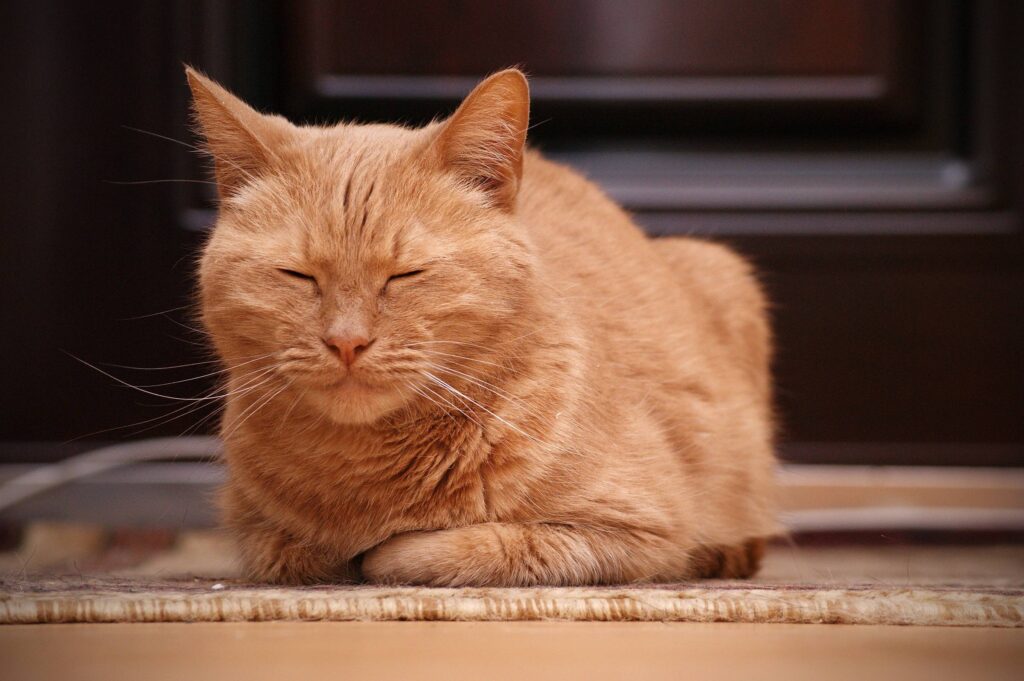
Lower the teaser wand and let its mouse creep past the sofa. A short roll of a ball might prompt a chase, or your cat may stay where they are and reach out one excellent paw.
Cats Protection’s advice on gentler play for older cats includes short sessions and toys that don’t intimidate them. Even watching or swiping provides stimulation. Keep offering those chances to play together as their movement changes.
An electronic toy can help if your cat enjoys following a moving target. PawsPik’s rechargeable Chirp & Chase Cat Ball has Slow, Fast, and Interactive modes; Slow is the setting we’d consider for a cat who wants a floor-level pursuit without having to sprint. There are lights, chirping sounds, and a rope attachment as well, which may be entertaining for one cat and unwelcome for another.
If the noise makes yours retreat, a soft mouse moved by your hand gives you much more control over the game. Stay with them when using the electronic ball, as the manufacturer directs, and put it away afterward. Limping, struggling, or losing enjoyment is a reason to stop and discuss the change with your vet.
Some afternoons, the whole session may be a few interested swipes from beside you on the rug. Enjoy them.
A place by the window and a hand with the brushing
The window seat may still be your cat’s favorite spot, even if they’ve stopped going up there. A steady carpeted ramp or broad steps can make the journey easier, including the way down. Watch the landing: a slippery floor can spoil an otherwise comfortable route.
Your phone is handy here. Record ordinary movement for the vet—an approach to the step, a turn, the way your cat lowers themselves—without coaxing them into a jump they’re avoiding. A familiar routine at home can be easier to show than to describe later in the examination room. A pet camera for cats can catch the moments you miss while you’re out.
You can also bring scratching within reach. A horizontal scratcher removes the high stretch up a post; put it where your cat spends time and give it enough grip underneath to stay put.
When the long coat needs your help
A long-haired cat who can no longer comfortably reach their back or rear end may need you to take over some grooming. Pain or reduced flexibility can leave those areas receiving less attention, and tangles can build up. Short-haired cats can struggle too, so tell your vet if grooming has declined.
Battersea recommends a soft brush and gentle handling in its advice on grooming an older cat. Use a cat comb to find small tangles, keeping sessions comfortable and stopping if touching a particular area seems painful. Go gently around sensitive joints.
A few comfortable minutes beside you with the brush can be a nice way to spend part of the evening.
For tight mats or a needed sanitary trim, get help from a vet or experienced cat groomer. Scissors close to a mat can cut the skin, so let someone with the right tools and a steady hand take care of it.
Home health checks between appointments
A fluffy coat can make weight changes surprisingly hard to judge by eye. A digital pet scale gives you a record to follow, especially when you use the same scale repeatedly and share changes with the veterinary team. A low platform can also be easier for your cat to use. Ask the team what weighing plan makes sense for them. Weight is only part of the picture. The feline senior-care guidelines consider muscle condition, examination findings, and other observations alongside it. The number on the scale won’t explain a loss or tell you whether muscle has changed, but it can give you a reason to call.
There are also tests you can do at home. Each answers a particular question, so discuss what you and your vet would do with the result before adding one to your cat’s care.
Petivity’s saliva test for kidney-health monitoring
Petivity’s At-Home Kidney Health Test for Cats measures urea in a gumline saliva sample. After two minutes, you read a color result. This is separate from the company’s litter-box monitor.
Petivity describes the test as a complement to regular laboratory work. It could provide additional information between appointments, but an elevated result needs interpretation and further investigation; it cannot establish a complete kidney diagnosis. And if your cat’s appetite, drinking, or behavior has changed, a reassuring strip is no reason to put off the conversation with your vet.
AnimalBiome’s look at gut bacteria
AnimalBiome’s Gut Microbiome Test for Cats, also called KittyBiome, uses a stool sample you mail to its laboratory. The report describes the bacterial profile and compares it with reference profiles from healthy cats.
For an older cat with persistent digestive trouble, your vet can help decide whether that information would contribute to the investigation. It answers a different question from kidney testing or a routine fecal parasite test. A bacterial profile alone won’t tell you why your cat is unwell or what treatment they need.
Keep results from either test with your cat’s pet health data, where the veterinary team can see them alongside the rest of the record. Senior cat monitoring is easier to manage when the observations reach someone who can help you act on them.
Have a vet within reach on your phone
Passwords are easier to sort out while your cat is asleep beside you than while you’re worried about them. Set up your practice’s app or portal, find the records, and ask how the team would like you to send observations or request help.
Ask A Vet is another app offering pet records and veterinary questions. It has human Certified Vet Chat, telehealth consultations, and automated AI chat as separate services. Make sure you know which conversation you’re opening: an instant AI reply isn’t a veterinarian answering your question.
For everyday concerns or the question you remember after an appointment, that access can be useful. Emergencies need a more direct route. Save your own vet and the nearest emergency clinic as phone contacts, with the address ready in maps; Ask A Vet explicitly says not to wait for its app in an emergency.
Straining with little or no urine can mean a blockage requiring immediate veterinary attention. Difficulty breathing or collapse also calls for urgent in-person help. Use the phone to reach that care quickly.
Sharing the house with an older dog too? Our gadgets for senior dogs guide covers their side of the sofa.
You may find that the change your cat appreciates most is having dinner waiting when they come back for another bite. Or it may be the ramp that gets them beside you on the sofa again. Follow those small improvements as their needs change, and keep enjoying the company of the cat you’ve spent so many years getting to know.