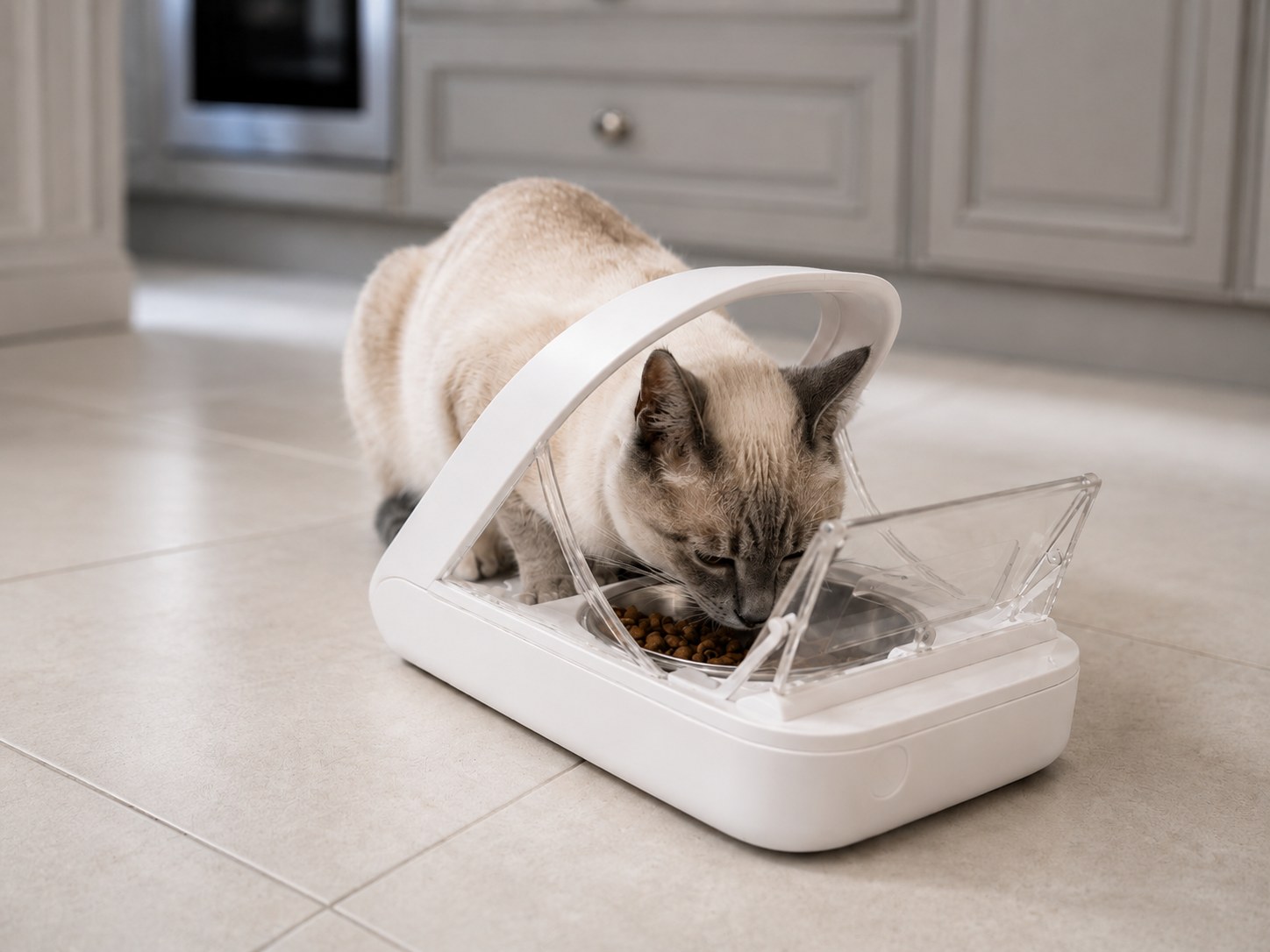
A SureFeed automatic cat feeder does not make breakfast appear. It waits for the right pet to approach food that a person already placed in the bowl, then opens the lid for that pet’s implanted microchip or a registered Sure Petcare RFID collar tag. That distinction makes SureFeed unusually good at one problem and completely wrong for another.
SureFeed belongs in homes where dinner arrives on time but attracts the wrong guest. Think dog at the cat bowl, one cat treating every serving as communal property, separate diets, or a nervous eater that needs space. If the missing piece is food appearing at a future hour, use a timed hopper or tray instead; this lid is security, not catering.
SureFeed Microchip Pet Feeder controls access to prepared wet or dry food without becoming a timed dispenser. It does not require an app to perform that job, refrigerate wet food, drop new portions, or make a crowded station peaceful without thoughtful placement and patient training. SureFeed is Secondary in this cluster, but this existing review remains a narrow specialist exception.
Before buying, observe the conflict itself. Note who approaches first, whether the intended eater is comfortable near a moving lid, and whether another pet blocks the exit rather than merely stealing food. That observation decides whether one feeder, two feeders, an optional rear cover, or a different room layout is the practical plan. The chip can open the lid; it cannot redesign the social geography around it. The household problem remains larger than the sensor.
About Sure Petcare and SureFeed
Sure Petcare builds microchip-aware doors and feeding products. Its SureFeed range uses the pet’s existing compatible microchip or the included RFID collar tag as a key. The feeder can store multiple registered identities, but the practical household plan is usually to authorize the pet or pets that should share that bowl and keep everyone else out.
Summary of SureFeed automatic cat feeder features
SureFeed Microchip Pet Feeder covers selective access with an automatically closing lid, staged training mode, removable bowls and mat, and four C batteries. Ownership costs include batteries, optional bowls or a rear cover, and possibly extra feeders when more than one pet needs a private station. The closing lid—not an app—is the heart of this product.
SureFeed Microchip Pet Feeder at a glance
| Product Name | Pet Tech Category | Best For | Key Feature | Additional Key Feature | Key Specs | Price Range |
|---|---|---|---|---|---|---|
| SureFeed Microchip Pet Feeder | Selective-access bowl | Keeping an unauthorized pet out of prepared food | Microchip or RFID-tag lid access | Staged training mode | Wet or dry food; stores up to 32 pet identities; 4 C batteries | Premium |
SureFeed Microchip Pet Feeder for selective access
Quick verdict
The standard SureFeed is a focused food-theft solution. It opens for a registered chip or collar tag and closes when that pet leaves. If the owner does not need feeding records or integrated scales, the basic model delivers the essential mechanism with less setup.
Pros
- Works with common implanted microchips or the Sure Petcare RFID collar tag
- Automatically closing lid protects prepared food from unauthorized pets
- Supports wet and dry food
- Staged training mode helps a cautious pet adjust to lid movement
Cons
- Does not dispense a scheduled portion
- Moving lid may require a patient training period
- Some homes need one protected feeder per pet
Best for
A cat whose bowl is raided by another cat or a dog, or a multi-pet household where one prepared meal needs controlled access. It can also help a slower or nervous eater when the station is placed somewhere that does not invite ambushes.
Biggest tradeoff
The lid is both the solution and the learning curve. Sure Petcare’s training mode starts with an open bowl, introduces small movements, and gradually works toward normal closure. A skeptical cat should set the pace. Cats have survived thousands of years without trusting moving lunch furniture on command.
Key specs and detailed analysis
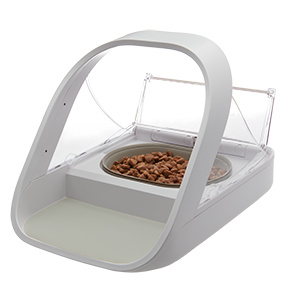
Sure Petcare says the feeder works with common microchips and its RFID collar tag, can store up to 32 pet identities, and uses four C batteries. It includes a full bowl and split bowl for wet, dry, or mixed prepared meals. The lid helps limit exposure to other pets and insects; it is not refrigeration.
Cleaning is specific. Remove and wash the bowl pieces as directed, hand-wash the mat and lid, and wipe the body rather than submerging it. Food residue around the lid seal can undermine the very protection the product was purchased to provide.
The optional rear cover can help with a persistent thief approaching from behind, but placement is still part of access control. Leave the intended cat room to enter and exit without a sibling blocking the only path.
Check the current SureFeed bowl options and rear-cover accessory before ordering.
Training, cleaning, and multi-pet placement
Plan training before the feeder becomes necessary. Begin with the lid in the least threatening position, use familiar food, and advance only when the cat approaches comfortably. Lid speed and closing behavior can be adjusted on the product; use the gentlest setting that still protects the meal from the household’s food thief.
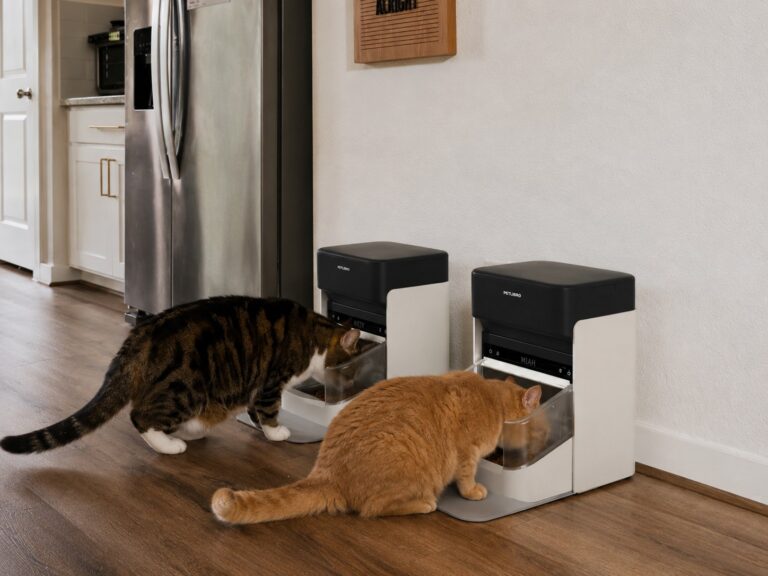
In a two-cat home, one feeder may work when only one meal needs protection. Two may be necessary when both cats need private bowls. Separate stations and color-coded mats can simplify the routine.
Where SureFeed falls short
SureFeed is not a timed food dispenser. It will not serve breakfast at 6 a.m., store a large dry-food supply, or refrigerate wet meals. It is also a poor fit when the intended cat cannot acclimate to the lid or when another pet can physically intimidate the cat at the station despite the lock.
FAQ
Can SureFeed stop a dog from stealing cat food?
It can keep an unregistered dog from opening the lid, but placement and rear access still matter. Dog-Proof Cat Feeding Setups for Shared Pet Homes covers room layout, height, barriers, and escape routes around the feeder.
How do two cats use RFID or microchip feeders?
The setup depends on whether they share food or need private meals. RFID Automatic Cat Feeder for Two Cats: One Feeder or Two? explains why some households need two units rather than one bowl with several registered pets.
Does SureFeed dispense food on a timer?
No. It controls access to food already placed in the bowl. Use a timed tray or hopper when future serving is the main need.
Does SureFeed Microchip Pet Feeder need an app?
No. The feeder recognizes a compatible implanted microchip or registered collar tag locally; its core access-control job is not an app feature.
Can SureFeed use wet food?
Yes, Sure Petcare lists wet and dry food. The lid helps cover the bowl, but it does not refrigerate food. Follow the food’s handling instructions and clean the bowl and lid area regularly.
Will every cat accept the lid immediately?
No. Use staged training and allow the cat to progress gradually. A protected bowl is useful only if the intended eater feels comfortable approaching it.
Final recommendation summary
SureFeed Microchip Pet Feeder earns its place when the real problem is food theft or diet separation and the intended cat can learn the moving lid. It remains a specialist tool, not a general timed-feeder recommendation. The feeder should be chosen for recognition, training, placement, and bowl protection—not for features it does not have.
Choose SureFeed Microchip Pet Feeder when protected access is the household job.
Protected access is only one branch of the feeder tree. Use the Complete Guide to Automatic Pet Feeders for Dogs and Cats when timing is still unsettled, Best Automatic Dog Feeders: Picks for Small and Large Dogs when canine fit drives the choice, Best Automatic Cat Feeders for Multiple Cats: RFID and Dual-Bowl Options when the argument is shared bowls versus a guest list, and Best Automatic Cat Feeder for Wet Food when freshness changes the mechanism.