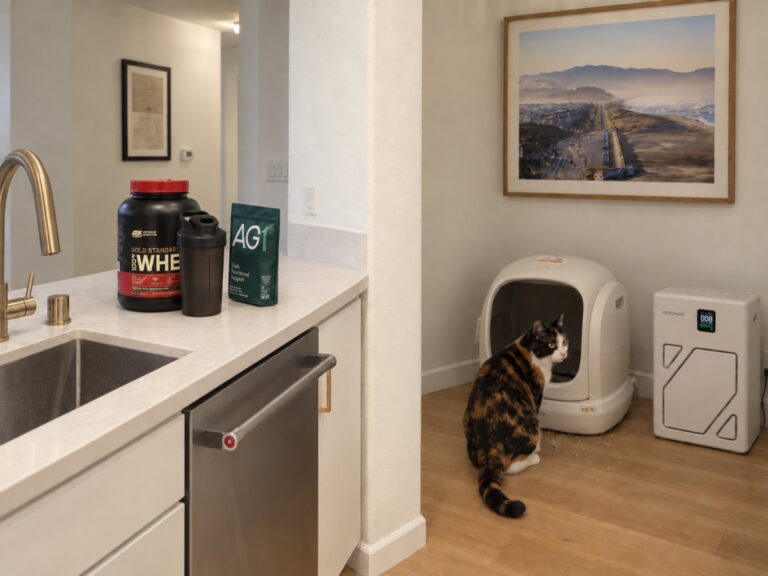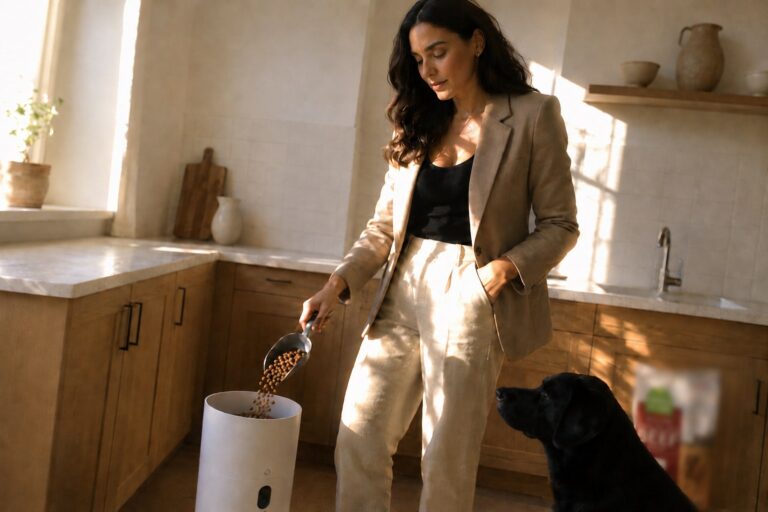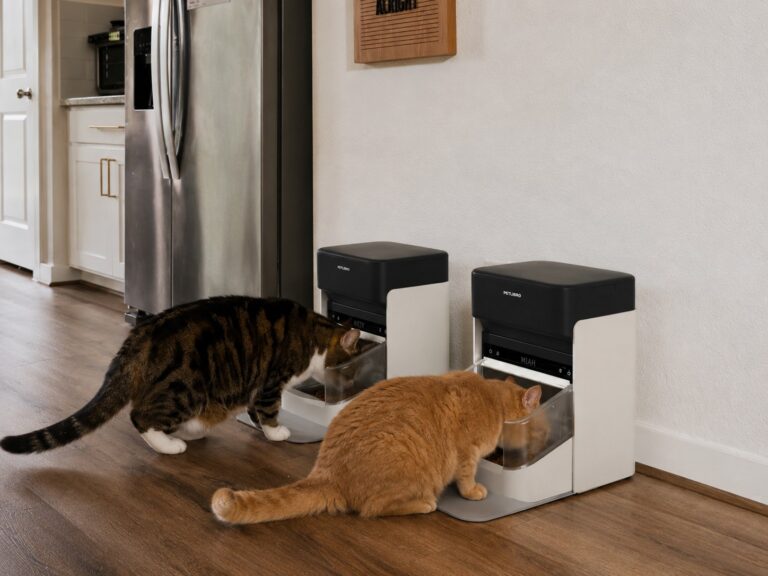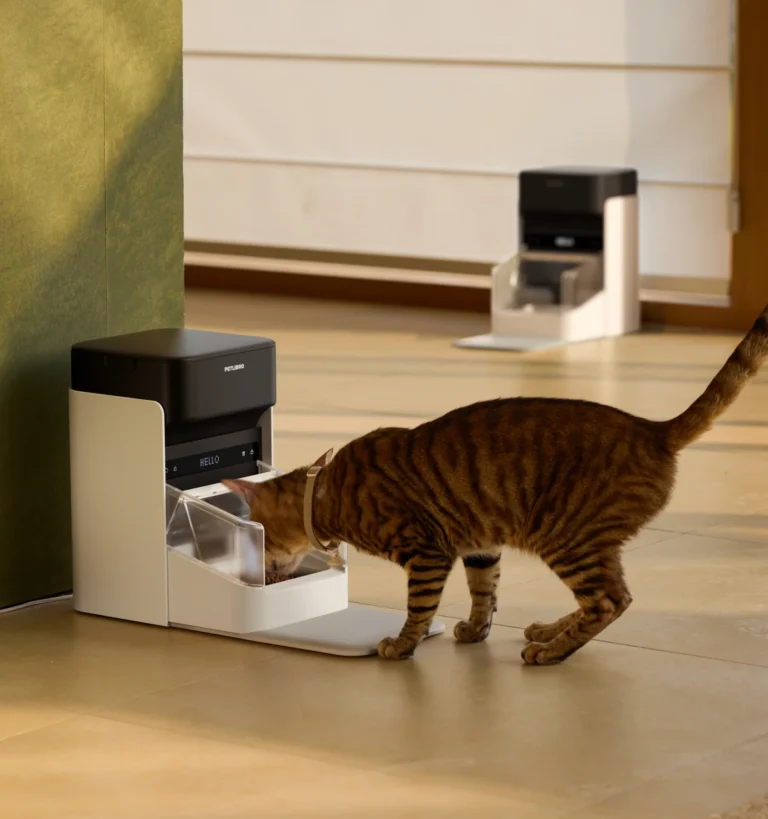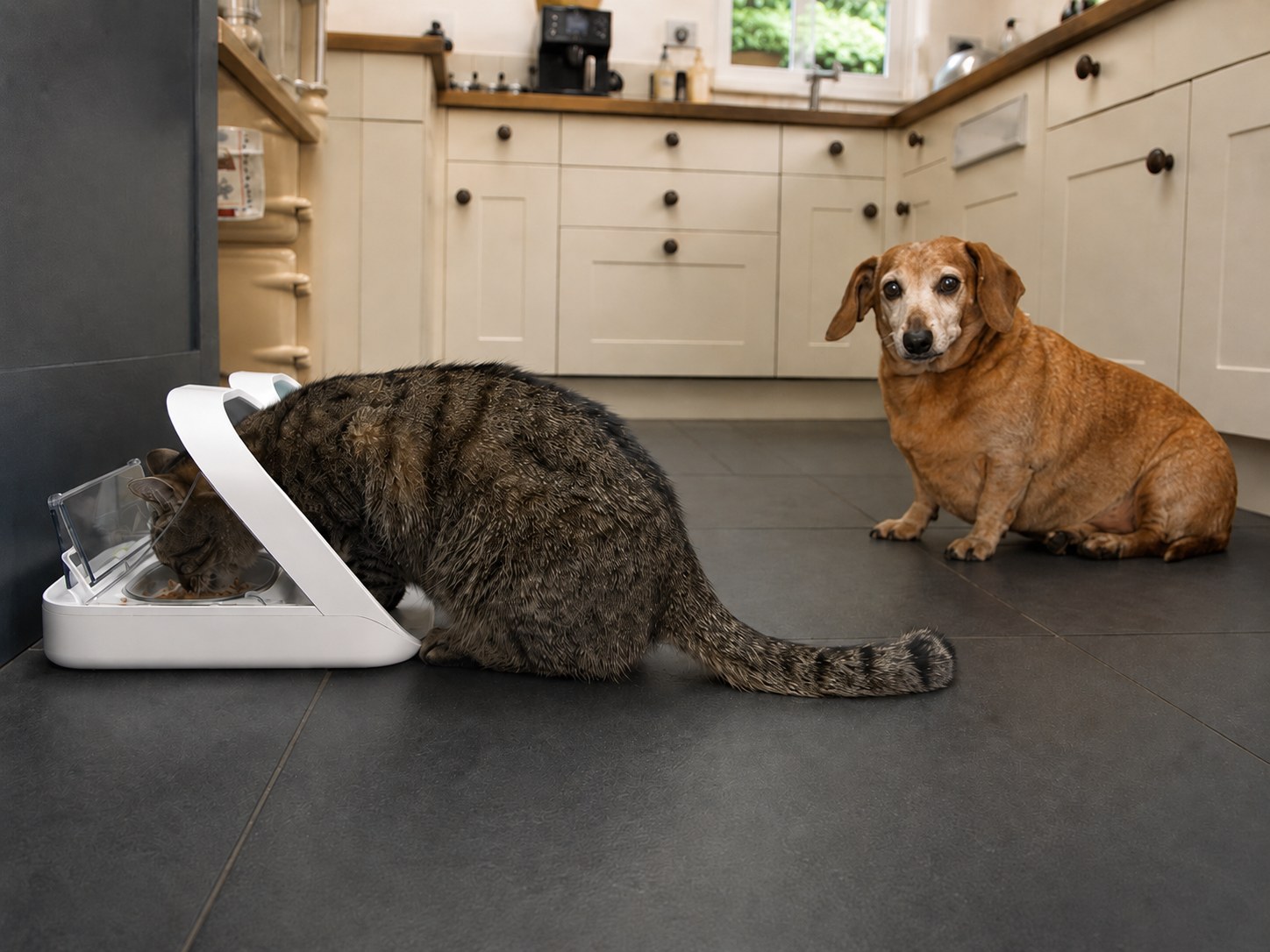
A cat food dispenser dog proof setup is rarely one heroic gadget. It is a set of layers: the bowl controls access, the room controls approach, and the placement keeps the dog from hovering close enough to turn the cat’s authorized meal into a team project.
Name the caper before buying the security system. Does the dog clean up after the cat leaves, shoulder in during the meal, knock over the feeder, or chew the cord? Each version needs a different fix. An RFID lid controls bowl access. It cannot secure a cord or make a nervous cat comfortable with a dog’s nose six inches behind it.
The strongest setup gives the cat a calm route in, an easy route out, and enough physical separation that the electronics are not doing all the work.
Layer One: Choose the Right Access Method
Covered RFID or Microchip Access
A cat food dispenser with collar recognition or microchip compatibility opens for a registered cat and closes after the cat leaves. This directly addresses casual theft from a bowl that would otherwise remain open.
The SureFeed automatic cat feeder can read compatible implanted microchips as well as a collar tag. It protects a meal the owner has loaded; it does not dispense new portions on a schedule. The current SureFeed retailer listing is the place to check availability and bowl options. Petlibro One RFID combines a dry-food hopper with an included RFID collar tag and protected bowl access. PawsPik’s RFID feeder is another collar-tag candidate whose current package and support details should be verified.
Recognition methods are not interchangeable. A product described as RFID may read only its own collar tag. If your goal is to use the cat’s implanted chip, confirm that exact compatibility.
A Cat-Only Feeding Zone
A baby gate with a cat-sized opening, a door latch that leaves a cat-width gap, or a room the cat can enter but the dog cannot may solve more than a sophisticated bowl. The opening must fit the actual animals. A compact dog may qualify as an honorary cat; a large or older cat may not enjoy a high jump.
Choose barriers that are stable, free of pinch points, and easy for humans to use consistently. The perfect gate propped open for laundry is just modern sculpture.
Elevation
A sturdy counter-height or shelf station can work when the cat is comfortable jumping and the dog cannot reach it. Use a broad, nonslip surface with space to turn around. Keep the feeder away from edges and secure its cord.
Elevation is not suitable for every cat. Kittens, seniors, cats with mobility limitations, and cats who dislike being cornered may need a floor-level protected room instead.
Layer Two: Stop Tailgating
RFID and microchip feeders open when the authorized cat approaches. A persistent dog may learn to stand behind the cat and reach toward the bowl before the lid closes.
Reduce that opportunity with layout:
- Place the feeder inside a cat-only enclosure with one controlled entrance.
- Aim the entrance so the dog cannot approach directly from behind.
- Use furniture to create a narrow turn that the cat handles comfortably.
- Leave the cat a second escape route when possible.
- Keep the station out of a dead-end corner where the cat can feel trapped.
Watch several real meals. A setup is not dog-proof because the dog failed once while you were staring at him with your hands on your hips.
Layer Three: Secure the Feeder Itself
Stabilize the Base
Place the unit on a level, nonslip surface. If the manufacturer permits it, use a fitted mat or station that prevents sliding without blocking vents, doors, sensors, or moving lids. Do not improvise straps that could entangle a pet.
Protect the Power Cord
Route the cord behind furniture or through a purpose-made protective cover, while preserving ventilation and access for inspection. Never place a damaged cord back in service. Battery backup may keep a feeder working during an outage, but it should not be treated as the permanent answer to chewing.
Check the Lid and Food Chute
Dry-food hoppers need a secure lid and a chute a dog cannot easily rake with a paw. Covered access bowls need room for the lid to close fully. Food crumbs around the station can teach the dog that persistent investigation pays.
Match the Setup to the Feeding Conflict
| Problem | Most useful first layer | Why |
|---|---|---|
| Dog eats leftovers after cat walks away | RFID or microchip-covered bowl | Closes access between cat visits |
| Dog pushes in during the meal | Cat-only zone plus protected bowl | Adds distance before bowl-level control |
| Dog tips or slides the unit | Stable station and placement | Addresses physical interference directly |
| Dog chews the cord | Protected routing and supervision | Access control does not protect wiring |
| Two cats need different diets and a dog steals | Separate protected stations in a cat-only zone | Controls identity and reduces crowding |
| Cat refuses a moving lid | Gradual training or a physical cat-only room | Comfort matters more than gadget loyalty |
Train the Cat Without Creating a Dinner Villain
Use the manufacturer’s training mode when available. Begin with the lid fully open or movement minimized, reward calm approaches, and advance only when the cat eats comfortably. Do not force the cat’s head toward the opening.
Keep the dog occupied elsewhere during training. The cat needs to learn the feeder, not the feeder plus an audience vibrating with snack-related optimism. Once the cat is comfortable, reintroduce the dog at a distance and observe the complete approach, meal, and exit.
For a household-level example of why access control can matter, read Luna Filed a Breakfast Complaint. We Needed an RFID Automatic Cat Feeder for Two Cats.
When Separate Timed Feeders Are Better
Protected access is not the only answer. If each cat eats a complete scheduled meal rather than grazing, separate timed feeders in separate rooms may be clearer and easier. Close the spaces during the meal, then pick up the bowls.
A dual-bowl feeder is not equivalent. It splits one delivery and remains open to both pets. For the product-choice decision between shared bowls and identity protection, use our guide to the best automatic cat feeder for multiple cats.
Dog-Proof Setup Checklist
1. Identify exactly when and how the dog gains access. 2. Decide whether the cat needs protected grazing or separate scheduled meals. 3. Verify collar-tag versus implanted-microchip compatibility. 4. Create a comfortable approach and escape route for the cat. 5. Prevent tailgating with distance, turns, or a cat-only entrance. 6. Stabilize the feeder and protect the cord. 7. Train the cat gradually with the dog elsewhere. 8. Observe several complete meals with both pets present. 9. Recheck the setup as pets age, grow, or become more inventive.
Frequently Asked Questions
Will a microchip cat food dispenser keep every dog out?
It blocks direct access when closed, but a dog may tailgate, push the unit, or hover while the cat eats. Combine the feeder with good placement or a cat-only zone.
Does an automatic dog feeder with collar recognition work for cats?
Species labels are less important than recognition method, bowl fit, tag size, and food compatibility. What matters is whether it reads a proprietary collar tag or an implanted chip.
Is feeding the cat on a counter enough?
Only if the cat can reach it comfortably, the dog truly cannot, and the station is broad and stable. Elevation is not appropriate for every cat.
Can two cats use one protected feeder?
Some feeders can authorize several pets, but then both have access to the same bowl. Different diets or individual portions generally need separate protected stations.
The Bottom Line
The best dog proof cat feeding station works more like home security than a magic bowl: control access, manage the approach, and remove easy opportunities. Use RFID or microchip access when food must remain available to one cat, add a cat-only route to stop tailgating, and secure the station against sliding, tipping, and cord raids.
Our Complete Guide to Automatic Pet Feeders for Dogs and Cats explains where protected access fits among timed, wet-food, camera, and gravity formats. The goal is not to outsmart the dog once. It is to make the correct meal the easy, boring outcome every day.