Cat people know the uniquely humbling thrill of buying something sophisticated for a family member who once chose the shipping box. Cats do like technology; they simply reserve the right to review it with brutal honesty.
A fountain can turn the bathroom-faucet obsession into a private water feature. A microchip feeder can end the breakfast heists. An electronic toy can make the hallway feel like prime hunting territory, while a self-cleaning litter box can quietly improve the least glamorous part of everybody’s day.
The best cat gadgets make a favorite ritual more delightful, a daily routine more personal, or a safety plan more reassuring. They also understand the assignment: your cat gets to approach, investigate, retreat, and decide whether the new household robot has earned clearance.
That is what makes tech for cats such a delicious design challenge. The gadget has to impress you and pass inspection with someone who can detect an unfamiliar motor from two rooms away.
This guide covers the smart stars of feeding, hydration, litter care, play, tracking, access, communication, monitoring, and cleanup. It includes a dedicated kitten section, too, because “tiny” and “adult” are not interchangeable operating modes.
For the cross-species view, begin with Smart Pet Gadgets: How to Choose Tech for Dogs and Cats. Stay here when the question is gloriously feline: Which technology would my particular cat welcome into the kingdom?
The Best Cat Gadgets at a Glance
The right first upgrade usually reveals itself in a sentence you have already said at home:
- “One cat keeps eating everybody else’s dinner.” Look at microchip, RFID, or recognition-based feeders.
- “My cat has rejected still water and now requests sink service.” Explore fountains and connected water monitors.
- “I would like the litter box to handle more of the litter-box situation.” Consider self-cleaning systems and smart litter monitors.
- “My indoor hunter needs a more exciting afternoon.” Try electronic chase toys, responsive puzzles, and powered food games.
- “I need to know what happens after I leave.” A pet camera can reveal naps, zoomies, social drama, and the occasional countertop felony.
- “My cat has outdoor privileges and an unreliable sense of curfew.” Compare dedicated GPS, radio, and network-assisted cat trackers.
- “The patio door has become a full-time concierge desk.” An electronic or microchip cat door can personalize access.
- “My cat already communicates through prolonged eye contact. We can build on this.” Talking buttons add a new family language.
- “I want to notice changes in weight, eating, drinking, litter visits, or activity.” Smart monitors can make patterns easier to see.
- “The fur is floating, the litter is migrating, and the vacuum has questions.” Robot vacuums, pet vacuums, air cleaners, and powered grooming tools can take the hint.
- “We have debated this cat’s ancestry in the family chat for years.” A cat DNA test can make the reveal much more interesting.
The best cat gadget is the one that fits both the moment and the cat. Before the feature list gets a vote, let your cat’s personality, senses, body, and home narrow the field.
Your Cat Gets Final Cut
A cat gadget can be technically excellent and still receive a one-star household review. Maybe the motor is too sudden. Maybe the entrance feels cramped. Maybe another cat has stationed herself beside it like nightclub security. Maybe the water fountain is perfect, but you placed it next to the litter box and deeply offended the interior designer.
The Feline Veterinary Medical Association describes a healthy indoor environment through safe places, resources placed apart, opportunities to play and hunt, consistent positive interaction, and respect for feline senses. Those five pillars of a healthy feline environment make a lovely filter for modern cat technology: Does the gadget give your cat more comfortable choices, more engaging moments, and more confidence in the home?
Use the checks below for every cat gadget. The specialist guides can handle the miniature buying checklists for each product family.
Match the technology to your cat’s personality
Personality fit is where the magic starts. A fearless puzzle enthusiast, a cautious observer, a determined food thief, and a cat who considers every closed door a constitutional crisis will want very different smart homes.
Notice what makes your cat lean closer. Some cats love fast, unpredictable movement; others prefer a toy that pauses long enough for a proper stalk. One cat may sprint toward the whirr of a feeder motor. Another may need to inspect the silent machine for several days before trusting it with breakfast.
Choose technology for the cat you already adore. A shy cat can be a wonderful early adopter when the smart format makes curiosity feel irresistible.
Audit the sound, motion, light, and scent
Humans see a sleek automatic litter box. A cat experiences an entrance, an interior, a motor, a moving floor, a new smell, indicator lights, and a machine that does something surprising after they leave. The difference explains many expensive misunderstandings.
Watch product videos with the sound on. Look for adjustable volume, motion speed, brightness, cycle delay, and notification settings. Consider whether a pump hums, a door clicks, a toy skitters, or a vacuum docks near a favorite sleeping spot. Cleaning products matter, too; a sparkling machine with a strong unfamiliar scent may not smell improved to your cat.
The coolest cat gadgets earn their keep through controls that make sense in your cat’s sensory world.
Measure every opening, platform, bowl, and wearable
Cat sizing is wonderfully deceptive. Two cats with the same weight can have different body length, shoulder width, fluff volume, head shape, and feelings about enclosed spaces. Measure the cat and the full movement: stepping into a litter system, turning around inside it, reaching a feeder bowl, passing through a flap, or curling up beneath a camera’s view.
For anything worn, consider the tracker, mount, collar, and attachment as one object. Check weight, bulk, balance, coat contact, and whether the device shifts during running, grooming, squeezing, and climbing. A small electronics module can feel enormous on a petite cat.
Fit deserves repeat checks. Collars loosen, kittens grow, coats change, and a device that looked centered on day one may migrate after the first serious zoomies.
Watch the traffic around important resources
In a multi-cat home, every new device enters an established social scene: who waits nearby, who blocks the entrance, who steals the reward, and who quietly decides the new arrangement is not worth an argument.
Study access from your cat’s eye level. A selective feeder may recognize the right microchip but still sit in a corner where another cat can loom. A smart litter box may record a visit but not explain why one cat hesitates in a narrow hallway. A fountain may be beautiful and technically shared while remaining socially unavailable to the shyest family member.
Smart personalization works best when the surrounding space lets each cat use it comfortably. Individual recognition and thoughtful placement are an excellent team.
Choose cleaning you can perform without a ritual sacrifice
Food dust settles near feeder mechanisms. Biofilm can develop in fountains and pumps. Litter finds seams that appeared invisible in the product photos. Fur joins every moving part eventually because fur believes in universal access.
Look at the path from dirty to clean. Can food-contact and water-contact pieces come apart? Can you reach the pump, chute, sensors, waste drawer, toy wheels, camera lens, and vacuum brush? Are replacement filters, liners, batteries, and brushes easy to find? Does the app tell you what actually needs attention, or merely announce that it has noticed something?
Automation should make the routine feel lighter. A machine that turns cleaning into an escape room needs a stronger design.
Make the introduction feel like an invitation
Let your cat investigate the gadget while it is quiet. Add power, sound, motion, and automatic cycles in stages. Pair each new sensation with something your cat already enjoys, and leave space to retreat without being followed by an enthusiastic demonstration.
For devices that change food, water, litter, or access, keep the familiar setup available during the introduction. That gives your cat a confident bridge toward the smart upgrade and lets you confirm steady use before the new system becomes the star.
Finally, test what happens during an outage, jam, dead battery, lost collar, app problem, or internet wobble. Battery backup, local controls, well-timed alerts, and a clear household plan keep modern technology feeling dependable even when Tuesday gets weird.
The Best Cat Gadgets for the Life You Share
Now the fun part: match the technology to the moment you want to make better. Each category below earns only a quick introduction here; the specialist buying guides own model comparisons, detailed features, and the glorious weeds.
Best for Breakfast Diplomacy: A Smart or Microchip Feeder
Timed feeders make punctual meals possible without requiring you to negotiate with a cat at 4:47 a.m. Connected models can add schedule changes, meal records, low-food alerts, or cameras. Microchip and RFID feeders solve a more personal problem by opening for one cat and closing the buffet to everyone else.
AAHA includes automated and identity-aware feeders among the options for controlling food access and amount. Match the feeder to the food, portion plan, face and whisker comfort, eating pace, and household’s finest pantry criminal. For the emotional stakes of perfectly timed feline breakfast, meet Abby and her timed cat feeder.
Best for Faucet Devotees: A Cat Water Fountain or Smart Water Monitor
A powered fountain gives moving-water fans their own tiny spring. Connected versions may track water level, filter life, pump status, or visits; monitored bowls can add usage data without circulating water. The winning format is the one your cat happily approaches and you can clean all the way through.
Cornell notes that some cats drink more from a fountain, while individual preferences vary. Give the new station an accessible, low-conflict location, keep fresh water available during its debut, and call your veterinarian if drinking changes sharply rather than asking the dashboard to diagnose the reason.
Best for a Fresher Bathroom: A Smart Self-Cleaning Litter Box
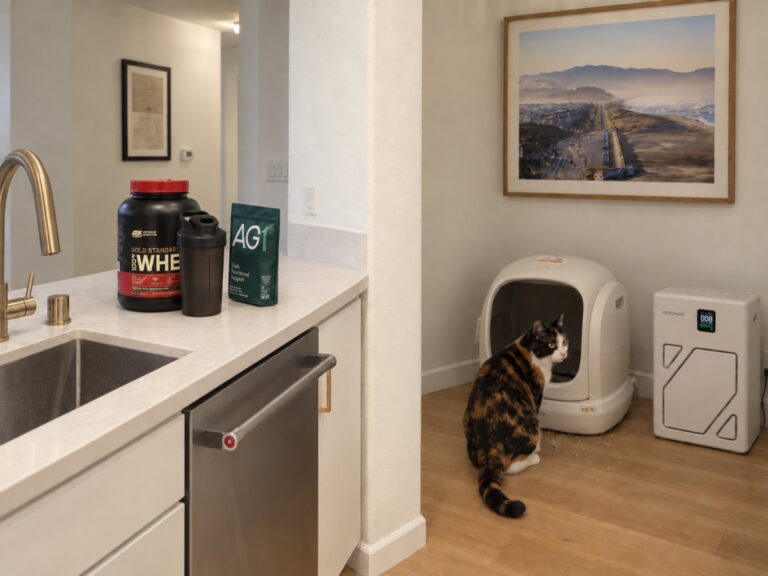
When the design fits your cat, an automatic litter box is one of pet technology’s great domestic upgrades. It removes waste sooner, improves odor control, reduces scooping, and may add visit, weight, or waste-level trends. Enclosed rotating systems, open raking systems, and other automated formats create different sensory and physical experiences, so a cat who dislikes one can still love another.
The technology still has to respect size, entry, litter texture, placement, cycle sound, delay, sensor behavior, and cleaning access. Ohio State highlights type, size, litter, location, and hygiene as core litter-box basics; those details point toward the right smart box. When you are ready to look closer, the automatic cat litter box guide explores the category in more depth.
Best for Indoor Hunters: An Electronic Toy or Smart Puzzle
Electronic cat toys can dart, flutter, roll, hide, chirp, pause, dispense food, or wake up on a schedule. Follow the sequence your cat loves—watch, stalk, chase, pounce, catch—then choose movement and difficulty that make the finale feel satisfying.
Inspect cords, strings, batteries, covers, wheels, and detachable pieces, and supervise early sessions. Best Friends recommends supervising long-string toys and making sure laser play ends with something your cat can physically catch. Its cat-enrichment guidance keeps the goal clear: high-tech play should end in triumph, not a red dot vanishing into another dimension.
Best for the Secret Afternoon Schedule: A Pet Camera
A camera can reveal which window gets the afternoon shift, who starts the hallway chase, whether the new feeder is attracting traffic, and what exactly happened to the plant. Motion clips and night vision add context; two-way audio and treat features can turn a check-in into a shared moment when your cat enjoys them.
Place the camera around the scene you actually want to understand instead of choosing the widest empty room. Then test voice and moving parts while you are home. Some cats adore remote attention; others hear your voice from a small speaker and begin searching for the portal. Horus offers one extremely charismatic case for a pet camera for cats.
Best for Curfews and Hide-and-Seek: A Dedicated Cat Tracker
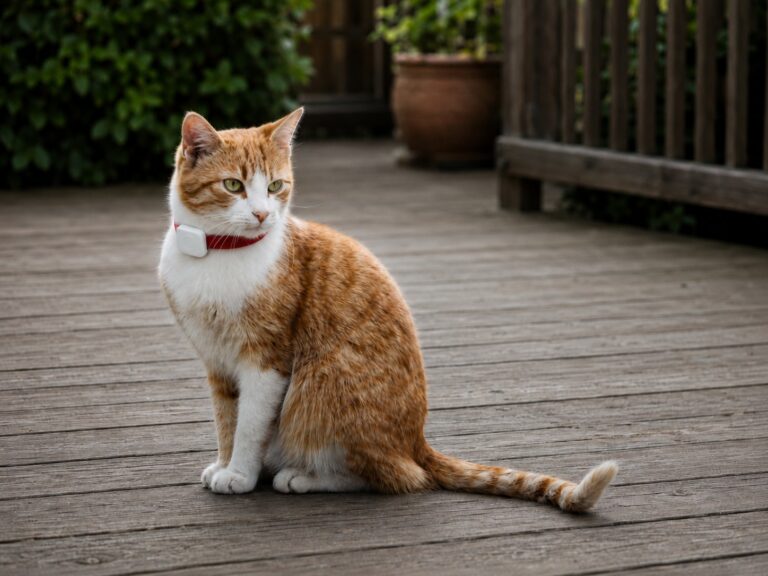
GPS/cellular trackers, direct-radio trackers, and Bluetooth or crowd-network finders locate cats in different ways. The right technology depends on whether your cat explores a neighborhood, disappears into a large rural property, slips into the garage, or specializes in hiding six feet from you beneath an object you already checked twice.
A collar-worn tracker needs cat-scale weight, secure mounting, dependable charging, suitable coverage, and a quick-release design that still works with the device attached. Cats Protection recommends a quick-release collar for feline safety. Pair active tracking with a registered microchip: the AVMA explains that microchips are not GPS devices, so the two technologies handle different parts of getting home.
Best for a More Selective Door Policy: An Electronic Cat Door
Microchip and RFID cat doors can recognize approved pets. Some add a phone app for curfews, one-way permissions, lock changes, and a record of door traffic. That can give your cat independence while denying the neighborhood cat a recurring dinner reservation.
Start with the physical experience: opening size, step-over height, tunnel depth, flap resistance, motor sound, escape view, and the route on both sides. Then look at recognition range, tailgating, manual controls, and power behavior. Use the best electronic cat door comparison when it is time to weigh access methods and installation styles.
Best for Cats With a Lot to Say: Talking Buttons
Talking buttons let your cat connect a repeatable press with a meaningful event. FOOD may be an obvious opening bid, but PLAY, WINDOW, CUDDLE, and the deeply versatile NO can make the soundboard feel more like your family.
Choose buttons with an activation force your cat can manage, clear audio, stable placement, and enough separation to reduce accidental presses. Model one concrete word consistently and let participation grow without turning every glance into a language exam. The best cat talking buttons guide compares systems made for the project.
Best for Noticing the Little Changes: Smart Scales and Wellness Monitors
Connected scales, activity wearables, smart litter systems, feeding histories, and water records can turn tiny daily moments into trends. The delight comes from knowing your cat’s normal rhythm well enough to notice when weight, movement, appetite, drinking, or litter visits begin telling a different story.
Use alerts as prompts to look closer and ask better questions, not as diagnoses. AAHA recommends discussing how and when to share remote-monitor data with your veterinary team and how they would use it. A clear export and a short note about what changed will usually be more lovable than handing over eighteen unexplained screenshots.
Best for the Family Group Chat: A Cat DNA Test
A cheek swab can launch an ancestry reveal, coat-color explanation, relative search, or selected genetic-health report. Decide which experience you want before choosing a service, because breed estimates, geographic ancestry, traits, and targeted variants are different promises.
Cat genetics deserves especially careful reading. UC Davis says its Veterinary Genetics Laboratory does not offer a cat breed test and previously discontinued an ancestry product because it could not answer the breed-composition question many customers expected. Commercial reports can still be fascinating; the fun gets smarter when you understand what each database and test can support. The best cat DNA test guide compares the choices.
Best for Fur, Litter, and General Sparkle Migration: Cleaning and Grooming Gadgets
Robot vacuums, cordless pet vacuums, air cleaners, grooming vacuums, powered clippers, and nail grinders can handle the home your cat accessorizes with fur and litter. Cat hair asks for brush-roll and upholstery performance; scattered litter asks for pickup without flinging; powered grooming asks for quiet control and a cat who accepts the sensation.
Choose around floors, furniture, litter type, coat, room size, noise sensitivity, and the mess that returns fastest. Introduce moving cleaners before they patrol a favorite route, and configure obstacle settings around feeding and litter areas. Our coverage of the best vacuum for cat hair and litter explains why those two messes need different machine strengths.
Smart Gadgets for Multi-Cat Homes Need to Know Who Is Who
A smart cat home gets much more interesting when every dashboard has a cast list. Individual recognition can protect a prescription meal, unlock a door for one cat, log litter visits, or separate one cat’s weight trend from the household average. That is where pet-specific technology starts to feel genuinely personal.
Identity is the first layer. Watch the social choreography around the machine. One cat can tailgate through a door, hover beside a feeder, interrupt toy access, or avoid a litter entrance controlled by a more confident roommate. A device can correctly recognize the cat in front of its sensor while missing the cat just outside the frame.
Choose systems that identify individuals reliably, then place important devices where access cannot be quietly controlled by the boldest cat. In larger homes, multiple smart stations give more choices than one magnificent machine serving as the household’s only food, water, or bathroom destination. More technology can create more freedom when it is distributed with the cats in mind.
Kitten Gadgets for a Tiny Chaos Engineer
Kittens are not miniature adult cats. They are rapidly changing bodies with maximal curiosity, limited respect for charging cables, and a gift for discovering the one opening nobody noticed.
The best kitten gadgets make that energy more fun while treating growth and supervision as active settings. Cameras, fountains, connected feeders, electronic puzzles, talking buttons, and automatic litter systems can all have a place. The exact device and mode have to fit the kitten today, then keep earning that fit as the kitten levels up.
Treat every size limit as a live measurement
Recheck collar fit and device weight frequently. A tracker that sits neatly on an older kitten may overwhelm a very small one, while a collar that fit last week can become tight during a growth spurt. Keep quick-release function intact after adding any electronic attachment.
Automatic litter systems may also set minimum weights for sensor detection or automatic operation. Those limits belong to the exact model, not the category. For example, Whisker currently requires a kitten to weigh at least three pounds for Litter-Robot 4 automatic mode and supplies a different supervised operating method below that threshold. Check the manufacturer’s current minimum-weight and operating instructions for whichever system comes home.
Inspect the room from whisker height
Charging cords, USB caps, loose batteries, toy feathers, strings, wheels, hinges, docks, and food-coated mechanisms become an interactive exhibit at kitten level.
Secure cables, close battery compartments, remove packaging completely, and check every device after play. Use powered toys with the level of supervision recommended by the manufacturer and justified by your kitten’s actual behavior. A product that was ignored yesterday may become tonight’s engineering project.
Use the first introduction as a lifelong advantage
The AAHA/AAFP feline life-stage guidance recommends gradual, positive kitten introductions to new sounds, experiences, handling, and routines. Smart products offer a joyful way to practice: reward an approach to the fountain, a calm step near the feeder, a curious look at the button, or relaxed play beside a quiet robot vacuum.
Let the kitten set the pace and keep the first sessions short. You are building a positive opinion of motors, chimes, moving parts, grooming sounds, and household automation that may last far beyond kittenhood.
Give electronic play a satisfying ending
Kittens have an enormous play drive. Choose electronic toys that let them stalk, chase, pounce, and win, with movement scaled to a small body and no reachable part that can be swallowed or wrapped around them.
Rotate modes and devices as coordination and confidence change. The perfect kitten gadget grows through new speed settings, puzzle difficulty, schedules, or modular parts instead of becoming predictable after one week. The household gets better technology; your kitten gets a world that keeps becoming more interesting.
Give a New Cat Gadget a Brilliant First Week
Begin with the device turned off. Let your cat sniff it, circle it, sit beside it, and conduct any required background check. Then add one feature at a time: lights, sound, movement, automatic operation, app audio, or a cleaning cycle.
During the first week, watch your cat more than the dashboard. Are ears turning back when the motor starts? Is the approach confident? Does another cat appear at the entrance? Is the wearable centered? Is the toy producing relaxed focus or frantic frustration? Adjust placement, volume, timing, access, and speed while the new routine is still forming.
Celebrate the tiny signs of acceptance. The first drink from the fountain, first confident trip through the cat door, first button press, and first nap through a robot-vacuum run are all excellent launch milestones.
Cat Technology We Would Not Call “Best”
Pet technology gets more exciting when we expect more from it. These are reasons to choose a stronger smart design:
- A feeder that recognizes one cat but lets another guard the only approach.
- A litter system whose entrance, motion, or automatic mode does not fit the cat using it.
- A tracker that turns the quick-release collar into a heavy, rigid necklace.
- An electronic toy with reachable batteries, swallowable pieces, tangling parts, or no satisfying end to the chase.
- A camera, scale, litter monitor, feeder record, or wearable pretending its alert is a medical diagnosis.
- Food, water, litter, or grooming hardware that cannot be cleaned where residue actually collects.
- A connected product that loses its essential function when the internet, account, app, or company changes—and gives you no clear backup or data exit.
Frequently Asked Questions About Cat Gadgets
What is the best cat gadget to buy first?
Choose the upgrade that improves a moment your cat already cares about. A food thief points toward an identity-aware feeder. A faucet fan may adore a fountain. An indoor hunter may light up for a responsive toy. A cat who goes outdoors may put tracking and selective access at the front of the line.
Your cat’s strongest preference is often the best shopping shortcut.
Are smart cat gadgets worth the money?
Absolutely—when your cat accepts the design and the technology makes a beloved routine noticeably better. Count filters, liners, batteries, subscriptions, replacement parts, app storage, and cleaning time along with the purchase price.
Delight is part of the return. A camera full of clips, a button that unlocks a new family joke, or an electronic toy that summons the evening zoomies can earn its place without solving an emergency.
Will my cat accept an automatic litter box?
Acceptance depends on the cat and the smart-box format. Interior size, entrance, litter, motion, cycle delay, sound, location, cleanliness, and the presence of other cats all shape the experience. Introduce the system gradually and keep the previous bathroom available until your cat is using the new one confidently and consistently.
If your cat rejects an enclosed rotating design, an open automatic format may be the better modern match. If litter habits change suddenly, contact your veterinarian; Cornell notes that house-soiling can have medical as well as environmental causes.
Do cat gadgets need Wi-Fi?
Many cameras, feeders, litter systems, doors, and app-controlled toys use home Wi-Fi. GPS trackers may use satellites for positioning and cellular service to send the location to an app. Direct-radio trackers communicate with their own receiver, while Bluetooth devices work at shorter range or through compatible device networks.
Check what the product needs, what keeps working offline, and whether essential controls remain available locally.
Can a smart litter box, feeder, or wearable tell me whether my cat is sick?
It can show that something changed: visit frequency, weight, activity, food access, drinking, or another measured pattern. It cannot examine your cat, confirm which cat caused an ambiguous event, or explain the medical reason.
Use the data to notice sooner, record timing, and give your veterinary team a clearer story. Call promptly for a meaningful change instead of waiting for the app to become more certain.
Which gadgets work best for multiple cats?
Look for dependable individual recognition, enough physical space, shared app access, and records you can attribute to the correct cat. Microchip feeders, selective doors, multi-cat litter systems, cameras, and connected scales can all help when the identity feature works in the real household.
Then watch access. The shy cat should not have to pass the resident bouncer to reach the smart thing you bought especially for them.
Build a Smart Cat Home Worthy of Its Resident
The best cat gadgets make the home feel more responsive to the cat at its center. Breakfast arrives with impeccable timing. Water moves. Toys come alive. The litter area stays fresher. A door recognizes who belongs. A camera saves the secret afternoon plot for the family chat.
Choose for your cat’s body, personality, senses, relationships, and favorite rituals. Introduce each new piece of technology like a welcome guest. Keep the gadgets that invite confident use, joyful play, and more ways to understand one another.
Your cat may still prefer the box for fifteen minutes. That is fine. The excellent machine inside it has a much longer audition.