The best vacuum for cat hair and litter has to solve a very cat-specific insult. The fur is soft and floaty and somehow visible only once you sit down on dark fabric. The litter is crunchy, gritty, and mysteriously portable. By the time it reaches the hallway, it feels less like debris and more like a personal message from the animal who runs the house.
Cat owners get very little out of generic pet-vacuum advice. A lot of it is built around dog-hair volume, carpet rescue, and big-room cleanup. Cat homes often need something more particular: cleaner hard-floor pickup, less scatter, better edge control, and a realistic plan for soft furniture plus the litter zone.
If you want the broader map first, Pet Vacuum Guide: Choosing the Right Vacuum for Pet Hair at Home is the better starting point. If your real problem is the split between fine cat fur and gritty litter, this is the better way to shop.
Fine cat hair is not dramatic, but it is relentless
A cat vacuum often has to do less brute-force work and more careful cleanup. Fine fur clings to chairs, blankets, cat trees, and the low furniture cats seem to prefer because it is hardest to vacuum around. It also drifts into corners and along baseboards in a way that looks minor until the light hits it just right.
A cat hair vacuum needs better soft-surface tools and edge control than many dog-heavy articles acknowledge. Miele stays useful here because attachment reach and cleaner handling are part of the appeal. Bissell and Shark matter because handheld-style cleanup is genuinely useful in a cat home, not just a nice extra.
Litter is its own cleanup category
The best vacuum for cat hair and litter needs to respect that litter is not just bonus debris. It is heavier, grittier, and much more likely to collect in the exact places many vacuums handle badly: hard-floor edges, grout lines, low corners, and the small perimeter around the box where the mess concentrates.
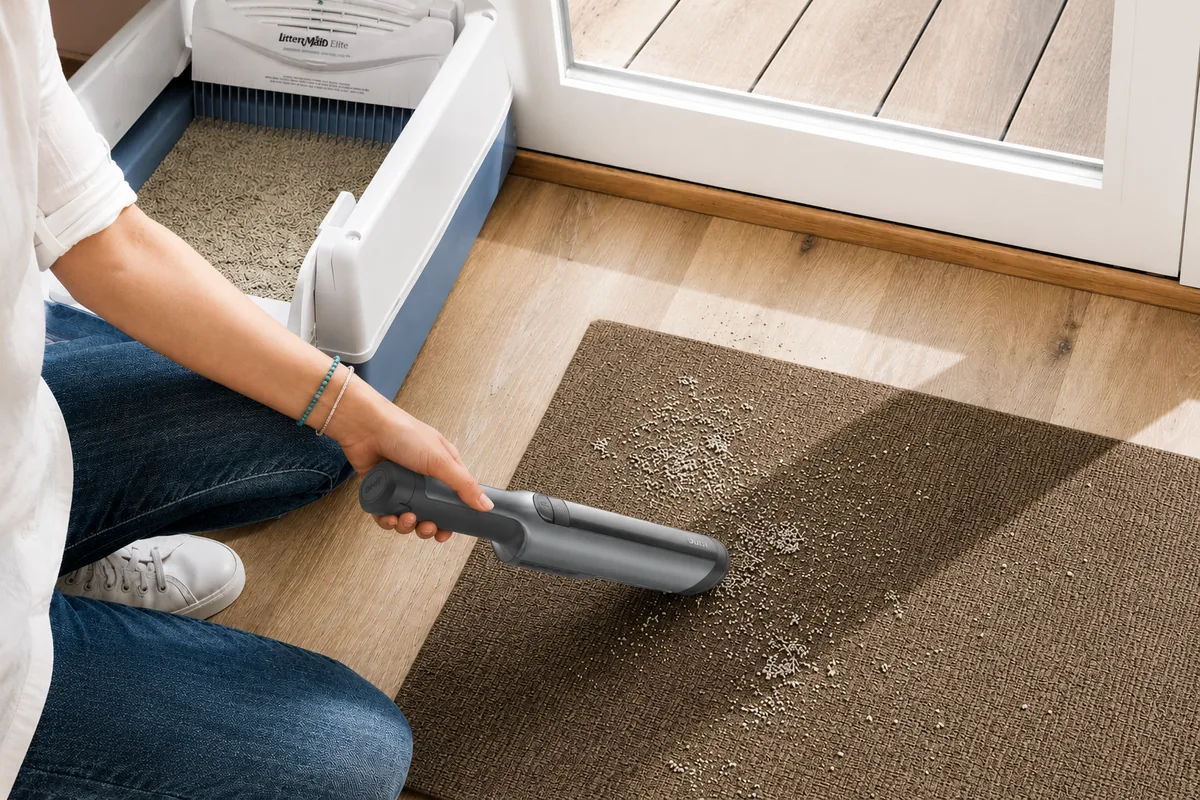
That is why a cat litter vacuum often ends up being either a very good floor vacuum with solid edge pickup or a smaller support tool that makes litter-zone cleanup easy enough to do often. This is also where the best handheld vacuum for cat litter can make real sense. A full-size vacuum may be the stronger main cleaner, but a smaller tool can be the reason the litter halo gets dealt with before it becomes a lifestyle.
Hard floors are where many cat homes get their biggest payoff
A lot of cat homes are hard-floor homes, or at least homes where the mess is concentrated on hardwood, laminate, or tile. That changes the equation. Fur stays visible. Litter stays audible. And a vacuum that behaves well on open floors starts earning its keep quickly.
This is where Miele, Tineco, and lighter cordless or canister options make more sense than people expect. A robot vacuum for cat hair can also be genuinely helpful in this kind of setup, especially if the daily problem is visible fur and tracked grit rather than deep carpet rescue.
Cat homes can look simpler than they are because the open floor makes the mess easy to spot. In practice, that same open floor lets the fur drift under low furniture while the litter settles in the exact strip around the box that many vacuums handle badly. Visibility helps, but it does not automatically make the cleanup graceful.
Robots help the middle of the room more than the edges of the problem
Roomba, Roborock, eufy, and Narwal all have a real place in cat homes because the daily mess is often repetitive. Fine hair on open floors. Litter scattered beyond the box. Small debris zones in the same places every day. A robot can reduce the look of that mess very nicely.
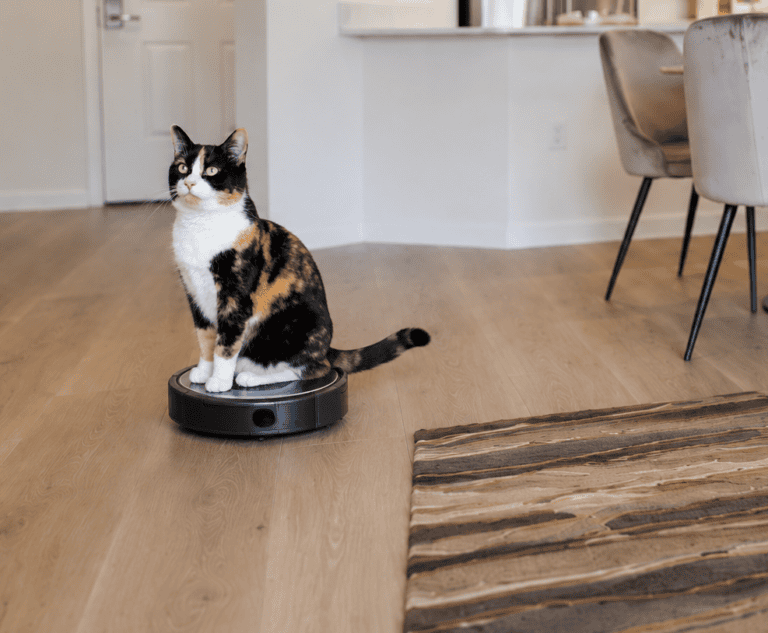
It just should not be confused with a full answer. Robots are still weaker at furniture edges, corners, low soft surfaces, and the stubborn ring around the litter area. If you want the more playful cat-specific version of that reality, My Cat Rode Roomba Like a Tiny UFO and Somehow the Floor Got Cleaner is the side read. If you want ranked picks, Best Robot Vacuum for Pet Hair goes broader.
Small spaces make convenience and storage matter more
Cat homes are often compact homes, or at least homes where the cat zones are concentrated enough that a giant vacuum can feel like too much object for the amount of floor you are dealing with. That makes storage, weight, noise, and grab-and-go use more noticeable.
This is why the right answer can split. A canister may be the better cleaner. A cordless may be the one you actually use every day. A robot may be worth it if the open-floor routine is half the battle. The cat still controls the vibe, but the vacuum setup does not have to be chaos.
Noise matters too, not because every cat reacts the same way, but because small spaces make every machine feel louder and more present. A vacuum that is awkward to store and annoying to drag out is easier to postpone, and in a cat home postponing usually means the fur and litter start reclaiming the room on a very petty schedule.
Most cat homes do better with a split strategy
That split might mean a main floor vacuum plus a handheld for the litter edge. It might mean a canister for rugs and soft surfaces plus a robot for daily hard-floor maintenance. It might mean a cordless for quick resets plus a smaller tool near the box.
If the part of the problem that keeps driving you crazy is the grit around the box and the fur nearby, Steve vs. the Cat Litter That Keeps Invading the House is the more specific companion read. If you want the broader shortlist after that, Best Pet Vacuum for Pet Hair is the faster route. If cleaner handling and canister control are what sound right, Miele Cat & Dog Vacuum Review: Canister, Cordless, and Allergy-Sensitive Pet Homes is the better brand-specific next step.
The best vacuum for cat hair and litter is usually the one that stops treating those as the same mess. Once you split them apart, the choices start making a lot more sense. ARTICLE END