Your pet does not know the living room was just vacuumed. The dog settles on the rug. The cat leaves the litter box. Soon, fur and grit return. A pet vacuum has to fit the surfaces where each mess collects.
That is why “best pet vacuum” is not one simple question. Your pet, their favorite places, and your cleaning rhythm shape the answer. “Vacuum cleaner for pet owners” covers several shapes but cannot choose for your pet. You may need one whole-home machine or a small helper near the sofa, litter box, or car.
Deeper pickup, quick cleanup, upholstery, robot upkeep, contained emptying, and wet/dry care need different designs. The best vacuum for pet hair roundup ranks specific picks once those tradeoffs are clear.
What Is a Pet Vacuum?
“Pet vacuum” describes a capability, not one machine shape. A pet vacuum cleaner should handle the messes that follow life with your pet. Those include hair, dander-bearing dust, litter, fuzzy upholstery, and grit carried on paws. “Vacuum cleaner for pet owners” remains a broad shopping label. Neither phrase chooses for your pet.
The machine might be an upright, cordless stick, canister, handheld, or robot. Look past the badge and consider what it must clean. A capable pet hair vacuum must manage both the surface and repeated cleanup. Will it still feel manageable tomorrow? The Bissell Pet Hair Eraser upright serves a different purpose from a BISSELL CrossWave Pet Pro. Both may help. Neither replaces the other.
Why Pet Homes Need More Than Generic Vacuum Advice
Pet mess has a geography. Hair gathers where your dog rests or your cat naps. It works into stairs and upholstery, then drifts across smooth floors. Litter spreads beneath the mat. Useful advice has to follow those habits.
A multi-dog family may need a vacuum for dog hair for carpet, furniture, and the car. Cats create another mix. Fine hair travels. Hard litter granules scatter when a floor head pushes instead of lifts. The best vacuum for cat hair and litter may not be the most aggressive fur remover. If you need a vacuum for pet hair and pet dander, emptying matters too. Pickup only helps when you can contain what leaves the floor.
How Pet Vacuuming Works in Real Life
Pickup is a combination of suction, airflow, and tool design
A suction claim cannot predict hair wrap or scattered litter. We look at the floor head, brushroll, airflow path, and attachments too. A capable pet hair vacuum needs both airflow and the right contact points.
Best Shark vacuum for pet hair, BISSELL, and best Dyson vacuum for pet hair take different approaches across upright and cordless ranges. Best Miele vacuum for pets brings canister control, floor tools, and a deliberate suction path. One vacuum may feel confident on carpet and merely adequate on wood. Another may glide across open floors but become awkward on the stairs.
Filtration and emptying matter as much as pickup for some homes
Collected dust still matters after pickup. A vacuum for pet hair and pet dander should keep that material contained. Check sealing, filtration, and what happens when the bin or bag is full. Better containment can reduce what escapes during disposal. The EPA notes that vacuuming can briefly stir settled dust. No vacuum can promise allergy relief on its own.
Miele remains relevant despite its weight and price. Its bagged approach suits people who value cleaner disposal. Dyson, Shark, BISSELL, and Tineco make different compromises among bins, filters, convenience, and upkeep. Picture emptying the machine after your pet’s usual spots. That moment belongs in the decision.
Batteries, docks, and apps change how cleaning fits into your day
Cordless and robot models earn their appeal through routine. Charging, battery life, bin size, dock footprint, maps, and maintenance all affect when you use them. Auto-empty features add convenience but also add another system to care for. The schedule can affect your pet too. A robot starting beside a nervous cat’s bed is not convenient for everyone.
Best Roomba for pet hair, roborock dog hair, eufy robot vacuum pet hair, and narwal robot vacuum pet hair each lead to different tradeoffs. Shark and ECOVACS also offer machines for recurring upkeep. A robot remains a maintenance cleaner first. High-shed homes usually still need a main vacuum for deeper work.
Types of Pet Vacuum
Upright vacuums still make sense for heavy floor cleanup
An upright belongs on the shortlist when hair is pressed into carpet. It also suits fur that gathers at the edges. Some homes simply need one serious weekly reset. Shark and BISSELL are the mainstream anchors here. Their pet-focused lines address familiar carpet and attachment needs.
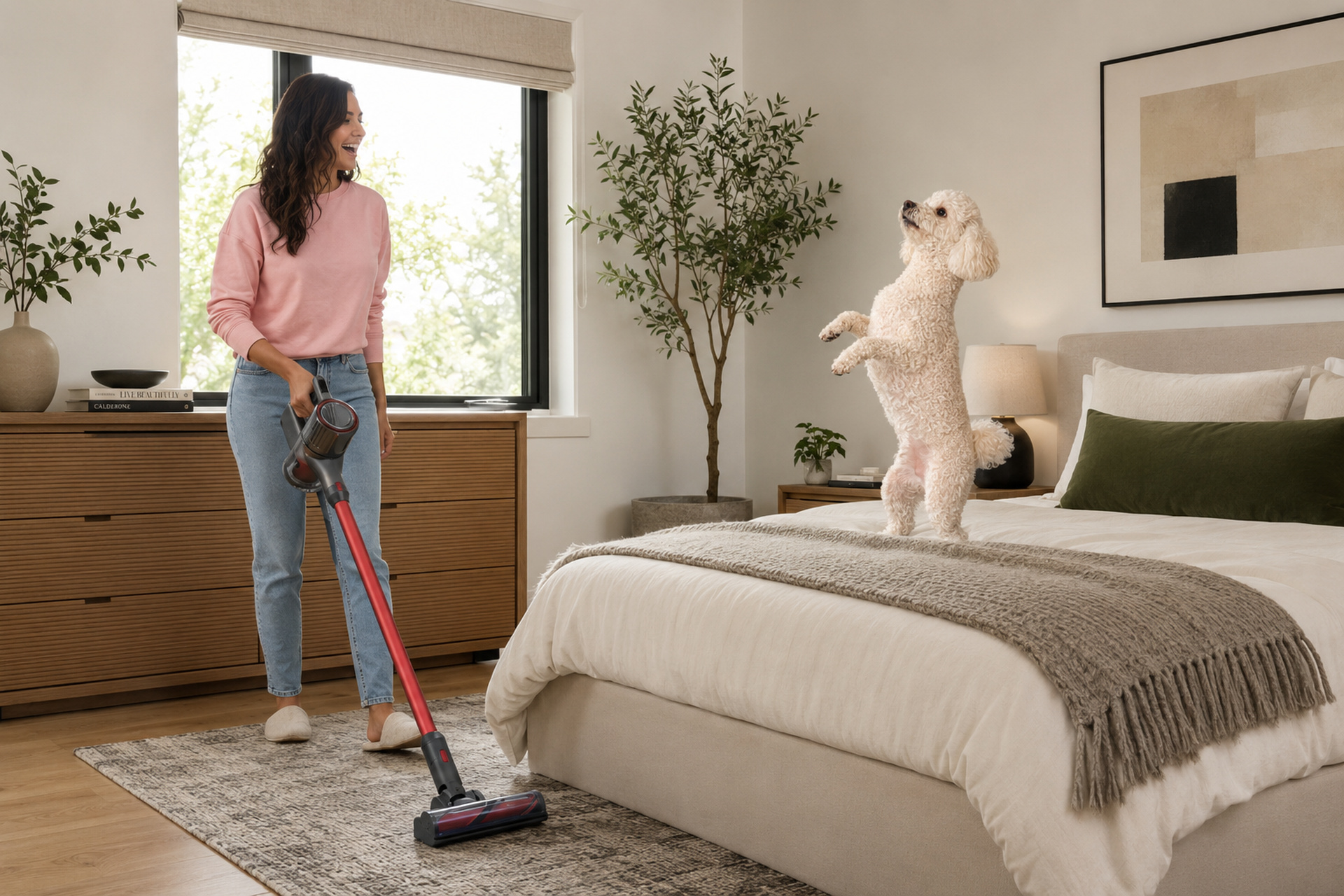
Dyson keeps a place at the premium end. Eureka and Dirt Devil cover value-minded options. The tradeoffs are physical, so consider the weight, cord, sound, and storage space. If your pet leaves when the vacuum appears, keep their exit clear. Never corner them with the machine.
Cordless sticks are daily helpers in many pet homes
The strongest case for a cordless stick is often that it stays within reach. You can catch litter outside the box before it travels. You can clear fur beneath a favorite chair without starting a full cleaning session. That convenience can make short, frequent passes feel reasonable.
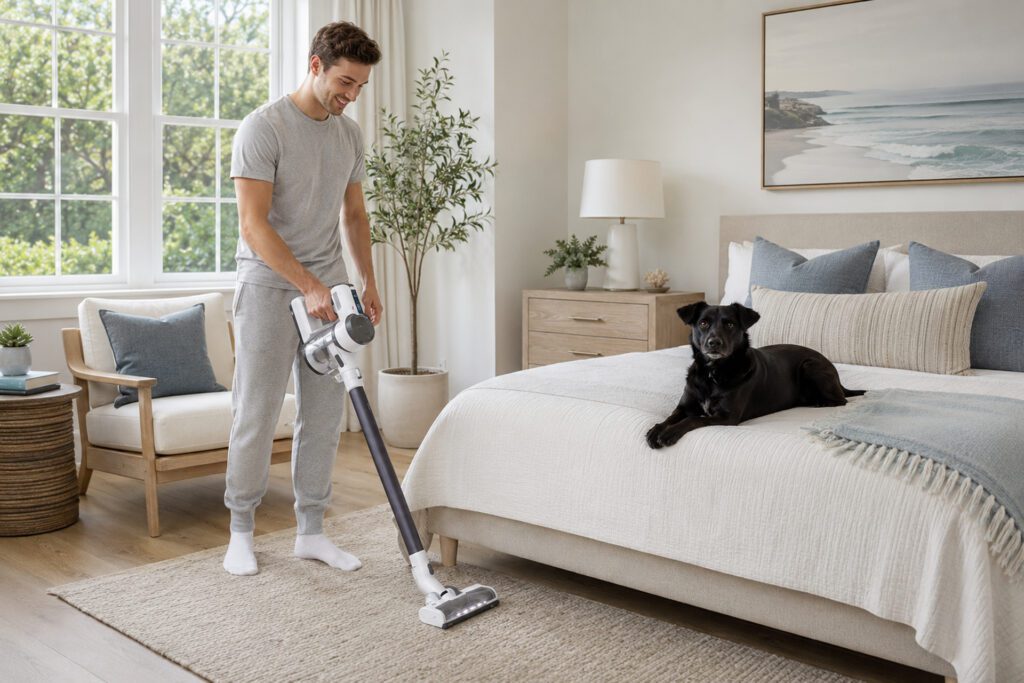
Dyson remains the premium cordless benchmark. Shark and Tineco make a practical case for frequent use. Samsung and LG broaden the field, and Miele joins it with the Triflex line. A cordless pet vacuum cleaner can still fill quickly while your pet is shedding heavily. Battery limits also matter when every room needs attention. The Best Cordless Vacuum for Pet Hair guide narrows that convenience-versus-capacity balance to cordless models.
Handheld vacuums are the spot-clean specialists
Some pet messes announce themselves from one exact place. It might be the sofa cushion your dog favors. It might be a carpeted step or the litter granules along the wall. The car vacuum for dog hair problem often waits for direct sunlight to reveal it.
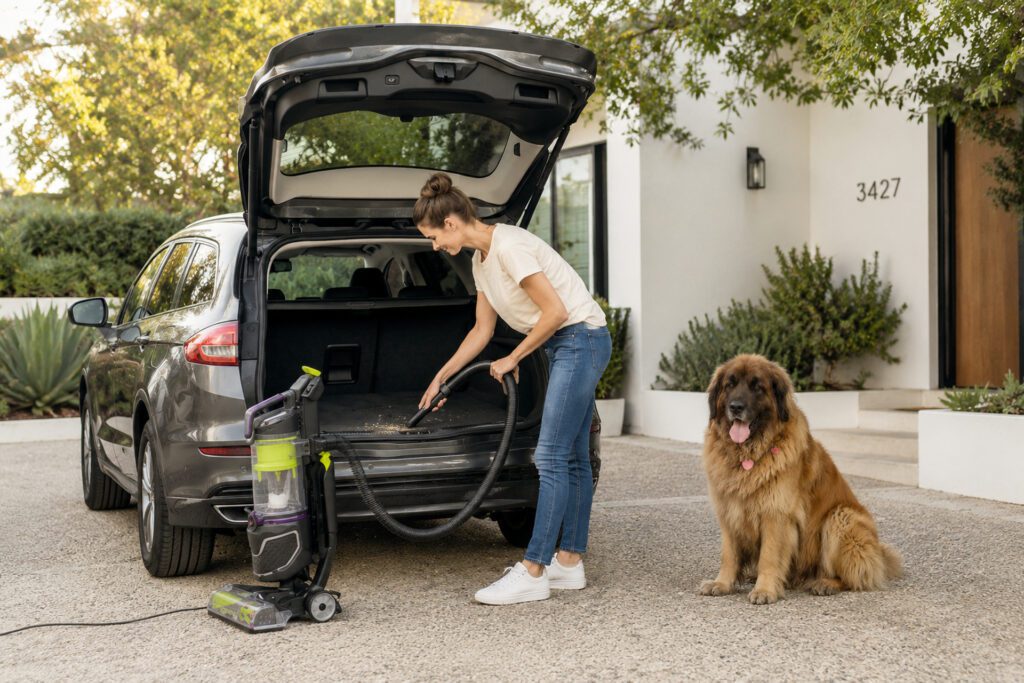
BISSELL is especially relevant for powered pet tools aimed at furniture and upholstery. Shark covers the quick-grab end. Dyson and Tineco add secondary handheld options. A handheld pet hair vacuum should not be expected to clean every floor. Its strength is being close, quick, and suited to a small mess.
A handheld vacuum for cat hair can live near the room where it is needed. It does not have to wait in a distant closet. The Best Handheld Vacuum for Pet Hair guide focuses on this smaller, deliberately targeted role.
Robot vacuums are maintenance cleaners, not magic
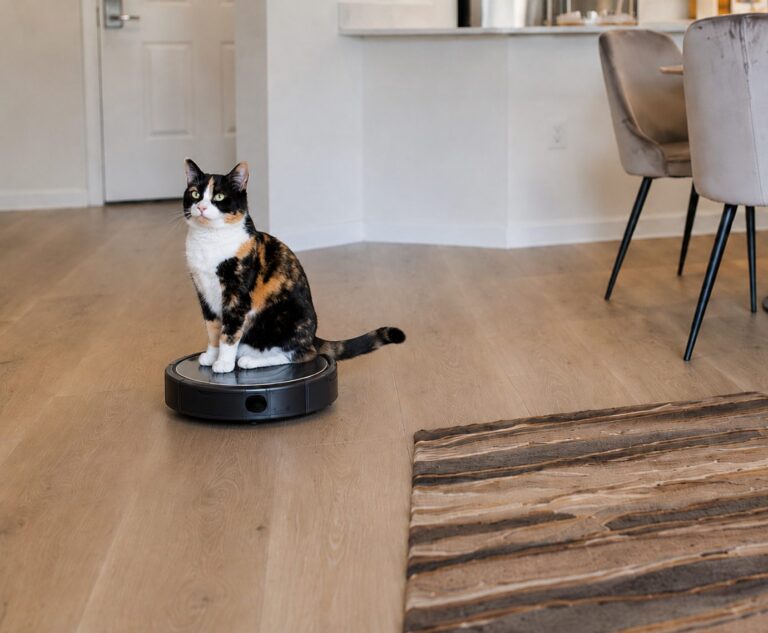
A robot can keep loose fur from becoming tumbleweeds across an open floor. It can revisit the litter-box path each day. That is why a robot vacuum for cat hair may earn its place without replacing the main vacuum.
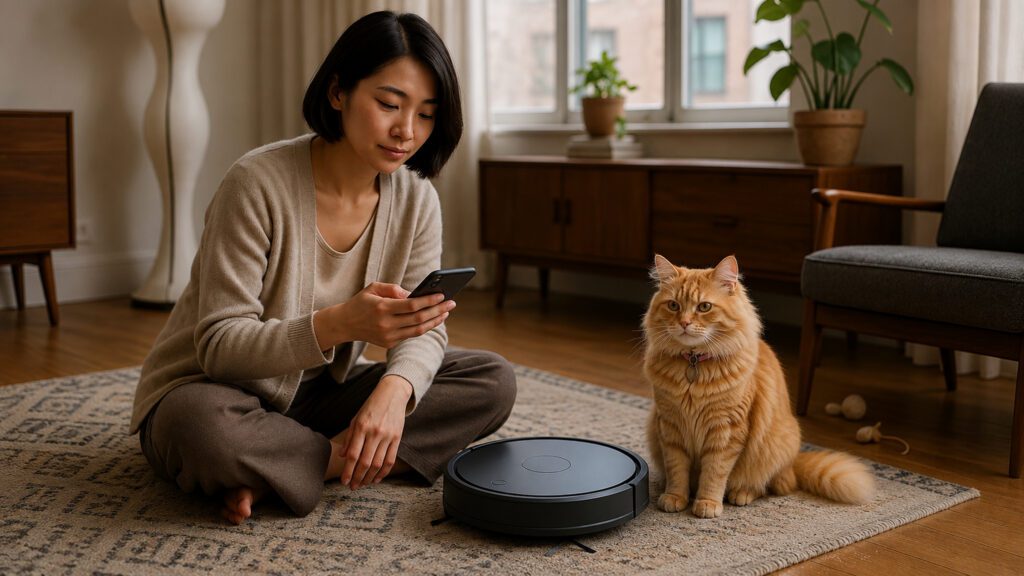
Roborock and eufy are both worth considering, but the better fit depends on your floors, where your pet leaves the biggest mess, and how much brush and dock maintenance you’re willing to take on. Compatible Roomba models add model-specific obstacle avoidance and mainstream familiarity. Narwal is more compelling for premium robot-mop convenience than as a blanket deep-cleaning replacement. Shark and ECOVACS remain credible parts of the wider field.
Your floor still needs preparation. Pick up cords and toys, and think about bowls, low bedding, scattered litter, and possible accidents. No obstacle system sees everything, so spot-clean any accident with an enzyme cleaner before the robot runs. Your pet gets a vote as well. Let them watch the machine from a comfortable distance. Do not expect them to share the floor immediately. One cat may watch from the sofa, while another needs a gradual introduction and a safe retreat. Brushes, filters, bins, and docks also need care. The Best Robot Vacuum for Pet Hair guide weighs that automation-and-upkeep exchange at the model level.
Canisters stay relevant because control still matters
A canister trades trendiness for reach and control. That can be valuable when your pet’s fur sits under furniture or along a staircase. It can also help when upholstery needs a more deliberate tool. Miele is the clearest active example among these choices. Its Cat & Dog lineup combines flexible tools, sealed cleanup, and whole-home reach.
Canisters may not be the first image that “best pet vacuum” brings to mind. They still suit readers who want strong suction and thoughtful attachments. Bagged disposal can also limit contact with collected fur and dust. For some people, that benefit outweighs flashier features elsewhere.
Wet dry cleaners and carpet cleaners are adjacent, not replacements
Muddy paw prints change the problem. On sealed flooring, a vacuum-mop or wet dry cleaner can collect debris and wash the surface. The BISSELL CrossWave Pet Pro is designed for that mixed-surface role. Vacuum-and-mop robots from Narwal, Roborock, eufy, Roomba, and ECOVACS sit in the same broader space.
They do not become main dry pet vacuums. Wet systems help with certain hard-floor messes. They do not remove heavy hair from rugs, carpet, upholstery, stairs, and corners in the same way. Buy one because paw prints and sealed-floor spills are part of your routine. Do not assume the word “pet” makes every cleaning tool interchangeable.
What to Consider When Choosing
Start with the surface, not the brand
Follow your pet around the home—figuratively—and note where cleaning is hardest. Carpet needs agitation for embedded hair. Hard flooring needs a head that lifts litter and kibble instead of batting it away. Stairs and upholstery reward useful attachments and a machine you can carry comfortably.
Your pet’s favorite places may matter more than total square footage. A small room can create a demanding problem when every surface collects fur. Pet Hair on Hardwood, Tile, Carpet, and Stairs: What Your Vacuum Actually Needs to Do breaks down those surface differences in more detail.
Then think about hair load and cleaning frequency
One short-haired cat in a small apartment may ask less of a vacuum than two shedding dogs. That comparison is only a starting point. A thick undercoat, seasonal shedding, grooming, and fabric furniture can change the picture. The best vacuum for long dog hair must resist wrap as well as lift.
Several dogs can turn a weekly reset into a serious project. Our best vacuum for multiple dogs discussion handles that situation more closely. Uprights, canisters, and stronger cordless sticks often suit deeper resets. Cordless and robot models become appealing when you prefer frequent control. Let the speed of the returning mess guide you.
Emptying, filters, and dander deserve their own decision
The strongest carpet pickup may not be your first priority. If you need a vacuum for pet hair and pet dander, sealing and filtration may matter more. Check how a full bin or bag releases too. More contained handling may be worth more to you than another accessory. The American College of Allergy, Asthma & Immunology recommends a vacuum with a HEPA filter as one way to reduce dust and pet dander, but no filter or vacuum can promise allergy relief.
If cleaner emptying matters more than raw pickup, Mildly Allergic to Your Own Pet? HEPA Filters, Sealed Vacuums, and Cleaner Emptying walks through what happens after the fur and dust leave the floor.
Storage, weight, and maintenance decide whether you will use it
Imagine the vacuum between cleanups. Where will it live? Can you carry it to the stairs? Will you empty the bin, replace the bag, clean the brush, and tend the filter? Those ordinary steps decide whether a capable machine becomes part of your routine.
A powerful vacuum avoided in the closet will not help beside your pet’s bed. The same test applies to a large robot dock in a small room. It also applies to a cordless bin that fills before the floor is done. Choose the friction you can accept.
Common Concerns You May Run Into
One vacuum may cover most of your home. Few are equally graceful with deep carpet hair, loose floor fur, upholstery, litter, stairs, and the car. A main machine plus a small helper can be the honest answer. It is an option, not a requirement. Begin with the mess that causes the most frustration.
Robots inspire their own version of wishful thinking. Scheduled cleaning works best when the floor stays ready and your pet feels comfortable. A robot cannot clean furniture or stairs. It also adds brushes, filters, bins, and perhaps a dock to your maintenance routine. Automation reduces one kind of effort rather than erasing all of it.
The “pet” badge deserves skepticism too. Sometimes it signals a useful brushroll or a genuinely good upholstery tool. Sometimes it is ordinary hardware in more enthusiastic packaging. Look at what touches the floor and how debris is contained. Then consider emptying, maintenance, and how comfortably you can use the machine around your pet.
Which Type Is Right for You?
If you are ready to compare specific machines, the ranked recommendations can help you choose among vacuums that fit your pet’s mess and your routine.
Still deciding between cordless, upright, canister, and robot designs? Our vacuum cleaner for pet owners guide helps you pick the one that fits where your pet leaves the mess and how you like to clean it.
Quick recurring cleanup points toward cordless options. Scheduled floor maintenance points toward robots. Mess on sofas, stairs, car seats, and litter edges strengthens the case for a handheld. Each form factor earns its place only when those strengths match the pet’s mess.
Cost Considerations
Price stretches widely because an entry-level upright and a self-managing robot are different purchases. Dirt Devil and Eureka occupy the value-upright end. Premium Dyson cordless models and Miele canisters ask more up front. Systems from Roomba, Roborock, Narwal, eufy, Shark, and ECOVACS add another level of hardware and automation.
Remember what comes after checkout. Bags, filters, brushes, batteries, dock bags, and mop pads can all add to long-term cost. A sophisticated dock may remove work from your day while adding consumables. Choose the form that suits your pet and routine first. Then compare prices among machines that can do what you need.
FAQ
What makes a pet vacuum different from a regular vacuum?
A pet vacuum is built for, or especially capable with, recurring pet mess. That includes shed hair, upholstery fuzz, scattered litter, and dander-bearing dust. Useful differences usually appear in the floor head, tools, emptying, and ease of use. There is no magical “pet mode.”
Do I need a robot and a regular vacuum?
Possibly. A robot can keep open floors from collecting as much daily fur and litter. A regular vacuum handles deeper carpet, furniture, stairs, and spots the robot cannot reach. Whether you need both depends on where your pet sheds. It also depends on how much maintenance cleaning you want to automate.
Is a cordless stick enough for heavy shedding?
It can be. A strong cordless works well when frequent short passes suit your routine. If your pet packs hair into carpet, a larger machine may be easier to live with. The same is true when a compact bin fills too quickly. An upright or canister may then make the better main vacuum.
What matters most if I care about dander and cleaner emptying?
Think past raw pickup. Look at how the vacuum contains collected dust and how you remove it. Check how the filters and seals are arranged. These features can help limit what escapes during handling. They cannot guarantee allergy relief.
Are wet dry vacuums the same as pet vacuums?
No. A wet dry cleaner or vacuum-mop can help with certain hard-floor messes. It is not the same as a main dry pet vacuum cleaner. That main vacuum removes fur from carpet, upholstery, stairs, and the rest of the home.
Final Summary
The best pet vacuum does not start with a brand logo. It starts with the trail your pet leaves through your home. Notice the hair in carpet, loose fur along baseboards, litter outside the box, or paw prints on the floor. Think about the sofa too. Once you know where the mess lives and how fast it returns, the choices narrow.
Choose for those surfaces and for the amount and kind of hair your pet sheds. Choose for the cleaning rhythm you can sustain. Consider the sound and movement your pet can comfortably tolerate. Then be honest about storage and upkeep. The best pet hair vacuum helps you care for the home you share. It should not ask you or your pet to organize life around the machine.