The best vacuum for tile floors pet hair is usually not the same vacuum that feels best on carpet, and that is exactly where people get tripped up. Tile exposes scatter. Hardwood exposes fine dust and visible hair. Carpet exposes whether the machine can actually pull fur out instead of just looking busy. Stairs expose weight, reach, and whether the vacuum becomes annoying the second you leave the main floor.
Surface mismatch is one of the most common shopping mistakes in pet homes. A vacuum that feels smooth and satisfying on hardwood can shove litter into grout lines. A vacuum that does heroic work on carpet can feel clumsy in a narrow stairwell. A robot that keeps open floors looking decent can still leave the edges around the litter box looking rude.
If you want the broad category reset first, Pet Vacuum Guide: Choosing the Right Vacuum for Pet Hair at Home is the better overview. If your frustration is tied to one floor type or one room, the surface logic is what usually clears things up.
Hardwood needs clean pickup and less drama
Hardwood is the floor that makes mess visible fast. You notice the fur tumbleweeds, the dusty halo under the side table, and the trail from the litter box almost immediately. On hardwood, the right vacuum usually comes down to control more than brute force.
Cordless sticks and canisters tend to shine here because they are easier to steer and easier to use often. Dyson, Shark, and Tineco are all useful examples of the daily hard-floor branch. Miele makes a strong case when you want more attachment control and cleaner handling. A hardwood floor vacuum pet hair setup should leave the floor cleaner, not just move the mess three inches to the left.
Tile adds grit, grout, and litter scatter
Tile is where the best vacuum for tile floors pet hair question gets more specific. Pet hair matters, but it is only half the story. Tile often comes with tracked litter, kibble crumbs, dust at the wall line, and grout that seems designed to hold onto exactly the wrong kind of debris.
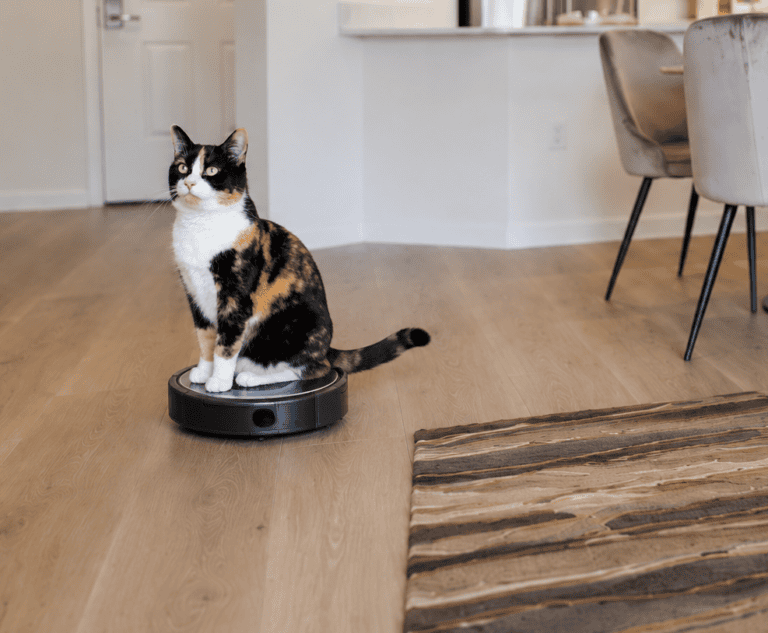
Tile rewards calmer floor-head behavior. A vacuum that is too aggressive can scatter dry litter instead of picking it up cleanly. A handheld suddenly matters more than people expect here, especially around corners and the little disaster zone outside the box. Robots can help with open tile floors, especially from Roomba, Roborock, eufy, or Narwal, but they are still weaker at tight edges and stubborn grout-line grit than the fantasy version of robot ownership suggests.
Carpet is where weak vacuums get exposed
Carpet is the bluntest test in the house. It does not care how sleek the vacuum looks or how many smart features are on the box. If the machine cannot pull pet hair out of the pile, the relationship ends there.
That is why the best vacuum for pet hair and carpet is so often a stronger manual vacuum. Shark and Bissell still make the clearest mainstream case in this part of the cluster. Dyson can work very well in the right home, especially when the carpet is not too punishing and the vacuum is used often. Miele stays relevant here because strong carpet tools plus cleaner emptying are a compelling combination in pet-heavy homes.
If carpet is the main battle, be skeptical of anything that sounds too easy. A vacuum for pet hair on carpet needs real floor performance. A robot can help keep the surface from looking furry all week, but it is still not the thing you reach for when the rug actually needs help.
Stairs turn a decent vacuum into a bad one very quickly
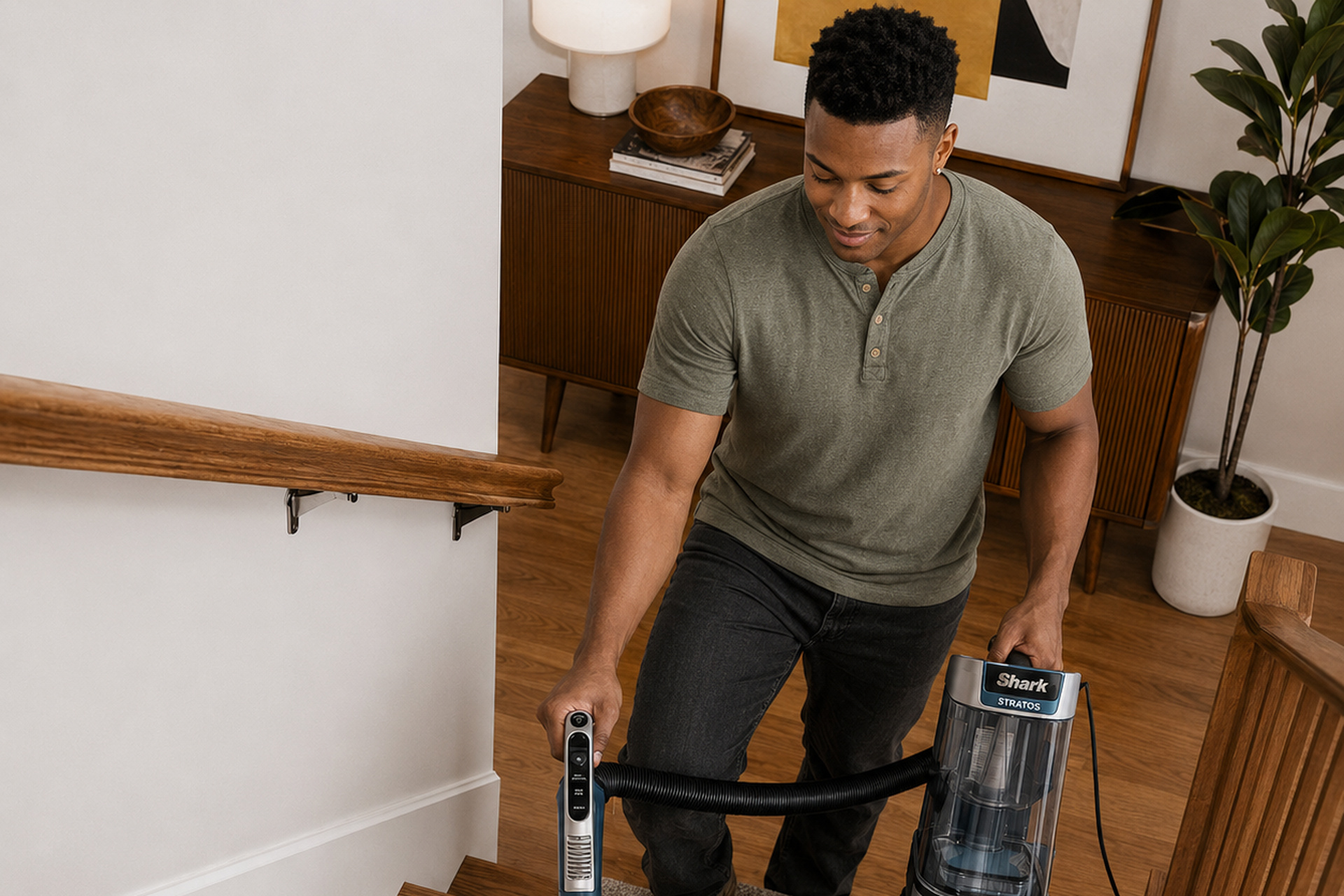
The best vacuum for stairs and pet hair has to do more than clean well. It has to be tolerable to carry, angle, and maneuver while you are already in an awkward position. Stairs punish bulk and bad tool design faster than almost anywhere else in the house.
Canisters, convertibles, and handhelds tend to make more sense here than large uprights. Miele earns attention because the hose-and-tool reach is part of the appeal. Dyson and Shark are useful if a cordless or convertible form is easier for your routine. Bissell and smaller handheld-style tools matter when the issue is fur on carpeted steps, soft stair corners, or upholstery nearby. Uprights can still clean stairs, but that does not make them pleasant stair vacuums.
Mixed floors reward versatility, not perfection
Many pet homes are not mostly one thing. They are hardwood in one room, tile in another, rugs in the middle, and carpet on the stairs. That is where a cordless or a well-chosen canister starts making more sense than chasing one perfect floor type.
Shark, Dyson, and Tineco all have a real place here because quick repeat cleanup matters in mixed-floor homes. Miele makes more sense if you care less about speed and more about control, reach, and calmer handling. Robots also have a role, but it is still a maintenance role. Roborock and Roomba are the easier everyday robot examples. eufy and Narwal get more interesting if the house is hard-floor heavy and you want mopping in the routine too. If that is your next question, Best Robot Vacuum for Pet Hair goes further.
Let the most annoying surface decide the purchase
If hardwood and tile are the surfaces driving you crazy, prioritize clean pickup, edge control, and less scatter. If carpet is the real problem, prioritize a stronger manual vacuum. If stairs keep getting postponed, prioritize weight, reach, and attachments. If every room seems to want something different, Cordless, Upright, Canister, or Robot? How to Choose a Pet Vacuum by Cleaning Job is the better next read because the problem may be tool type more than floor type.
That is the useful mental shift here. Surface does not just change where the mess sits. It changes what the vacuum actually needs to do. Once you know which surface keeps disappointing your current setup, the shopping usually gets much easier. ARTICLE END