Shopping for pet gadgets can make a normal Tuesday look wildly under-engineered. Apparently your cat needs a bathroom with an app, your dog needs a fitness dashboard, and the water bowl has been waiting its whole life for Wi-Fi.
Some of these smart devices are excellent. A feeder can protect breakfast when your commute falls apart. A tracker can shorten the worst kind of search. A camera can reveal that the mysterious 2 p.m. barking is actually a delivery-truck feud—and save the clip for the family chat.
The misses add more tapping, cleaning, and subscriptions than delight. If the dashboard improves but your pet’s day does not, we have overachieved in the wrong direction.
The difference is rarely the number of connected features. The best pet gadgets make something meaningful better for your pet in your home. They fit your pet’s body and personality and stay dependable when real life gets messy. They support the care you already give without pretending to replace your veterinarian, trainer, secure containment, or good judgment.
Done well, pet technology is not cold or clinical. It is another way to spoil them brilliantly: more freedom, more play, more reassurance, and more chances to understand the fluffy family member at the center of your home.
What Counts as a Smart Pet Gadget?
Pet technology arrives with a vocabulary problem. Retailers use smart, connected, automatic, electronic, and AI almost interchangeably, even though those words describe different things.
Smart pet products sense, decide, or adapt
A smart device notices something and responds. A microchip feeder recognizes your pet before opening. A litter box waits until your cat has left before starting a cleaning cycle. A wearable turns motion into activity trends you can follow.
The intelligence may be modest, and that is perfectly fine when it serves your pet. A sensor that keeps the wrong cat out of prescription food can be more impressive than a device producing a glossy annual report on your terrier’s “wellness journey.”
Connected pet products communicate
A connected device sends information to or receives commands from another device, usually through Bluetooth, Wi-Fi, cellular service, or a proprietary base station. That connection can bring remote alerts, video, location updates, shared caregiver access, and schedule changes from almost anywhere.
That can feel a little magical: breakfast adjusted from the train, a tracker checked from the trail, or a cat-cam opened during a long afternoon. The trick relies on the gadget, power, network, app, account, and sometimes a cloud service. Great connected products keep that backstage machinery out of your way.
Automatic products follow a trigger or schedule
An automatic feeder can release food at set times. A fountain circulates water. A door opens for a recognized tag. An electronic toy starts a play cycle when your pet is ready for action.
Automation runs many smart routines. Connectivity adds remote control, history, sharing, and alerts that let you participate from wherever the day takes you.
Wearables travel with your pet
Pet wearables include trackers, activity monitors, smart collars, electronic tags, and some medical monitoring devices. The gadget itself becomes a big part of your decision: Is it comfortable? Is the attachment secure? Is it too heavy for a small pet? How often must it charge? Does the tracking method match where your pet actually goes?
Once wearable data reaches a veterinarian, insurer, platform, or research program, the story gets more complicated. For the gadget itself, ask a simpler question: Is the information reliable enough to guide an action you can take for your pet?

Start With the Moment You Want to Make Better
Before comparing features, picture the moment you want technology to improve: a calmer breakfast, a safer backyard adventure, a more playful afternoon, or the comfort of seeing your pet while you are away.
And if the gadget also looks ridiculously cool? Excellent. For Barkytech readers, delight is part of the point. The sweet spot is technology that makes you grin and makes life better for your pet.
“I want mealtimes to feel easier and more personal”
Start with an automatic pet feeder: timed feeders, app-controlled portion feeders, refrigerated wet-food systems, or access-controlled feeders. Think about your pet’s food, portion needs, eating style, cleaning preferences, and whether another pet is likely to stage a pantry heist.
If your pet takes medication with meals, follows a medical diet, bolts food, or distrusts new bowls on principle, ask your veterinarian about the feeding plan first. Then choose smart hardware that supports your pet’s food and routine beautifully.
“I want more peace of mind about where my pet is”
Separate identification from active tracking. A visible tag and registered microchip help someone contact you after finding your pet. Pet GPS trackers and cellular, radio-frequency, and Bluetooth devices actively help you locate your pet, with different ranges, update speeds, battery demands, and network needs.
A suburban escape artist, a rural adventurer, an indoor cat hiding in the garage, and a cat roaming beyond the yard all need different technology. The right tracker is the one designed for your pet’s version of the world.
“I want smarter access or boundaries”
Decide whether you want selective entry, scheduled outdoor access, wildlife protection, separation between pets inside the home, or electronic containment outdoors. Microchip pet doors, smart doors with app schedules, wireless dog fences, and connected boundary systems solve different versions of access.
The technology should match the setting. An electronic boundary is a trained signal rather than a physical wall, while a selective door still needs to fit your pet, the opening, the climate, and the household’s safety plan.
“I want to feel closer while we are apart”
A pet camera lets you catch goofy moments, see whether your pet settles, discover who starts the wrestling match, and keep the best clips for everyone who loves them. Choose this route when a little visibility would turn time apart into something calmer—and much more shareable.
“I want to make playtime even more exciting”
Electronic cat toys, interactive dog toys, smart puzzle feeders, remote treat dispensers, and dog communication buttons can add movement, novelty, discovery, and another way to interact. Follow what your pet already loves to chase, sniff, solve, or tell you.
Technology can keep the fun fresh when it follows your pet’s play style and arrives with your attention. Aim for more great moments together, not maximum stimulation for its own sake.
“I want to understand health and wellness changes earlier”
Connected scales, smart litter boxes, feeding records, and wearable sensors can turn little observations into clearer patterns. They give you more ways to notice when your pet’s usual rhythm changes—even when your pet cannot explain it.
A meaningful change is a loving reason to pay closer attention or call your veterinary team, and to bring the pet health data along. It is not a diagnosis delivered by push notification.
“I want a fresher home with more time for the fun stuff”
Robot vacuums, pet vacuums, pet air purifiers, automatic cat litter boxes, and electronic groomers can make the home feel cleaner with far less repetitive effort. The best question is not “How automated is it?” It is “Will this particular machine handle our particular brand of fur, litter, and chaos?”
The household wins when the device fits the mess and the floor plan without turning you into the vacuum’s personal assistant.
Choose for Your Specific Pet
A gadget can thrill one pet, bore another, and deeply offend a third. Species matters, but so do age, size, coat, face shape, sensory needs, appetite, anxiety, chewing, play style, and your pet’s history with similar products.
Dog gadgets need the right scale, strength, and training
Dog gadgets have to handle more variation in body size and enthusiasm than the lifestyle photos suggest. A collar component that disappears on a large dog may overwhelm a toy breed. A feeder that serves a measured meal for one dog may be no match for another dog’s problem-solving jaw. An electronic boundary can become part of a trained routine, but it is not an invisible brick wall.
Check measurements against your dog, including neck circumference, body weight, shoulder height, gait, and reach. Then add personality: chewing, pawing, bolting, guarding, sound sensitivity, and tolerance for anything worn on the body.
Training is part of the product experience. If success asks your dog to enter, wait, touch, wear, return, or ignore, make time for gradual reward-based learning. The American Veterinary Society of Animal Behavior recommends reward-based dog training for training and behavior modification. A collar’s Bluetooth connection does not make an aversive method kinder.
Cats need control, quiet, and a convincing reason
Many cat gadgets succeed or fail at the diplomacy stage. The motor is strange. The entrance is wrong. The bowl touches whiskers. The app says “meal completed,” while your cat says the household has violated several treaties.
Look at sound, motion, scent, entry height, escape routes, resource placement, and whether another cat can block access. In multi-cat homes, a gadget can redraw the social map: who waits nearby, who gets startled, and who controls the narrow passage.
The Feline Veterinary Medical Association describes a healthy indoor environment as including safe places, separated key resources, chances for play and predatory behavior, predictable positive interaction, and respect for feline senses. That broader environmental framework helps you choose technology that adds more of what your cat loves.
Puppies and kittens turn cables, docks, and moving parts into a safety review
Young pets investigate first and read the quick-start guide never. Powered devices add cords, batteries, lids, hinges, food residue, and moving mechanisms to a home already being explored with teeth and paws.
The American Kennel Club’s puppy-proofing advice recommends looking at the room from puppy level and securing electrical cords and reachable objects. That low-angle inspection should happen before a feeder, camera, toy dock, or charging cable moves in.
Introduction matters, too. UC Davis advises gradual, positive crate training and warns against forcing a puppy, using confinement as punishment, or moving faster than the puppy can tolerate. The same principle applies to many gadgets: smart technology can support a routine, but trust still deserves time.
The Main Types of Smart Pet Gadgets
The wish list gets easier once you know what would delight or reassure both of you. Here is what changes from one smart-gadget family to the next.
Smart feeders and water devices
Feeding technology ranges from timers to app-controlled portion feeders, refrigerated wet-food systems, microchip-access bowls, slow-feeding puzzles, fountains, and water monitors.
A timed feeder can make breakfast gloriously punctual, especially for early risers, small frequent meals, or days when you cannot be home at the usual time. For big appetites, an automatic dog feeder for large dogs needs a hopper and lid built for the job. A microchip cat feeder can end a very specific household food war when one cat needs a different diet and the household thief has a résumé.
Look for confirmation that a portion actually reached the bowl, not merely that the motor turned. Consider hopper shape, food size and texture, cleaning access, freshness, backup power, and whether your pet can break in. For wet food, a refrigerated wet cat food dispenser keeps meals chilled until serving; follow the food manufacturer’s and veterinarian’s handling guidance.
Many water fountains keep water moving through a filter, and Cornell reports that some cats drink more from them, while preferences vary. Choose one you can clean easily, introduce it while another water source remains available, and keep backup water ready for outages or travel.
A feeder or fountain should make care smoother and your pet’s routine more dependable. Three alerts, a proprietary filter, six fiddly parts, and a cat who refuses to approach are signs that you picked the wrong model—not the wrong technology.
Trackers, identification, and containment
Microchips, trackers, and fences all sit under the safety banner, but they solve three very different problems.
A microchip is permanent identification. According to the American Veterinary Medical Association, it contains a unique identification number, has no battery, and must be read with a scanner. It provides identification, not live tracking. Its value depends on registration and current contact information, and it does not replace a visible collar tag.
If you want to understand how clinics and shelters read chips, our guide to the pet microchip scanner explains that part of the identification chain.
Active trackers handle the live-location question. GPS/cellular trackers can cover broad areas where service exists, though they need charging and may require a subscription. Our picks for the best GPS dog collar and best cat GPS tracker compare those trade-offs model by model. Bluetooth tags use nearby phones or short-range finding and are not equivalent to dedicated live location. Radio-frequency trackers can work without cellular service, with their own range and receiver experience.
Electronic containment handles a third problem. A Wireless Dog Fence creates a trained electronic boundary rather than a physical wall, so it cannot stop wildlife, another dog, or a person from entering. That distinction helps you choose among GPS, radio base-station, buried-wire, and connected tracker-and-boundary systems. Terrain, layout, signal behavior, equipment, and reward-based training all shape the fit.
For any collar-mounted device, check weight, shape, attachment, breakaway needs for cats, snag risk, charging frequency, and whether coat or body position affects performance. The tracker your pet can wear comfortably and consistently is the tracker that gets to join the adventure.
Smart doors and selective access
An electronic or microchip-reading pet door can give your pet more independence while limiting access to recognized pets. A connected smart pet door may add schedules, direction controls, remote locking, and activity history.
The buying decision is physical before it is digital. Measure your pet’s width and shoulder height, the installation surface, and the step-over height. Consider timid pets, long bodies, weather, wildlife, multiple pets, and whether one determined family member may tailgate another through the opening.
Our automatic pet door guide goes deeper into styles and fit. Here, look for connected features that make daily access easier: clear lock status, flexible schedules, reliable recognition, useful history, manual controls, and a power plan.
A smart door earns its place when it becomes part of the household rhythm. Your pet gets freedom, you get control, and the local raccoon does not get an invitation.
Pet cameras and remote interaction
A well-placed pet camera can show whether your dog settles, reveal your cat’s secret afternoon routine, and confirm a walker arrived. It can also save moments worth sending to everyone who considers your pet a minor celebrity.
Choose placement around what you want to see. A wide living-room view may miss the food and water station, while one camera aimed at the favorite nap-and-watch spot may explain the whole day. Compare night vision, field of view, local versus cloud storage, event detection, two-way audio, treat tossing, and shared access.
Test two-way talk and dispensers with your pet. Some pets find a familiar voice reassuring; others go looking for the person who has apparently become trapped in a tiny speaker. A treat feature can create a joyful check-in when the sound, portion, and launch style suit your pet.
Seeing a problem is not the same as being able to respond, so pair remote visibility with reachable emergency contacts and clear sitter instructions. That practical plan lets the camera do what it does best: add connection, context, and a surprising amount of comedy to the hours you spend apart.
Electronic toys, puzzle devices, and communication tools
Play technology can add movement, novelty, foraging, and training opportunities. The possibilities include motion toys, scheduled toys, app-controlled chasers, electronic puzzle feeders, remote treat devices, and communication buttons.
Follow the fun your pet already seeks. A smart chase toy may thrill a cat who loves to stalk and pounce. An electronic scent puzzle may light up a dog who happily works for food. A button board may suit a household ready for patient, consistent communication practice.
Best Friends Animal Society notes that interactive play can support exercise and the human-cat bond, that new self-play toys should be observed at first, and that long-string toys require supervision. Its cat-enrichment guidance helps smart-toy shoppers focus on the way their cats naturally love to play.
Automatic play should not mean endless play. Check for removable pieces, cords, pinch points, overheating, entrapment, chewing, and frustration. Watch the first sessions, tune the settings, and rotate smart toys so each return feels exciting.
If communication buttons interest you, our guide to dog talking buttons covers setup and expectations. With consistency, buttons can become a charming shared cue system and one more way for your dog to participate in family life. When you are ready to shop, compare the Best Dog Talking Buttons for Communication or the Best Talking Buttons for Cats.
Health monitors, wearables, smart scales, and DNA tests
Health gadgets can capture patterns your memory would miss. A wearable may track movement or rest. A connected scale can make weight checks easier. Feeding and litter devices can build histories over time.
Those measurements mean more when you know your pet’s normal pattern and use the device consistently. A sudden activity change may inspire closer observation. A gradual trend may help you explain timing to your veterinarian. An alert can be wrong, and silence can be falsely reassuring.
AAHA says pet wearables may allow real-time monitoring and repeated home measurements may improve understanding. Its broader telehealth guidance also warns about missed physical cues, missing diagnostic testing, privacy breaches, and malfunctions; the technology should augment, not replace, in-person care.
Before buying a health-oriented device, ask what it measures directly and what it infers. Then check whether its claims have been independently or clinically validated, whether you can export raw data, and whether your veterinary team can use the output. A beautiful score is not automatically a meaningful measurement.
Senior pets and pets with sensory changes have their own electronic options, from activity monitors and pet treadmills to illuminated or vibration cues and veterinarian-guided red-light devices. Because comfort and medical needs vary so widely, choose these with closer attention to fit and veterinary guidance.
DNA kits answer different questions about ancestry, traits, relatives, or selected health variants. Our pet DNA test guide explains how to compare those promises. Treat health findings as information to discuss with your veterinarian, not a standalone diagnosis or fate.
Smart litter boxes, vacuums, air care, and cleanup machines
Smart cleanup technology earns its place by making the home fresher and freeing up more time to enjoy it with your pet. A device that improves the same routine every day can feel like a tiny domestic miracle.
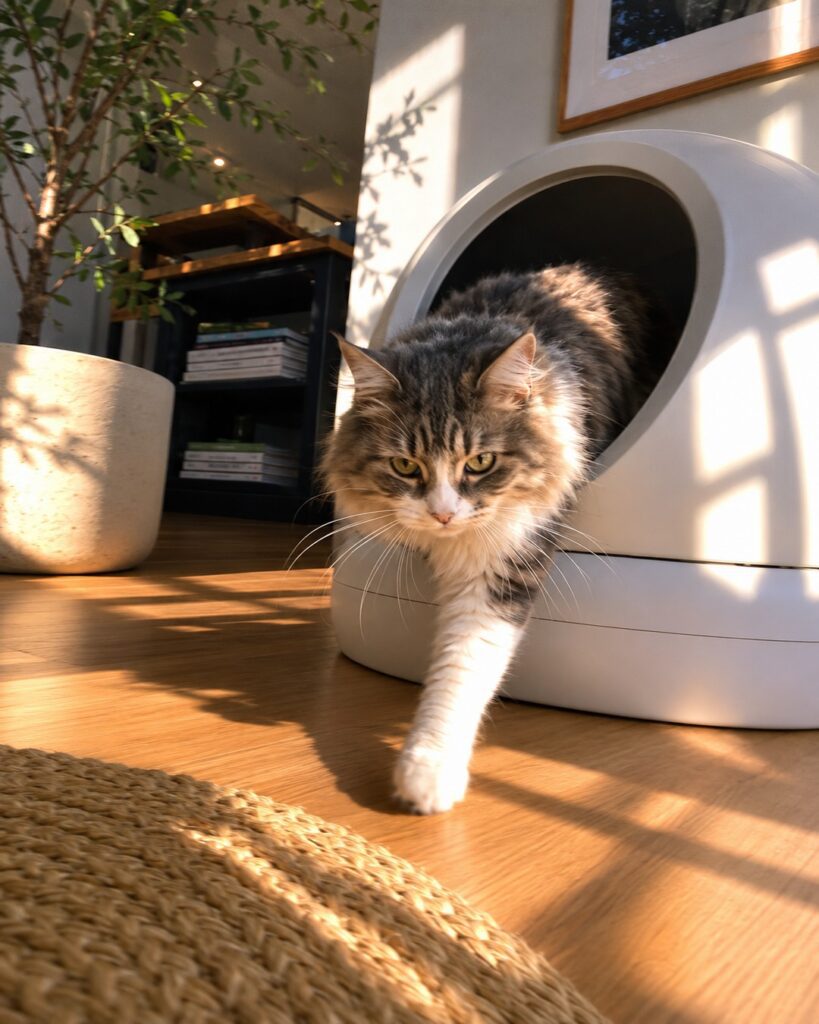
When your cat accepts it and the mechanism works reliably, a well-placed smart litter box is a clear upgrade. It removes waste sooner, makes odor easier to manage, and may add useful visit history. The win depends on choosing the smart design your cat will happily use.
Cornell’s Feline Health Center notes that many cats prefer uncovered boxes and that entry height, cleanliness, litter, and box count matter. Those feline preferences point toward better technology choices, not away from technology. A cat who dislikes an enclosed rotating globe may be much happier with an open automatic system.
Compare entrance size, interior space, litter compatibility, cleaning access, cycle delay, sound, multi-cat identification, waste capacity, and sensor behavior. Introduce the new system gradually, then let your cat’s confident, consistent use confirm the fit.
Vacuums and air cleaners serve the home your pet fills with fur, dander, litter, and personality. A pet vacuum should match the coat, floors, furniture, noise tolerance, and cleaning pattern. A robot vacuum for pet hair can keep open floors impressively tidy, though cords, thresholds, deep rugs, pet bowls, and surprise accidents all affect the match. For those surprise accidents, spot-clean with an enzyme cleaner before the robot finds them.
Properly sized and maintained air cleaners can reduce some airborne particles, but the EPA says filtration complements source control and ventilation. Our pet air purifier buying guide explains how to match the unit to the room and keep up with the filters, and our best air purifier for pets picks compare current models. An air cleaner can improve the room; it cannot explain your pet’s symptoms.

The Pet Gadget Worth-It Test
Before falling in love with the product page, run the gadget through eight questions. They separate a long-term favorite from an expensive blinking roommate.
1. How often will it make a difference?
A device that helps at breakfast twice a day has more chances to earn premium features than one you remember once a month. Shop for your normal week, not the launch video.
2. Will my pet love—or comfortably accept—it?
Look beyond the species photo on the box. Check dimensions, sound, motion, texture, visibility, entry and exit, attachment, access competition, chewing, guarding, anxiety, and sensory needs.
Read critical reviews for patterns, not drama. Repeated comments about a deep bowl, loud motor, cramped entrance, or bulky collar can reveal which design will feel right for your pet.
3. What keeps it running?
List refilling, charging, cleaning, descaling, filter changes, calibration, updates, account management, training, and troubleshooting. Then decide who in the household will own each part.
The routine should feel easy enough to keep. A gorgeous smart fountain is only gorgeous while the pump and filter are clean.
4. What happens on an off day?
Picture a power outage, Wi-Fi outage, dead phone, dead battery, full waste bin, food jam, stuck door, damaged collar, false boundary alert, tipped water tank, or fur-covered sensor.
Premium technology should make trouble visible and recovery straightforward. Look for missed-meal confirmation, manual door controls, clearly labeled stale location data, stored schedules, useful battery warnings, and health dashboards that never turn a missing reading into a reassuring one.
5. What will it cost over time?
Add the purchase price, subscription, filters, bags, cartridges, food trays, replacement batteries, accessories, cellular service, installation, and likely replacement cycle.
Price is not the villain here; surprises are. Spending more can be the joyful, sensible choice when the product fits your pet beautifully and the ongoing costs buy features you genuinely value.
6. What happens to the data?
Identify what the device collects: video, audio, location, routines, household occupancy, caregiver accounts, health observations, or payment data. Check whether you can limit collection, delete history, export records, control sharing, and remove access for a former sitter or household member.
Location and health-flavored data can feel as adorable as the profile photo while still revealing household routines. Treat the account like part of the smart home.
7. Does it fit everyone who loves this pet?
Think about multiple pets, children, older adults, guests, sitters, walkers, and the family member who has never knowingly installed firmware. Can caregivers receive the right alerts without sharing one password? Can a sitter handle the essential controls without downloading three apps? Can a child accidentally trigger the door or dispenser?
A good connected system makes shared care feel more coordinated, not more complicated.
8. Which smart format fits best?
Compare the smart designs that solve the same need. A camera with local storage or a richer cloud service. A portion feeder or a microchip-access feeder. A chase toy or an electronic scent puzzle. An open automatic litter system or an enclosed rotating one.
Pick the connected, automated, electronic, or powered design that fits your pet and feels like a real upgrade.
When a gadget passes all eight questions, it has earned a place in your pet’s day rather than merely adding more technology to the house.
Give New Pet Technology a Happy First Week
Even a brilliant gadget deserves a thoughtful introduction. Let your pet meet it before it becomes an important part of the routine, and give yourself a few days to learn the controls without pressure.
Start with your pet’s normal rhythm
Notice the current meal schedule, water use, bathroom routine, activity pattern, location habits, or cleaning rhythm before the device changes it. That baseline turns the new dashboard into a story about your pet rather than a page of mysterious numbers.
Make the first impression feel familiar
Let your pet investigate without pressure. Use familiar food, litter, placement, and cues where possible. During the transition, keep the previous setup available unless a veterinarian or behavior professional advises otherwise.
Change one thing at a time. If you replace the food, bowl, feeder location, mealtime, and app schedule in one afternoon, your cat is not the only household member without a clean theory.
Practice the backup plan once
Disconnect Wi-Fi, unplug the unit, or let the phone go offline while you are home. Check whether schedules remain stored, doors have manual controls, alerts arrive, and another caregiver can step in.
Keep the appropriate backup water, feeding supplies, collar identification, medication instructions, and emergency contacts accessible. That bit of redundancy lets you enjoy automation with confidence.
Tune alerts to the moments that matter
Choose notifications that help you act or make you happy. A door-left-open alert may matter. A weekly activity trend may be fascinating. A saved clip of your cat’s 3 a.m. zoomies may deserve its own family thread.
Good alert settings turn a stream of data into a connection you actually enjoy.
Privacy and Security for Connected Pet Devices
All that lovely visibility comes with real household data. Connected gadgets may collect video, audio, location, feeding schedules, activity, and information about when people are home.
The Federal Trade Commission recommends securing the router, changing default usernames and passwords, and using unique passwords and two-factor authentication. It also advises installing firmware and app updates, disabling unused features, and disconnecting obsolete devices. The agency warns that many internet-connected cameras are vulnerable to snooping and suggests checking access logs for unfamiliar activity. The FTC’s connected-device checklist belongs in every pet-friendly smart home.
Before setup, create a unique account password and turn on two-factor authentication if offered. Give each caregiver individual access when the system supports it instead of circulating one login. Remove old users promptly. Place cameras so they capture your pet’s world without accidentally watching private screens, documents, children’s rooms, or neighboring property.
During ownership, install security updates and revisit privacy and sharing settings after major app changes. Disable microphones, remote control, cloud recording, or location history you do not use. If a company stops supporting a device, decide whether it can remain secure and genuinely valuable offline.
Privacy is part of product fit. Location sharing may be worth it for an escape-prone dog; indoor audio may deserve tighter limits. Protect the people in the home while keeping the connected features you love.
Where Pet Technology Works Best With You
The most exciting pet gadgets do not push you out of the picture. They give you better information, smoother routines, and more ways to connect—then let your judgment and affection do the part only you can do.
A feeder can confirm that food was dispensed, not that medication was swallowed. A tracker can help you find your pet, not make every adventure risk-free. A litter history or activity score can flag a change, not explain it. Those are not reasons to retreat from technology; they are reasons to use each device for the part it does brilliantly.
When your pet has trouble breathing, collapses or becomes unresponsive, vomits repeatedly, may have been poisoned, or suffers a major injury, AAHA’s pet-emergency guidance says to seek prompt care. A cat producing little or no urine may have a life-threatening urethral obstruction. Contact a veterinarian or emergency service; do not wait for a dashboard to become more certain.
For non-urgent changes, technology can make the veterinary conversation much better. Save a short video. Note the time and context. Export a clear trend. The useful sentence is “Here is what I noticed,” not “The app diagnosed this.”
Used this way, pet technology becomes wonderfully personal. Automating a repetitive routine can leave more room for play, cuddles, training, and noticing the tiny things that make your pet unmistakably yours.
Choose a Pet-Tech Company That Can Keep Up
A connected product is partly hardware and partly an ongoing relationship with the company behind it. Before buying, look beyond the product glamour shot.
Check the warranty, replaceable parts, proprietary filters or accessories, subscription features, and outage behavior. Find the current support documents, security-update policy, privacy notice, and data-deletion instructions. Then make sure a human can be reached when the app decides to have a personality.
Ask what changes if you cancel. Does the tracker lose live location or only history? Does the camera keep live view without recording? Does the feeder retain schedules? Can you export data? Can a new owner fully reset the device?
Do not assume an app or cloud service will live as long as the plastic. Companies merge, products are discontinued, plans change, and integrations disappear. Favor hardware with strong support, safe outage behavior, exportable data, available consumables, and core features you will still love if one integration vanishes.
Frequently Asked Questions About Pet Gadgets
Are smart pet gadgets worth it?
Absolutely—when they make a recurring part of your pet’s life more playful, connected, consistent, or reassuring. A feeder that protects every breakfast, a tracker that adds confidence to adventures, or a toy your cat races to greet can easily earn its place. Judge it by the joy and improvement you get again and again, not the promises that looked exciting for thirty seconds online.
What smart pet gadget should I buy first?
Choose the recurring worry or absurdity you would happily fix first: missed mealtimes, disappearing-dog panic, litter-box buildup, lonely afternoons, or bored-cat mayhem. One great device will teach you more about your pet’s tech preferences than a cart full of guesses.
Do pet gadgets need Wi-Fi?
Not every electronic gadget requires Wi-Fi. Some use Bluetooth, cellular networks, radio frequency, microchip recognition, or schedules stored on the device. Wi-Fi-connected models often add the richest remote controls, alerts, history, and shared-care features, so check what the product can do both at home and while you are away.
What is the difference between a pet microchip and a GPS tracker?
A microchip is implanted identification that a scanner can read after someone finds your pet. It has no battery and does not transmit a live location. A GPS or other active tracker travels with your pet and helps you locate them. It needs power and may depend on cellular service, a base station, nearby devices, or a receiver.
Can a pet wearable tell me whether my dog or cat is sick?
A consumer wearable may reveal a change in activity, rest, location, or another measured pattern. It cannot establish the cause or replace an examination and diagnostic testing. Treat a meaningful change as valuable information to observe and discuss with your veterinarian.
What if my pet refuses to use the gadget?
Pause and adjust the introduction. Check sound, motion, smell, height, texture, placement, access conflict, and whether the device asks your pet to move in an uncomfortable way. Bring it back gradually with positive associations and familiar cues. If the refusal affects eating, drinking, elimination, or causes distress, involve your veterinary team promptly.
How much should I spend?
Spend on the features that will make a real difference for your pet, then include subscriptions, consumables, accessories, and replacement costs in the full picture. A premium product can be wonderful value when it fits beautifully, stays supported, and delivers a benefit your household enjoys every day.
Build a Smarter, Happier Life Together
Smart pet gadgets are at their best when they make care steadier, keep you closer, and add more fun to the house. A feeder can protect breakfast. A tracker can make adventures less nerve-racking. A camera can keep you in the loop. An electronic toy can rescue a rainy afternoon.
Build around the pet in front of you. Measure the fit, watch those first reactions, test the backup plan, and protect the account. Great technology should feel less like another screen and more like a new way to understand and delight the dog or cat who runs the place.
That is the Barkytech standard: a gadget that does something genuinely cool and helps you care with better judgment, more confidence, and more joy.