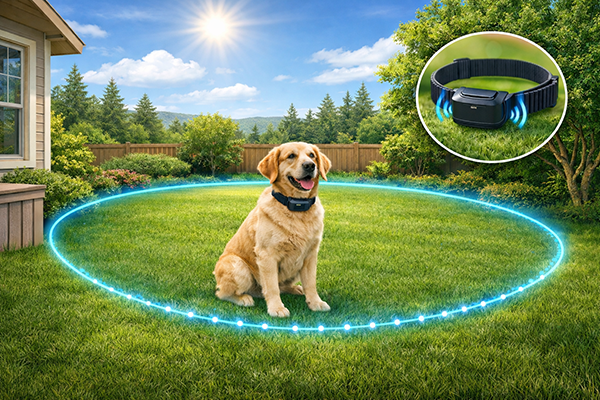
A wireless dog fence can feel like the perfect “best of both worlds” idea: your dog gets room to roam, you get peace of mind, and you don’t have to build a six-foot physical fence (or negotiate with your HOA). But here’s the honest truth: “wireless dog fence” is a bucket term. Depending on what you buy, you might be getting a GPS-based virtual fence collar, a radio-based system with a base unit, or a classic in-ground “invisible” fence with a buried wire.
This guide walks you through what these systems actually are, how they work, what they’re good at (and what they’re not), and the buying criteria that matter in real life. You’ll also see the major, reputable brands shoppers typically compare, including Halo Collar, PetSafe, SportDOG, SpotOn GPS Fence, and installer-based options like Pet Stop and Invisible Fence.
If you’re ready to shop now, check out these categories:
– Best Wireless Dog Fences Overall
– Best GPS Dog Fence Systems
– Best Budget Wireless Dog Fences
– Best Wireless Dog Fences for Large Yards
(And if you’re still deciding whether this category is right for you, keep reading.)
What is a wireless dog fence?
A wireless dog fence is a dog containment system that creates an “invisible boundary” your dog learns to respect. When your dog approaches that boundary, the collar delivers a warning (often a tone or vibration). If your dog keeps moving toward or past the boundary, the collar can deliver a stronger cue, which may include static stimulation depending on the model and how you configure it.
Two key clarifications up front:
1) It’s not a physical barrier. A wireless fence won’t stop another dog, wildlife, or a person from coming into your yard. It also won’t physically block your dog from leaving if they’re highly motivated.
2) It’s part tech, part training. These systems work best when you commit to training. Think of the collar cues as a consistent “boundary reminder,” not magic.
You’ll also see related terms used interchangeably online: invisible dog fence, electric dog fence, electronic dog fence, GPS dog fence, and virtual dog fence. In keyword data, “wireless,” “invisible,” and “electric dog fence” often behave like co-dominant category terms, while “GPS dog fence” is a major sub-type term rather than the umbrella.
Benefits of wireless dog fences
For the right dog and the right environment, a wireless dog fence can deliver a lot of value.
• Freedom without a construction project: You can create a containment boundary without installing a physical fence line.
• Cleaner sightlines: Many homeowners like that their yard view stays open (and that they avoid fence-style HOA conflicts).
• Flexible boundaries: Depending on the system type, you may be able to create custom shapes, exclude “no-go” zones (like gardens or pools), or create temporary travel boundaries.
• Multi-dog capability: Many systems can support more than one dog with additional collars (check brand rules and costs).
• Peace of mind: A trained boundary can reduce the stress of door-dashing or accidental roaming — with the important caveat that no invisible system is a guarantee.
How wireless dog fence technology works
Core mechanism
All wireless fence types share a similar behavioral loop:
1) The system defines a boundary (via GPS coordinates, radio signal, or buried wire signal).
2) The collar detects when your dog approaches the boundary.
3) The collar issues a warning cue (tone, vibration, or both).
4) If the dog continues, the collar can deliver a correction cue (often optional and adjustable).
5) Training teaches the dog to turn back at the warning cue.
That training component is why a wireless fence can be incredibly effective for some dogs… and frustrating for others.
Connectivity layer
This is where systems differ.
• GPS-based fences rely on satellites for location and a collar that interprets the boundary. Some brands add cellular connectivity so the collar can send location and alerts to your phone.
• Radio-based “wireless” fences use a transmitter (base unit) that creates a circular boundary radius. The collar detects the signal strength as the dog moves away from the transmitter.
• In-ground wired fences send a radio signal through a buried boundary wire. The collar detects proximity to the wire-defined boundary.
Power and backup systems
Power matters more than most shoppers expect.
• GPS collars are rechargeable and may need frequent charging depending on the brand, features, and usage.
• Radio base units usually plug in and need a powered indoor location.
• Wired systems depend on a powered transmitter and an intact boundary wire (some systems include wire-break alerts).
If your area loses power often, or your dog is likely to test boundaries during storms, think through “what happens on the worst day,” not just the average day.
Connected apps and alerts
Some systems behave like a true “smart device” with an app, location tracking, and notifications.
For example:
• PetSafe’s Guardian® GPS 2.0 combines a GPS fence with tracking and requires a paid subscription after a trial period; PetSafe lists monthly and annual subscription pricing on its product page (terms can change).
• SpotOn explains that GPS itself doesn’t require cellular, but optional cellular is what enables the collar to communicate with the phone over long distances for certain app-connected features.
• Halo supports app-created fences and markets near real-time tracking updates through its app experience.
If you want your phone to show live location and send escape alerts, pay close attention to the system’s connectivity requirements and ongoing costs.
Types of wireless dog fences
To choose well, first decide which “type” fits your home and your dog. Here are the three main buckets you’ll see.
Type 1: GPS / virtual fence collars
GPS fences let you draw a boundary on a map and load it to the collar. This is the most flexible option for yard shape (custom boundaries instead of a simple circle), and it can be portable if you want containment at a cabin or on a trip.
Brand examples you’ll see in this category include Halo Collar, SpotOn GPS Fence, and PetSafe’s Guardian® GPS line. Invisible Fence also offers GPS collar technology, typically sold through its dealer network rather than a simple “add to cart” model.
Trade-offs to understand:
• GPS needs a clear view of the sky. Dense tree cover, terrain, and environmental factors can affect performance.
• Many GPS fence systems involve subscriptions for tracking/alerts. Some brands may keep the fence boundary working without cellular but limit live tracking and notifications when connectivity is missing.
• Battery management is real. You’ll need a charging routine.
Type 2: Radio-based ‘wireless’ base-unit fences
This is the style many shoppers picture when they hear “wireless fence”: you plug in a transmitter inside your home, and it creates a circular boundary radius. These can be simpler to set up than wired systems, but the circle-only geometry can be limiting in real yards.
PetSafe is a major brand in this category, and it’s common to see PetSafe systems compared directly against GPS-based collars depending on your property layout.
Trade-offs to understand:
• Boundary shape is usually a circle. If your yard is long and narrow, or you need a boundary that avoids the driveway, you may find this format frustrating.
• Signal interference and layout can matter. Transmitter placement is a real variable.
Type 3: In-ground wired ‘invisible’ fences
In-ground systems define the boundary with buried wire (or wire placed under surfaces in some installs). The collar detects proximity to that boundary signal. These are often called “electric dog fences” or “invisible fences,” and they’re a major part of how consumers shop the category.
SportDOG is a recognized brand for in-ground fencing systems, and service-based brands like Invisible Fence and Pet Stop sell installed solutions through dealer networks. SportDOG notes that kits can cover about 1 1/3 acre and can be expanded to larger areas, depending on your design and additional wire.
Trade-offs to understand:
• While some installs can be clean and minimally disruptive, it’s still a wired boundary system — not the best fit if you need “set up and move” portability.
• Wire integrity matters. Some systems include wire-break alerts, but troubleshooting can still be a thing.
Key buying criteria
These are the decision points that actually determine whether you’ll love your system… or end up returning it.
Boundary shape and yard layout
If your yard is simple and you’re okay with a circle, radio-based systems can work. If you need custom boundaries (around gardens, driveways, pools, or odd property lines), GPS or in-ground wired is often the better match.
Coverage size and range
“Range” means different things for different systems:
• GPS: limited more by signal and battery than by a transmitter radius.
• Radio-based: limited by the transmitter’s effective radius in your environment.
• In-ground: limited by how much wire you use and how you lay out the boundary.
If you have acreage, start with: Best Wireless Dog Fences for Large Yards.
Signal reliability (trees, terrain, interference)
If you have heavy tree cover or live in a rural area with spotty cellular, that doesn’t automatically rule out GPS fences — but it should change how you shop. SpotOn explicitly distinguishes between GPS (satellite) and cellular connectivity, and PetSafe notes different behaviors when cellular is unavailable.
Correction options and training approach
Most systems include tone and/or vibration warnings and may include optional static stimulation. The goal for most families is not “max correction.” It’s “clear warning cue + consistent training so your dog turns back.”
It’s also worth knowing that veterinary behavior organizations caution against using punishment-based tools (including electronic collars) as a first-line approach for behavior problems. That doesn’t mean every wireless fence is automatically “bad,” but it does mean training approach, fit for your dog, and humane handling matter.
Dog fit: age, temperament, and household reality
Wireless fences are a better fit for:
• Dogs that are food-motivated and respond well to training routines
• Homes that can commit to the training period
• Dogs that aren’t chronically anxious or reactive around triggers beyond the boundary
They may be a poor fit for:
• High-prey-drive dogs that will blow past a boundary to chase
• Dogs with significant fear/anxiety issues (talk to a qualified trainer)
• Homes where a physical barrier is needed for safety from outside threats
Waterproofing and durability
Collars are outside gear. Look for waterproof ratings (or at least waterproof design claims), rugged construction, and practical strap fit. SportDOG highlights waterproof design in its in-ground systems overview.
Battery and charging routine
If you choose a GPS collar, you’re choosing a charging routine. If you know you’ll forget, build reminders into your life (or consider an alternative type).
If you choose an in-ground collar, battery life and charging time still matter, but the usage pattern may be different than a “smart tracking collar” setup.
Multi-dog support
If you have more than one dog, check:
• Whether the system supports multiple collars
• Whether you pay per dog (including subscriptions for GPS tracking features)
• Whether training can be done separately per dog
In general, plan to train one dog at a time so each dog learns the boundary clearly.
Cost overview
Wireless dog fence costs typically come from three buckets:
1) Hardware: transmitter and collar (radio-based), collar-only (GPS), or transmitter + wire + collar (in-ground)
2) Add-ons: extra collars for additional dogs, replacement contact points, extra boundary wire, etc.
3) Ongoing costs: subscriptions for tracking/alerts on some GPS systems
Some brands publish subscription pricing openly. For example, PetSafe lists monthly and annual subscription options for Guardian® GPS 2.0. SpotOn describes optional cellular subscriptions tied to phone connectivity features rather than “GPS itself.”
Common problems and limitations
Even when these systems are “working,” there are real limitations worth being clear-eyed about.
• No physical barrier: a wireless fence cannot stop outside threats from entering the yard.
• Motivation overrides training: some dogs will cross if they’re highly motivated, especially if training is incomplete.
• Boundary confusion: if your boundary setup doesn’t match your yard reality, dogs can get mixed signals.
• Tech constraints: GPS depends on signal conditions; radio-based systems depend on placement and interference; wired systems depend on wire integrity.
• Training time: most returns and “this didn’t work” stories have a training gap somewhere in the middle.
Who should (and shouldn’t) use one
A wireless dog fence can be a smart solution if:
• Your dog is trainable and you can commit to training
• Your household wants containment without building a physical fence
• Your environment fits the system type you choose (GPS vs radio vs wired)
You should strongly consider a physical fence (or a different strategy) if:
• You need to keep other animals out or keep kids safe in the yard
• Your dog is a known escape artist with high prey drive
• You cannot reliably maintain charging/training routines
• Your local environment makes the chosen tech unreliable
In many households, the best setup is layered: wireless boundary training plus leashes, supervision, and smart routines around doors and gates.
FAQ
Do wireless dog fences hurt dogs?
Most systems use a warning first (tone/vibration) and may offer optional static stimulation. The humane goal is to train your dog to respond to the warning cue. If you have concerns, talk to a qualified trainer and consider systems that emphasize adjustable cues and strong training guidance.
Do GPS dog fences need cellular service?
GPS-based fences use satellites for location. Some systems use cellular for live tracking, alerts, and app communication. Some brands state the fence boundary can still function without cellular, but you may lose live tracking and notifications.
Do wireless dog fences work for big yards?
They can, but you need the right type. GPS and in-ground wired systems can be more flexible for larger properties, while radio-based systems depend on transmitter radius and layout. Start with our large-yard comparison guide.
Can I use a wireless fence if I live in a wooded area?
It depends. Dense tree cover and terrain can affect GPS conditions and cellular connectivity. Choose a system designed for those conditions and plan for testing and training before you rely on it.
Can puppies use wireless fences?
Many brands recommend minimum age/weight guidelines. Beyond that, the bigger issue is training readiness. Puppies are still learning impulse control, so if you go this route, prioritize gentle training and clear routines.
Will a wireless fence stop other dogs from entering my yard?
No. Wireless and invisible systems do not create a physical barrier, so they do not prevent outside animals or people from coming in.
Final summary and what to read next
If you take one thing from this guide, let it be this: the best “wireless dog fence” is the one that matches your yard shape, your dog’s temperament, and your ability to train and maintain the system.