By the ninth “can you let me out?” of the day, an automatic pet door starts to sound less like a gadget and more like a civil right. The catch is that these doors solve very different problems. Some move a panel for a dog. Some admit one specific cat and nobody else. Some add an app that tells you who went where.
They all promise the same thing—your pet gets to handle more of their own comings and goings—but the right choice depends on your pet, your home, and how they naturally use the doorway. Choose poorly and you can end up with a beautifully engineered door that your beagle refuses to walk through.
Start with how your pet comes and goes
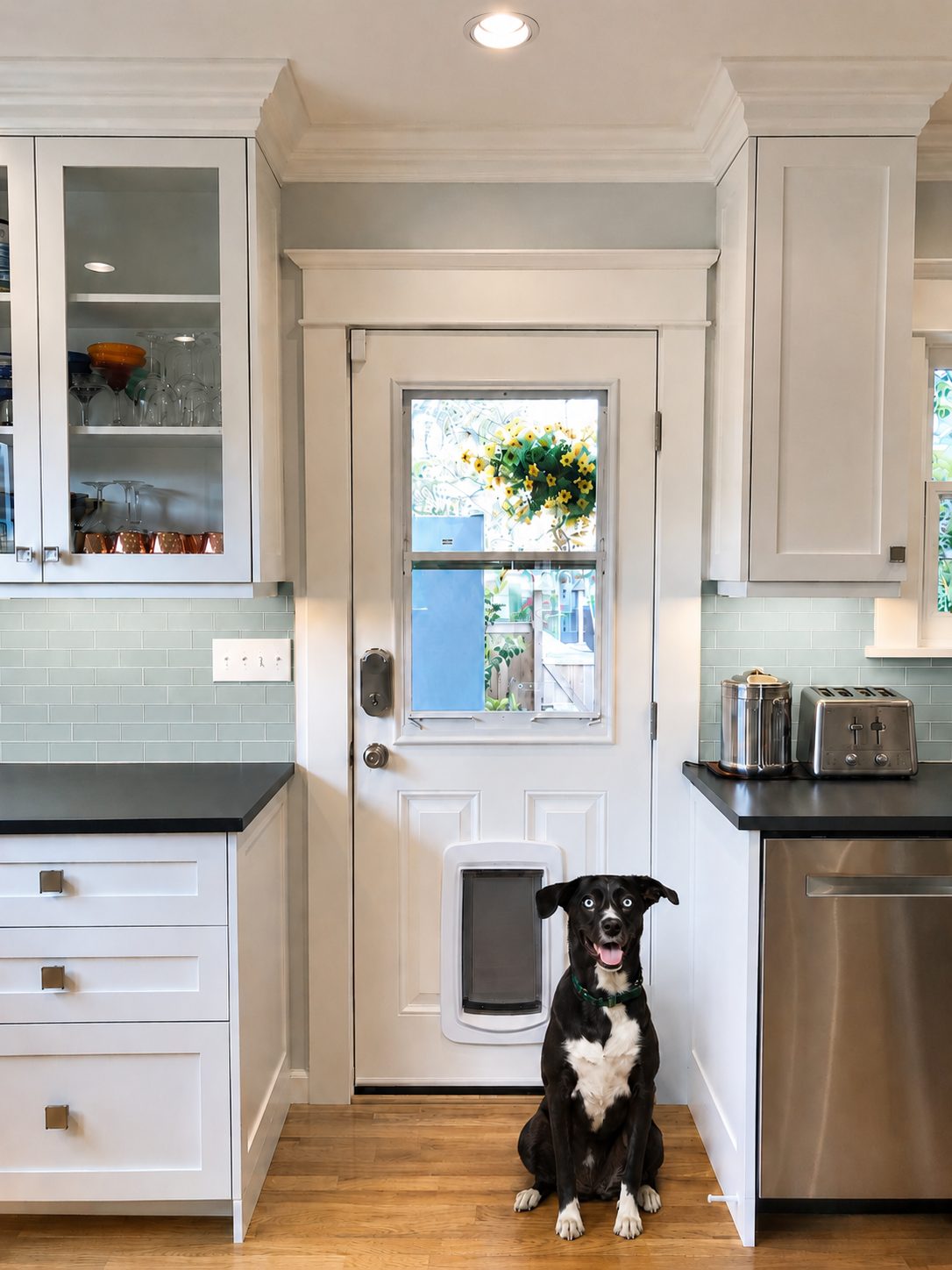
For a dog, this usually starts as a physics question. Is the opening comfortable at a walking pace, not a crouch? Can the wall or exterior door take it? Will rain, snow, a collar transmitter, or a panel that moves change whether the dog is willing to use it at all? A large dog is not a small dog with a bigger box — a broad-chested 70-pound boxer and a lean 90-pound shepherd need different clearances.
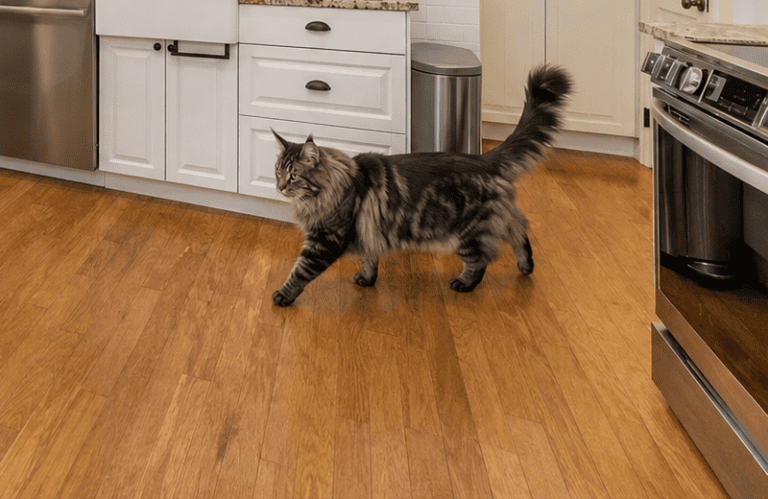
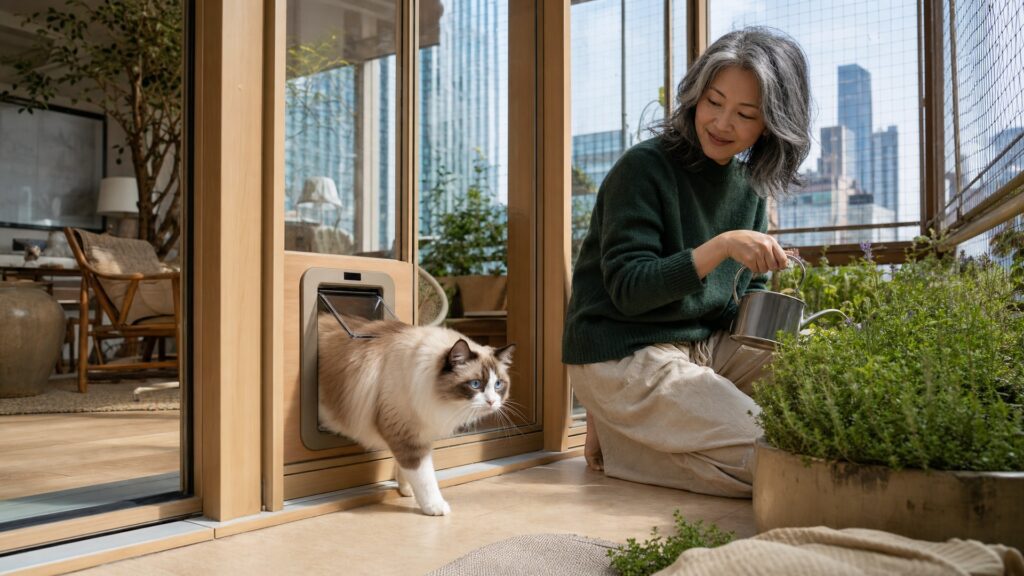
For a cat, the question is almost never movement. It’s permission. The door may need to read a microchip or a collar tag, keep the neighbor’s tabby out, respect a curfew, and do all of it without spooking a cat who already regards new furniture as a personal insult. A microchip pet door solves that beautifully. It will not solve anything for a Labrador.
Understand what the labels mean
Automatic describes physical movement. Electronic describes a control system — a collar key, an RFID pet door reader, a powered panel. Smart pet door features add a connected layer: remote controls, schedules, alerts, activity history. An automatic pet door opener might work on your pet’s passage or on the home’s door.
The options overlap just enough to make product pages confusing. Our electronic pet door explainer sorts out the vocabulary. Then you can choose what fits your pet.
For dogs: clearance, weather, and a path that makes sense
If you have a dog who needs a reliable yard route, start with Best Electronic Dog Doors for Large Dogs, Small Dogs, and Wall Installs. It compares High Tech Pet, Pawport, PetSafe, and PlexiDor on physical fit, powered movement, collar-activated access, smart controls, wall and standard-door placement, weather, and safety.
Resist the pull toward the most technical option. A roomy, weather-sealed opening in a sensible spot beats an app screen every single time, because no amount of software rescues a bad installation.
For cats: selective entry and household politics
If the problem is “my cat needs to get in, and the neighbor’s cat absolutely does not,” go to Best Electronic Cat Doors and Microchip Cat Flaps for Selective Entry. Cat Mate, PetSafe, and SureFlap all solve it, but through different combinations of microchip reading, collar tags, curfews, and app control.
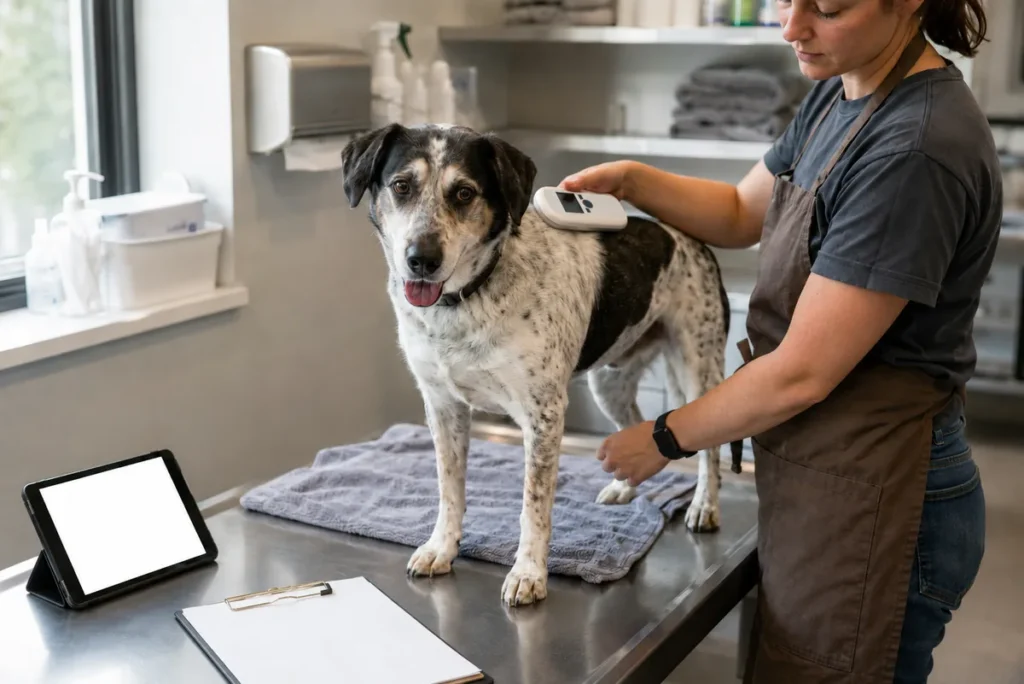
Settle the recognition method before you worry about “smart.” An RFID pet door reads a collar tag. A microchip pet door reads the chip already implanted in your cat. rfid pet door covers that trade-off, and microchip cat door training handles the part nobody warns you about — when one cat masters the flap in an afternoon and the other stages a week-long protest.
If you want app control and alerts
The dog comparison above covers Pawport, PetSafe SmartDoor Connected, and High Tech Pet’s Wi-Fi models when alerts, schedules, remote locks, or access logs are the attraction. The cat comparison covers SureFlap Connect. Each uses the connected layer for something different.
Apps genuinely earn their keep when you want to know the dog came back in before you left for work. They are not cameras, they do not make your yard safe, and they are not a plan for the evening the router dies. Read wifi pet door before remote control becomes your only control.
Installation changes the product choice
Where the door goes often matters more than what it does. A wall, an exterior door, a patio-panel insert, and a sliding-door opener each impose different constraints. A patio panel contains a pet flap. A sliding-door opener moves a compatible slider you already own. Those are two completely different renovations that happen to share a doorway.
wall pet door helps you pick the location before the hardware. Measure your pet, the approach on both sides, and how you actually use that doorway.
How automatic, electronic, and smart systems work
Core mechanism
An automatic dog door may use a motorized panel that rises when a pet wearing the right collar transmitter walks up to it. An electronic dog door may use a key or RFID reader to decide whether to unlock, leaving the dog to push through the flap. An automatic cat door usually leans on selective recognition rather than a large moving panel. That mechanism is the first thing your pet experiences: a panel that moves, a flap that gives, or a lock that recognizes them.
Connectivity layer
Smart pet door features can mean app schedules, remote locks, alerts, or activity history. A dog door that locks automatically is often what you want when the lock should behave on its own instead of waiting for someone to open an app. PetSafe SmartDoor Connected door and Pawport smart pet door are connected in different ways, while SureFlap Connect layers app tools on top of selective recognition. Connection adds convenience. It cannot fix a physical fit that was wrong from the start.
Power and backup
Powered systems need a real answer to what happens during an outage and how the thing works locally. Battery systems need a replacement routine. Wi-Fi systems need an outage plan. This is the boring part, and it’s the boring part that keeps the convenient part convenient. app controlled dog door walks through it without pretending every product behaves alike.
Types of automatic pet doors
Powered dog-door systems
Power Pet automatic door and PlexiDor Electric are two powered choices for dogs. Both are collar-activated: the door responds to a transmitter or RFID key the dog wears. They matter when clearance, a rigid panel, wall feasibility, and repeated daily yard traffic outrank app settings.
Selective-entry cat doors
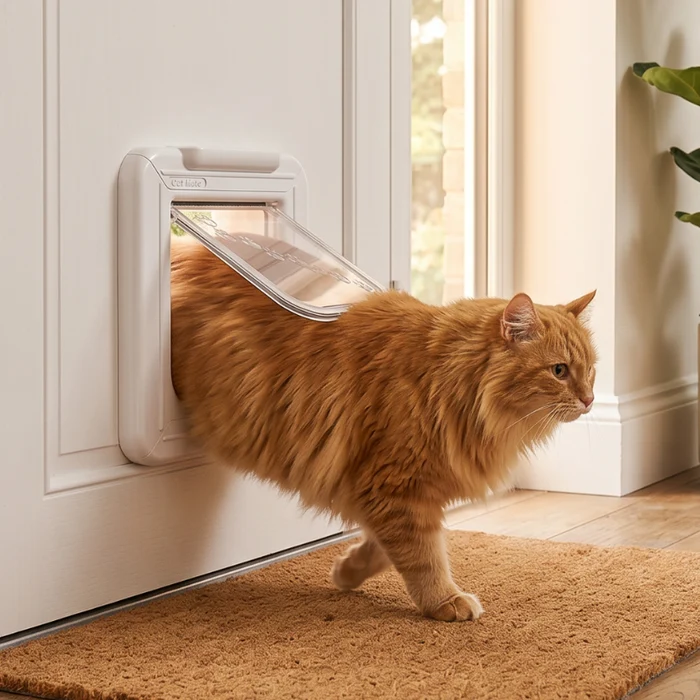
Cat Mate microchip cat flap, the PetSafe Microchip Cat Door, and SureFlap are cat-focused choices where microchip, tag, or collar recognition decides who gets in. These doors are a genuine relief for intruder-cat stress. Training and entry/exit settings come with them.
Smart covers and openers
Pawport is a smart cover for a pet-door frame you already have. An automatic cat door opener for an enclosure has to fit the path your cat uses. These options change your home in completely different ways, and a sliding glass pet door patio panel works very differently from a slider opener.
The practical buying checklist
Fit and movement
Measure your pet moving naturally, and measure the clear passage rather than the outside frame. A big dog needs an opening that doesn’t turn every trip to the yard into airport security.
Recognition and permissions
Decide whether your pet needs a collar key, an RFID tag, implanted-microchip recognition, or just a hole in the wall. Entry and exit rules are often separate settings, and in a multi-pet home that difference is the whole ballgame.
Power, app, and fallback
For a smart dog door or smart cat door, Wi-Fi, Hub, app, local controls, battery behavior, and outage behavior all matter. “It has an app” is not an emergency plan.
Home fit
Choose wall, door, patio, or slider based on the route your pet actually walks. An automatic pet door opener only earns its price when the location and your pet’s habits make it sensible.
The concerns worth taking seriously
Security is the one everybody raises first, and the honest answer is that a pet door changes your exterior wall without turning your house into an open house. Selective access cuts unwanted entry sharply—a microchip flap really will keep the neighborhood tabby from treating your kitchen as a franchise location. What it can’t stop is tailgating, where another pet slips through behind yours while the flap is still open. Tailgating can still happen with selective-entry doors. Treat it as a known boundary, not a dealbreaker.
Weather is the one people underestimate. A dog-sized opening in a wall is a hole in your building envelope, and weather sealing, brush strips, and a rigid panel are the difference between a convenient door and a January draft you can feel from the couch. Powered panels generally seal better than flexible flaps. They also cost more and need power.
Then there’s the question nobody wants to ask: is the space on the other side actually safe? A connected door will happily notify you that your dog went out at 2 a.m. It has no opinion about the gate you left open. Fencing, wildlife, traffic, and pool access are the real safety layer. The door just automates the exit.
What it actually costs, after keys, batteries, and pet door accessories
The sticker price is the opening scene. The rest of the cast includes collar keys, tags, batteries, adapters, and one small piece of plastic that will inevitably go missing.
For collar-key systems, budget a key or transmitter for each pet who will use the door, plus the occasional replacement. PetSafe SmartDoor Connected uses Pet Door Keys; High Tech Pet uses collar transmitters. A dog who treats collars as chew toys turns “included accessory” into a subscription you didn’t sign up for. Microchip systems avoid collar keys because they recognize a compatible chip already implanted in your cat, but some installations still need tunnel or glass adapters.
Then there are the pet door accessories that decide whether the thing stays pleasant after week one: batteries, weather seals, replacement flaps, wall tunnels, brush strips, and any Hub or bridge a connected model requires. Dog systems tend to put the money into physical installation — wall depth, exterior finish, power routing, weather sealing. Cat systems tend to put it into recognition and multi-pet management — extra tags, adapters, and the patience to train a cautious cat.
An app does not automatically mean a subscription, and the box price does not tell you what replacement keys or parts will cost. Those details vary by model. A cheap door with expensive keys is not a cheap door.
Living with it: maintenance and what actually changes
Every system has a routine once it’s in. Check the weather seals and moving parts on dog-sized openings. Keep tags and keys accounted for. Notice the low-battery warning before it becomes a locked-door surprise at 11 p.m. Revisit permissions when a new pet joins. The right automatic pet door disappears into the background, and a small amount of maintenance is what gets it there.
What changes is bigger than fewer trips to the back door. A well-matched door gives a dog a predictable yard rhythm, lets a cat come home without a human doorman, and stops the household schedule from bending around whoever hears the first scratch. It also hands you new responsibilities: access rules, power, weather, training, and an honest look at where your pet goes once that door opens.
Frequently Asked Questions
What is the best automatic pet door?
The one whose opening, recognition method, and local behavior fit your pet and your home. A dog who needs a roomy powered panel, a cat who needs selective entry, and a family who wants app control are choosing for different daily realities.
Are smart pet doors safe?
They can be, when the product is fitted correctly, your pet is trained, you understand the local controls, and the outdoor space is secure. Connected tools add convenience on top of those basics. They don’t replace any of them.
Do automatic pet doors have cameras?
Not among the products covered here. Some send alerts or log activity.
What pet door accessories should I budget for?
Extra keys or tags, collar transmitters, batteries, weather seals, replacement flaps, wall tunnels, glass or track adapters, and any Hub a connected model needs. The exact list follows from the access method, not the brand.
The bottom line
Start with what your pet needs to do on their own: walk through a dog-sized opening, keep other cats from following them inside, follow an app-managed routine, or use one particular doorway. Answer that and the choices narrow to the doors that fit your pet and your home—the ones most likely to make life easier instead of more expensive.