There was a cat on my parents’ kitchen counter.
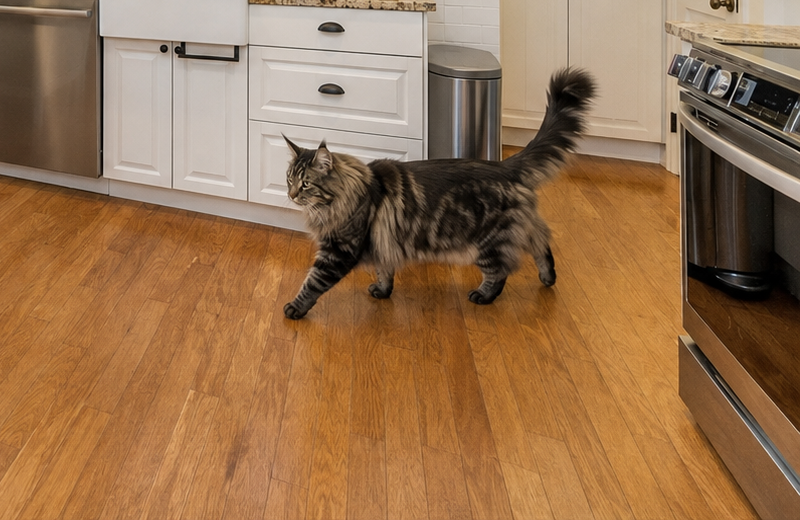
My parents don’t have a cat—or so I thought. Yet there he was, a huge cat sitting comfortably on the counter between the toaster and my mom’s spices, some of which had apparently been shoved onto the floor. His front paws were curled neatly underneath him as he sat unperturbed in that classic cat loaf pose.
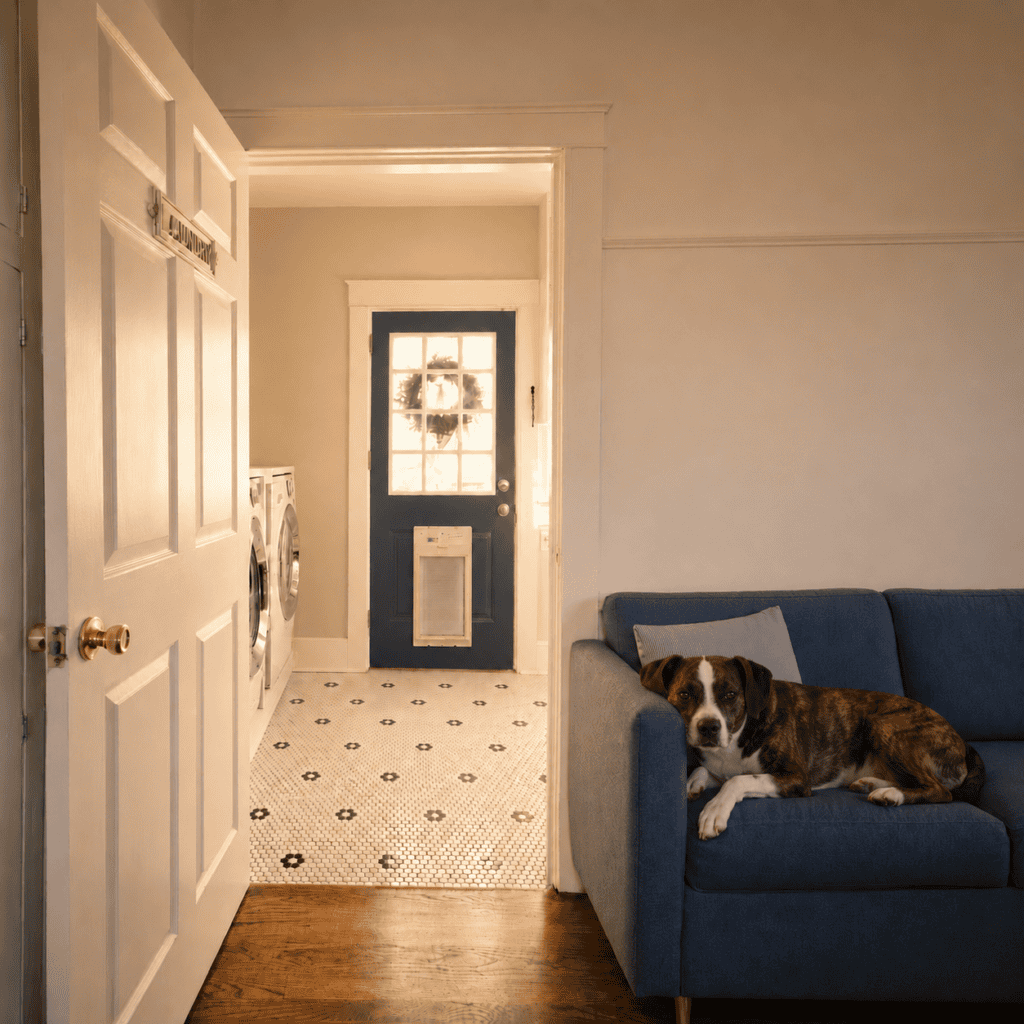
Behind me, my parents’ older dog June stood in the doorway with the resigned, tired expression of a senior dog who had already complained about the issue to no resolution. When the cat noticed me, he stood up, stretched, jumped off the counter, and sauntered calmly toward the laundry room. It was a very large cat—perhaps a Maine Coon or something.
June looked at me. I looked at June. I couldn’t tell if she was okay about having this new feline resident.
Then, I heard the little plastic flap in the back door open and close with its clackity-clack. The cat had let himself out through the doggie door.
My mom walked into the kitchen, saw the spice rack disturbance, and said, “Oh. He was here.”
Apparently, I was the last person in the house to meet the new tenant. The neighbor’s cat had been coming in through the dog door for weeks, and I was the last person to get the memo.
The evidence was everywhere
The evidence had been accumulating for weeks.
The dogs were going through food faster than expected. This is not an easy mystery to spot in a house with Penny, whose deepest belief is that any unguarded snack has entered the public domain. My dad blamed portion creep. My mom blamed my dad for forgetting when he had fed them. Penny declined to clarify.
Then there was the laundry room smell. It wasn’t dramatic. It was just not dog. June had started pausing outside that room and looking toward the back door before choosing a different place to nap. My mom kept finding the good throw blanket rearranged on the couch, pressed into a small, tidy nest that did not match either dog’s sleeping style. June occupies her corner like a person who has had the same seat at the theater for 20 years. Penny sleeps as if she was dropped from a low altitude. Neither one makes a neat circle.
Every clue had received its own explanation. Together, they added up to a cat with a second home.
Meet The Subletter
The maybe-Maine-Coon belonged to a neighbor. He was well fed, well cared for, and completely confident that property lines were more of a human hobby. At some point he had discovered the old dog flap in my parents’ back door, pushed through it, and found a house containing food, water, soft furnishings, and two dogs who were not interested in escalating the situation.
I started calling him The Subletter.
He was not scared of us. That made the problem funnier and also more unsettling. A frightened animal darting through once would have felt like an accident. The Subletter had a routine. He knew where the food was. He had opinions about blankets. When I lifted him off the counter and carried him toward the back door, he remained loose and calm in my arms, like a customer being shown to another table.
We put him outside. He sat on the step and waited for us to vacate the laundry room.
Eleven minutes later, the flap clacked.
He had come back in.
Everything we tried except fixing the actual door
My dad responded to this by developing theories. Maybe the cat only visited at certain hours. Maybe moving the dog bowls would discourage him. Maybe he was getting in some other way, a theory he maintained while standing next to the moving plastic flap.
My mom put a small dish of water near the back door.
She said this was not for the cat. It was simply water that happened to be on the floor at cat height near the cat’s preferred entrance. I have worked around brand positioning long enough to recognize a soft launch.
For several days, my parents blocked the flap at night. That kept the cat out at night. It also kept June and Penny in, which meant somebody had to remember to open it in the morning. He adjusted his schedule and began arriving during business hours.
Shooing him did not work. Moving the food slowed him down but did not remove the appeal of the house. My dad’s theories became more detailed. My mom’s water dish remained operational.
The dogs were never aggressive with him. June mostly wanted the household to return to its previous programming. Penny was fascinated, confused, and personally offended that another animal had located food before she did. I found her one afternoon staring at the flap, then looking back at us as if waiting for a manager to address a process failure.
That was when the solution became embarrassingly obvious.
The dog door was just a door
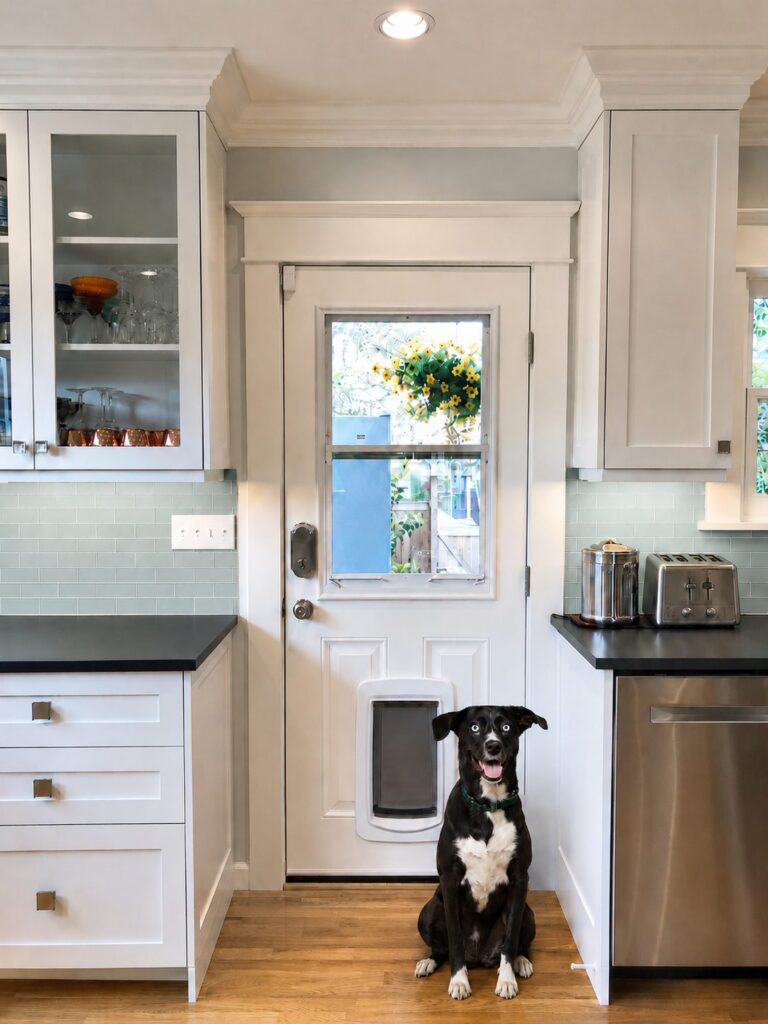
For 10 years, my family had called that opening a dog door because dogs used it. The flap itself had no such policy. It had no lock, no sensor, no collar recognition, and no opinion about species. We had assigned access permissions to a rectangle of flexible plastic and felt betrayed when it failed to enforce them.
The cat had not outsmarted a system. There was no system.
If the neighbor’s cat keeps coming in through the dog door, it might not sound like a huge deal. But my parents live in the suburbs, and they have other animals that visit their yard too. Wild ones that you would not want to find on your kitchen counter.
My parents did not want to close the flap permanently. June and Penny used it to reach their potty spot in the yard, and taking that freedom away would have solved one problem by creating a new daily job for everybody. A manual lock had the same limitation: locked stopped the cat and the dogs; unlocked welcomed a full cast of animal characters not on the guest list.
My parents needed a doggie door that behaved like a locked door until one of their dogs wanted to use it.
What my parents wanted in a new door
They looked at automatic pet door options, but every extra feature fell behind one question: could the opening recognize June and Penny without welcoming everybody else?
The first requirement came directly from The Subletter: the door had to recognize June and Penny. That made collar-activated electronic dog doors the useful shortlist, not the ones with the longest feature list. The one they chose opens when either dog approaches wearing her activating collar. An animal without one can stand outside looking extremely qualified and the panel stays closed.
They also wanted a roll-up pet door. The back door has a window above the pet opening and very little room for a solid panel to lift. Their new door closes as a rigid, interlocking panel, then rolls into a compact housing when it opens. My dad appreciated the engineering. My mom appreciated not replacing the entire back door.
Then my dad began planning for the electrical grid to fail.
The door normally runs on household power, so he added the optional rechargeable backup battery. If the power goes out, the battery can keep the door operating instead of turning it into an expensive wall decoration. The backup costs extra, a detail my dad mentioned several times while also insisting it was non-negotiable.
June was the harder question. She is old enough to treat any new household object as a personal betrayal. Would she understand a door that moved upward? Would it close while she was taking her time?
The automatic opening meant she did not have to push through a flap. The panel is designed to rise again if it meets an obstacle while closing. My parents still introduced it with supervision because a safety feature is not a reason to rush a senior dog. June watched it. She backed away. She watched Penny use it. Then she walked through slowly enough to make the whole family hold its breath.
She was fine. She also looked annoyed that we had made it an event.
My mom’s questions were about winter and sleep. The old flap moved every time the wind did, sending a cold draft into the laundry room. She wanted a rigid door designed to seal tightly when closed. More important, she wanted control over when the dogs could let themselves out.
Where my parents live, black bears are part of the overnight safety math. The timer is not bear protection, and nobody in the family treats the pet door as bear-proof. Its job is to keep June and Penny inside. Their exit access shuts off overnight, then comes back on after first light so the dogs can reach their potty spot without my parents setting an alarm for dawn. They still check the yard and keep anything edible secured, because no app setting replaces common sense around wildlife.
One day of training and one disappointed cat
Penny learned the new routine almost immediately. June took most of a day, several careful approaches, and the emotional support of everyone pretending not to stare at her.
The next time I visited, The Subletter was sitting outside the back door. He looked through the glass at the closed panel, then at me. The door did not dislike him. It simply did not recognize him.
I felt a little bad for him.
He had found an unlocked entrance leading to snacks, water, a good blanket, and a family that kept escorting him out without changing the terms. Frankly, The Subletter had made a strong housing decision.
June got her quiet corner back. Penny stopped conducting investigations in the laundry room. The cold air stayed on the correct side of the back door. My mom removed the water dish, although not immediately.
Somewhere nearby, a very large cat had to go back to living in only one house.
I hope the adjustment was not too hard.