Physical Address
304 North Cardinal St.
Dorchester Center, MA 02124
Physical Address
304 North Cardinal St.
Dorchester Center, MA 02124

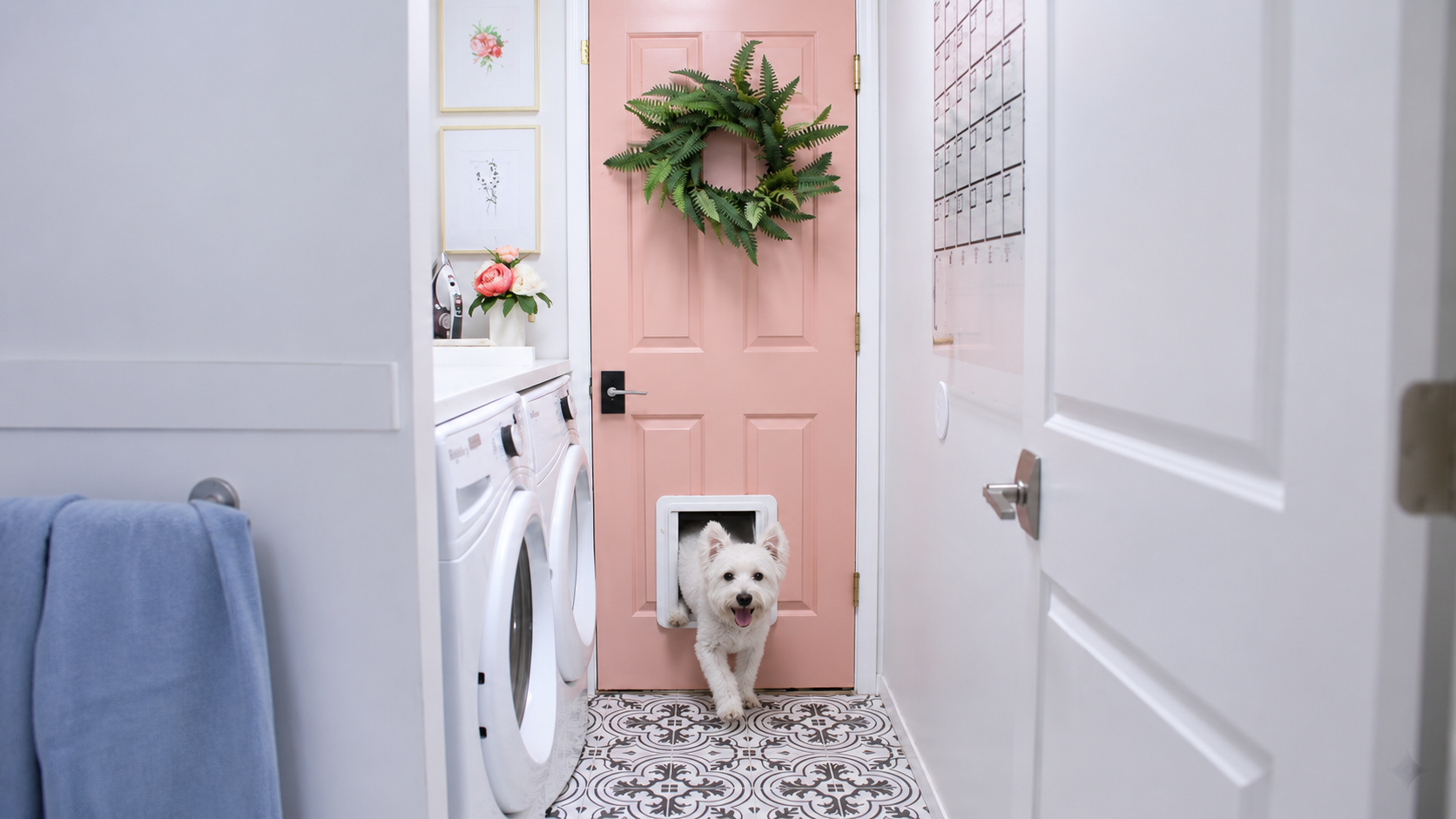
An electronic pet door can be a powered panel, a collar-key flap, a microchip cat door, or something with an app. That’s not you failing a vocabulary quiz. The labels genuinely overlap, which is why you can open five browser tabs and still not know whether you’re looking at a door that moves, a door that recognizes your pet, or a door that texts you.
The overlap exists because pet-door marketing has never met an adjective it didn’t want to borrow. The way out is to stop reading the labels and ask three questions instead: does the opening move by itself, how does it decide who gets to use it, and can you manage it from somewhere other than the hallway?
An automatic pet door usually describes movement. A motorized automatic dog door opens or closes for the pet rather than asking a seventy-pound retriever to shove a stiff flap out of the way. An automatic cat door uses the word more loosely, so check whether the flap actually moves on its own or simply unlocks for the right cat.
That distinction matters enormously for a dog who hates flap resistance, an arthritic senior, or a nervous rescue who won’t push through anything. For a cat owner trying to keep the neighbor’s tabby out, movement barely registers as a concern. The complete automatic pet door guide separates those two starting points properly.
An electronic pet door uses electronics to control access or movement. It might read a collar key, drive a motorized panel, or manage a lock state. PetSafe illustrates the range within a single brand: it sells an Electronic Pet Door with simple key access and a separate SmartDoor Connected model with an app. One electronic dog door can be beautifully local and simple; another can be a connected product sending notifications.
An electronic cat door usually points toward selective entry — a collar sensor, a magnetic key, RFID pet door technology, or a scanner reading an implanted chip. Two assumptions to drop before shopping: electronic doesn’t mean app-controlled, and electronic doesn’t mean the pet is spared pushing a flap. Plenty of electronic doors just unlock.
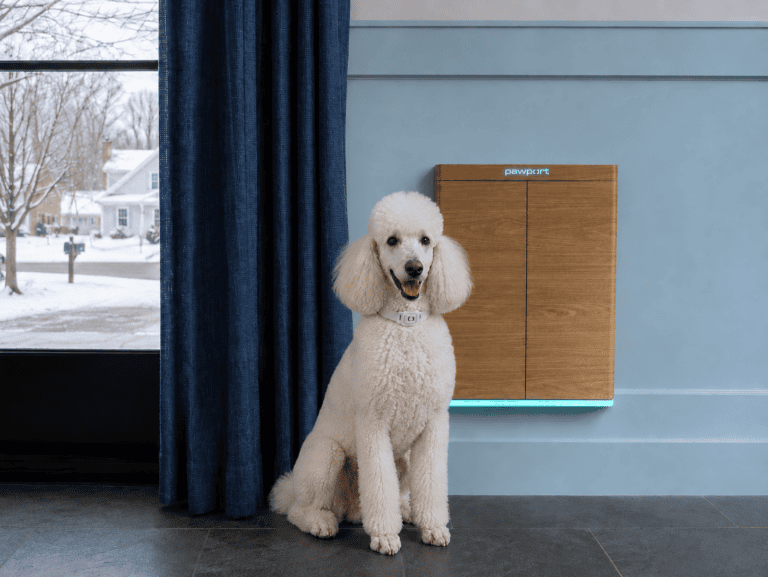
A smart pet door adds a connected layer: schedules, remote locks, alerts, activity history. PetSafe SmartDoor Connected is a smart dog door and smart cat door option because its app manages access settings for keyed pets. Pawport is smart in a completely different way — it upgrades a pet-door opening you already own with controlled access and activity tools.
Here’s the part that costs people money: smart does not mean selective. An app controlled dog door may let you change a lock state while having no idea which animal walked through. A smart cat door may report activity while relying on a tag or chip system with its own limits. If you want the door to know which pet used it, that’s a recognition feature you have to buy deliberately. The smart pet door comparison sorts the architectures by the control you actually want.
An RFID pet door generally reads a collar-worn tag. A microchip pet door reads a registered implanted chip, and often accepts a compatible tag as well. Neither label tells you whether the door is motorized, connected, or big enough for a dog.
A cat who removes every collar within a week makes a microchip cat door feel like a small miracle. A dog who already wears a collar all day is perfectly well served by a key-triggered electronic dog door. The RFID vs microchip guide covers the trade-off, and the cat comparison turns it into actual products — a far better use of your time than trying to decode a dog product into a cat solution.
An automatic pet door opener might operate the pet’s passage or your door. The Wayzn Smart Pet Door is firmly the second kind: it opens a compatible existing sliding glass door. It is not a patio panel with a flap in it. That makes it genuinely interesting for a sliding-door household and also makes compatibility, secure outdoor access, and a manual backup plan the central questions rather than footnotes.
Three questions, in this order, and almost every listing gives itself away.
Does something move under power, or does the pet push? Words like motorized, powered, panel, and rises suggest the first. Flap and unlocks suggest the second.
What is the credential? Look for collar key, transmitter, RFID tag, or microchip. If the page never says, it probably has no recognition at all and simply opens for anything that pushes it.
What does the app do? There’s a large gap between “receive notifications” and “change lock modes remotely,” and product copy often uses the same enthusiastic tone for both. If it only notifies, you’re buying a doorbell for the dog.
Automatic — the opening moves on its own, usually a motorized panel.
Electronic — there’s a control system deciding whether the door opens or unlocks. Often, but not always, involves a collar credential.
Smart — there’s an app, and it can do something beyond notify you.
RFID — recognition via a tag worn on the collar.
Microchip — recognition via the chip implanted in your pet.
Opener — a device that operates a full-size human door, not a pet flap.
Patio panel — an insert that stands in a sliding-door track and contains a pet flap.
Retrofit cover — hardware that upgrades a pet-door opening you already have.
If your dog needs clearance, weather protection, or a wall install, go to the dog Best list. If your cat needs selective entry, curfews, or protection from a neighborhood visitor with suspiciously excellent timing, go to the cat Best list. If you want app control, alerts, access history, or an opener, start with the smart Best list.
The right label is the one describing your problem, not the one with the most futuristic packaging.
No. Automatic usually describes powered movement; electronic describes a key, tag, or microchip controlling access. Some products are both. Plenty are only one.
No. Smart covers app control, schedules, alerts, and activity history. Microchip is about reading your pet’s implanted chip. SureFlap’s connected products combine both ideas, but neither feature implies the other.
Sometimes physically, rarely usefully. A dog-sized opening doesn’t solve the cat-specific problem of selective entry, which is the whole reason most people buy a cat door. A microchip flap or collar-sensor door is the relevant comparison.
Not necessarily, and this is the most common misreading in the category. Many electronic doors simply unlock and leave the pet to push through the flap. If you want the opening to move, look for motorized or powered specifically.
Treat automatic as movement, electronic as control, smart as connected management, and RFID or microchip as recognition. Once those four pieces come apart, shopping gets dramatically less weird — and your pet ends up with the kind of independence that actually fits your house.