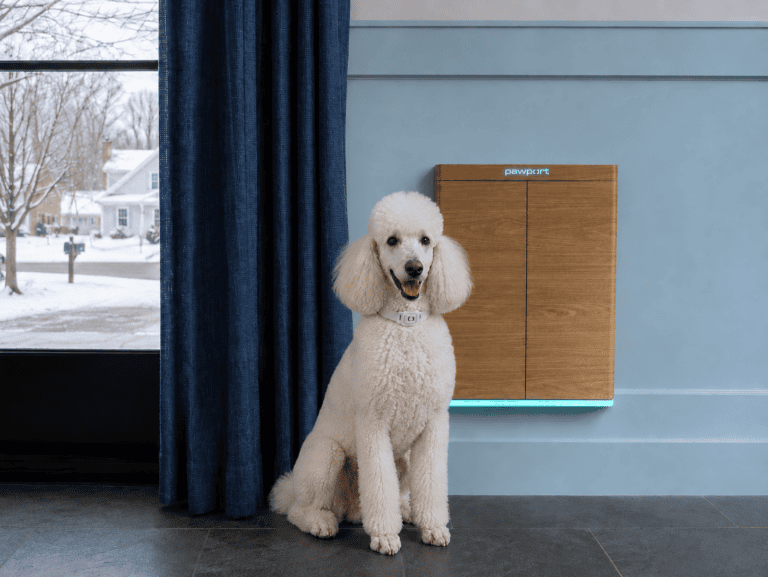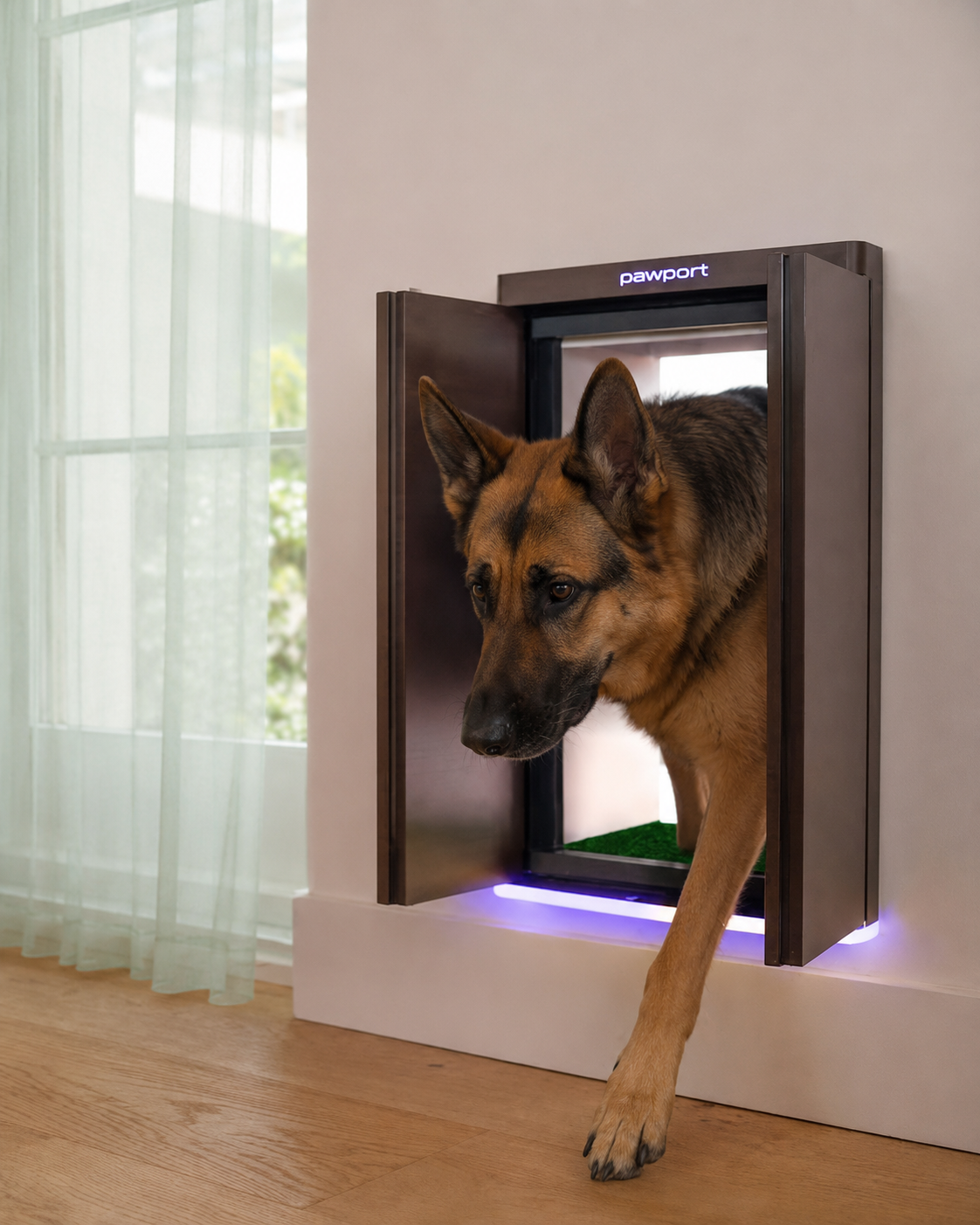
Picture five big dogs using the same pet door before breakfast, after school, and every time the backyard gets interesting. Pawport is built for that kind of hard-working opening: a smart, motorized retrofit cover that adds controlled tag access, schedules, and app or top-door controls to a compatible existing pet door. Its materials and two-deadbolt security language are manufacturer claims, but they explain why Pawport feels more like an access system than a decorative smart flap.
Pawport is most persuasive when a home already has a sound pet-door location and needs one tougher, better-managed entry point for several active pets. Current support allows up to 10 paired Smart Pet Tags on one door. It is not a sliding-door opener, and it does not scan an implanted microchip. Each pet still needs a tag for automatic access, plus a realistic plan for tag batteries, power, app behavior, and fit.
What Pawport is, and is not
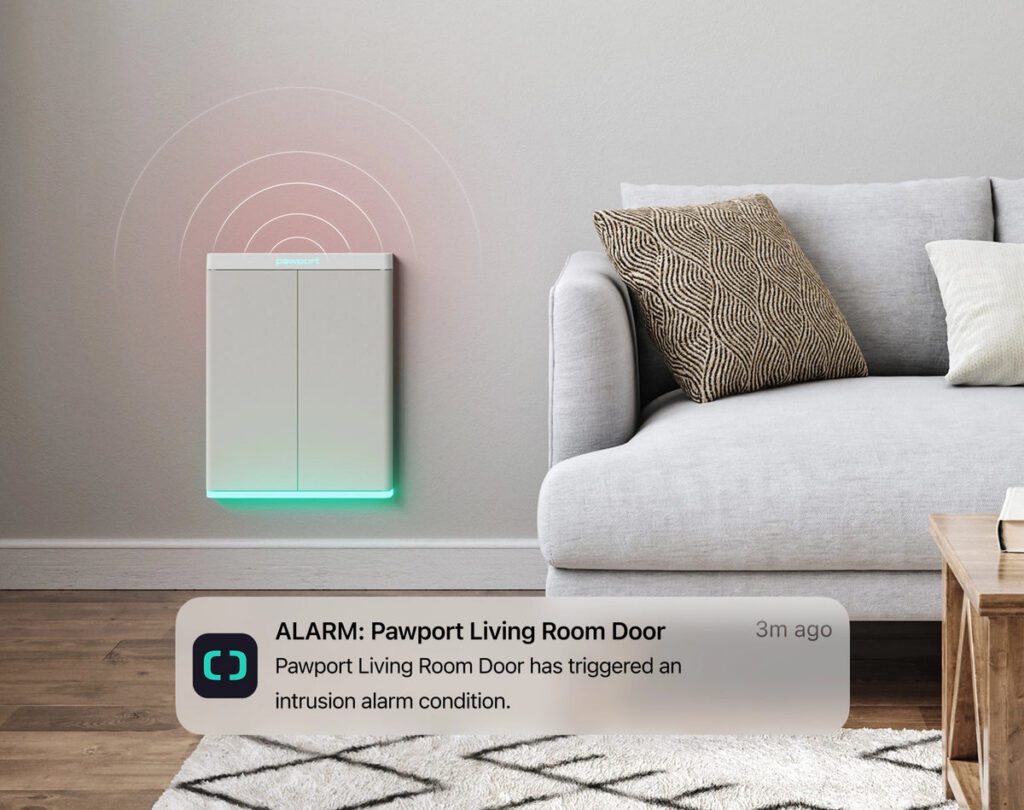
The Pawport pet door lane is retrofit technology. Instead of moving a human sliding door like Wayzn, Pawport covers an existing pet-door opening. Instead of reading an implanted chip like a selective-entry cat flap, it uses its own collar-worn Smart Pet Tag. The Pawport smart door is therefore a specific solution to a specific starting point: an existing opening worth keeping.
The Pawport app is useful because a busy household can make one entry point serve several pets: remote lock control, schedules, activity information, and lighting controls are current product features. A smart pet door app still cannot make a too-small opening comfortable or make a pet accept a collar tag. The Pawport smart door makes sense only when the household will actually use that extra control. A smart pet door app should make a five-dog routine calmer, not create another task to manage. Pawport’s plug-in, hardwired, optional-battery, and solar-assisted power choices also deserve to be part of the buying decision. Best Smart Pet Doors and Pet Door Openers for App Control and Alerts compares the wider connected-access choices.
Model comparison table
| Product Name | Pet Tech Category | Best For | Key Feature | Additional Key Feature | Key Specs | Price Range |
|---|---|---|---|---|---|---|
| Pawport Smart Pet Door | Smart retrofit pet-door cover | Upgrading a compatible existing pet door | Motorized lock/cover with app controls | Collar-worn Smart Pet Tag access | Retrofit fit must be verified; app, WiFi, tag, and power are part of the system | $$$$ |
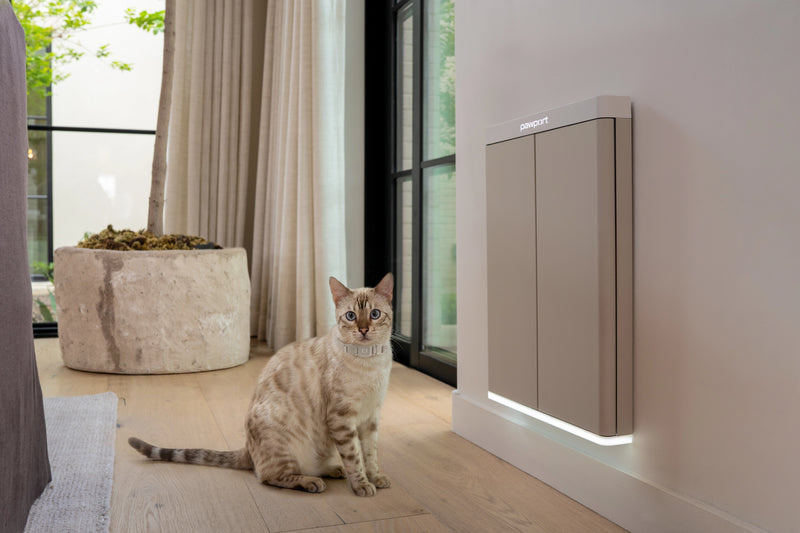
Pawport Smart Pet Door
Quick verdict
Pawport is a strong idea for the right existing opening. It can add controlled access without recutting a wall or replacing the whole human door. For a household frustrated by an unprotected flap, that may be a meaningful change.
But the retrofit is only as good as the opening below it. The existing frame, usable clearance, rail or cover dimensions, and pet’s willingness to wear a tag all matter. Pawport is a smart layer, not a universal sleeve that makes every flap secure.
Pros
- Upgrades a compatible existing pet door instead of requiring a new wall or patio-door opening.
- Current sources describe remote lock control, schedules, pet activity information, and adjustable app settings.
- Smart Pet Tag access can add a controlled entry layer to an ordinary opening.
- Pawport has a current public direct affiliate program; approval and exact terms remain separate matters.
Cons
- The Smart Pet Tag is a collar key, not implanted-microchip recognition.
- Existing-frame fit and pet clearance decide whether the retrofit is useful.
- App, WiFi, tag, and power dependence add more points of friction than a plain flap.
- Individual owner reports include setup, detection, firmware, and support concerns; they are signals to investigate, not a reliability rate.
Best for
Dog or cat households with a compatible existing pet door, a pet that can comfortably wear the tag, and a real reason to schedule or remotely control the opening.
Biggest trade-off
Pawport brings a busy existing opening into a controlled multi-pet routine, but the underlying frame, clearance, and pet behavior still matter. If those are wrong, even a rugged Pawport pet door cannot correct the decision.
Key specs
- Architecture: motorized retrofit cover for a compatible existing pet door.
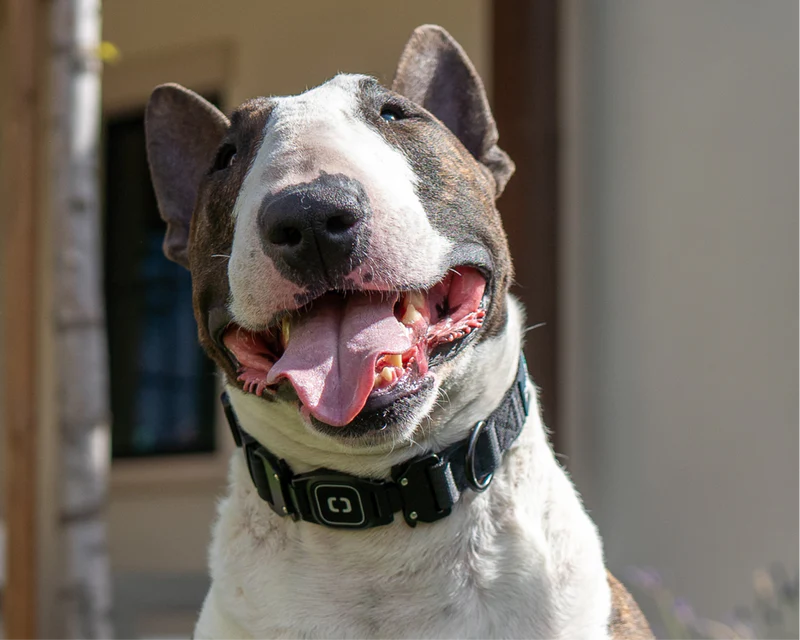
- Access method: Pawport Smart Pet Tag on the pet’s collar; not an implanted-chip reader.
- Controls: remote lock control, scheduling, activity information, and lighting are described through the Pawport app.
- Connectivity: local control, outage behavior, and backup power are the details that decide whether the door still works when the wifi drops.
- Fit: verify the existing opening and pet clearance; do not assume a retrofit fits every flap.
Detailed analysis
Start with the old door. Is it in the right place? Does the pet clear it comfortably? Can the existing frame accept the hardware? A retrofit avoids a new cut, but it does not erase the geometry already in the wall or door. An owner report describes having to size up because the existing door’s rails reduced the usable fit. That is one experience, but it captures the right pre-purchase question.
Then consider the tag. For a dog that already wears a collar indoors, Pawport dog door access can feel natural. For a cat that regularly slips collars or needs individual microchip rules, it may solve the wrong problem. A tag controls the door only while it stays with the pet; it does not turn an implanted identification chip into a home key.
The app matters, too. Pawport app controls can be useful for an evening curfew, a dog walker, or a check on door use. They also create a dependency on the account, network, and current device behavior. WiFi Pet Doors and App Control: What Still Works Offline? frames the local-fallback questions to ask before a smart routine becomes the only routine.
Dog and cat implications
For dogs, Pawport can be useful when the existing opening already gives safe clearance and the daily yard routine benefits from schedules or remote control. Do not use the Pawport dog door as a reason to stretch a too-small opening around a larger dog.
For cats, decide whether a tag is actually the desired access method. A cat that needs true individual selective entry or does not reliably wear a collar is usually better served by a microchip cat flap. Pawport can add control to a compatible cat door, but it does not become a microchip system because the app records activity.
Pawport versus other smart access options
Pawport is not Wayzn. Wayzn opens a human sliding door; Pawport is a smart cover on a pet-door opening. Pawport also is not the PetSafe SmartDoor Connected: PetSafe is a purpose-built electronic pet door, whereas Pawport begins with an existing door that must fit its retrofit architecture.
That makes Pawport appealing when the existing pet-door cut is worth preserving. It is a worse fit when a household needs a different opening size, an app-free routine, or individual microchip access. Complete Guide to Automatic Pet Doors for Dogs and Cats helps separate those decisions.
FAQ
Does Pawport read an implanted microchip?
No. Pawport uses a Smart Pet Tag worn on the pet’s collar. It is not an implanted-microchip reader.
Is Pawport a sliding-door opener?
No. Pawport is a smart retrofit cover for a compatible pet door. A sliding-door opener moves the human door instead.
What does the Pawport app do?
Current Pawport information describes remote lock control, schedules, activity information, and lighting controls. App, WiFi, and local-fallback behavior differ by configuration, and the local fallback is the part that matters when the network is down.
Will Pawport fit my existing pet door?
Only if the existing frame and opening meet the model’s requirements and the pet has proper clearance. Measure and confirm compatibility before ordering.
Final recommendation summary
Choose Pawport when the home already has the right pet-door opening and the household wants a smarter way to control it. The best case is focused: app controls, a collar tag, and a motorized layer over an existing door.
Skip it when the real problem is the opening itself, when a pet cannot reliably use a tag, or when individual microchip access is the priority.