PetSafe’s useful difference is not one extraordinary door. It is a practical choice ladder: pay for connected controls when schedules will genuinely help, choose a simpler collar-key flap when they will not, give a collar-averse cat a chip reader, or solve a sliding-glass installation without pretending every household needs the same technology.
That matters because the wrong kind of access is still wrong, even with a trusted brand on the box. The petsafe smart door lane is for app-led rules. The Electronic Pet Door is a collar-key electronic flap. The Microchip Cat Door is the selective-entry cat lane. The sliding-glass panel is an installation format. Each gives a pet freedom in a different way, and each avoids paying for features another household actually needs.
The PetSafe decision tree
Choose SmartDoor Connected if remote control, schedules, and connected household routines will earn their keep. Choose the petsafe electronic pet door if a simple collar key gives enough freedom and WiFi would only add work. Choose the petsafe microchip cat door when a cat needs collar-free selective entry. Choose the petsafe sliding glass pet door when the home needs a compatible patio installation, not a different access method.
Those are not upgrade tiers. They are separate lanes. A SmartDoor Connected may be the wrong purchase for an app-averse dog household, and the plain Electronic Pet Door is not a cheaper version of a microchip cat solution.
Models comparison table
| Product Name | Pet Tech Category | Best For | Key Feature | Additional Key Feature | Key Specs | Price Range |
|---|---|---|---|---|---|---|
| SmartDoor Connected | App-connected electronic pet door | Households that need schedules and remote controls | My PetSafe app access | Medium model has model-specific microchip capability; other sizes should not inherit it | Door/wall fit and app setup; pet key or model-specific chip setup | $$$ |
| Electronic Pet Door | Collar-key electronic flap | Dog or cat access without WiFi | Electronic key unlocks access | No app or implanted-chip claim | Pet wears a key; measure opening and pet | $$ |
| Microchip Cat Door | Selective-entry microchip cat flap | Cats needing collar-free entry control | Registered implanted-chip access | Four-way manual control | Cat-size fit; chip compatibility and training matter | $$ |
| Extreme Weather Sliding Glass Pet Door | Sliding-glass pet-door insert | A compatible patio-door installation | Patio/sliding-glass context | Weather-oriented panel design | Track, panel height, lock, and pet clearance must be verified | $$$ |
SmartDoor Connected
Quick verdict
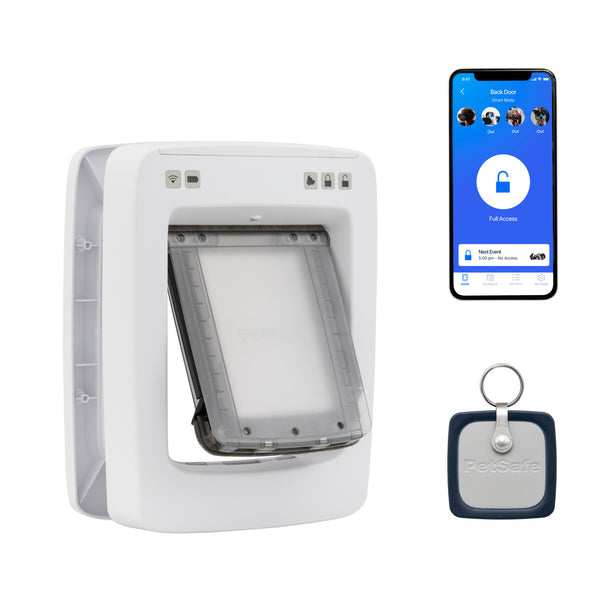
The petsafe smart dog door lane is for households that want access rules from a phone: lock states, schedules, and connected-pet management. The petsafe smartdoor connected door earns that extra complexity only when those rules will alter the daily routine.
That change is only useful if the household will maintain the app and device setup. Current quick-start material uses the My PetSafe app to add each pet. Current retailer information says microchip pairing is limited to the Medium Connected door, so a large SmartDoor buyer should not assume collar-free chip access.
Pros
- Current product material supports app-led setup and individual-pet management.
- Schedules and remote lock controls can suit a multi-pet or changing routine.
- Medium models have a distinct microchip capability to investigate for collar-free access.
Cons
- WiFi, app, sound, setup, and tag or chip compatibility can become part of the daily routine.
- Microchip access is not a feature to generalize from Medium to every size.
- Customer reports include setup, tag detection, training, and support frustrations; those reports are not a product-wide reliability measure.
Best for
A household that wants connected rules more than a basic key flap.
Detailed analysis
The petsafe smartdoor connected door earns its added complexity when a household needs a real schedule or remote check, not merely a locked flap. A nervous pet may need patient training around a sound and moving lock, and an app-connected door deserves a plan for network interruptions. WiFi Pet Doors and App Control: What Still Works Offline? sets up the questions to ask before the connected layer becomes a surprise.
Electronic Pet Door
Quick verdict
The Electronic Pet Door is the simpler petsafe electronic pet door lane. A compatible collar key unlocks the flap; the pet still pushes through it. There is no reason to call it an app door, a motorized panel, or a microchip reader.
Pros
- Electronic key access can keep the routine simpler than an app system.
- It suits a household where a collar key is workable and remote controls are unnecessary.
- It is a distinct, more basic lane than SmartDoor Connected.
Cons
- A collar key must remain on the pet.
- It does not give the household app schedules or remote controls.
- The flap and opening still need a realistic pet-size and training check.
Best for
Dogs or cats that reliably wear a collar key and owners who want electronic access without building a connected-home routine.
Detailed analysis
The smartdoor electronic pet door is a controlled flap, not a powered passage. The petsafe electronic pet door is a reasonable middle ground for a dog owner who wants an authorized key but has no use for phone alerts. It is not an ideal cat answer when the cat loses collars or the household needs chip-based identity. Best Electronic Dog Doors for Large Dogs, Small Dogs, and Wall Installs helps with the dog-size and installation comparison before the word “electronic” overwhelms the basic fit question.
Microchip Cat Door
Quick verdict
The petsafe microchip cat door is the clearest PetSafe choice for a cat household that wants collar-free selective entry. Its question is not whether it has the most connected features. Its question is whether registered cats can get home without turning the neighbor cat into an uninvited tenant.
Pros
- Implanted-chip access avoids making a collar the household key.
- The product lane is built around cat-sized selective entry rather than dog-door app controls.
- Four-way manual locking provides simple household control.
Cons
- The opening is cat-sized; measure a large cat before making a cut.
- Chip compatibility, flap sound, and training can affect day-to-day success.
- It does not inherit SmartDoor Connected app functions or large-dog capability.
Best for
Cats that are implanted-chipped, do not reliably wear collars, and need unwanted-animal exclusion more than a smart-home dashboard.
Detailed analysis
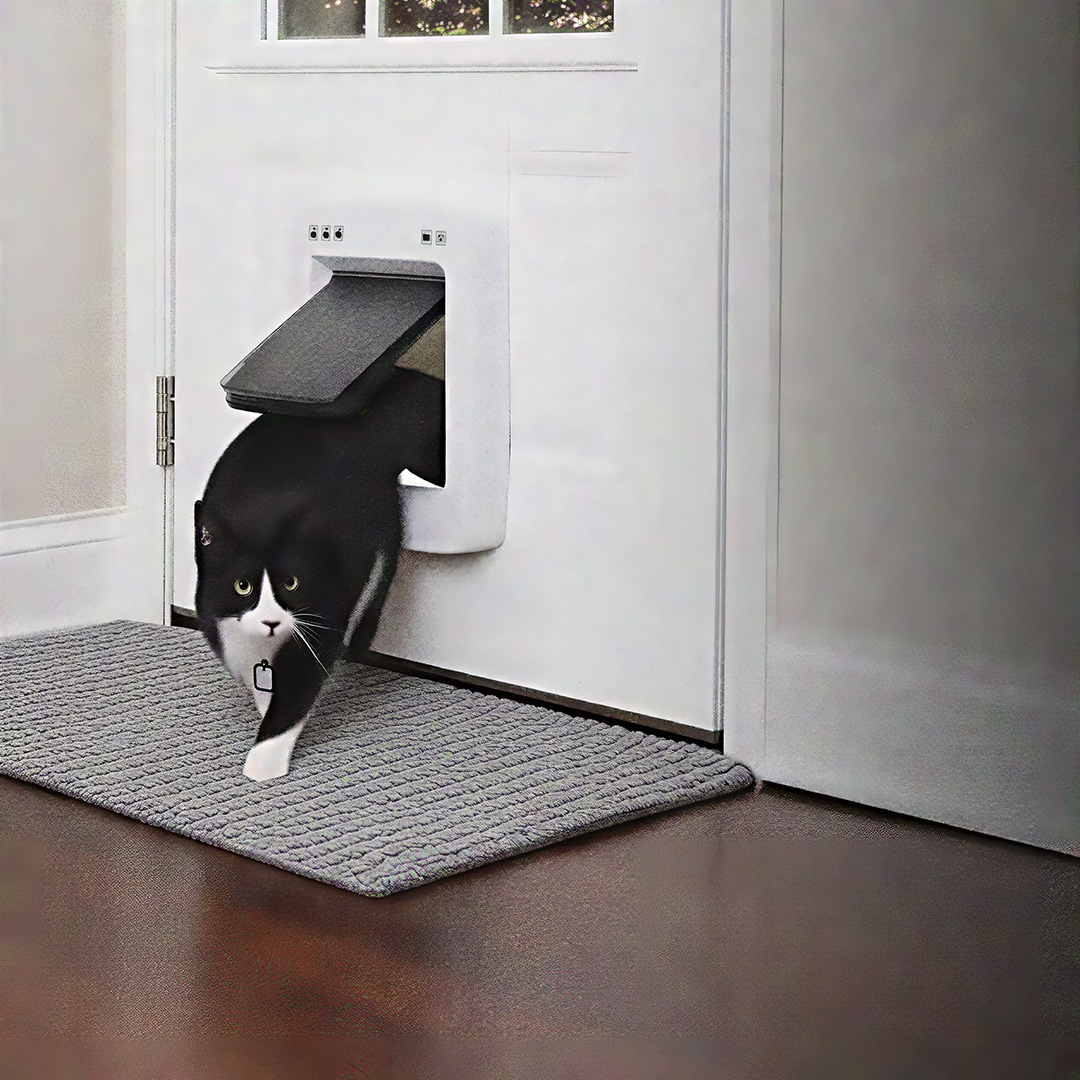
This is not a little petsafe smart dog door. A cat can avoid the collar key, but the household still needs to register the chip, confirm fit, and teach the cat that the flap is safe. Retailer feedback includes grateful selective-entry owners alongside fit and installation concerns. Individual reports do not predict one flap’s future, but they make a deliberate measure-and-training plan sensible. Best Electronic Cat Doors and Microchip Cat Flaps for Selective Entry covers alternatives when the cat’s access rule is more important than the PetSafe brand.
Choose the Microchip Cat Door when the core problem is collar-free selective entry for a cat.
Extreme Weather Sliding Glass Pet Door
Quick verdict
The Extreme Weather Sliding Glass Pet Door is not an electronic gatekeeper. It is an installation-context option for a compatible sliding-glass opening. Its appeal is avoiding a new cut in a wall or standard door, while its risks are track, height, lock, and clearance compatibility.
Pros
- Provides a PetSafe patio-panel route for a suitable sliding-glass door.
- Keeps the buying decision focused on existing opening and panel fit.
- Weather-oriented construction is relevant to a patio context, subject to correct installation.
Cons
- It does not supply app control, microchip recognition, or electronic key access by itself.
- A sliding panel can change the closing and locking arrangement of the human door.
- Every patio door needs a track, height, lock, and pet-clearance check.
Best for
A home with a compatible sliding-glass door where the installation format matters more than connected or selective-entry features.
Detailed analysis
The petsafe sliding glass pet door is the answer when the question is “where can the pet door go?” rather than “which pet gets permission?” It is easy to make a patio insert sound universal; it is not. Measure the track, panel height, usable pet opening, and lock arrangement first. Where to Install an Automatic Pet Door: Wall, Standard Door, Patio Panel, or Sliding Door helps compare that choice with a wall or standard-door opening.
A final fit check
Do not start with the PetSafe logo. Start with the pet and the opening. A large dog needs enough physical clearance before any collar key or app setting becomes relevant. A cat that cannot keep a collar on needs a microchip-first lane, not a SmartDoor workaround. A patio opening needs a panel fit before smart features enter the conversation. That is the useful dividing line between a petsafe smart door and a smartdoor electronic pet door: access method and installation must match the daily problem.
Final recommendation summary
PetSafe is strong when the model lane matches the household: connected control for a changing routine, collar-key access for a simpler daily door, chip-based entry for the cat that loses collars, and a patio insert for the home that needs its glass left intact.
The wrong choice is usually visible early: an app-free household, a collar-hating cat, a pet that does not fit the opening, or a patio door that cannot take the panel. Complete Guide to Automatic Pet Doors for Dogs and Cats helps resolve those questions before a brand name turns into a shortcut.