Choosing an automatic dog door for your home isn’t one decision. It’s four stacked on top of each other: where your pet naturally walks, how much human doorway you’re willing to give up, whether the pet needs a large opening or selective entry, and whether the product moves a flap, a panel, or the sliding door itself.
Location is the feature that comes before the features. No app rescues a badly placed doorway, and a simple access system in the right spot can feel like the smartest thing in the house.
Wall installation: permanent, flexible, and not a weekend project
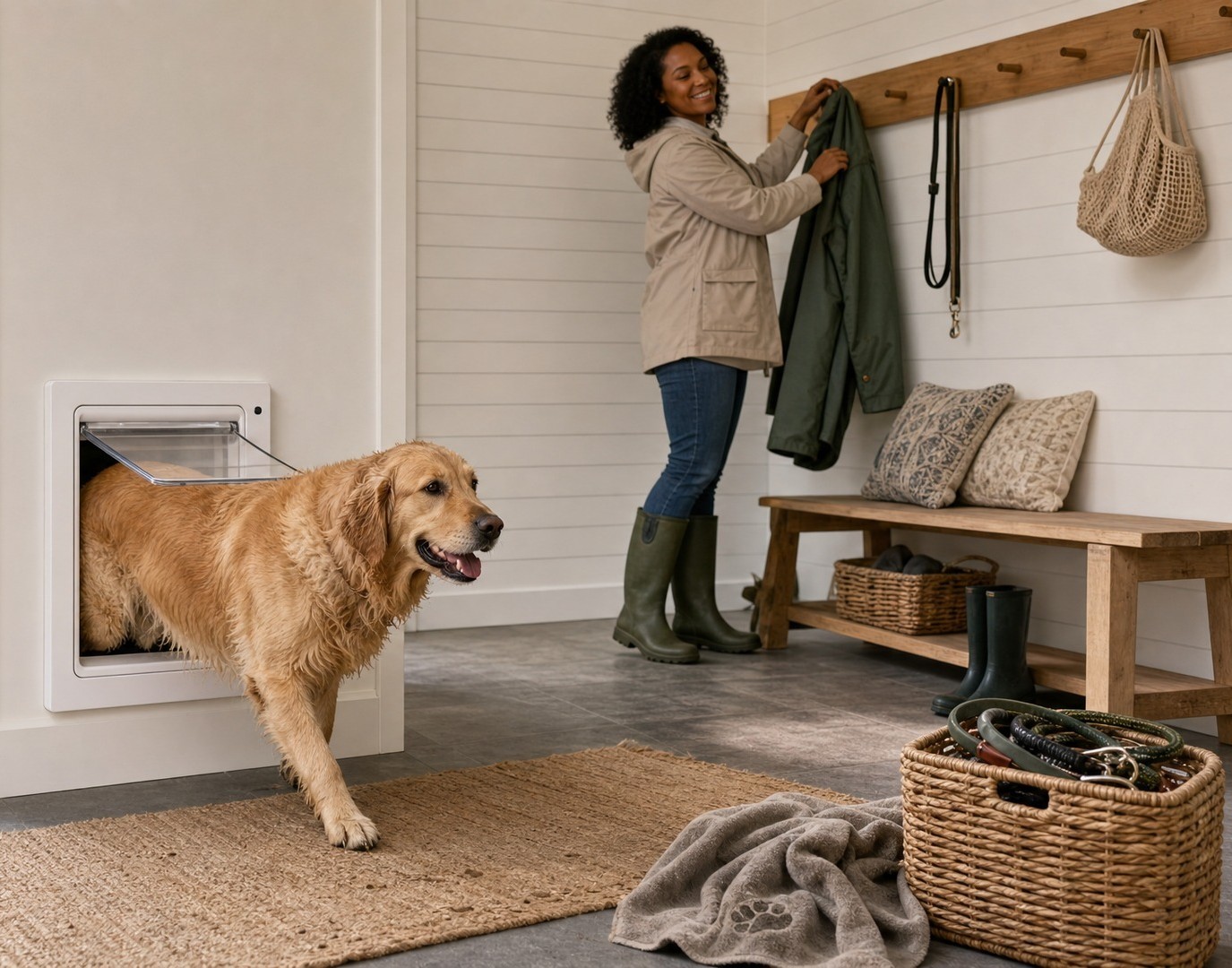
An electronic dog door for wall installation frees you from treating the back door as the pet route. That’s ideal for a large dog, a family doorway that’s constantly in use, or any spot where the pet needs a straight approach rather than a detour through the kitchen. It’s also the option that lets you put the door exactly where the dog already wants to go, which matters more than people expect.
What it brings with it: wall depth, exterior finish, weather exposure, power routing, and safe landing space on both sides. A wall pet door is usually the better long-term answer than a cramped cut in an exterior door — and it’s the one to have installed professionally rather than attempted on a Saturday. Use Best Electronic Dog Doors for Large Dogs, Small Dogs, and Wall Installs to settle the product, then confirm feasibility for your actual wall.
Standard exterior doors: direct route, limited real estate
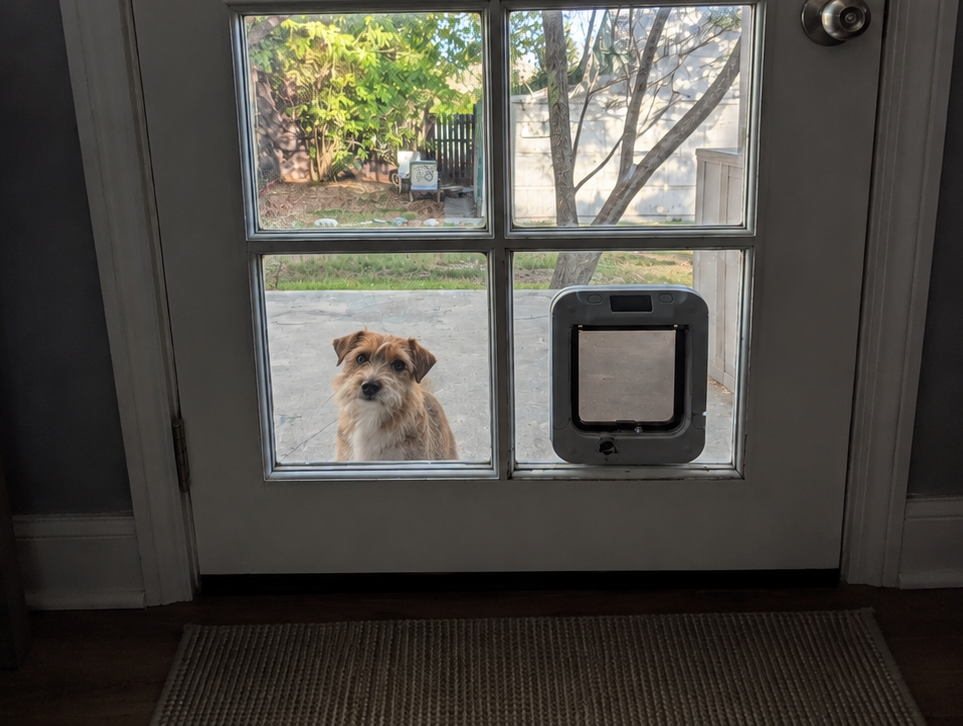
The exterior door is the familiar choice, mostly because the pet already uses it. An electronic pet door fits neatly there when three things line up: the door has room for the opening, the pet clears it comfortably, and the weather seal keeps earning its keep through a winter.
For a dog, look at stride, shoulder and hip clearance, and the path to the yard. For a cat, the more useful question is usually whether a smaller selective-entry door will keep the neighbor’s cat out. PetSafe’s Electronic Pet Door and SmartDoor Connected show why one exterior-door location can support either simple local key access or a connected routine, depending entirely on which model you buy — our PetSafe Smart Door and Electronic Pet Door Review separates them.
The constraint nobody mentions: a pet door in an exterior door means the whole assembly is now heavier and less well insulated, and the door still has to close and lock like a door.
Patio panels: a sliding-door location with a pet flap in it
An automatic patio dog door or sliding glass pet door panel stands in the sliding-door track and contains its own pet passage. It’s a good answer when cutting a wall isn’t appealing, when the slider is where the pet already goes, or when the household wants something more reversible than a hole in the building.
The trade-offs are real: you permanently lose some of the human doorway width, and track fit, panel height, and weather sealing all have to be right. High Tech Pet’s patio versions put a powered pet door inside the panel, which is the version to look at for a large dog — our High Tech Pet Power Pet Automatic Door Review covers the sizing.
One caution worth stating plainly: an electronic cat door for sliding glass door use is still a separate selective-entry product sitting inside a panel. “Sliding” describes where the system lives. It tells you nothing about whether the flap is smart, electronic, microchip-enabled, or entirely manual.
Sliding-door openers: the home door itself moves
An automatic sliding door opener for dogs does not put a pet door in your slider. It motorizes the slider. A patio panel is an insert that stands in the sliding-door track and contains its own pet passage; your human door still opens and closes manually around it. Wayzn offered the whole-slider architecture, but based on the latest information, we no longer recommend them.
This is the distinction underneath every “automatic sliding door opener for dogs” search. If you want the home slider to move, you mean an opener. If you want a pet passage that lives in the sliding-door opening, you mean a panel. The High Tech Pet Wi-Fi Patio Door is the panel type, with a powered pet door built into it.
If you rent, start here
Renting narrows the field usefully rather than ruining it. Cutting a wall or an exterior door is almost always off the table, which makes a compatible patio panel worth a look.
A patio panel is the classic renter solution: it stands in the track, comes out when you leave, and does no permanent damage. Check your lease anyway — some prohibit anything that alters the door’s locking arrangement, which a panel does.
Ask before you install, keep the original hardware, and photograph the doorway before anything changes. That’s a boring sentence and it has saved a lot of security deposits.
Match the installation to the pet, not just the house
Large dogs need clear space and an approach that isn’t awkward — a door reached by squeezing past a grill and a recycling bin will get used reluctantly at best. Cats usually need the opposite: a small, quiet route that doesn’t feel like a confrontation, ideally somewhere the household isn’t constantly walking through.
And check what’s on the other side before you commit to a location. A perfect installation opening onto the side yard where the gate doesn’t latch is a worse decision than an imperfect one opening onto a fenced patio.
Choosing a location in four questions
Work through these in order and the location usually picks itself.
Where does the pet already go when it wants out? Put the door there if the structure allows it. Fighting an established route is a losing game.
Can that spot be cut? A wall or exterior door needs the right structure, depth, and a power route for anything electronic. If the answer is no, check whether the slider can take a patio panel.
Is a slider involved? A panel in the track costs you doorway width and gives you a pet-sized passage; it does not move the whole door.
How big is the pet? Above a certain size the flap options quietly disappear. Check the usable opening of a powered dog door in a wall or patio panel rather than assuming a full-height slider will be available.
Frequently Asked Questions
Is a patio panel the same as an automatic sliding pet door?
No, and this is the most common mix-up in the category. A patio panel sits in the door track and contains a pet flap. An automatic sliding pet door opener moves a compatible existing sliding glass door.
Can I put an electronic dog door in a wall?
Several products support wall installation. Wall thickness, structure, weatherproofing, power routing, and professional feasibility all need confirming for your specific home and model before anyone starts cutting.
Is a standard door or a wall better for a large dog?
Whichever gives the dog comfortable clearance, a safe approach, and a sensible route outside. A wall offers more freedom of placement; a standard door is simpler when the existing route already works.
Can a sliding glass pet door keep neighbor cats out?
Only if the access mechanism inside it does. A sliding-door location supplies no microchip or collar recognition by itself — that’s a property of the flap, not the doorway.
What is the best pet door option for renters?
A compatible patio panel avoids a permanent cut. Check the lease first, particularly any clause about the door’s locks.
The practical takeaway
Choose the location first: a wall for a dedicated permanent route, an exterior door for the familiar path, a patio panel for a reversible insert. Then pick the dog or cat product, with the controls you need, that belongs in that spot — Complete Guide to Automatic Pet Doors for Dogs and Cats covers the rest of the decision.