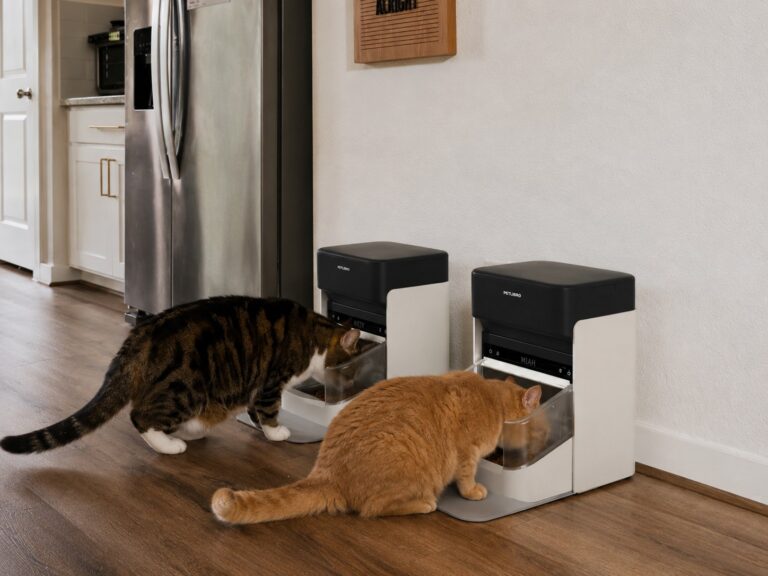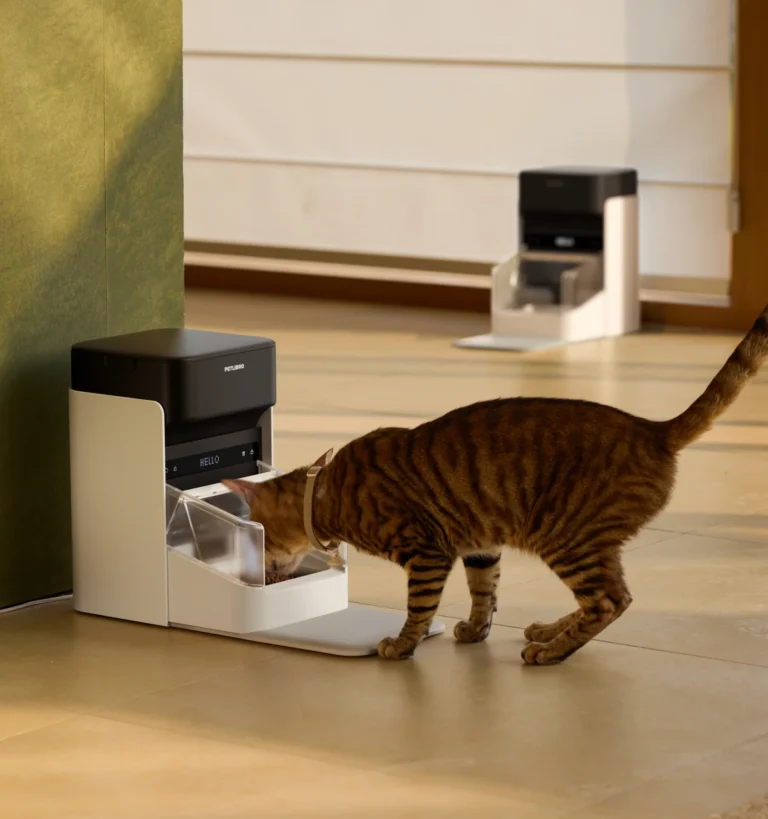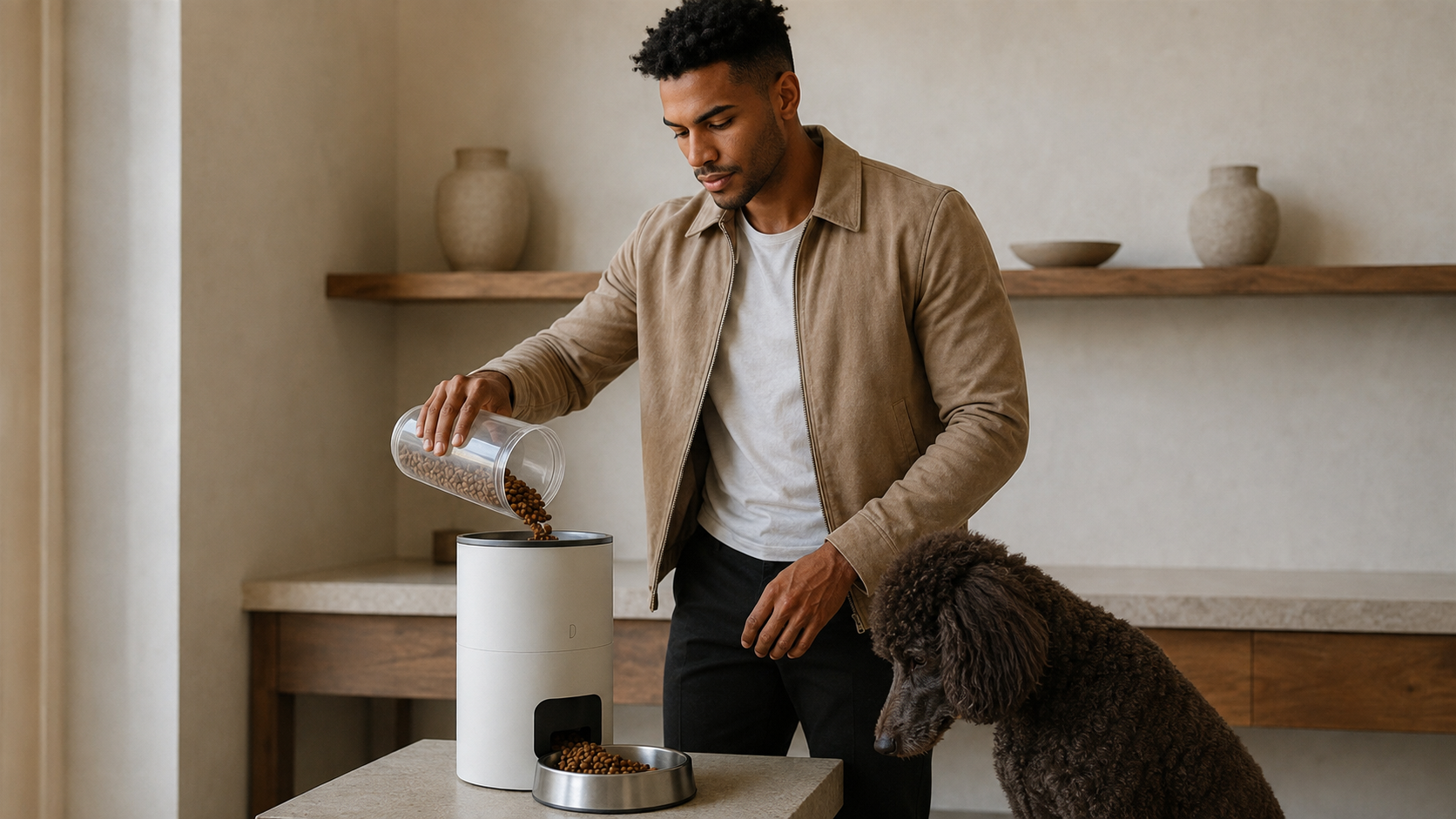
Gravity dog feeders and timed automatic feeders look like cousins in the product aisle: reservoir on top, bowl on the bottom, dinner somewhere in the middle. They are doing different jobs, and the resemblance has launched plenty of wrong purchases.
A old fashioned gravity feeder keeps topping up the bowl as the dog eats. A timed automatic feeder releases a programmed amount at a programmed time. Gravity reduces refills; a timer creates actual meal boundaries.
If continuous access is the plan, gravity may be enough. If breakfast belongs at 7:00 and dinner at 6:00, it cannot help. There is no clock hiding in the plastic and refusing to clock in.
| Question | Gravity feeder | Timed automatic feeder |
|---|---|---|
| Does it serve food at set times? | No | Yes |
| Does it measure scheduled portions? | No | Yes, within the model’s calibrated range |
| Does it keep the bowl topped up? | Yes | Only by programmed meals |
| Does it need power? | No | Usually batteries, AC power, or both |
| Can it jam? | Food can bridge at the outlet | Food can jam in the outlet or motorized mechanism |
| Best for | Pets allowed continuous access and owners reducing refill frequency | Pets on a meal schedule or measured routine |
How a Gravity Feeder Works
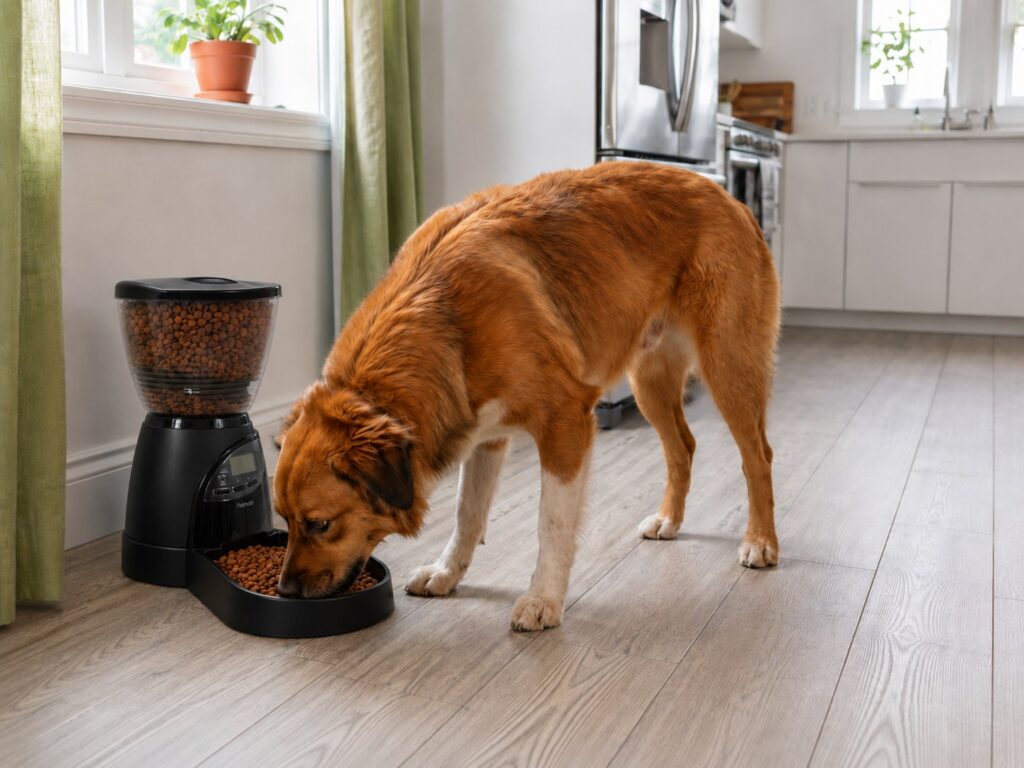
A gravity dog food dispenser places a reservoir above an open bowl. When the food level in the bowl drops below the outlet, more food falls until the pile blocks the opening. No timer, sensor, motor, or portion program is involved.
That simplicity has real advantages. A manual dog feeder does not lose settings, need batteries, or care about a power outage. It is easy to understand and often easy to clean. The food path can still bridge when kibble is too large, irregular, oily, or packed tightly, so “no motor” does not mean “no checks.”
Petmate gravity feeders represent the straightforward lane: a reservoir, an outlet, and a bowl. Their value is convenience between refills, not precision. Petmate Le Bistro Portion-Control Feeder is the Primary timed contrast because its assignment is scheduled dry-food delivery, not keeping an open bowl continuously supplied.
How a Timed Automatic Feeder Works
A timed feeder stores meal instructions and uses a motor to turn an impeller, auger, drum, or tray. It can serve several meals, split a daily ration, and limit how much food reaches the bowl at each event.
Its “portions” must be measured with the actual kibble. Different shapes and densities change the amount produced by one motor step. A timed feeder also adds maintenance: batteries or power, clock checks, chute cleaning, and test cycles.
How Automatic Pet Feeders Work: Timers, Portions, Sensors, and Jams goes deeper on the mechanism and its common failure points.
Also considered: PetSafe Eatwell 5-Meal Pet Feeder preloads compartment meals, while PetSafe Smart Feed Automatic Pet Feeder uses a hopper schedule. Both are Secondary contrasts only. Neither is a gravity feeder, and there is no active PetSafe review destination.
Gravity is Sufficient When Refill Convenience Is the Only Job
A gravity feeder can make sense when all of these are true:
- Your pet is meant to have continuous access to the approved dry food.
- You do not need the feeder to enforce meal times or serving amounts.
- The pet does not routinely overeat, guard the bowl, or steal another pet’s food.
- You can inspect the feeder and refresh the food regularly.
- The reservoir and bowl fit the pet physically.
The useful question is not “How many pounds does it hold?” It is “How long should this food sit here before I clean and refresh the station?” A larger reservoir reduces pouring, but it can also hide crumbs, stale food, or an unnoticed bridge at the outlet.
Choose Timed Automatic Feeding When Schedule Is the Job
A timed feeder is the better fit when you need:
- Breakfast or dinner delivered at specific times
- A daily ration divided into repeatable meals
- Smaller scheduled servings instead of an always-full bowl
- A record or routine that household members can follow
- More control over when food becomes available
The feeder should match both minimum and maximum meal needs. A large hopper does not prove it can dispense a large dog’s dinner in one event, and a tiny portion setting does not prove it is consistent. Compare the current Best Automatic Dog Feeders: Picks for Small and Large Dogs if scheduled portions are your real goal.
Large Dogs Change the Fit Test
A gravity feeder for large dogs needs a stable base, a bowl the dog can reach comfortably, an outlet that handles the chosen kibble, and enough capacity to reduce refills without encouraging neglect. A lightweight cabinet may slide or tip when a large dog investigates it.
A timed large-dog feeder adds two more questions: Can one scheduled event release the intended meal? And can the bowl receive that food without piling against the chute? Check output and bowl dimensions rather than relying on a “large capacity” label.
For either format, secure the station without creating a chew or entrapment hazard. Watch the first meals. A dog who leaves a gravity feeder alone when you are standing nearby may discover an exciting new engineering curriculum at 2:00 a.m.
What About Cats?
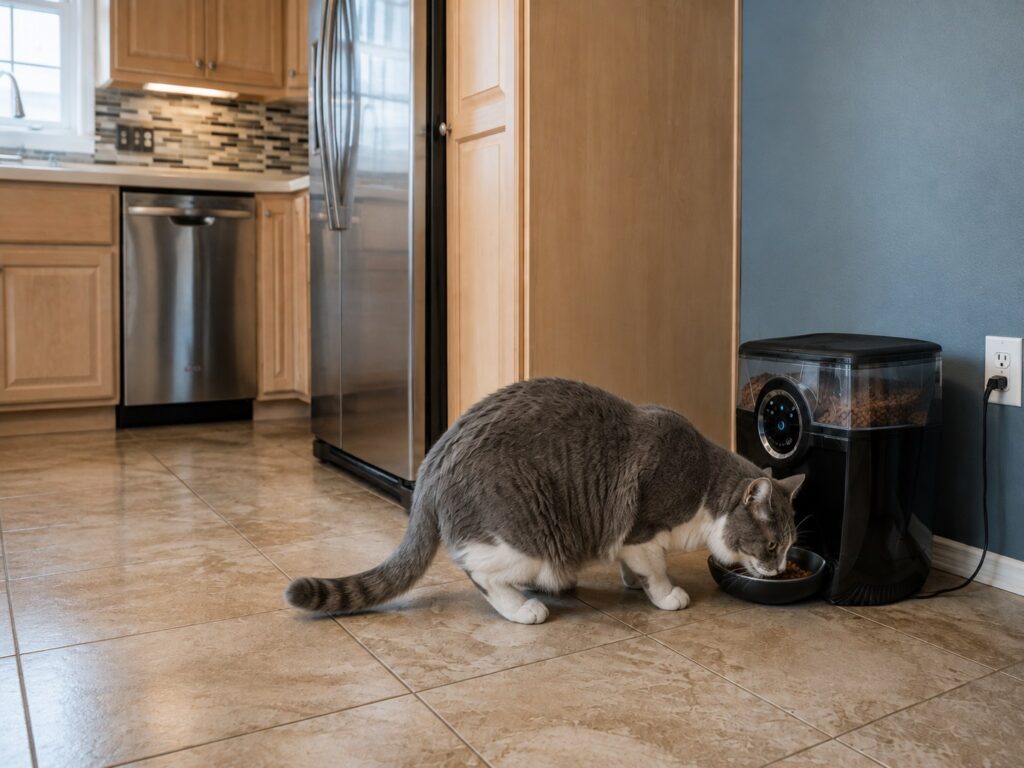
The mechanism does not change for a gravity cat feeder. Food drops whenever the bowl level falls. A gravity feed cat feeder can suit a household where continuous dry-food access is intentional, but it does not assign portions, control timing, or keep one cat out of another’s food.
In a multi-pet home, a gravity cat food dispenser is communal unless it sits inside a protected area. If cats have different diets or one pet steals, use separate stations or identity-controlled access instead.
The Hidden Costs of Both Formats
Food Freshness
Both reservoirs expose dry food to time, air, and residue. Use the maker’s cleaning guidance, keep the lid sealed, and avoid continually pouring new food over old crumbs.
False Confidence
Gravity can look full while food is bridged above an empty bowl. A timed feeder can log a motor event while a chute is blocked. Inspect the physical food path.
Poor Bowl Fit
A deep bowl, high lip, narrow opening, or awkward feeder body can make eating uncomfortable. Measure the station at pet level.
Multi-Pet Conflict
Neither an open gravity bowl nor an ordinary timed bowl identifies the diner. Shared access is appropriate only when the pets safely share the same food and routine.
A Five-Minute Buying Test
Complete this sentence: “I need a feeder because _____.”
- If the answer is “I refill the bowl too often,” compare gravity feeders.
- If the answer is “meals need to happen at set times,” compare timed feeders.
- If the answer is “my pet needs measured servings,” use a calibrated timed feeder.
- If the answer is “one pet steals,” neither ordinary option solves it; look at protected access.
- If the answer is “I will be away,” add a human check-in. Capacity is not care.
Frequently Asked Questions
Are gravity dog feeders automatic?
They refill automatically through gravity, but they do not schedule or measure meals. Calling them automatic without that distinction is how a refill tool gets mistaken for a portion-control tool.
Is a gravity feeder good for a large dog?
Occasionally, but only when access is appropriate and the unit is stable, comfortable, and compatible with the kibble. It is not suitable when the dog needs timed or measured meals.
Can a gravity feeder overfill the bowl?
The food normally stops when the pile blocks the outlet, but the bowl remains continuously available. Spills, bridging, and pet tampering are still possible.
Which type is more reliable?
Gravity has fewer components and no power dependency but is more likely to be manipulated by your dog. Timed feeders provide control that gravity cannot. Reliability should be judged against the job: a gravity feeder still cannot serve dinner at six.
The Bottom Line
We think there are clear benefits to a feeder with more features than a simple gravity feeder. Pick a timed automatic feeder when measured meals must appear at specific hours. If the sentence includes a time of day, gravity has already lost the job interview.
Then match the reservoir, outlet, bowl, and stability to the pet. For the wider set of mechanisms—including wet-food trays and RFID access—read the Complete Guide to Automatic Pet Feeders for Dogs and Cats. Buy the solution to the problem you actually have; the pets will happily invent new problems later.