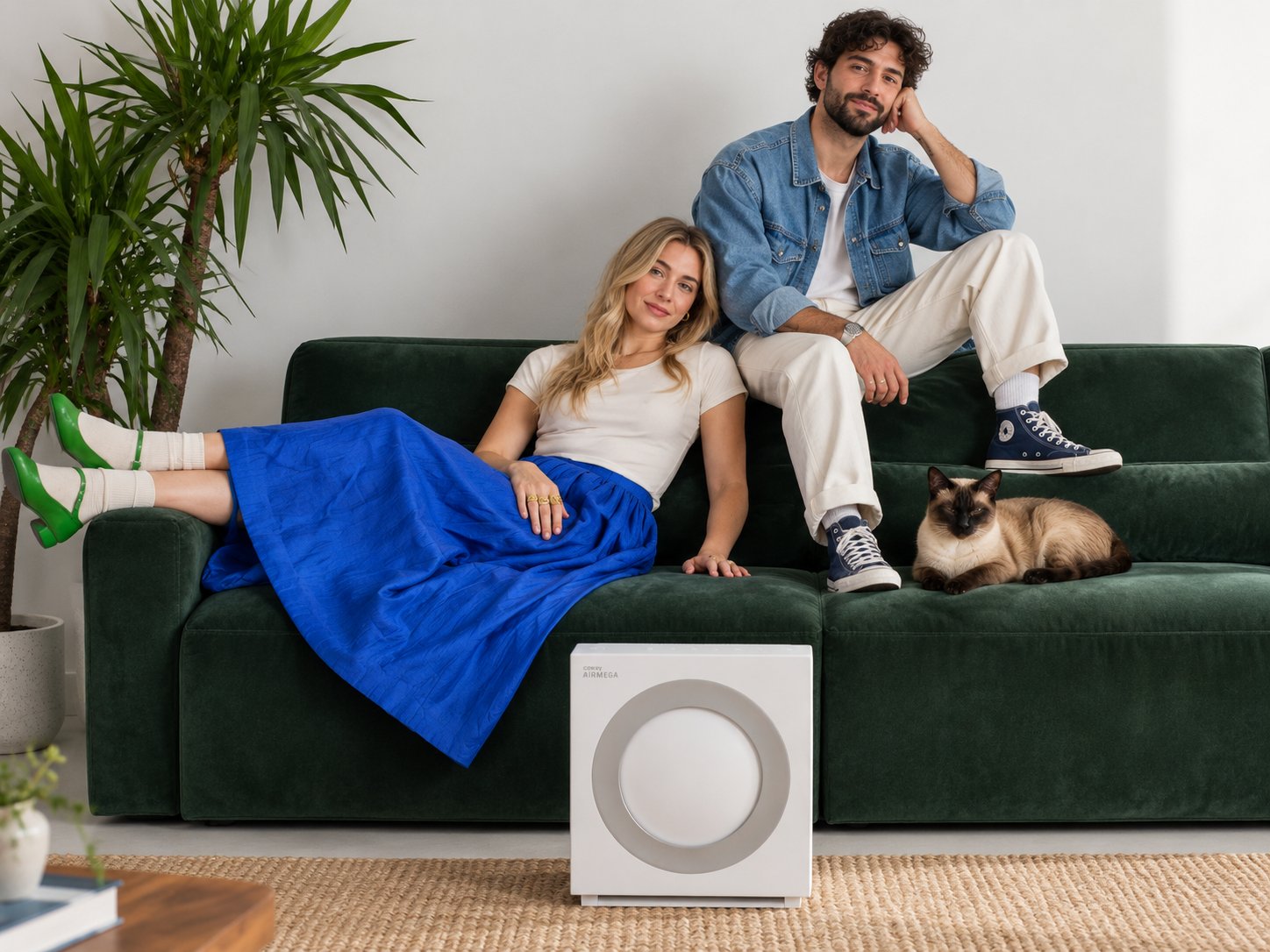
When your dog has shaken rain onto the rug, your cat has claimed the bedroom, and a freshly scooped litter box still seems to have an opinion, an air purifier can sound like the answer to everything. It can help, but first consider what is actually bothering you and your pet.
An air purifier filters airborne material that reaches its intake. It does not vacuum the sofa, scrub a litter pan, wash a damp blanket, or pull air through a closed door. That is not bad news. It helps you choose a purifier that belongs in your home and supports the room your pet actually uses. Start with what is in the air, then the room, then the filter care you can keep up after a busy week.
First, Separate What You Need Help With
Airborne dander and allergy concerns
The American Academy of Allergy, Asthma & Immunology explains that pet allergy involves proteins from sources including dander, skin cells, saliva, and urine. A room-sized cleaner with appropriate particle filtration can be one exposure-reduction measure for airborne material. It is not medical treatment, it cannot remove every trigger from a pet home, and it cannot pull settled material out of rugs, bedding, or your pet’s coat.
That is still a useful role. For an air purifier for pet allergies, focus on particle-cleaning capacity that fits the room and a sound level you can live with. The quiet bedroom unit that stays on can be more helpful than a powerful machine that gets banished after an hour. The model-level decision work belongs in the best air purifier for pets comparison.
Visible fur
An air purifier for pet hair is mostly a maintenance story. The impressive tumbleweed under the coffee table has usually settled before the purifier gets a vote. Vacuuming, grooming, and washing bedding still matter in a home with a loved pet.
The appliance becomes easier to live with when it has a prefilter you can reach and clean. That layer catches some larger debris before it burdens the primary filter. A washable or vacuumable prefilter does not replace cleanup; it keeps the purifier from becoming one more thing you have to rescue after shedding season.
Odor and litter-box concerns
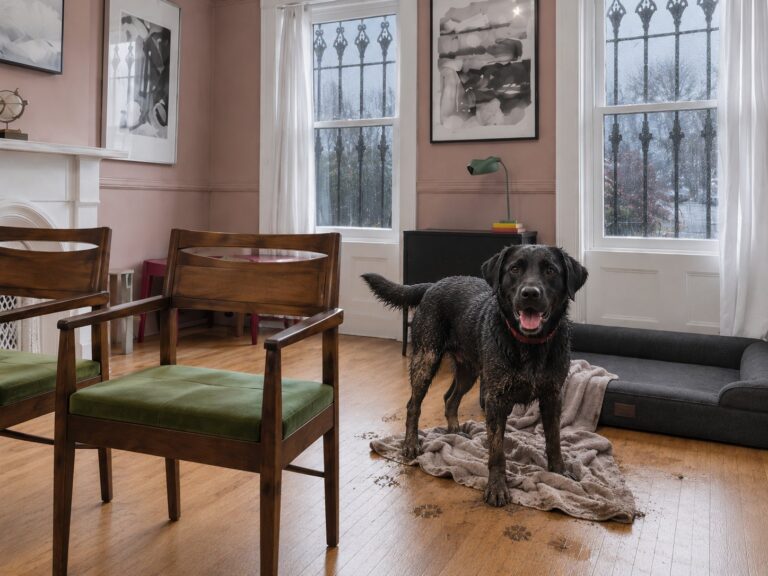
Odor is a different concern. Litter, wet-dog towels, pet bedding, cooking, and stale room air all begin with something in the house. If damp-dog scent is the stubborn part of the problem, air purifier smells like wet dog helps separate fur, dander, and odor concerns. Scoop, wash, dry, and ventilate when appropriate before asking a machine to help. Gas-focused media such as activated carbon may support that work for some odors, but particle filtration is not an odor-erasing promise.
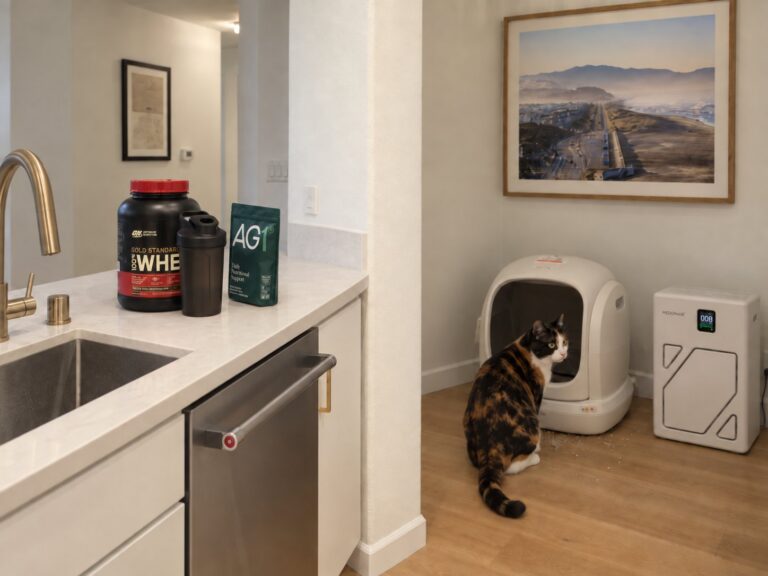
If the reason for shopping is litter-box odor or damp-dog smell, compare filter media, how often it needs replacing, and the routine around the source. A cat air cleaner in a small litter corner still needs that source-cleaning plan. Do not buy a strong particle number and assume it settles a gas-and-cleaning problem. The air purifier for pet odor comparison keeps the distinction clear. When the litter is clean but the room your cat uses still feels stale, air purifier for cat smell is a useful source-cleaning check before buying another filter.
The room is too big for the little machine
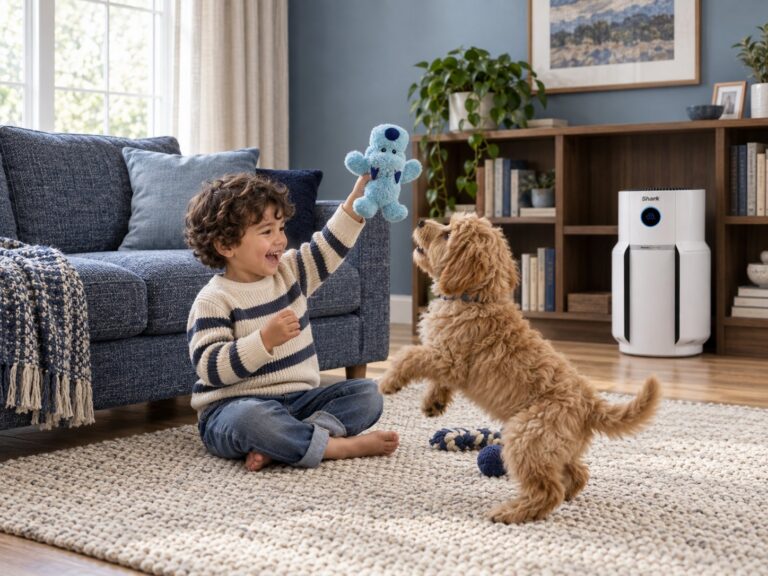
A compact unit can be quiet and capable in a bedroom, then feel hopeless in the living room where your dog naps, your cat uses the sofa as a lookout tower, and the kitchen opens into everything. Treat a closed bedroom, a litter corner, and a large shared room as different assignments. Sometimes one bigger unit fits. Sometimes two room-matched units do more than one dramatic coverage headline. And if the machine must share a visible room, the everyday question of air purifier and pets can matter just as much as what the specification sheet says.
Size for the Air You Need to Move
EPA recommends using room dimensions and clean-air delivery information such as CADR where available. Its consumer guidance relates smoke CADR to the floor area of an eight-foot-ceiling room; taller ceilings, open plans, or a stronger cleaning goal need more capacity.
You do not need to build a calculator into your dog’s bed. You do need to read coverage claims with their conditions attached. One brand may describe a broad area at one air change per hour, while another lists a smaller room at several air changes per hour. Those are not the same experience. Find the condition behind the number. Then, consider your own pet: where they sleep, where they spend the evening, and which room needs the support most.
Levoit lists the Vital 200S-P with a 250 CADR and a 388-square-foot reference at 4.8 air changes per hour. Coway lists the Mighty AP-1512HH with smoke, dust, and pollen CADRs plus a smaller multi-air-change room reference. Both examples show why a useful number includes context. Your own room still gets the final say. For the larger-room decision, see How to Size an Air Purifier for a Multi-Pet Home.
Make Room for the Purifier in Your Home
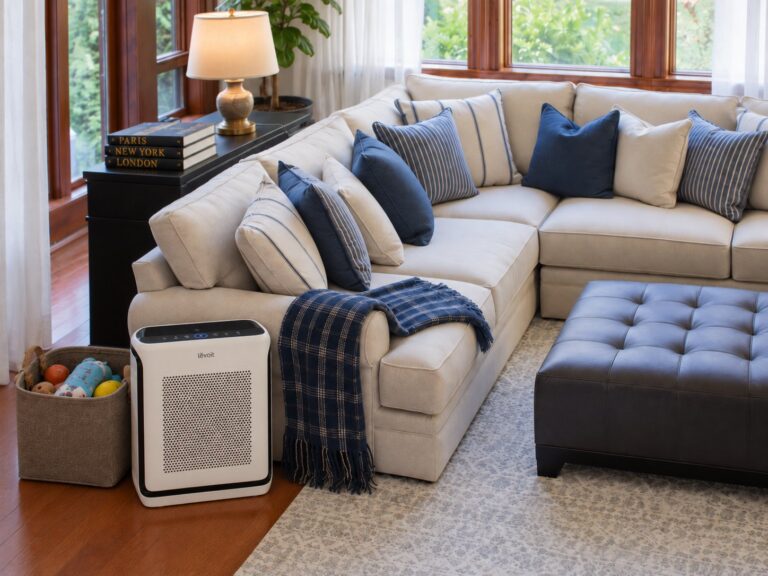
An air purifier is going to live in the room with you, not in an equipment closet. Before you choose, picture where it will sit when your dog is sprawled on the rug or your cat is taking over the sunny end of the sofa. A tall, narrow unit can slip beside a console; a low, wider shape may feel more natural next to a chair. Neither shape is automatically better. The right one is the one that has a clear path for air and does not turn into an awkward obstacle in the room.
Look at the overall footprint, the shape of the intake and outlet, the cord path, and how easy it will be to reach the filter. If you love a calm, uncluttered room, choose a design you will be comfortable leaving out. Hiding it behind furniture may make the room look better for a minute, but it can make the purifier less useful. The placement guide goes deeper on giving it clear air without making it the center of the room.
Read the Filter Details That Matter
Particle filtration handles airborne particles
For airborne dander and fine dust, what matters most is enough airflow through suitable particle filtration. Read current product documentation instead of trusting an old marketplace listing or a vague “HEPA-style” label. A wonderful filter in a tiny machine can only clean the air it actually pulls through.
The prefilter is a real household feature
In a shedding home, an accessible prefilter can matter more than an elaborate display. Levoit documents a washable prefilter on the Vital 200S-P, and Shark describes a debris screen on the NeverChange Air Purifier MAX. They are manufacturer-described maintenance features, not promises about how much fur a machine will capture.
Meowant describes pet-oriented intake designs with cleanable or reusable prefilter components on its current MW-PA16 and MW-PA08 pages. Oneisall describes a dual-sided intake and washable prefilter on its current PP02 page. These are fair examples to inspect when the intake seems to collect fur faster than anything else in the room. They are not a pass to skip room sizing, vacuuming, or filter replacement.
Carbon belongs in the odor conversation
Activated carbon and similar media are intended to address some gases and odors. Their usefulness depends on the media and whether the source has been cleaned. Alen offers an Ultimate Odor filter option with a carbon and catalyst layer; Austin Air describes activated-carbon and zeolite media in the HealthMate Plus. Those are different ownership decisions, not proof that a smell will vanish because a purifier arrived.
Match the Purifier to Your Room
This guide is here to help you choose, not hand out trophies. Brand details matter only when they explain a real-life tradeoff.
For particle capacity in an occupied room, current manufacturer information from Levoit, Coway, and Alen gives you a starting point for comparing airflow, filter options, and tolerable noise. For hair gathering around the intake, Shark, Meowant, and Oneisall offer examples of screens, pet-oriented intakes, and cleanable prefilters that are worth examining. For an odor concern, the odor-media options from Alen, Shark, and Bissell can be relevant only after the litter, laundry, bathing, or ventilation source is handled.
Dyson, Bissell, PuroAir, and Windmill also make purifiers worth a look, and the comparison pages are where specific product lines get weighed against each other. The point here is simpler: choose a design because it addresses the room and the routine in front of you, not because its marketing photo has a golden retriever in it.
Placement Is Part of Performance
Put the purifier in the room where the airborne concern happens. A bedroom unit belongs in the bedroom. A shared-room unit belongs in the lived-in part of that room. A litter-area unit needs to be in that same small space to be relevant. Give the intake and outlet the clearance in the manufacturer instructions. Do not hide the unit behind a sofa, pin it against pet blankets, or expect a closed door to behave like a ventilation duct.
Then, consider your own pet. Choose a stable location. Keep cords away from chewers, pullers, and feet moving through the room. Keep a water bowl, litter scatter, or dog bed from blocking the intake. A curious cat and a cheerful tail can defeat a perfect-looking setup in an afternoon. For the safety mechanics, see air purifier safe for pets. For room setup, see best air purifier for bedroom pets.
Ozone and Ionizers Require a Deliberate Choice
EPA warns against ozone generators sold for occupied spaces because ozone can irritate the lungs. Some electronic cleaners and ionizers can generate ozone during use. A conventional mechanical-filtration approach is easier to evaluate: match it to the room, keep the air path clear, and maintain the filters.
If a unit includes an ionizer, plasma setting, or similar feature, read the current instructions for that exact model and decide deliberately whether it should be active. California’s certified-device list can help screen for ozone and electrical-safety requirements in its program. It is not a cleaning-performance ranking, and it cannot make any product the right fit for every pet.
Think About the Care It Needs
A purifier becomes part of daily life through its filters, odor media, electricity use, and the small supplies that make cleaning possible. A washable prefilter can make fur management less annoying, but it still needs your attention. Heavier carbon media may need more frequent swapping in an odor-heavy room. A very quiet setting may be easy to live with but move less air than a higher fan speed.
Find the current filter schedule and availability before you choose. Then be honest about your home. If a complicated replacement ritual will become a calendar mystery, a simpler, readily available option will be easier to live with. The best care plan is the one that actually happens.
Do a One-Week Reality Check
Before comparing models, watch the room for a week. Where does your pet sleep? Where does fur gather? When is the smell strongest? Is the door usually open or closed? You may find that the scary “entire-house” problem is actually a bedroom problem, a litter-area problem, or a living-room capacity problem.
Notice the things you already do without resentment and the ones you avoid. If you vacuum faithfully but filter reminders vanish into the calendar, a simple accessible prefilter may matter more than extra controls. If the living room is used mainly at night, quiet operation at the setting you will use may be more important than an all-day auto mode. If your puppy chews cords or your cat has a talent for occupying busy floor space, placement may rule out an otherwise appealing machine. The better choice works with the home you share with your pets; it does not require you to become a different kind of pet parent. If you have gone a little nose-blind to the room, the air purifier for pet owners perspective can help you name the actual concern before buying.
Choose by Household Situation
For the bedroom your cat uses, start with particle capacity that fits the room, quiet operation you can use overnight, and a plan for bedding and settled material. For a shared room with a shedding pet, prioritize enough airflow and a prefilter you will clean. For a litter corner, start with hygiene and source control, then consider gas-focused media. For an open multi-pet space, size honestly and decide whether two rooms need two machines.
That is why an air purifier for homes with pets should not be chosen by species alone. Your cat in a closed bedroom and your shedding dog in an open living room call for different air-cleaning approaches. Start with the room, the airborne concern, and the routine—not the pet-themed marketing.
Frequently Asked Questions
Do I need a pet-specific air purifier?
No. Pet-oriented designs can offer useful intake or prefilter details, but room fit, appropriate filtration, and maintenance matter more than marketing language.
Can an air purifier remove hair from floors?
No. It can capture some hair that reaches the intake, but most visible fur settles on floors, furniture, and bedding. Vacuuming, grooming, and laundry remain part of the plan.
Can a purifier help with pet allergies?
It can be one exposure-reduction measure for airborne particles in a room. It is not a cure, treatment, or guarantee of symptom relief. air purifier for pet allergies explains the limits.
Is particle filtration enough for litter-box odor?
No. Odor and particles are different concerns. Clean the source, then consider suitable gas-focused media if odor remains the concern.
Should I run a pet air purifier all day?
Consistent use is usually more useful than short bursts because a purifier only cleans air that reaches it. Choose a setting you can tolerate and maintain the unit as directed.
Is a larger purifier always better?
Not automatically. A larger unit may suit an open room, but the right choice also depends on placement, noise, filter care, and whether you will use it consistently.
Final Takeaway
Choose a pet air purifier for the room and the problem you have today. Airborne dander calls for room-matched particle capacity. Shedding calls for a prefilter routine that does not become a family feud. Odor calls for source cleaning plus suitable media. Large shared rooms call for honest sizing. Once those decisions are clear, shopping gets calmer—and your pet gets to keep being your pet, fur, nap schedule, damp paws, and all.
A small choice made now can make the next busy week easier: put the unit where your family and pets share air, set a usable fan speed, and make the prefilter part of the same routine as the vacuum and laundry. That is the quiet kind of improvement that lasts.