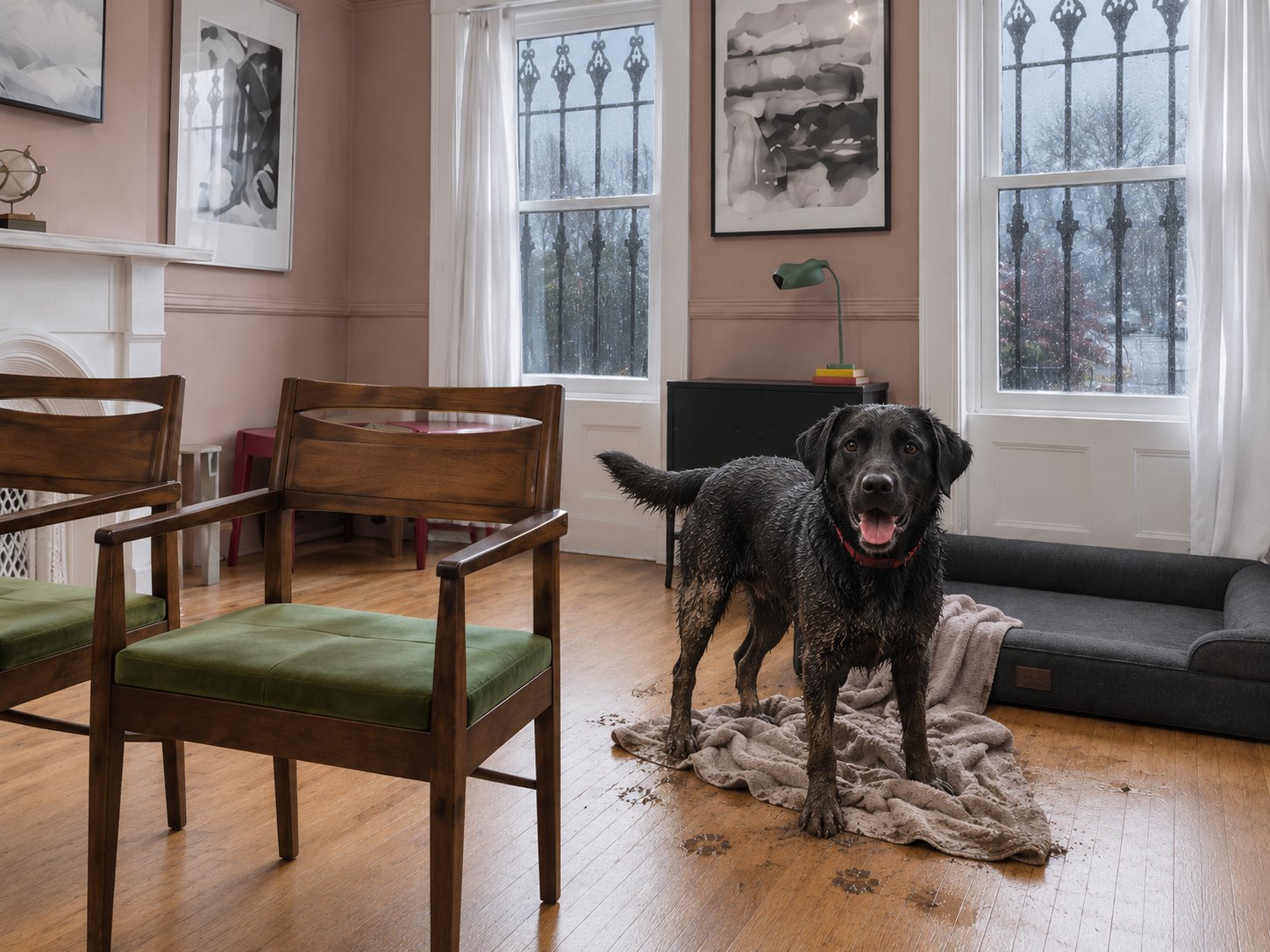
If “air purifier smells like wet dog” has become your late-night search, the machine may not be the real mystery. Wet-dog smell often hangs on after your dog looks dry because damp fur has met the usual suspects: a blanket, car-seat cover, couch corner, collar, or rug that has quietly stopped getting much airflow.
An air purifier can support the room after the source is handled. It cannot dry your dog, wash the blanket, remove an old damp towel, or explain away a persistent smell. Sorting those things out keeps one appliance from being asked to run the entire household.
Three Problems Can Arrive at Once
A heavy-shedding home can bring three separate concerns:
- Visible hair settles on floors, furniture, and the purifier’s intake.
- Airborne dander and dust move through the room and may reach the filter.
- Odor comes from damp materials, body oils, tracked debris, or a source that still needs cleaning.
They overlap in real life, which is why a room can look freshly vacuumed and still smell off. But they need different responses. Hair calls for cleaning and prefilter upkeep. Airborne particles call for room-scale airflow. Odor starts with finding, cleaning, and drying what is carrying it.
Start With the Damp Things
Before you buy or reposition a purifier, do a small wet-dog sweep:
- Wash and fully dry bedding, blankets, towels, and washable covers. A second washable dog blanket lets one dry completely while the other is in use.
- Check your dog’s bed, collar, harness, and the spot where your dog rests after a damp walk.
- Vacuum hair and debris from upholstery seams and rugs.
- Look for low-airflow spots behind furniture or by an entry mat.
- Improve ordinary ventilation where it is safe and practical.
EPA’s guide to air cleaners puts source control and ventilation ahead of relying on an air cleaner alone. That is not a scolding. It gives the purifier a role it can actually handle.
Where an Air Purifier Fits
Once the source work is under way, a purifier can help support air in the shared room. For a heavy-shedding dog home, keep the intake clear and inspect the prefilter often. Fur that mats around an intake is a maintenance signal, not evidence that the unit has cleaned the sofa.
If odor is what brought you here, look at the filter media and how often it needs replacing, not just a HEPA-style particle claim. Use the dedicated pet odor and litter box smell comparison for that decision. It keeps carbon and source-control logic where it belongs.
Do Not Turn Hair Into an Odor Diagnosis
Hair can carry ordinary pet smells and collect dust, but it does not prove that a lingering odor is an air-filtration problem. Your dog after coming in from rain, a blanket that stayed damp, or a stale textile corner may be doing more than the amount of shedding.
For the airborne-particle side—dander, room capacity, and practical hair maintenance—read airborne dander and hair. The point is not to own more devices. It is to choose the right tool for the concern your home actually has.
Keep the Routine Small Enough to Repeat
A workable weekly reset can be very ordinary: wash your dog’s bedding, vacuum the spot your pet uses, wipe the intake, check the filter condition, and give damp gear a place to dry. When the smell returns, trace it before buying another machine.
For shared fabric and stale-room habits that also show up in cat homes, the 5 Reasons Your Home Smells Like Cat Even When the Litter Box Is Clean article offers a related reset route. It is not a substitute for dog-specific cleaning, but fabrics and low-airflow corners do not care which beloved pet made them messy.
Frequently Asked Questions
Will an air purifier remove wet-dog smell?
It may support room air after damp sources are cleaned and dried. It cannot replace bathing, laundry, drying, or investigation of a persistent smell.
Why does my house smell like dog after cleaning?
The remaining source may be in bedding, upholstery, collars, rugs, a damp entry area, or a low-airflow corner. Look for damp material before treating it as an appliance problem. If an old accident spot is part of the story, an enzyme cleaner made for pet stains is the right tool for it.
Does shedding make your dog smell worse?
It can add cleaning and prefilter work, but shedding and odor do not necessarily have the same source. Address both without assuming one explains the other.
Should I run a purifier near your dog’s bed?
It can be helpful in the same occupied room with a clear intake, but it should not be pressed into bedding or furniture. Clean and dry the bed itself.
Is HEPA enough for dog odor?
Particle filtration and odor support address different concerns. Review the filter media, replacement plan, and source-control steps rather than relying on one label.
Final Takeaway
A wet-dog smell is usually a clue from your home, not a cue to buy the biggest purifier. Clean and dry the source, manage shed hair, keep room airflow realistic, and then choose an air-cleaning approach for the specific problem that remains.