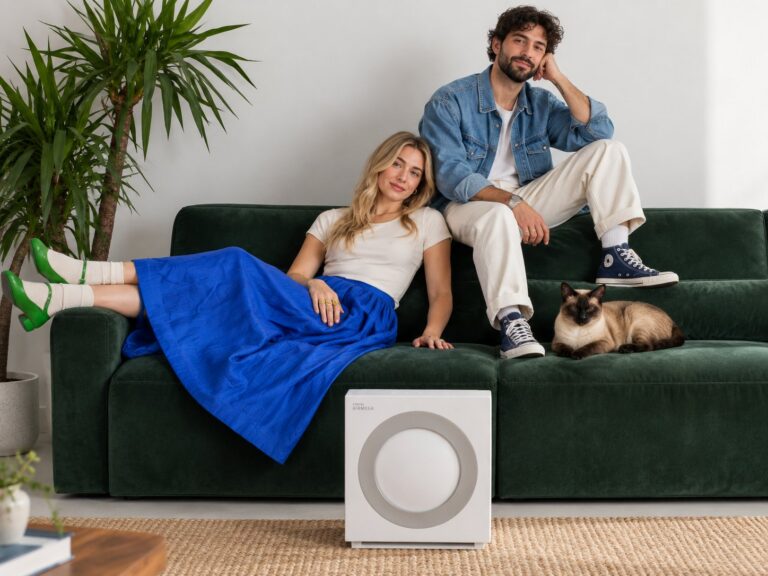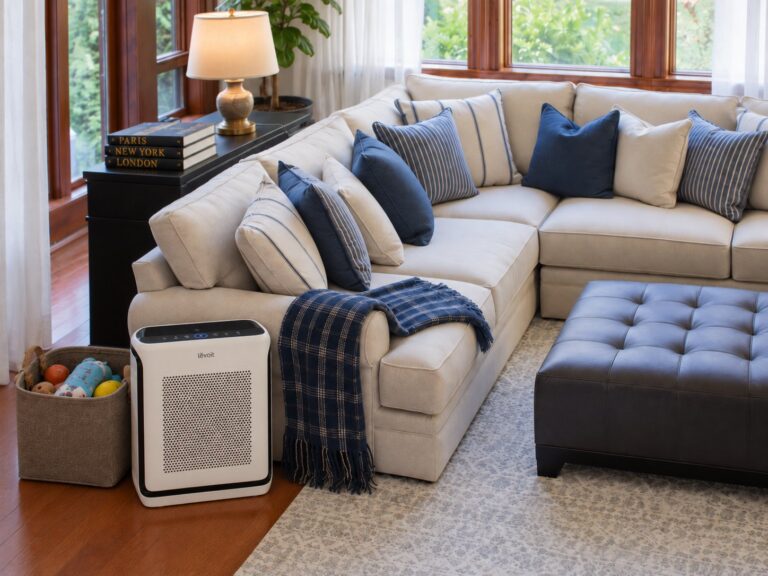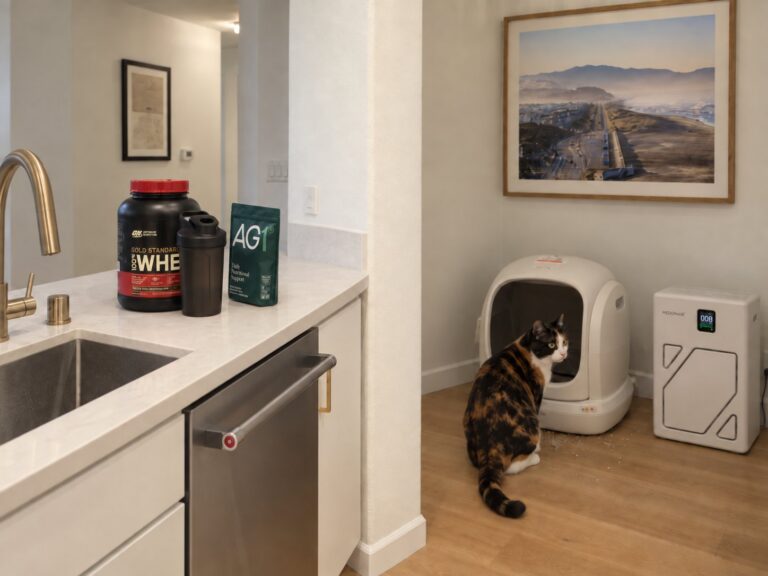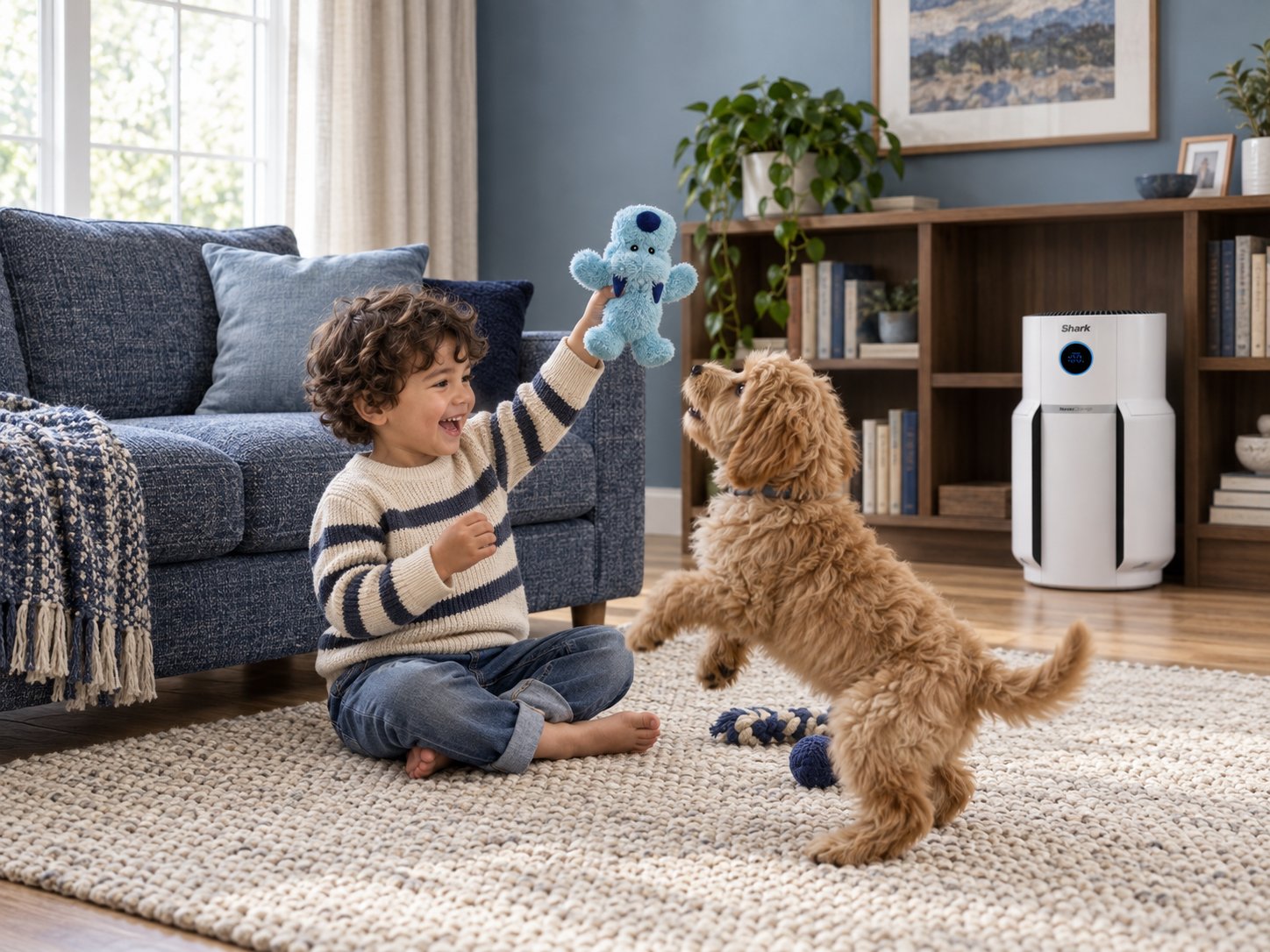
When your cat is sleeping peacefully and you or someone in your family is still sneezy, an air purifier can make a real difference. A correctly sized purifier reduces airborne dander in the room where it runs, which can make day-to-day time with your pet more comfortable when symptoms are mild.
It is not a substitute for medical care when symptoms are serious. But it is a practical way to improve the air in the bedroom, living room, or other space you share with your pet.
Dander, Hair, and Allergens Are Different Things
Pet hair is the visible evidence: on the sofa, under the table, and somehow on a clean shirt. Dander is smaller material from the animal’s skin. AAAAI explains pet allergy as a reaction to proteins found in sources including dander, saliva, and urine. Hair can carry those proteins, but hair itself is not the whole allergy story.
That distinction keeps the chores sensible. Vacuuming, washing bedding, grooming, and cleaning surfaces deal with settled material. A portable air cleaner can only work on particles that are airborne and pass through its filter.
What a Purifier Can Contribute
A correctly sized purifier can reduce airborne particles in the room where it runs. That can be a useful part of caring for the bedroom or shared room where you and your pet spend time.
Two limits matter:
- It is only working in its actual room or area.
- It needs enough airflow and a maintained filter to keep helping.
EPA’s guide to air cleaners is useful here: portable cleaners are room-scale equipment. A device downstairs is not cleaning a closed bedroom, and a small quiet machine may be the wrong capacity for a busy family room.
If allergies affect both the bedroom and the living room, think of them as two separate spaces. One purifier cannot reach through a closed door. A correctly sized purifier in each room you use most can give you more consistent help than moving one machine back and forth whenever you change rooms.
Where It Has Limits
No air purifier removes every allergen from a pet home. It does not wash a blanket, clean an upholstered chair, or stop shedding. Those things still matter because dander can settle alongside visible hair.
The positive case for filtration is straightforward. EPA’s guide to air cleaners says portable air cleaners can reduce indoor particle pollution and notes that portable-HEPA studies have found improvement in one or more allergy or asthma symptoms. AAAAI notes that HEPA air cleaners can be a big help in removing unwanted allergenic particles from the air. For mild pet-allergy symptoms, a well-sized purifier can make the room feel easier to live in. If symptoms are severe, persistent, or include asthma concerns, pair the purifier with advice from a qualified clinician rather than expecting it to carry the whole load alone.
Let the Purifier Do Its Best Work
Give the purifier the best chance to help by pairing it with a few familiar habits:
- Keep its intake and prefilter clear of hair.
- Vacuum and clean the rooms where your pet rests.
- Wash bedding and soft textiles on a routine that fits your home.
- Keep the unit in the room that needs it rather than treating it as a whole-house device.
- Replace filters on the model’s schedule, and sooner when the filter is visibly loaded.
This is not about treating your pet like a problem to manage. It is about making the shared spaces where you cuddle, sleep, and spend time together feel better.
Choose a Purifier for the Room You Share
A brand name or a HEPA-style label is not enough on its own. First decide whether you want cleaner air in a closed bedroom, a shared living space, or more than one zone. Then look for enough particle-cleaning capacity, filter care you can keep up with, and a speed you will actually leave running.
The next step is to compare options for allergies, dander, and hair. If you have not yet measured the room, size the room first. Those decisions belong before a cart, not after it.
Frequently Asked Questions
Can an air purifier remove pet dander?
Yes. It can reduce airborne dander that reaches its filter, especially when the purifier is sized for the room and its filter is kept clean. It cannot reach dander settled in fabrics, floors, or another room.
Is a HEPA air purifier enough for dog allergies?
A HEPA filter can make a noticeable difference in room air when the purifier has enough airflow for the space. Pair it with regular cleaning, filter care, and personal medical guidance when symptoms need more support.
Should I put a purifier in the bedroom?
A bedroom can be a sensible priority because it is occupied for many hours and may be closed off from the rest of the home. Size it for that room.
Do I need more than one air purifier?
Possibly. If you spend time in more than one separate room—such as a bedroom and a living room—each room may need its own correctly sized purifier. Focus first on the rooms where you and your pet spend the most time.
Does hair make allergies worse?
Hair can carry allergen, but visible shedding also creates a cleaning and prefilter-maintenance problem. Treat those as related but different concerns.
Do I need to get rid of my pet?
This page cannot answer an individual health decision. If allergies are affecting you or someone in your family, speak with a qualified clinician. A purifier is not a substitute for that conversation.
Final Takeaway
An air purifier for pet dander is one of the most useful ways to improve the air in a room you share with your pet. A correctly sized, well-maintained model reduces airborne dander and can make everyday time in that room more comfortable when symptoms are mild. It cannot clean every surface, and severe or persistent symptoms deserve medical guidance alongside a purifier. If you need support in more than one separate room, plan for a purifier in each room that matters most.
For the broader picture, return to the Pet Air Purifier Buying Guide: How to Choose for Dander, Hair, and Odor.