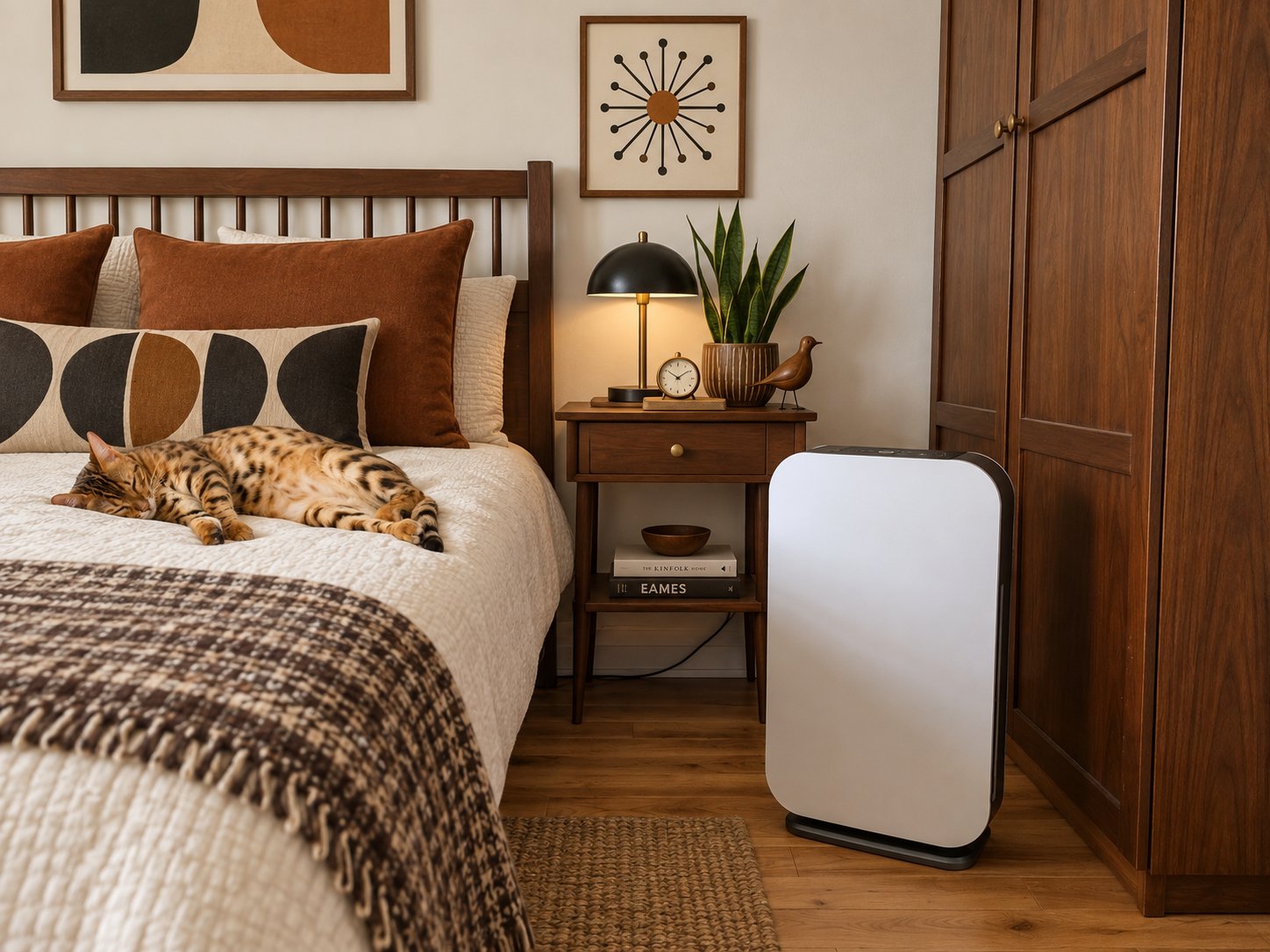
The best place for a quiet air purifier for pets is usually not the place that makes it disappear. A machine wedged behind the sofa may look neater, but if its intake cannot breathe, it has been turned into a very polite piece of furniture.
Placement is a lived-in decision. Your pet may have one route through the room, one favorite nap spot, and surprisingly firm feelings about a new object that hums. Your family may want the unit quiet enough for sleep but open enough to move room air. The goal is simple: give the machine a clear working path without making the room harder for anyone to use.
Begin With the Room That Needs Help
Portable cleaners work in a room or area, not across an entire house. EPA’s guide to air cleaners is a useful reminder that a closed bedroom and an open living room need their own thinking.
Choose the room before the corner:
- Put a bedroom unit where it can run through the night without becoming a bedside obstacle.
- Put a shared-room air purifier where your family and pets actually spend their time, not in a hallway hoping air will travel.
- Treat a separate litter room or closed office as its own zone when it has its own air concern.
If you’re still trying to figure out which rooms you need to cover, use the guide to room capacity for more than one pet. Here we’re chatting about where in the room to put the unit once you’ve already picked the room.
Give the Intake and Exhaust Clear Air
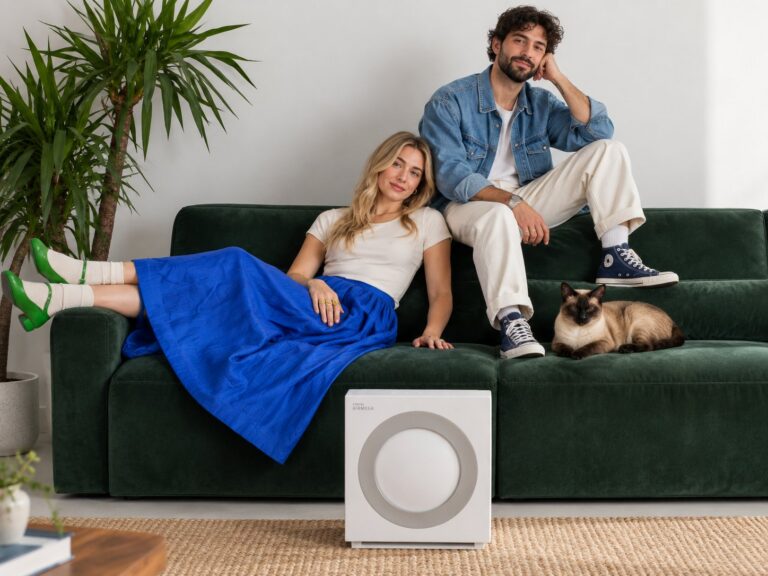
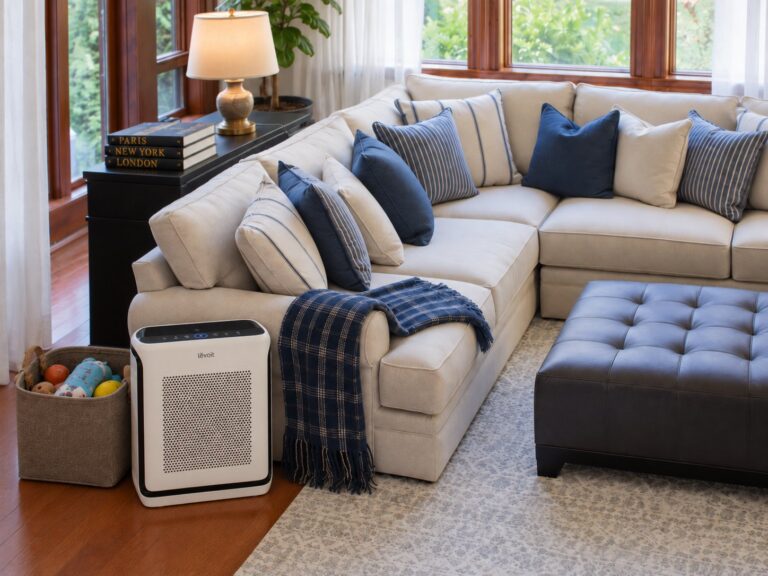
For most air purifiers, start with about a foot of clear space around the intake and outlet. Do not press either side into curtains, a couch, a low shelf, or a deep corner. Keep pet beds, laundry baskets, and a growing pile of toys from turning the airflow path into a barricade.
This does not mean the purifier needs to sit in the middle of the room like a tiny airport tower. It means it needs enough surrounding space to draw air in and send it back out without playing bumper cars with your family. A visible spot beside a console or at the end of a sofa can work better than a hidden spot that cannot move air. If your exact model gives different clearance instructions, follow those.
Bedroom Placement: Quiet Enough to Stay On
A bedroom purifier earns its space by being quiet enough to run, not by winning an imaginary maximum-speed contest. Pick a location that does not blow directly at the sleeper or pet bed, does not create a tripping hazard, and keeps the controls easy to reach.
A low setting may be comfortable at night but may not move enough air for a large shared room. That is normal. Let the bedroom unit handle the bedroom; do not drag it to the living room each morning and call it a whole-home system.
Litter Areas Need Airflow and a Respectful Routine
Do not park a purifier so close to a litter box that scatter, dust, or the box itself blocks the intake. The machine should support the room’s air, not crowd your cat or become another object to clean around.
Scoop and clean the source first. A clear-air path cannot replace litter hygiene, washing nearby textiles, or finding a persistent odor source. If the litter area is part of a larger shared room, place the unit for the room rather than aiming it like a fan directly at the box.
Shared Rooms Need a Clear Place to Work
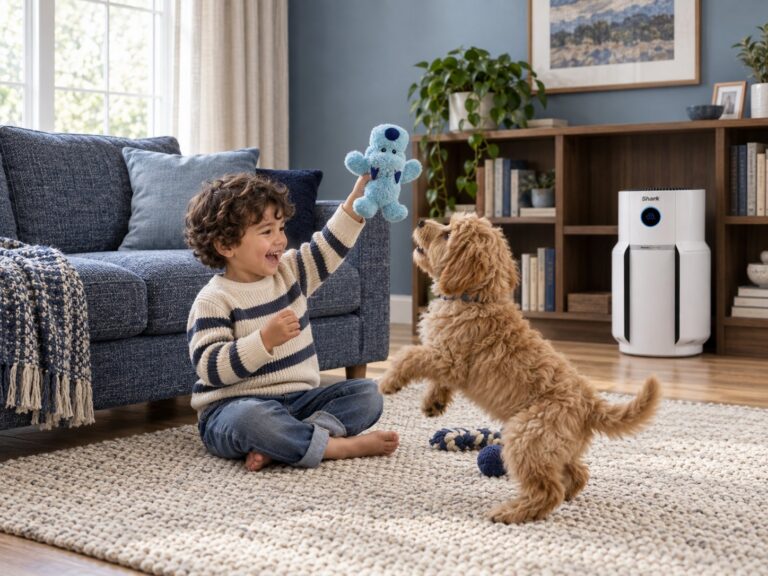
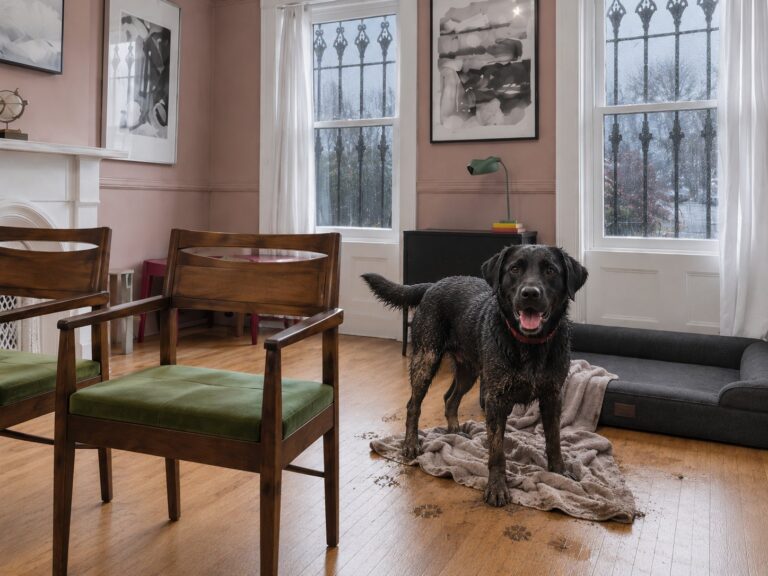
In a living room, avoid hiding the purifier behind furniture just because your dog likes that corner. Give it a stable location with clear air, a reachable cord, and enough room for everyday traffic. If the room opens into a kitchen, stairwell, or another wing of the home, one unit may only serve the main zone.
A device that is visible can still belong. Use a side table, open console end, or intentional wall-adjacent space that preserves airflow. For styling ideas, see 5 Ways to Make Your Pet Air Purifier Part of Your Home Decor; that article owns the decor conversation.
Keep Safety Questions Separate
Placement is not a substitute for understanding the technology inside a machine. For model-specific questions about safe operation and ionizers, use the safety explainer and your product’s exact documentation.
Frequently Asked Questions
Can I hide an air purifier behind a couch?
Only if your model’s instructions allow enough clearance and the intake and exhaust remain open. A hidden unit that cannot move air is a poor trade.
Should the purifier sit next to the litter box?
Keep it in the same room with clear airflow, but do not let litter scatter, the box, or furniture block the intake or disrupt how your cat uses the room.
Is the bedroom always the best place?
Not always. It is a strong priority if it is a closed, heavily occupied room. A shared living room may need its own unit.
Can I run it on low all the time?
A low setting may suit sleep, but it may not move enough air for a larger active room. Match the setting to the room and the time of day.
Do I need one on every floor?
Not automatically. Assess the rooms that are occupied and separated. Closed doors and distinct zones are a stronger reason for a second unit than the number of pets alone.
Final Takeaway
Place the purifier where it has clear airflow and where your family and pets actually need it. Keep it out of blocked corners, size separate rooms separately, and let a quiet bedroom unit be a bedroom unit rather than a whole-home promise.