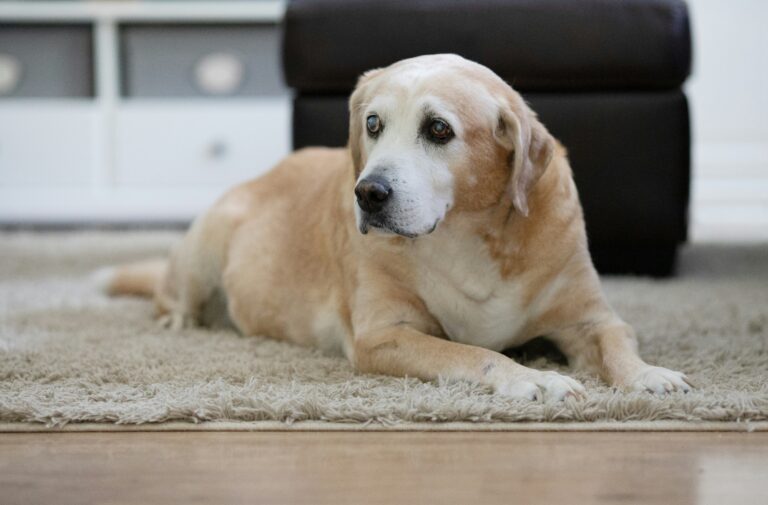
A pet DNA test often begins with everybody looking at the same beloved animal and seeing something different. The shelter called your dog a Lab mix, but somebody sees hound ears and somebody else is certain there is shepherd in that tail. Your cat has a look that seems familiar, yet there is no pedigree tucked into the adoption papers. Curiosity is part of the fun. Sometimes there is a more serious hope too: a medication clue, a health result worth discussing, or one more piece of a rescue pet’s missing story.
Whatever comes back, the animal asleep on your sofa will be exactly the same animal. A report can add context, but only if the test was built for your question and you read percentages as estimates rather than destiny. If you already want a dog-only shortlist, our Best Dog DNA Test Kit guide can help. Cat families can start with our Best Cat DNA Test guide. Pet genetic testing can reveal useful clues, but it cannot prove every part of a family story or replace a veterinarian’s judgment.
Like you, we want curiosity to make life with a pet richer—not turn a much-loved companion into a list of percentages. The most satisfying results often give a family something new to notice, a relative to celebrate, or a better question to bring to the next veterinary appointment. The frustrating ones can be vague, surprising, or easy to overread. Knowing which kind of answer you are buying makes it much easier to enjoy the discoveries, keep the limits in perspective, and choose the best pet DNA test for the dog or cat who is already part of your family.
First, name the question that brought you here
Most kits combine several kinds of information, but those answers are not interchangeable.
- Ancestry estimates compare sections of your pet’s DNA with a company’s reference animals.
- Traits connect selected variants with features such as coat color, hair type, or body size.
- Relative matching looks for shared DNA among other pets in the company’s system.
- Health screening checks selected variants associated with particular conditions or drug sensitivities.
- Identity and parentage testing compares genetic profiles from known animals; it is not the same as an ancestry estimate.
A family filling in a rescue dog’s blank backstory may be delighted by ancestry and relatives. Someone choosing a dog genetic test because they are worried about MDR1 needs a health tier and careful veterinary interpretation. A breeder confirming parentage needs samples or profiles from the relevant parent and offspring, not a colorful mixed-breed chart. Same swab shape, very different promise.
That distinction also helps with cost. Current U.S. offerings range from narrower ancestry products to broader ancestry-and-health packages, and sale prices change often. Relatives, report updates, oral-health features, downloads, and deeper insights may be included only in a particular tier, upgrade, or subscription. A long feature list is not useful if it misses your one important question.
What dog ancestry results can—and cannot—tell you
Dog ancestry services compare your dog with reference groups built from breeds, types, or varieties the company has sampled. The result is an estimate produced by that company’s reference panel and method. It is not a direct reading of a breed label hidden in every cell.
The Embark dog DNA test and Wisdom Panel dog DNA test are two current options that combine dog ancestry with relatives and traits, with health screening available in broader tiers. DNA My Dog offers several dog-focused ancestry packages; our DNA My Dog review looks at that provider on its own terms. HomeDNA, Orivet, and Koko Genetics also have current dog products, with different emphases and report structures.
Advertised counts do not create a fair scoreboard. One company may count breeds, another breeds plus types and varieties, and another may describe genetic markers or reportable conditions. A larger number can sound reassuring without telling you whether your dog’s relevant reference population is well represented, how small components are handled, or how uncertainty is shown.
Appearance is not a reliable referee either. A mixed-breed dog inherits a shuffled set of variants, and the visible features your family notices are only part of that inheritance. The ears do not get veto power. A surprising percentage can be plausible. Two services can also return different labels because their reference animals, thresholds, and algorithms differ. Focus first on the broad picture, read how the company describes trace results, and treat tiny percentages with proportionate caution.
Ancestry offers context, not a personality script. A large peer-reviewed study found breed ancestry was a weak predictor of behavior in an individual dog. We would not change a training plan because a report added a breed at 12 percent—or even at a much larger percentage. Watch the dog in front of you: what motivates them, what worries them, how quickly they recover, and what helps them learn.
Why cat ancestry requires different expectations
Dogs and cats have different domestication histories, breed histories, and population structures. Those distinctions are more useful than treating either species as the benchmark. Many cats are random-bred rather than descendants of a recently documented breed line, and feline populations can overlap geographically and genetically. Companies also describe cat results with unlike terms: breed, population, category, or similarity.
Wisdom Panel Complete for Cats currently reports breed and population ancestry alongside health and trait information. The Basepaws cat DNA test compares a cat with its feline reference groups and includes oral-health reporting in its current Breed + Health product. Our deeper guide to cat ancestry explains why those findings should not be read exactly like dog breed percentages.
A cat genetic test cannot create the missing family tree. Formal pedigree or registration depends on documented lineage and registry requirements. Population similarity can tell you that parts of your cat’s DNA resemble a reference group; it cannot prove that the cat is a registered member of that breed. This limit matters most when a result seems to confirm a story you already hoped was true.
Health results are screens, not diagnoses
Health reporting can be the most useful and the most unsettling part of a pet DNA test. A detected variant means the laboratory found the tested genetic change. It does not automatically mean your pet has the condition, will develop it, or needs a change in care. Clinical importance can depend on the gene, inheritance pattern, breed background, penetrance, age, symptoms, and whether the association is well established for that pet.
UC Davis veterinary guidance recommends treating direct-to-owner results as information to discuss with a veterinarian, not as a replacement for veterinary evaluation. If a result could change medication, breeding, surgery, monitoring, or a major care decision, save the exact variant, genotype, test method, and company explanation. Your veterinarian can decide whether clinical examination, a diagnostic workup, or confirmation through another laboratory is appropriate.
MDR1 is a good example. Variants in the ABCB1 gene can affect sensitivity to certain drugs. A result can be valuable to the veterinarian choosing or dosing medication, but it is not a reason to stop, start, or change a drug yourself. Washington State University’s MDR1 program provides veterinary genetics context for the finding.
Some cat reports include a genetically predicted blood type. That prediction does not replace clinical blood typing or crossmatching. Cornell’s diagnostic guidance explains that transfusion compatibility is determined with clinical testing, and cats can have naturally occurring antibodies that make a mismatch dangerous. Bring the genetic result to the veterinarian as background; do not use it alone for a transfusion or breeding decision.
A negative health panel has limits too. It means the tested variants were not detected as reported. It does not cover every genetic change, every disease, or every future health problem. Routine care and attention to new symptoms remain just as important after a reassuring dashboard.
A clean sample protects the answer—and your pet’s trust
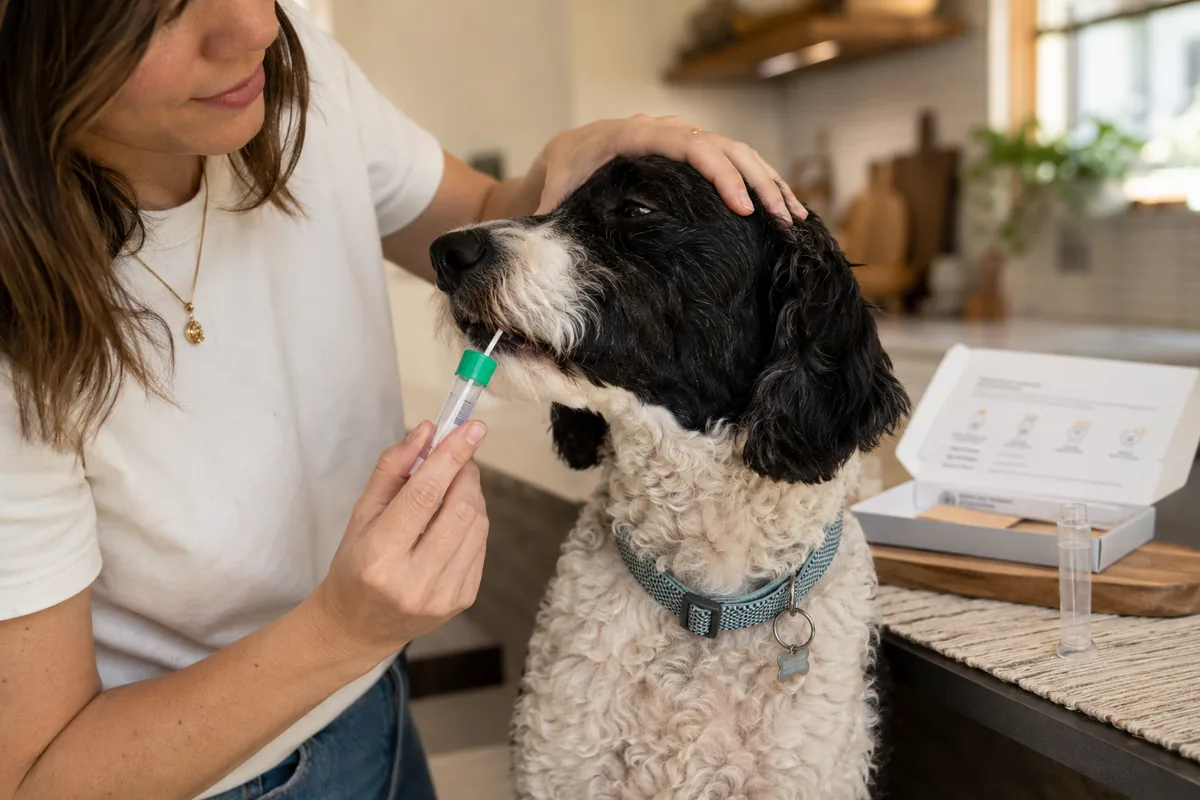
Cheek swabbing sounds easy until your dog chews the swab like a new toy or your cat files a formal objection to mouth handling. The exact collection time and steps differ, so follow the instructions in the box rather than borrowing a number from another brand.
Choose a calm moment. Keep other animals away from the collection area, respect the required food-free interval, and have everything opened and ready before touching your pet’s mouth. Let a reluctant pet investigate the unopened supplies. A brief practice touch along the cheek on an earlier day can be kinder than turning one attempt into a wrestling match.
If your puppy or kitten is still nursing, milk and close contact with the mother or littermates may complicate an oral sample. Some companies recommend waiting until weaning; others give their own age and food-separation rules. Our puppy DNA breed test story explores the emotional decision, while our guide to puppy DNA covers when waiting can make collection easier. For the mechanics of dog samples and turnaround, see our at home dog DNA test walkthrough.
An inadequate or contaminated sample commonly leads to a failed or inconclusive quality check and a request to collect again. It should not be treated as the default explanation for a surprising but usable ancestry report. Our guide to canine DNA test accuracy separates those possibilities in detail. If recollection is requested, slow down, review the company’s directions, and ask support what failed before trying again.
Turnaround estimates are usually measured in weeks and vary by product, shipping, laboratory volume, and whether recollection is needed. There is no single timeline that applies to every current U.S. kit. Before you mail the sample, agree on one house rule: a surprise starts a conversation; it does not rewrite the pet’s identity.
How the seven current providers differ
The right comparison is about fit, not a universal winner.
Embark and Wisdom Panel
Both currently offer dog ancestry, traits, relatives, and broader health tiers. Their reports and feature boundaries differ, so packages at similar prices do not necessarily include the same experience. Neither one is best for every dog.
Basepaws and cat-focused questions
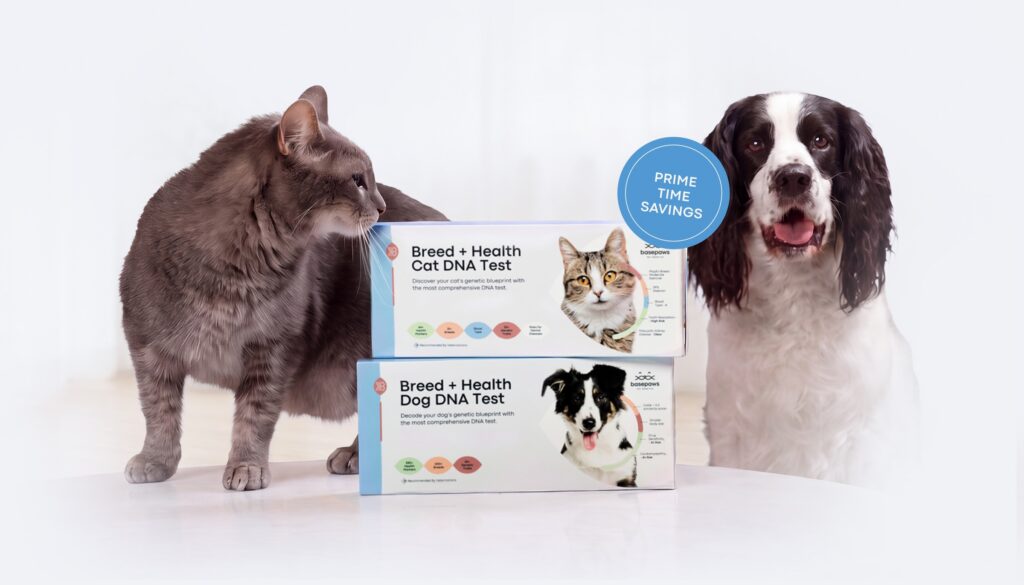
Basepaws is a current cat-specific option whose report combines feline ancestry context, health screening, traits, and oral-health information. It can suit someone interested in more than a breed-style result, provided similarity is not mistaken for pedigree.
DNA My Dog, HomeDNA, Orivet, and Koko Genetics
DNA My Dog remains dog-focused and offers ancestry packages with different inclusions. HomeDNA carries a mixed-breed dog identification product plus separate pet health products. Orivet offers pet-owner genetic products alongside services for breeders and veterinary settings. Koko Genetics has dog and cat packages and currently lists U.S. retail availability as well as direct options and upgrades. These can be relevant when their exact report answers your question. None has comparable independent evidence that justifies placing it above or below every other service.
Product names, availability, prices, promised turnaround, and included reports vary by provider and can change. Niche products, upgrades, and premium features are especially likely to differ in their availability and exact scope.
Privacy deserves the same attention as the results
A DNA kit involves more than a mailing address. It can create an account profile, a genetic-data file, a stored physical sample, research permissions, and possible relative connections. Those are separate things, and each provider handles them differently.
Before activation, ask:
- Can you opt out of research without losing the report?
- Can you hide your pet from relative matching, and what profile details can matches see?
- Can you download raw data, and will an upgrade change access?
- How long may the physical sample be retained, and can you request destruction?
- Can you request account or personal-data deletion, and what legal or operational exceptions apply?
- Does the company describe sharing, sale, research, or commercial use separately?
Embark describes research opt-out and profile controls, and its privacy policy describes deletion requests with exceptions; that is not the same as a blanket promise to destroy every physical sample. Wisdom Panel’s U.S. terms describe sample and data uses that must be read separately from dashboard controls. Basepaws addresses personal information in its privacy policy and sample/research rights in its terms. Koko Genetics’ consent document describes its own research, deletion, and sample-destruction process. DNA My Dog, HomeDNA, and Orivet publish policies too, but a policy’s silence on one control should never be filled with an assumption that it matches another brand.
The FTC’s genetic-testing privacy guidance is written for human tests, but its central distinction is useful here: deleting data and destroying a biological sample are not automatically the same request. Because terms can change after an article is published, the policy presented when a kit is activated is the controlling one.
Read the report, then look back at your pet
Start broad. Does the ancestry story make sense at the breed-group or population level? Which parts are small or weakly supported? Does the company explain uncertainty and future updates? If two services disagree, set the reports beside each other and compare labels and methods. Averaging the numbers only creates a third answer that neither laboratory reported.
For health results, separate “variant detected” from “disease diagnosed.” Save the source material, note any symptoms or family history you already know, and ask the veterinarian what the finding changes—if anything. For traits and behavior, give more weight to the pet you observe every day than to a generic description attached to ancestry.
Mixed-breed and rescue families often carry the biggest hopes into testing. Our guide to a dog DNA test for mixed breeds helps compare that specific fit, and our rescue dog DNA test guide focuses on incomplete histories and unexpected answers. If your cat dislikes mouth handling, our at home cat DNA test story offers a more recognizable picture than a sterile four-step list.
Common questions about pet DNA tests
Can a pet DNA test identify my pet’s exact breed?
It can provide an ancestry estimate based on the company’s reference animals and method, but it cannot reveal a perfect breed label hidden in your pet’s DNA. That distinction is especially important for cats, whose results may describe population or breed-group similarity rather than documented pedigree.
Are pet DNA health results a diagnosis?
No. A health result reports whether the laboratory detected a tested variant. It does not establish that your pet has—or will develop—a condition. We would bring any result that could affect medication, breeding, surgery, or monitoring to a veterinarian before changing care.
Why can two DNA tests give different ancestry results?
Providers use different reference animals, thresholds, labels, and algorithms. Those differences can produce unlike percentages without proving that one usable report is false. The broad ancestry picture usually deserves more weight than a tiny trace result.
Is my puppy or kitten too young for a DNA test?
Their inherited DNA will not change as they grow, but collecting a clean cheek sample can be harder while they are nursing or in close contact with littermates. Age, weaning, and food-separation instructions vary by provider, so the collection directions included with that specific kit apply.
What happens if the sample does not pass quality checks?
The company may ask you to collect another sample. A failed quality check often points to too little usable DNA or contamination; it does not automatically explain a surprising ancestry result that passed the laboratory’s checks.
Can a DNA test predict my pet’s personality?
Not reliably. Ancestry can add context, but it does not outrank what you see every day. Your pet’s individual history, learning, health, environment, and preferences are more useful guides to the support they need.
The bottom line
The useful pet DNA test is the one that answers your real question without asking you to treat a percentage as destiny. Dog ancestry, cat population similarity, health screening, traits, relatives, identity, and pedigree all have different evidentiary limits. A bigger advertised count does not erase those limits, and no brand is the right fit for every pet.
Swab calmly, read broadly, protect your privacy deliberately, and bring consequential health information to your veterinarian. Then close the dashboard and look back at the dog or cat beside you. The result may add a chapter to their story, but it does not get to replace the individual your family already knows. That question is at the heart of Can a Dog DNA Test Actually Change How You Parent Your Dog?. Let new information sharpen your questions while love and observation keep the final word.