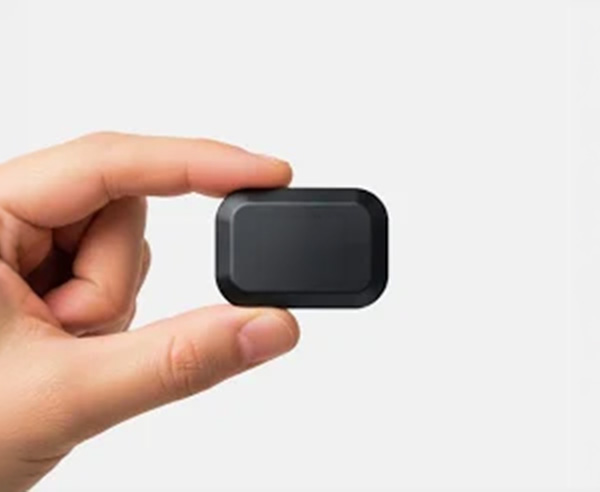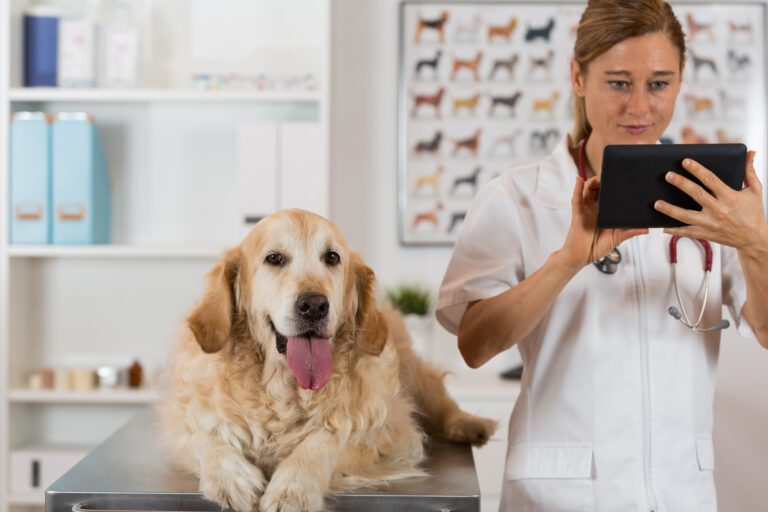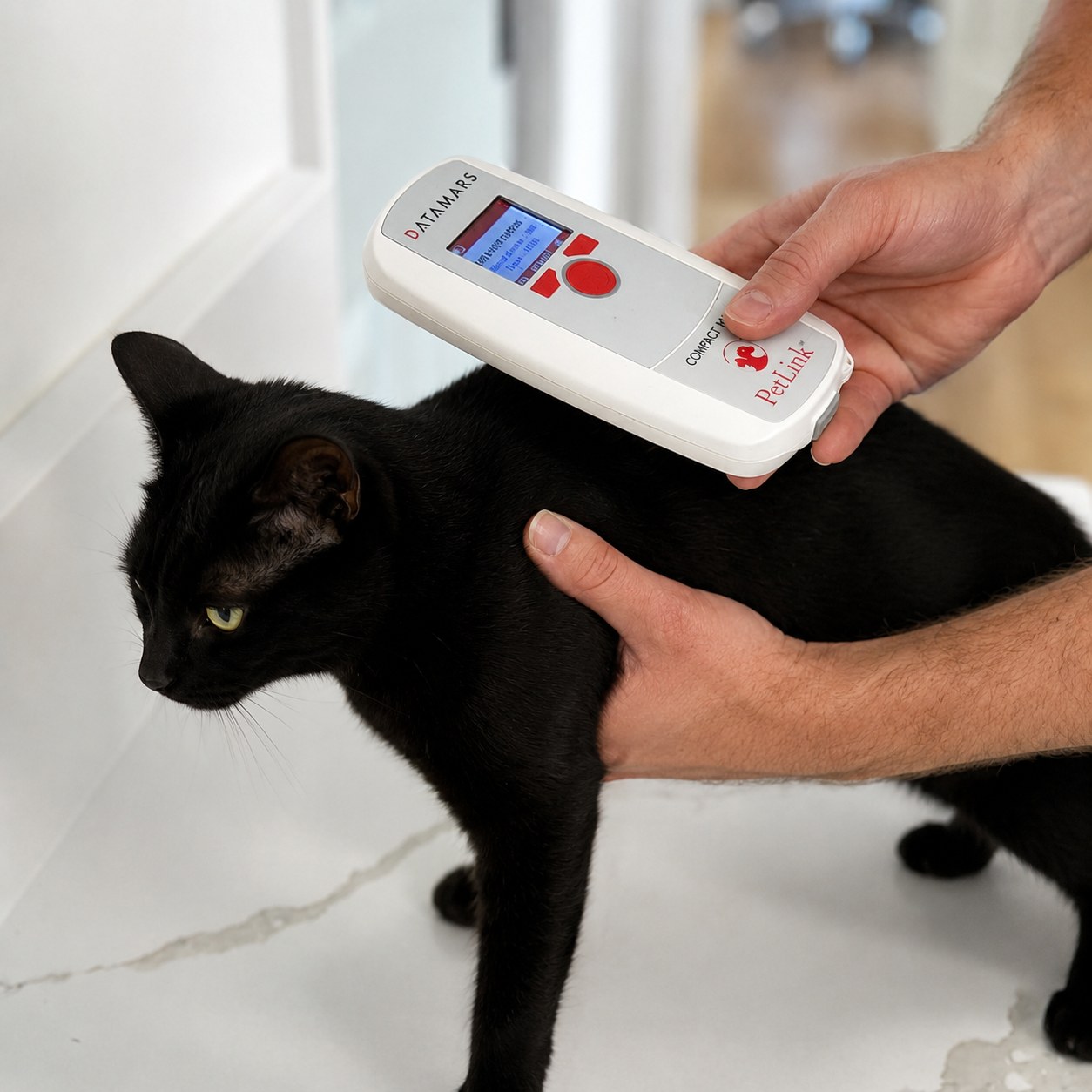
A pet chip scanner near me search sounds like a map problem. Most of the time, it is really a reliability problem. The dog showed up after hours. The shelter is closed. The clinic you trust is twenty minutes away and may or may not want a walk-in found-pet visit. That is when lost dog chip reader, dog chip reader near me, and dog chip scanner near me stop sounding like vague search terms and start sounding like a deadline.
There is good news here. Scanner access is often closer than people assume. Best Friends says most veterinary clinics, animal shelters, and even some police and fire stations have universal microchip scanners and usually scan pets for free. Best Friends also says most veterinarians and pet supply stores will scan a found pet at no cost. The catch is obvious once you actually need the help: nearby is not the same as available, and available is not the same as easy.
That gap decides the whole question: keep borrowing access or buy your own reader. If you want the broad scanner category first, start with Complete Guide to Pet Microchip Scanners. If you are already leaning toward ownership, Best Pet Microchip Scanner for Individual Pet Owners and Universal Pet Microchip Scanner Guide: ISO, AVID, RFID, and When You Need a Stick Reader are the two pages that make the next decision easier.
The first places worth trying
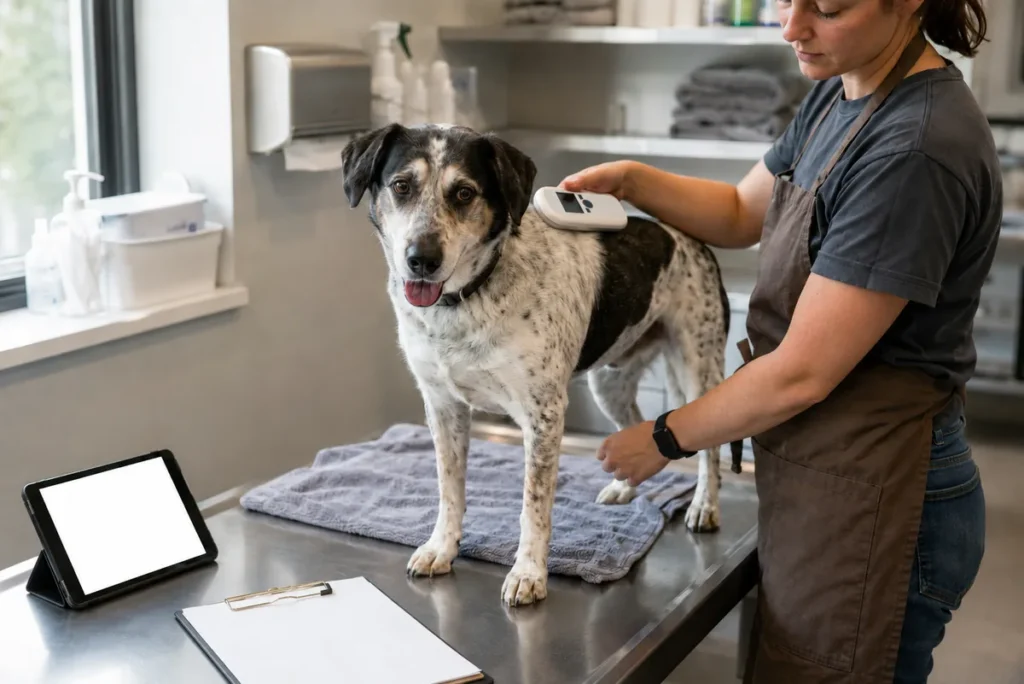
Veterinary clinics are still the most dependable answer to a pet chip scanner near me question. They already work with microchips, registry follow-up, and the awkward reality of found animals showing up without warning. Shelters, humane societies, and rescue groups are close behind because scanning is already part of their normal workflow.
Best Friends also points out that some police and fire stations have scanners. That matters more in the real world than it does in a neat buying guide because found-pet problems do not wait for office hours. It is not a promise that every department in every town is ready to help. It is a reminder that the search should be wider than one clinic and one shelter phone number.
Retail-adjacent service can help too, but only if you read the setup correctly. A petco chip reader search can be useful because Petco says its veterinary team will scan a pet and, if a chip is found, provide the chip number and the name of the microchip registry. That is real scanner access. It just lives on the veterinary side, not as a general retail-floor guarantee.
A petsmart chip reader search needs the same caution. PetSmart’s own learning content points people toward Banfield Pet Hospital or their veterinarian for microchipping. That tells you where service may exist. It does not create a blanket promise that every PetSmart location functions as a found-pet scanning stop.
What a local scan can and cannot do
The local scan solves the first bottleneck fast. Is there a chip? If yes, what number is on it? That can turn a messy found-pet situation into something more manageable in a matter of minutes.
The scan is not the whole reunion. AAHA’s lookup guidance still matters because the number has to be matched to the right registry afterward. A nearby scanner tells you what the chip says. It does not guarantee updated contact information, and it does not replace the follow-up work that comes next.
The other limit is convenience. A town can have scanner access and still be unreliable in practice. Maybe the scanner is close but the hours are narrow. Maybe the scanner is free but the shelter is not taking walk-ins late at night. Maybe the service exists but every use turns into phone calls, driving, and hoping you caught the right person on the right shift.
When borrowing access is still the smart move
Borrowed access is enough when the need is occasional and predictable. Maybe you want your own pet’s chip verified at an annual visit. Maybe you found one stray during business hours and several nearby places can help. Maybe you live in an area where scanner access is common enough that getting to it is not disruptive.
In those situations, buying a scanner can be more about peace of mind than real day-to-day improvement. There is nothing wrong with that, but it is different from having a hard practical reason to own one.
This is also the wrong moment to buy out of terminology panic. If your main issue is understanding compatibility rather than local access, read the universal guide first. If your main issue is choosing the right owner-friendly reader after you have already decided to buy, go to the owner comparison page.
When the ownership case gets real
The case for ownership gets stronger when the problem keeps repeating or the timing keeps working against you. Rural households feel this first. A scanner somewhere nearby does not help much if it is after dark, if the drive is long, or if the only realistic option opens tomorrow morning.
Small-town foster volunteers and repeat found-pet responders feel it next. If you keep finding yourself searching lost dog chip reader every few weeks, the problem is not just access. The problem is that the access keeps arriving too late or with too much friction.
The same clue shows up when dog chip reader near me and dog chip scanner near me keep reappearing in your search history. One search can mean curiosity. A pattern usually means you are already living the ownership case and have not acted on it yet.
What to buy if the answer is yes
For simple home ownership, Tera is the easiest lane to recommend in this cluster. It fits the person whose problem is practical access: a reader in the house, in the car, or in the foster bag so the next found pet does not depend on office hours. Tera Pet Microchip Scanner Review covers that lane in more detail.
Hero is the stronger compact option when access and compatibility are tangled together. If you are buying because you keep meeting unknown pets and do not want to wonder whether your reader is too narrow, Hero is the cleaner answer. Hero Microchip Scanner Review and the universal guide explain why that extra coverage matters.
If your use is heavier than casual owner response, stop trying to force an owner-grade handheld to do institutional work. AKC Reunite and Datamars make more sense when scans are frequent, operational, or attached to tougher handling conditions. If that is your world, shop the institutional lane rather than an owner handheld.
A better test than “near me”
Ask one question instead of staring at maps: if a found pet showed up tonight, do you already know exactly where you would go, whether they would help, and whether that plan would still feel easy at 9:30 p.m.?
If the answer is yes, borrowed access is probably still fine.
If the answer is no, that is the real meaning behind a pet chip scanner near me search. You are not just looking for a location. You are looking for certainty, and certainty is often what ownership buys.
FAQ
Is a petco chip reader search a legitimate place to start?
Yes. A petco chip reader search can lead to Petco’s veterinary services, which say they can scan a pet for an existing microchip and provide the ID number and registry name if one is found. The catch is that it depends on the local veterinary setup.
Is a petsmart chip reader search the same thing as guaranteed scanner access?
No. A petsmart chip reader search may point you toward Banfield or your own veterinarian, but it should not be treated like a chainwide promise that every store can help with a found pet immediately.
If I keep typing dog chip reader near me or dog chip scanner near me, should I just buy my own scanner?
Usually yes, if those searches come from repeated real situations. Dog chip reader near me and dog chip scanner near me are often signs that the access problem is no longer occasional.
When does a lost dog chip reader search become a buying decision?
It becomes a buying decision when lost dog chip reader stops being a one-off emergency and starts describing your normal pattern: after-hours finds, rural gaps, repeat fosters, or regular volunteer response.