A porch cat finally lets you stroke her shoulders. An RFID pet scanner may be the tool in your hand. You may have one calm chance to scan her. The reader must recognize her chip without turning that trust into a struggle.
Like you, we had questions when these scanner terms started piling up. The need may begin with a loose dog, a new adoption, or your own pet before a move. RFID, ISO, AVID, HomeAgain, AKC, and Halo can sound like competing answers, but they describe different parts of the choice.
We sort them in this order: chip coverage, safe scanning distance, then product family. For the wider map, start with our Complete Guide to Pet Microchip Scanners. For a home or occasional-use shortlist, see Best Pet Microchip Scanner for Individual Pet Owners.
RFID tells you the technology, not whether the reader is enough
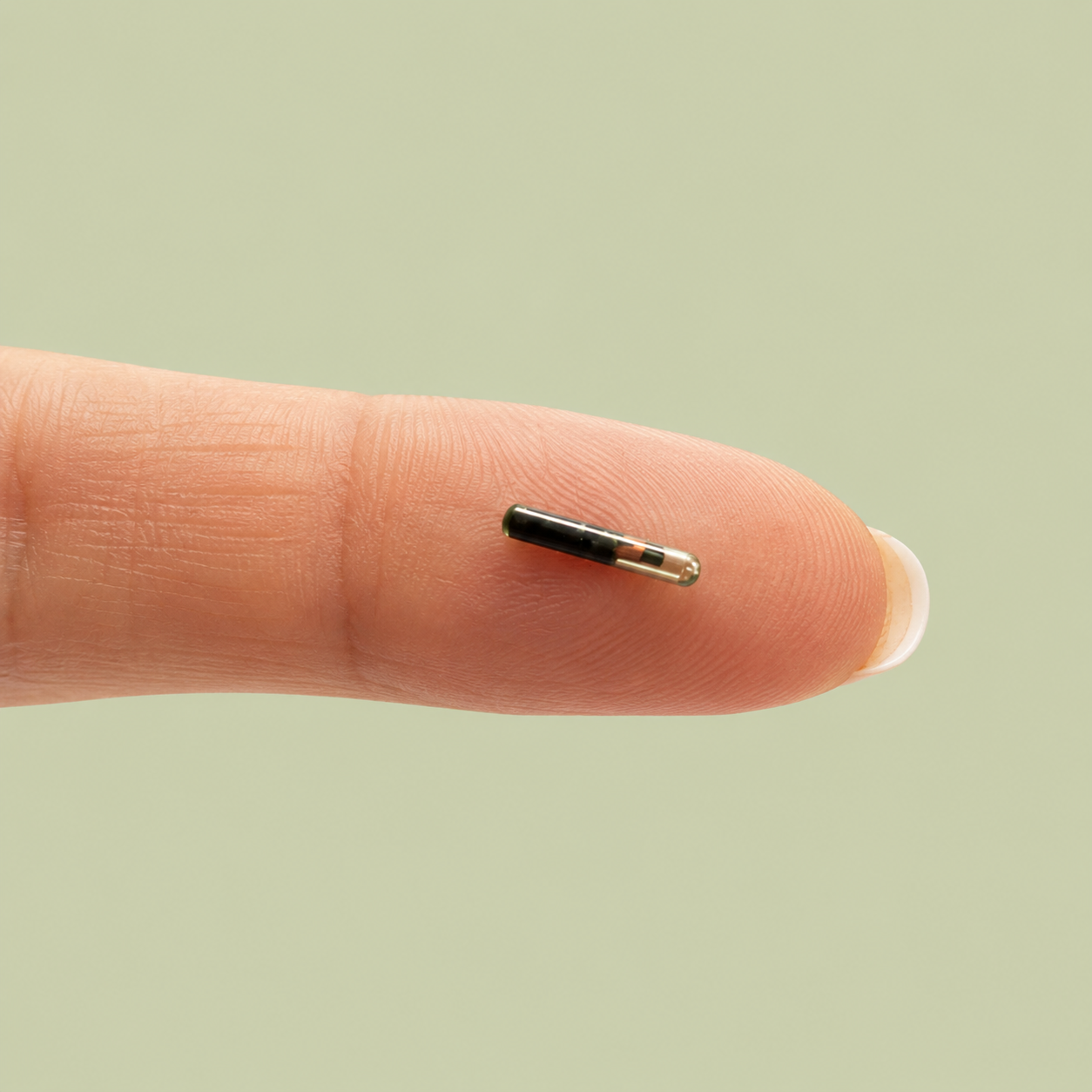
An implanted pet chip stores an identification number. An RFID pet scanner reads that number and shows it on the screen. It does not reveal a name, phone number, or address. You must still find the relevant registry, which handles contact with the registered family.
“RFID” therefore does not promise compatibility. A pet RFID reader and a pet RFID chip reader may support different frequencies or protocols. No supported read means no number to look up.
An NFC pet chip reader is not a phone shortcut. Phone NFC operates at 13.56 MHz. Common pet chips use low frequencies such as 125 kHz, 128 kHz, or 134.2 kHz. Your phone cannot read them. Compatible low-frequency RFID hardware is required. For dependable pet identification, we would choose a dedicated pet microchip scanner.
The useful split is ISO-heavy coverage versus broader coverage
AKC Reunite says its universal scanners read 134.2 kHz, 128 kHz, and 125 kHz microchips sold in the U.S. Based on AKC Reunite’s recovery statistics, more than 90% of microchipped U.S. pets have 134.2 kHz ISO chips.
A focused reader can be enough when you know your pet’s chip is compatible. PocketHero ISO reads 15-digit ISO chips, not 9- or 10-digit chips. Tera H02 covers ISO FDX-B and selected formats but may not support some AVID chips, so it works best when you already know your pet has a compatible chip—not when the chip history is a mystery.
Unknown histories call for broader coverage. Hero Advanced Reader is sold for 9-, 10-, and 15-digit chips. Its stated exception is the discontinued AKC Trovan chip. AVID MiniTracker 4 and Datamars Compact Max+ are broader compact choices too.
A familiar brand name is only the starting clue
Old paperwork or a familiar logo can point you toward a pet RFID reader or pet RFID chip reader, but it cannot confirm compatibility. The reader’s protocol list is what tells you whether it can read your pet’s chip. AVID MiniTracker 4, for example, lists AVID, ISO FDX-B, FECAVA, and Trovan support.
A home again chip scanner or home again chip reader may point to a registry, brand, or product. HomeAgain’s Universal WorldScan Reader Plus covers common 125 kHz, 128 kHz, and 134.2 kHz chips. That model’s coverage matters more than brand memory.
AKC Reunite shows why shape matters too. QuickScan 650 is a pocket reader for spot checks. WandScan 900 Reach is built for crates and cages. An AKC chip reader or AKC chip scanner can therefore be compact or long-handled.
If you’re considering a Halo chip reader, the key question is whether that product family covers the chip formats you may meet. Halo lists FDX-B and FECAVA/FDX-A support, but not AVID-encrypted or 10-digit Trovan chips.
Compact readers work when your pet accepts a close scan
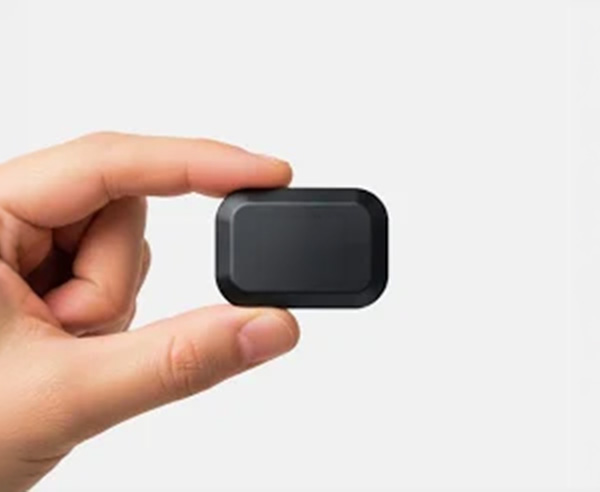
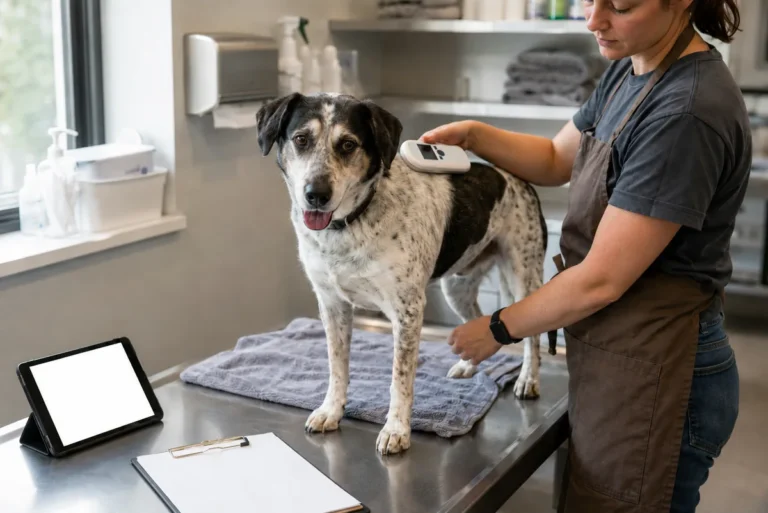
A compact reader suits a pet who will accept a slow, close pass. Your dog may stand beside you without concern. A trusting cat may prefer this to another carrier trip.
Small comforts matter. Look for a clear screen, simple controls, a secure grip, and feedback that will not startle your pet. Keep the reader charged and know how you will record the number.
Choose coverage with the same care. A compatible Tera model may suit one documented chip. Hero gives you broader compact coverage, apart from its discontinued AKC Trovan exception. Compare those choices in our Tera Pet Microchip Scanner Review and Hero Microchip Scanner Review.
One blank pass does not prove there is no chip. Check the charge, slow down, change the scanner’s angle, and cover more of the body. Chips can shift, metal can interfere, and the reader may not support the protocol. Do not force a frightened pet through repeated attempts. Ask a veterinary clinic, shelter, or rescue to confirm an important blank result.
A compact reader still requires your hand to get close. A cat at the rear of a carrier may need another shape.
Stick readers exist because some scans should not be close-range
A stick reader puts the antenna at the end of a long handle. The antenna stays near the pet while your body stays farther away.
AKC Reunite positions WandScan 900 Reach for crates and cages. Datamars positions X-TEND MAX for feral, aggressive, or stressed pets. AVID’s MiniTracker 4 Wand makes the geometry clear. The assembly is 22 inches long, but its chip-reading ranges are only a few inches. The tool length creates person-to-pet space; it does not enable remote scanning.
That space may help a wary cat at the back of a trap. It can also help trained staff scan through kennel bars. A long handle does not make every approach safe. If a dog is genuinely threatening, call animal control or another trained professional.
Organizations with repeated scans and mixed chip histories need a fuller comparison. See Best Animal Microchip Scanner for Shelters, Rescues, and Breeders. For traps and wary community cats, read the Feral Cat Colony Microchip Scanner Story: Which kind of pet microchip reader did Maria need?.
The clean buying order
Choose by answering three questions about chip coverage, scanning distance, and where the reader will be used.
- Do you know your pet’s exact chip, or could you meet unknown and legacy formats?
- Will the pet accept a close pass, or would fear, a carrier, cage, or trap make reach kinder?
- Will the scanner stay at home, or support repeated work in a breeder kit, clinic, shelter, or field bag?
Coverage first. Distance second. Product family third. That order avoids two disappointments. One is a reader that cannot detect the chip. The other is a scanner you cannot bring close without upsetting the pet.
FAQ
Is an NFC pet chip reader a real shortcut for scanning pets?
No. Phone NFC uses a different frequency from common pet chips. You need compatible low-frequency RFID hardware. A dedicated pet microchip scanner is the practical tool. Its result is a number, which still needs a registry lookup.
Do I need a different AVID chip reader or AVID chip scanner for AVID chips?
You need a reader that explicitly supports the relevant AVID format. Encrypted AVID chips require a reader with compatible encrypted-chip support. Then choose a compact or wand shape based on how closely your pet can be scanned.
Does a home again chip scanner or home again chip reader tell me which scanner to buy?
No. HomeAgain may be the brand or registry name you remember, but coverage belongs to the specific reader. HomeAgain’s Universal WorldScan Reader Plus covers several common formats; the name does not make every reader equivalent. Then choose a shape your pet will comfortably allow near them.
Is an AKC chip reader or AKC chip scanner different from a universal reader?
The descriptions can overlap. AKC Reunite sells universal readers in pocket and wand forms. QuickScan 650 and WandScan 900 Reach serve different handling needs. Coverage tells you what the device reads. Shape tells you how to bring it near the pet.
What does a Halo chip reader actually read?
Halo lists FDX-B and FECAVA/FDX-A support. It does not support AVID-encrypted or 10-digit Trovan chips, so it is a product-specific option rather than a universal reader.