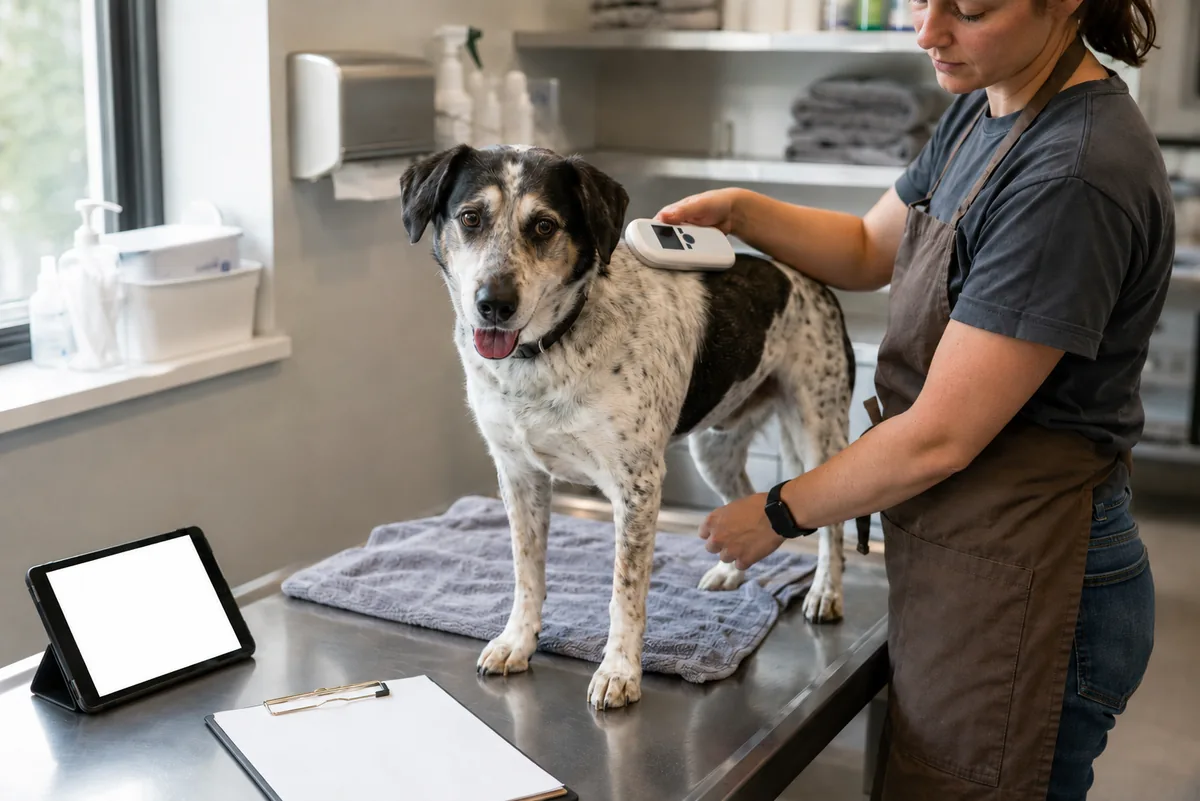
If you are buying an animal chip scanner for shelter intake, rescue transport, breeder handoff, or clinic-like daily use, you are not shopping in the same lane as an owner who wants a reader in a desk drawer. The job changes the answer. The best scanner for table intake is not automatically the best stick reader for crates or feral transfers, and the cheapest backup is rarely the safest primary choice.
Shelter and rescue teams usually need at least two honest answers: a handheld that works on the exam table and a reach reader that keeps hands out of the crate. Compatibility still matters, but so do scan distance, handling safety, speed at intake, and whether extras like Bluetooth or temperature support actually help the team’s routine. A compact scanner can win one job while a wand wins another. That is not indecision. It is the category telling the truth.
This search category also gets messy because buyers use the same pile of terms for slightly different jobs: animal chip reader, animal chip readers, vet chip reader, vet chip scanner, dog chip reader, chip scanners for dogs, dog chip scanner, dog id chip reader, dog rfid chip reader, and dog rfid reader. Most of those searches are still asking the same practical question: what works when scan conditions are difficult? If you need category context first, read Complete Guide to Pet Microchip Scanners. If you already know you need operator gear, stay here.
Quick Comparison
| Product Name | Best For | Key Feature | Additional Key Feature | Key Specs | Price Range |
|---|---|---|---|---|---|
| Datamars Compact Max+ | Best compact institutional scanner | Universal compatibility | Bluetooth plus deep memory | Reads ISO FDX-B, FDX-A, Trovan, and Avid; up to 4,000 stored numbers; rechargeable battery | Premium |
| Datamars X-TEND MAX | Best extended-reach scanner | Safer no-contact scanning | Built for feral or stressed animals | Bite-resistant stick reader; rescue and shelter focus; distance-first design | Premium |
| Hero Advanced Reader / Hero +Temp | Best crossover compact for transport and breeder teams | Universal handheld coverage | Bluetooth and temp-capable upgrade path | Reads 9-, 10-, and 15-digit chips; seven-inch body; Hero +Temp adds compatible temp reading | Mid to premium |
| AKC Reunite QuickScan 650 / ProScan +Temp / WandScan 900-Reach | Best one-brand system family | U.S.-frequency coverage across formats | Pocket, temp, and wand lanes | Reads 134.2, 128, and 125 kHz chips; ProScan adds temp; WandScan fits crates and cages | Mid to premium |
| AVID MiniTracker 4 / MiniTracker 4 Wand | Best for legacy-compatibility confidence | Published read-distance detail | Bluetooth plus wand option | Reads Avid, ISO FDX-B, Fecava, and Trovan tags; compact and wand models | Premium |
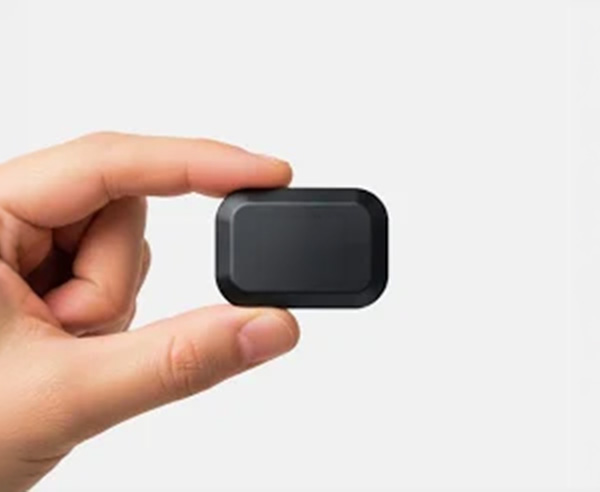
| Tera Pet Microchip Scanner | Best limited-scope budget backup | Easy buying path | USB export | ISO11784/11785 and FDX-B support; 64 stored scans; compact handheld | Budget |
Datamars / PetLink
Quick Verdict: Datamars is the strongest scanner family in this article because it offers the clearest compact institutional winner and the clearest dedicated extended-reach winner.
Pros:
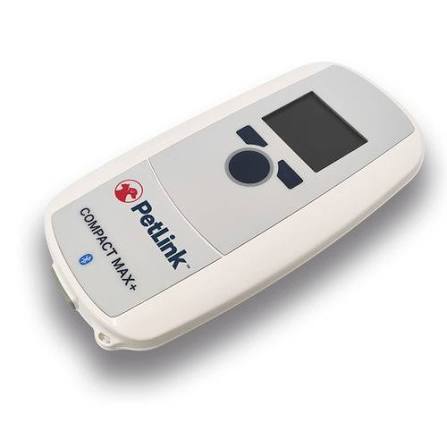
- Compact Max+ covers ISO FDX-B, FDX-A, Trovan, and Avid
- Bluetooth, USB-C, and high memory support busy intake days
- X-TEND MAX is built specifically for feral, aggressive, or stressed animals
Cons:
- More expensive than lighter-duty compact readers
- Buying path is clearly professional rather than casual
Best For: Shelters, rescues, humane societies, animal control teams, and clinics that need both compatibility confidence and a clean split between intake-table scanning and safer distance work.
Key Specs: Compact Max+ reads ISO FDX-B, FDX-A, Trovan, and Avid; up to 4,000 stored microchip numbers; Bluetooth 5.2 and USB Type-C; rechargeable Li-ion battery. X-TEND MAX is a bite-resistant stick reader positioned for feral, aggressive, or stressed animals.
Detailed Analysis: Datamars Compact Max+ is the best compact animal chip scanner in this comparison because the company is clear about the job it is built for. Datamars says it is ideal for clinics, shelters, rescues, and animal control agencies, and the current datasheet backs that up with broad compatibility plus much deeper memory than the owner-leaning options. If your scanner is moving through repeated intake and record-keeping, that matters.
The family also handles distance correctly. X-TEND MAX is marketed specifically for feral, aggressive, or stressed animals and for safer no-contact scanning. That makes it the strongest stick-reader answer in the article because it solves a different physical problem instead of acting like a compact-reader accessory.
This is the family I would choose for a shelter or animal-control team that wants one serious compact tool and one serious reach tool without building intake around compromise. The tradeoff is cost and a more formal buying path.
Hero / Microchip ID Systems
Quick Verdict: Hero is the best compact crossover choice for rescue transport, breeder verification, and lighter institutional teams that want universal coverage without jumping immediately to wand hardware.
Pros:
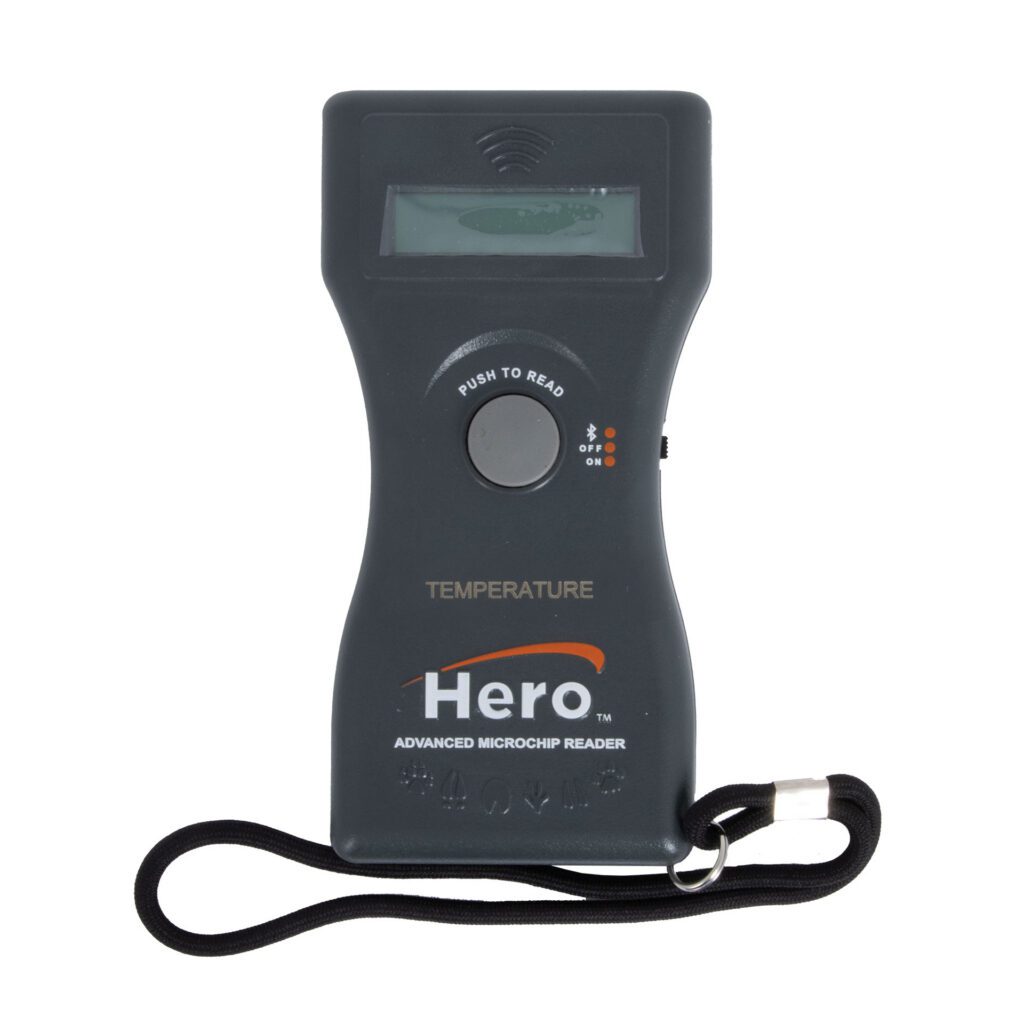
- Hero Advanced reads 9-, 10-, and 15-digit chips
- Bluetooth transfer removes manual typing friction
- Hero +Temp gives intake teams a compatible temperature-reading upgrade path
Cons:
- Compact form factor is still not the best answer for crate-heavy or feral scanning
- Premium for a team that only needs simple spot checks
Best For: Rescue transport kits, breeder handoff routines, mobile clinic or foster-network scanning, and mixed-chip environments where compatibility matters more than long-distance reach.
Key Specs: Hero Advanced Reader reads all 9-, 10-, and 15-digit chips; Bluetooth transfer up to 25 feet; seven-inch body; rechargeable 9V battery. Hero Universal +Temp adds compatible temp-chip reading and the same one-line ID display behavior.
Detailed Analysis: Hero Advanced Reader lands here as the best crossover tool because it balances broad coverage with a format that still feels easy to issue, carry, and learn. Microchip ID Systems says it reads all 9-, 10-, and 15-digit chips and sends the number by Bluetooth to a nearby device. For rescue transport, breeder paperwork, or mixed but not cage-heavy scanning, that is a practical combination.
Hero +Temp makes the family more interesting for intake teams that actually use compatible temperature chips. That qualifier matters. Temperature support is valuable when it plugs into a real process and dead weight when it does not.
This is why Hero fits breeder verification, rescue transfer, and compact universal transport kits better than kennel-row or feral-heavy scanning. It is a strong handheld, but it is still a handheld. For the product-family specifics, read the full Hero Advanced Reader review.
AKC Reunite
Quick Verdict: AKC Reunite is the best one-brand scanner family for U.S.-focused teams that want clear pocket, temp, and crate-friendly options under one operator-oriented umbrella.
Pros:
- Product line maps cleanly to spot-check, intake, and distance-scanning jobs
- Universal U.S.-frequency coverage is stated clearly
- ProScan +Temp and WandScan 900-Reach solve materially different shelter problems
Cons:
- Direct-store buying path feels more specialized than mainstream pet tech
- QuickScan 650 is not the strongest answer when reach is your main problem
Best For: Shelters, rescues, breeders, and clinic-like teams that want one brand family with distinct tools for spot checks, temp-capable intake, and safer distance scanning.
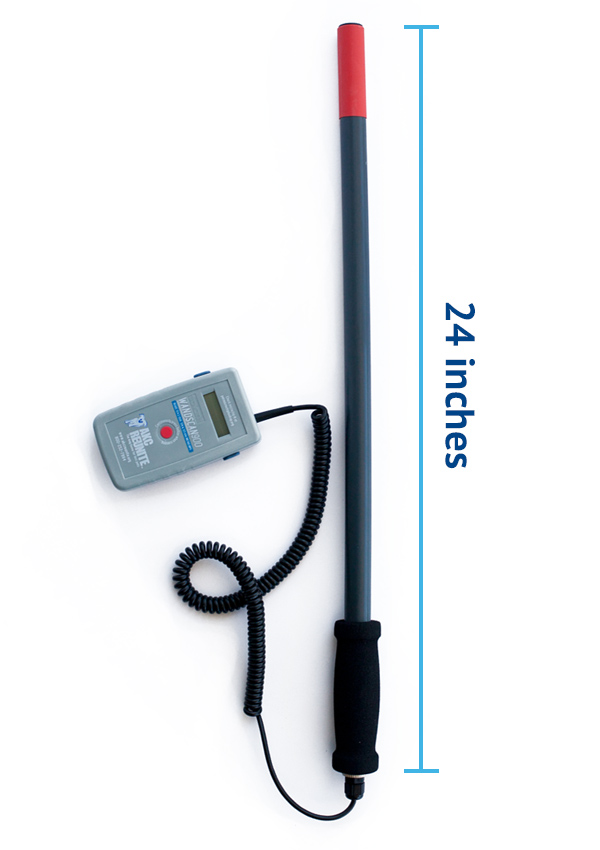
Key Specs: QuickScan 650 reads 134.2, 128, and 125 kHz pet microchips in a pocket format; ProScan +Temp adds compatible temperature reading and up to 3.2-inch detection depending on brand; WandScan 900-Reach uses a 9V battery and is designed to fit through crates and cages.
Detailed Analysis: AKC Reunite stands out because the product line is easy to understand. QuickScan 650 is the pocket spot-check tool. ProScan +Temp is the intake-friendly temperature option. WandScan 900-Reach is the safer-distance crate and cage scanner. For a team that wants one vendor relationship and one U.S.-frequency logic across multiple work styles, that clarity is genuinely useful.
ProScan +Temp is the most useful unit in the lineup for shelters or clinics that use compatible temp-sensing chips. AKC says it reads the major U.S. frequencies and can display temperature from compatible chips while also detecting microchips up to 3.2 inches away depending on brand. That makes it more than a simple dog chip scanner for table work.
WandScan 900-Reach also deserves a serious look because AKC’s own instructions explain that the antenna runs along the side of the red wand area, not at the tip, and that the scanner is designed to fit through crates and cages. Those are the sort of details that prevent bad technique and wasted scans. If you want one family that spans spot-check, temp, and distance work, AKC Reunite is the easiest all-in-one system to explain.
See AKC Reunite scanners before your team ends up forcing one tool into three different jobs.
AVID
Quick Verdict: AVID is the best pick when legacy-compatibility confidence and published read-distance transparency matter as much as convenience.
Pros:
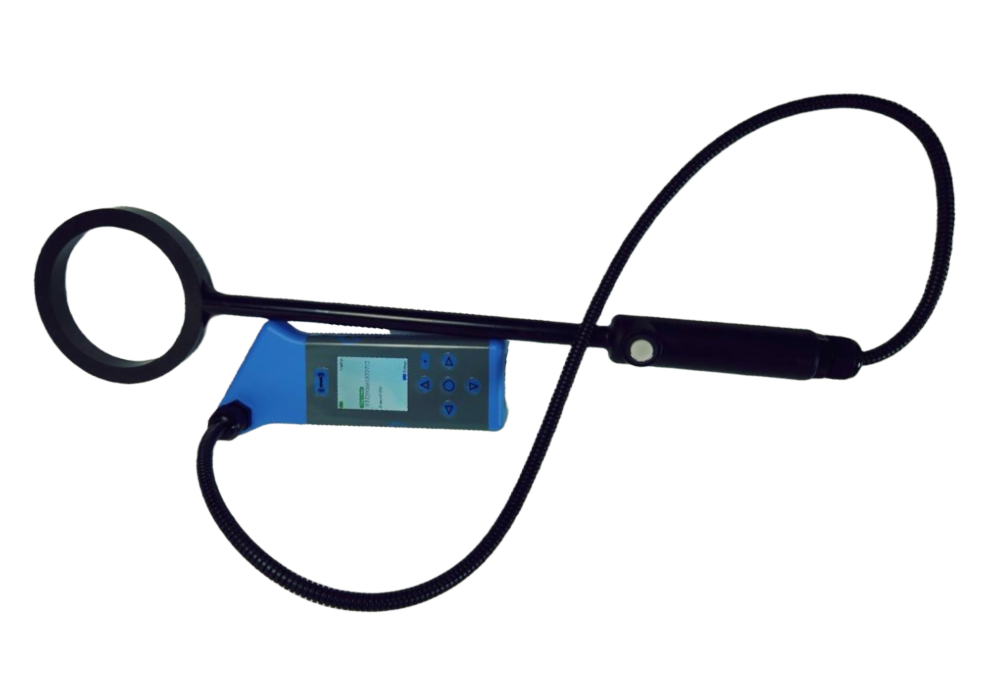
- Explicit compatibility with Avid, ISO FDX-B, Fecava, and Trovan tags
- MiniTracker 4 Wand is built to scan through cages or at safer distance
- Published read-distance figures are unusually useful for serious buyers
Cons:
- Buying path feels professional and specialized
- Not the easiest answer for low-complexity teams that just want a simple reader
Best For: Clinics, shelters, and rescue teams that still encounter AVID-heavy or legacy-chip complexity and want more transparency about what the scanner can actually read.
Key Specs: MiniTracker 4 uses Bluetooth 5.3, 4 AA batteries, and a compact 8.3-inch body. MiniTracker 4 Wand uses a five-inch loop antenna, 22-inch wand and handle, flexible cable, and published read distances up to 7 inches for ISO FDX-B tags.
Detailed Analysis: AVID’s biggest strength here is clarity. The company states exactly which tag families MiniTracker 4 and MiniTracker 4 Wand read, and it publishes read-distance numbers by tag type. That is valuable for teams that cannot afford to rely on fuzzy universal claims, especially when a vet chip reader has to handle older or mixed-chip realities.
MiniTracker 4 itself is a strong compact institutional option. It fits in a pocket, uses Bluetooth 5.3, and is described as a universal companion-animal reader. The wand version is where the line gets more compelling because AVID pairs the same compatibility lane with a waterproof loop antenna and distance scanning through a cage or from a safer position.
AVID is not the best answer for every organization because it asks the buyer to care about spec depth and legacy complexity. Some teams do. Some do not. If your daily work includes mixed chip histories, older systems, or repeated moments where a generic dog rfid chip reader claim is not enough, AVID moves up quickly.
Explore AVID if legacy-chip confidence matters more to your team than casual buying convenience.
Tera Digital
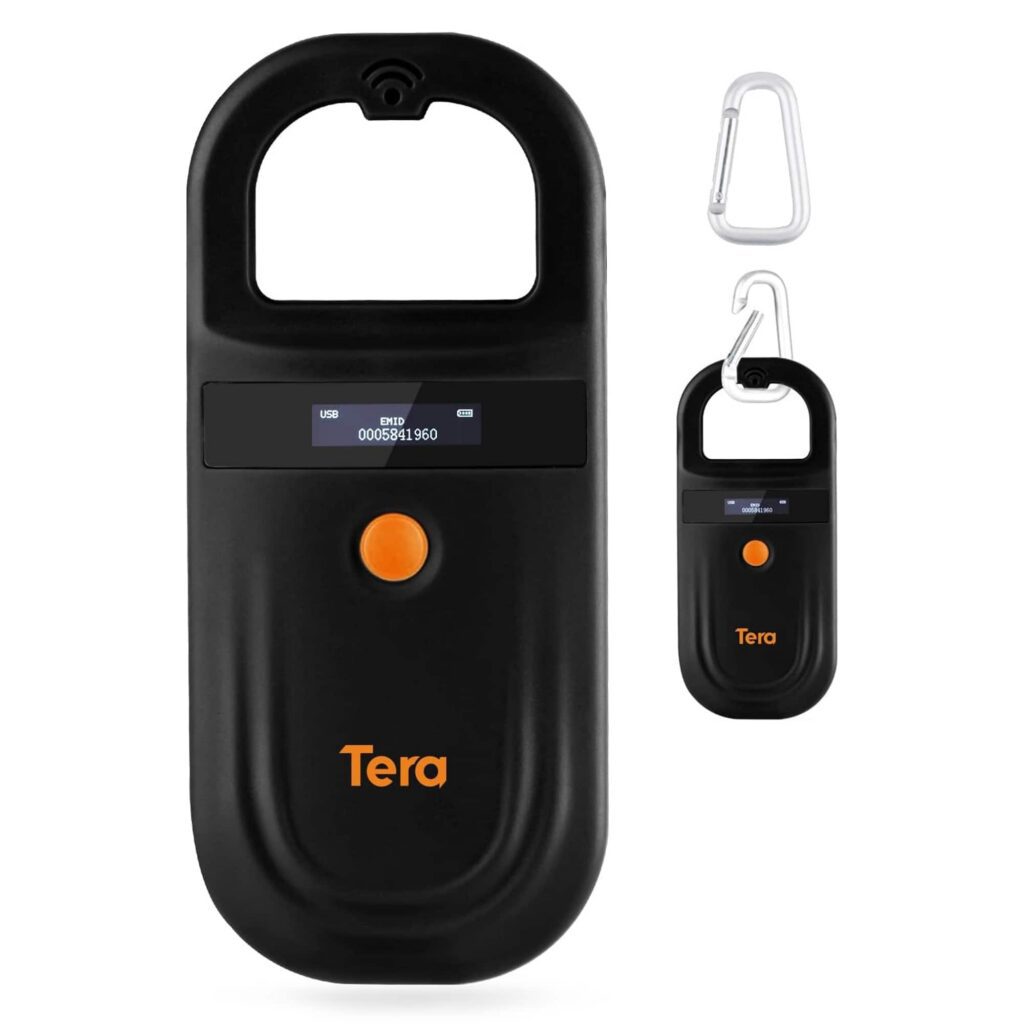
Quick Verdict: Tera is the best limited-scope budget backup in this article, but it is not the safest primary scanner for most operator teams.
Pros:
- Cheapest and easiest buying path in the article
- Simple routine and USB export
- Useful as a narrow backup for known ISO-heavy direct-care situations
Cons:
- Supports ISO11784/11785 and FDX-B rather than broad institutional universal coverage
- Only stores 64 scan records
- Wrong default for mixed or unknown chip-history intake
Best For: Budget-constrained breeder kits, ISO-heavy direct-care backup use, and limited-scope transport or spot-check jobs where the compatibility caveat is fully understood.
Key Specs: Supports ISO11784/11785 and FDX-B chips; stores up to 64 scan records; exports data by USB cable; compact handheld body.
Detailed Analysis: Tera belongs in the article because budget pressure is real. The Best Buy listing and Tera’s own guide make the product’s appeal obvious: it is cheap, compact, and easy to buy. In a narrow use case, that can be enough.
The problem starts when a budget backup gets promoted into a general institutional recommendation. Tera’s public support language centers on ISO11784/11785 and FDX-B chips, and the broader cluster research already flagged that this is not a universal answer for mixed legacy-chip environments. That means the scanner can be useful without being the right tool for the hardest version of the job.
So the honest recommendation is simple. Tera is fine when you know exactly why its limits are acceptable. It is not fine when you are hoping those limits will not matter. If you want the model-specific breakdown first, read the full Tera Pet Microchip Scanner review.
Check Tera only if you need a constrained backup and you understand the compatibility ceiling.
Buying Guide
How to choose without flattening the job
Start by splitting the work in front of you. Are you mostly scanning on a table and at close range, or are you scanning through cages, crates, or high-stress situations where distance matters more than another Bluetooth bullet point? That question decides more than any brand name does.
Once you answer it, the shortlist gets cleaner. Compact universal readers like Datamars Compact Max+, Hero Advanced, AVID MiniTracker 4, or AKC QuickScan 650 make sense when table-side scanning is normal. Stick or reach tools like Datamars X-TEND MAX, AVID MiniTracker 4 Wand, or AKC WandScan 900-Reach matter when table-side scanning stops being realistic.
Compatibility and legacy-chip pressure
If you are still trying to make one animal chip scanner do every job, this is the point where that idea usually breaks. A universal label does not end the conversation. It starts it. If your environment regularly touches AVID, Trovan, FDX-A, or animals with unknown chip history, published compatibility matters more than comforting marketing language.
Datamars and AVID score well here for a simple reason: both publish compatibility that clearly reaches beyond simple ISO-only framing. Hero also remains strong as a universal compact, but it is still a compact tool, which means compatibility confidence and read distance are separate questions.
Reach, crates, and hard-to-handle animals
If you routinely scan through kennel bars, rescue crates, or defensive-animal situations, stop treating a compact reader like a complete answer. Use the right tool. This is exactly why the stick-reader lane exists.
Datamars X-TEND MAX, AVID MiniTracker 4 Wand, and AKC WandScan 900-Reach all address that problem from slightly different angles. If the hardest thing your team deals with is colony or field scanning, pair this buying guide with the feral-colony article because the handling reality becomes much more concrete there.
Extra features that actually matter
Temperature reading is useful only when it plugs into an actual process. ProScan +Temp and Hero +Temp are strong tools when compatible temp chips are part of intake or wellness logic. If they are not, the feature is just a more expensive line item.
Memory and transfer matter the same way. Datamars Compact Max+ storing up to 4,000 numbers is meaningful for busy intake. Bluetooth on Hero or AVID matters when the number is actually moving into records quickly.
Budget pressure and backup strategy
Budget pressure is real, but the wrong place to save money is the part where compatibility or read distance breaks. A cheap backup scanner can make sense. A cheap primary scanner for hard, mixed, institutional work usually turns into a more expensive lesson later.
Tera is the clearest example. If your use case is controlled, known, and narrow, a budget backup can be rational. If your use case includes unknown chip histories or frequent intake, the cheap answer usually becomes a second purchase.
Safety and scanning technique
AAHA’s core warning still applies here: the microchip is not GPS, and the reader displays the number, not the owner contact sheet. After the scan, the number still needs registry follow-through. Good hardware helps, but it does not remove that step.
Technique matters too. AKC Reunite’s instructions emphasize the actual read area on QuickScan and WandScan, and those details are easy to ignore until a failed scan wastes time. A scanner can be correct and still look useless if the team is using the wrong part of the device or trying to make a compact reader do what a wand should do.
FAQ
Do shelters and rescues really need both a compact scanner and a stick reader?
Not always, but many do. If your work includes both table intake and cage, crate, or aggressive-animal situations, one format will usually feel compromised in the other setting. For that reason, animal chip readers for shelter teams usually split into compact and reach jobs, and this page keeps separate winners.
What makes a vet chip reader different from a simpler owner scanner?
Usually not the basic act of scanning, but the intake pressure around it. A vet chip reader or vet chip scanner needs to survive repeated use, mixed chip histories, and faster documentation expectations. Owner gear can still help in lighter roles, but institutional pressure exposes its limits faster.
Are dog chip reader searches actually a separate buying category?
Usually no. Dog chip reader, dog chip scanner, dog id chip reader, and dog rfid reader searches often land inside the same broader institutional decision. The hardware usually changes because of handling conditions, compatibility, or intake demands, not because the animal happens to be a dog.
When does a dog rfid chip reader need a wand format?
When close-range scanning stops being safe or realistic. Kennels, transfer cages, hard-to-handle dogs, and feral or defensive animals all push you toward the reach lane quickly. Once handling gets difficult, chip scanners for dogs stop being one simple category.
Is a budget scanner ever acceptable for breeder or rescue work?
Yes, but only when the use case is constrained and understood. A small breeder doing predictable handoffs in a known chip environment may tolerate a limited budget unit better than a busy shelter could. The mistake is not buying a cheaper tool. The mistake is pretending the cheaper tool is solving a harder job than it really is.
Should temperature-reading capability be a deciding factor?
Only if you actually use compatible temp-sensing chips and have a routine that benefits from those readings. If you do, ProScan +Temp or Hero +Temp can be genuinely useful. If you do not, the feature is just a more expensive add-on.
Final Recommendation
Datamars Compact Max+ is the best compact animal chip scanner in this article because it matches institutional compatibility, memory, and intake needs more honestly than the lighter-duty options. Datamars X-TEND MAX is the best extended-reach scanner because it is explicitly built for feral, aggressive, or stressed-animal scanning and treats distance as the main job, not a bonus feature.
Hero Advanced Reader is the best crossover compact choice for breeder, rescue transport, and lighter mixed-chip teams. AKC Reunite is the best one-brand family for organizations that want clear spot-check, temp, and cage-friendly options under one roof. AVID is the strongest fit when legacy-compatibility confidence and published read-distance detail matter more than casual convenience. Tera is the budget backup only, not the safest institutional default.
Buy for the hardest version of your intake day, not the easiest version of your budget meeting. That is how you end up with an animal chip scanner that keeps the team moving instead of one that becomes the reason intake slows down at the wrong time. If your team turns out to be lighter-use than you thought, Best Pet Microchip Scanner for Individual Pet Owners is the better lane.