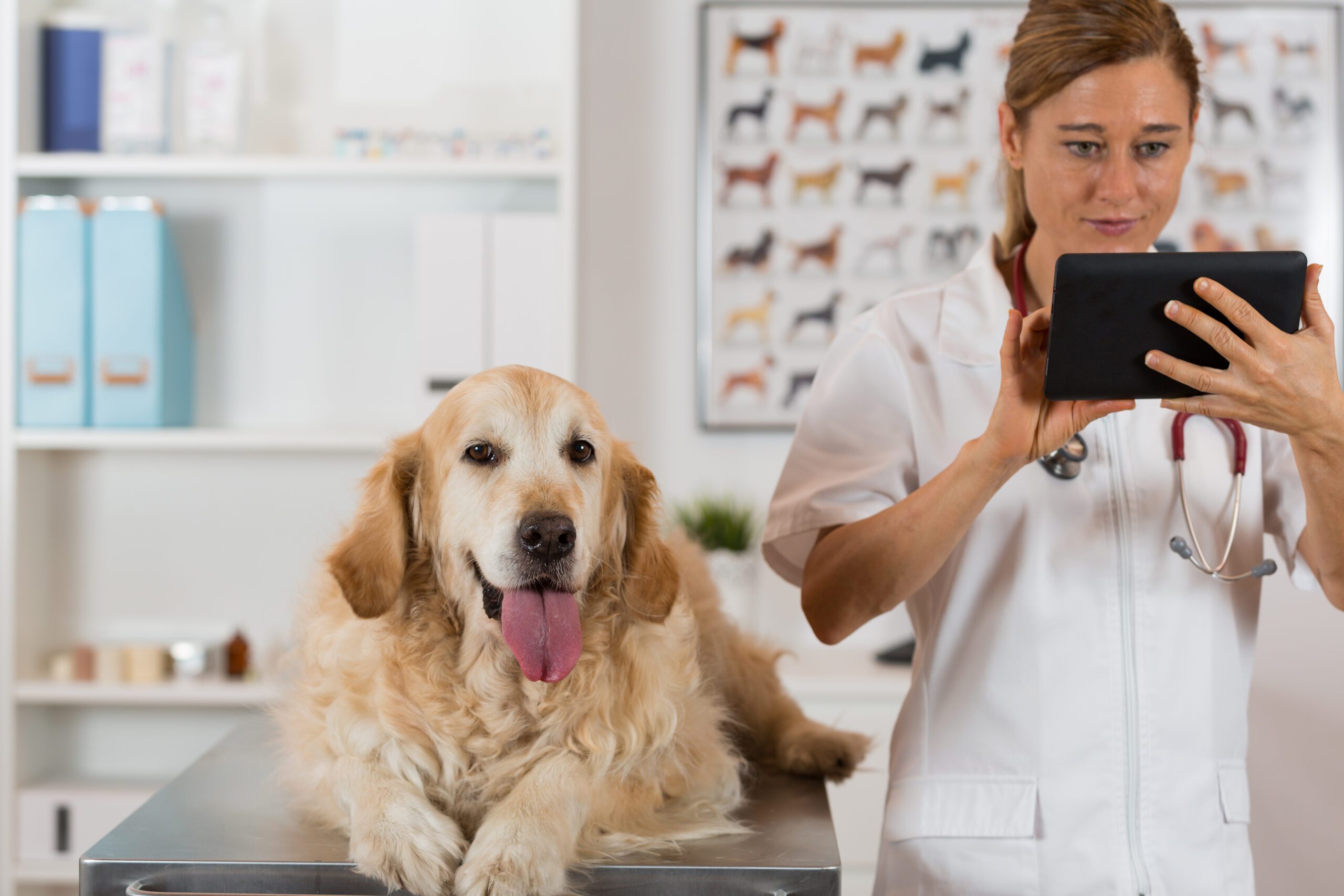
Your pet’s app has produced 78 screenshots, three orange alerts, a sleep score, and one graph that appears personally disappointed in Tuesday. It all feels like pet health data your veterinarian should see. The harder question is what any of it means without the story around it.
Formal vet records, wearable trends, feeder history, camera clips, photos, and your own notes can each add something different. None becomes a diagnosis because it arrived with a push notification. The best version gives your veterinary team enough context to spot a meaningful change without asking them to spend the afternoon touring every screen in your dog’s app.
Your Pet Has Data in More Places Than Their Treats
Start by separating the official record from information collected at home. Your pet’s medical record comes from the veterinary practice and may include exam notes, diagnoses, treatment plans, medications, laboratory results, imaging reports, vaccination history, and communication about care. Home-generated information is everything you and your gadgets notice between visits: activity, sleep, weight, food or water patterns, litter-box visits, coughing videos, mobility clips, symptom notes, and app alerts.
Both matter, but they answer different questions. Pet medical records tell the next clinician what care has already happened. Home data can show what changed in the place where your pet spends the other 99 percent of their life.
The distinction saves confusion later. A wellness score is not a medical record. A vaccine certificate is not the complete record. A PDF activity report does not replace an exam. They can still be excellent supporting characters when everybody knows which role they are playing.
Ask How Your Veterinary Team Wants the Information
Before exporting a month of pet wearable data, ask one wonderfully efficient question: “If I want to share this, what format works best, and where should I send it?”
The answer may be a veterinary portal, an email attachment, a printed one-page summary, a direct device integration, or something you bring to the appointment. Ask who reviews it, when they review it, and whether it becomes part of your pet’s record. A file arriving is not the same as knowing the right person saw it.
This is not merely our preference for a tidy inbox. AAHA’s remote-monitoring guidance specifically advises veterinary teams to discuss if, how, and when they want data from client-purchased wearables or remote monitors—and how they would use it in a wellness or treatment plan.
Your veterinarian may love a weekly report for one condition and have no clinical use for another app’s proprietary score. The gadget can still be worth using. Your veterinarian just needs the pieces that connect to your pet’s care.
Give Your Veterinarian the Highlight Reel
When something changes, lead with the story rather than the attachment. A strong summary usually answers:
- What changed?
- When did it begin?
- Did it happen once, or is there a pattern?
- What did your pet look and act like at the time?
- Did anything else change, such as medication, food, travel, boarding, weather, household routine, or recovery from a procedure?
- Which screenshot, clip, or report shows the change most clearly?
For example: “Miso’s overnight activity rose on four of the past five nights. She also began asking to go outside twice after midnight. Her food and medication are unchanged. I attached the weekly activity graph and a 20-second video from Tuesday.” That gives the care team a time frame, a pattern, related behavior, and two pieces of evidence. Much friendlier than “Her score is orange. Thoughts?”
If the app lets you choose a date range, match it to the question. A few days may show an abrupt change. Several weeks may be more useful for recovery or a longer pattern. Send the shortest view that tells the truth, and keep the longer export available if the veterinarian asks.
A Veterinary Portal Is a Front Door, Not an Emergency Room
A good veterinary portal can make ordinary care feel gloriously civilized. You may be able to request an appointment, download a vaccination certificate, send a photo, refill a prescription, check an invoice, or read follow-up instructions without joining the morning phone queue.
But every portal has people and policies behind it. Find out when messages are checked, what response time to expect, and where urgent questions belong. AAHA’s referral guidance supports web portals for records and updates while putting urgent communication on a faster track, with direct phone contact prioritized over email in urgent referral situations.
If your pet looks unwell, is in distress, or has an alert the manufacturer or veterinary team treats as urgent, follow the practice’s urgent-care instructions. Do not wait for someone to discover a beautifully organized emergency in a routine message queue.
How to Get and Share Vet Records Without Losing the Plot
Ask your current practice how to request a complete copy of your pet’s medical record. “Complete” matters. A portal may show invoices, reminders, and vaccines while keeping detailed exam notes or diagnostic reports elsewhere.
If your pet has visited multiple clinics, emergency hospitals, or specialists, one practice may not hold every piece. Keep copies from each source in a folder you can open without remembering which app owned 2024. A clear filename such as “Juniper_Cardiology_Report_2026-05-14.pdf” beats “document(17)_FINAL-final.pdf,” a filename that has never brought anyone joy.
Diagnostic images deserve their own check. X-rays, ultrasound images, CT scans, and MRI files may be stored or transferred separately from the written report. UC Davis, for example, gives clients different instructions for obtaining medical records and diagnostic images. Procedures and legal rules vary, so ask the practice what it can send to you, what it should send directly to another veterinarian, whether there is a fee, and how long the request usually takes.
Complete, readable records are not administrative trivia. AAHA’s VCPR position says records should allow another veterinarian to continue a patient’s care. That continuity matters when your regular doctor is away, you move, your pet needs an emergency hospital, or a specialist joins the group chat under less-than-relaxing circumstances.
Referrals Deserve a Confirmation, Not a Vibe
When your pet is referred, confirm that the specialty team received the actual package: the reason for referral, relevant vet records, laboratory results, medication history, and diagnostic images. A one-line note saying “please evaluate” is not the same as the radiographs everybody assumes are attached.
The AAHA referral guidelines call for medical records, diagnostic imaging, test results, urgency, and other pertinent details to move between primary and specialty teams. They also note that reviewing earlier information can help avoid unnecessary repeat testing.
Real hospitals build appointments around this handoff. UC Davis tells referral clients to have recent records, laboratory reports, and imaging sent before a sports-medicine appointment. It also suggests bringing videos of movement at home, a medication and supplement list, and questions. That is a helpful model even when your pet is visiting a clinic down the street: the medical history plus a quick look at what your pet is doing at home.
Wearable Data Works Best as a Trend With Context
Pet wearable data can show activity, rest, sleep, location, scratching, licking, or other measurements, depending on the device. What the numbers mean—and how accurately they measure it—varies by product.
Your pet’s own baseline is often the most helpful starting point. A change from their normal routine can give you a sharper question than a generic score alone. Pair the trend with what you observed: slower stairs, more nighttime wandering, a medication change, a missed meal, a return to play, or a recovery milestone.
Then let the veterinary team interpret it beside symptoms, history, an exam, and any appropriate testing. Consumer pet health data can support a conversation. It should not be promoted to Doctor of Veterinary Medicine because it learned how to draw a line graph.
Telehealth Is One Channel, Not the Whole Care Plan
Veterinary telehealth can include video appointments, messages, photo review, follow-up conversations, remote monitoring, and triage. It can be especially helpful when the behavior is easier to see at home or when the veterinarian wants a progress update between visits.
It does not make every phone a complete exam room. What can be diagnosed, prescribed, or managed remotely depends on the situation, the established veterinary relationship, and applicable rules. Ask when the practice uses veterinary telehealth, what belongs in a remote visit, and when it will want your pet seen in person.
There is also a recordkeeping question hiding behind the convenient chat box. AAHA’s platform guidance says practices using tools that do not connect directly with their practice software should capture appropriate information from telehealth, remote monitoring, AI-assisted diagnostics, and specialist consultations in the patient’s medical record. You can ask whether the advice, photo, or report you shared became part of your pet’s ongoing history.
Five Minutes of Prep Can Make the Visit Better
Before an appointment about a new concern, make one tidy little pet health case file:
- Write the main change in one sentence.
- Add the date it began and whether it is getting better, worse, or staying the same.
- List current medications and supplements.
- Choose one or two clear photos, videos, or graphs.
- Note any related change in eating, drinking, sleep, movement, bathroom habits, mood, or routine.
- Bring your questions, including what the veterinary team wants you to monitor next.
This is not about winning an award for Most Organized Person in the Waiting Room. It gives your concern a shape. Your veterinarian can ask for more detail without first excavating the entire camera roll.
How to Tell Whether a Practice Speaks Fluent Pet Tech
A tech-forward practice is more than the fanciest app in town. The better sign is clear answers about how information moves and who responds.
Ask:
- How can I download my pet’s complete medical record?
- What does the veterinary portal show, and what stays outside it?
- Where should I send photos, videos, or pet wearable data?
- Who reviews those messages, and how quickly?
- What should I do after hours or in an urgent situation?
- How do records and images reach an emergency hospital or specialist?
- If I switch practices, how will you transfer pet medical records?
The best answers sound specific. “Messages are checked twice each weekday, urgent concerns belong on the phone, and records can be downloaded as a PDF” tells you far more than a homepage badge announcing DIGITAL CARE.
Frequently Asked Questions
Can my veterinarian automatically see my pet’s tracker data?
Usually not unless the device and practice use a specific integration or shared platform. Ask whether the team accepts reports, which measurements it finds relevant, and what format it prefers.
How much wearable history should I send?
Start with the shortest date range that clearly shows the change, plus a brief written summary. Keep the full history available in case the veterinarian wants a longer comparison.
Is a portal message part of my pet’s medical record?
It may be, but do not assume every message or attachment is added automatically. Ask the practice how portal, email, text, telehealth, and remote-monitoring information are documented.
Are vet records and vaccination records the same thing?
No. Vaccination records are one part of a pet’s health history. A complete medical record may also include exam notes, diagnoses, treatments, medications, laboratory results, imaging reports, and communications about care.
Can wearable data diagnose a health problem?
A consumer wearable may reveal a change worth discussing, but an alert or trend is not a diagnosis by itself. Contact your veterinary team through its recommended channel and seek urgent care when your pet’s condition or the practice’s instructions call for it.
Make the Dashboard Part of the Conversation
The goal is not to collect less information about a pet you adore. It is to help the right information arrive with enough context to be understood.
Ask how your veterinary team wants pet health data. Keep copies of records you would hate to reconstruct. Confirm referrals instead of assuming. Share the graph that shows the change, the video that captures what never happens in the exam room, and the short note that explains why you are worried.
That is the lovely promise behind pet technology: the gadget notices something at home, the record remembers what happened before, and the humans caring for your pet get a clearer picture of what to do next.