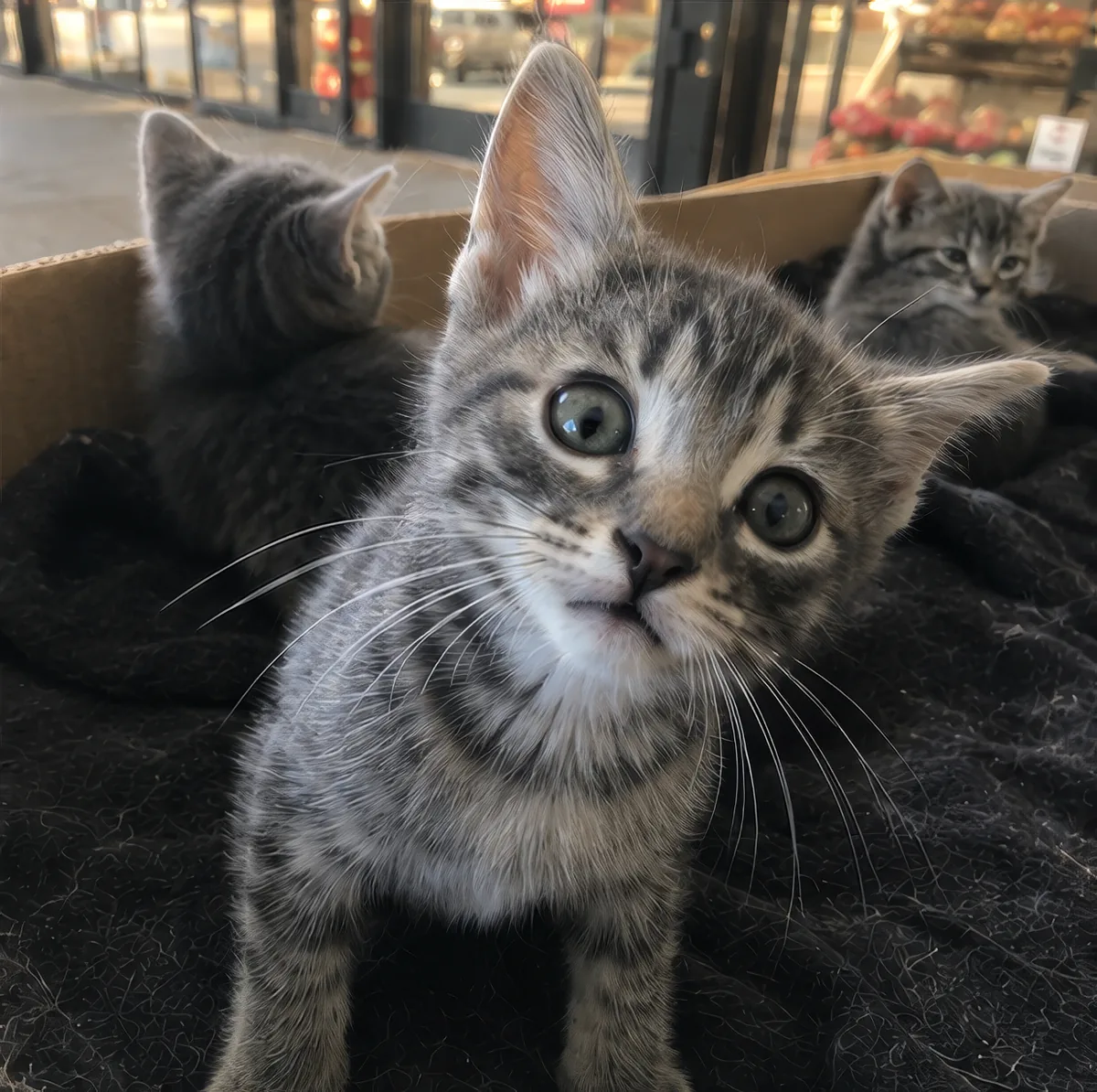
I was supposed to be in and out of the grocery store in eight minutes.
That was the whole assignment. Chips. Drinks. Maybe a tub of salsa large enough to imply we had more friends than we actually did. My buddy had texted before the game: anything crunchy, anything cold, lime chips if I saw them.
I had the chips. I had the drinks. I had the lime chips.
Then I walked out of the automatic doors and saw kittens. I cannot possibly walk past kittens without stopping to say hello.
Four of them were in a box decorated with hearts and a sweet little KITTENS NEED HOMES sign. One kitten was asleep with its face planted in the blanket. Another was fighting the blanket. A third stared at me like it knew I had no emotional defenses.
Behind the table was Maria, a middle-aged woman in a cat-hair-covered shirt and denim jacket. She was unfazed by the last tiny tabby trying to remove one of her buttons. I may be a 30-something-year-old dude, but my spirit people include middle-aged cat ladies. There is a reason moms love me.
I did not know it yet, but that table was going to be the reason I finally understood why the shape of a cat chip scanner matters.
The kittens had laundry names
I remember telling Maria I could not take one, because apparently that is the required opening statement for every cat person who is about to linger.
The kittens, she told me, had laundry names because they came from the cats near the laundromat by her work. Tide was the bold one wrestling the blanket. Bounce moved like a popcorn kernel and was trying to dislodge the button on her denim jacket. Gain had the roundest little face. Downy was the soft gray one face-planted in the blanket, looking innocent in the way only deeply suspicious kittens can.
The names were much better than anything I would have come up with. I would have panicked and named one Jeff.
I, of course, had more questions. Maria was trying to find homes for them so they could grow up loved and inside. When I asked how she became the one giving them away, she told me there were a few cats behind the clinic where she worked, plus a few near the laundromat and taco shop.
Not a big group. Not some official operation. Just enough cats that once she started feeding them, she felt responsible.
That was the first thing I noticed about Maria. She did not talk like a person giving a presentation about animal rescue. She talked like a person explaining why there was always dry food in her trunk. I have a suspicion there are more Marias out there than we know.
She told me she had not meant to get involved. There had been one gray cat at first. Then another. Then the black one that only came out after the taco shop closed. Food and water turned into trap videos and low-cost vet appointment calls.
This is how it happens, I guess. One bowl becomes a routine. A routine becomes a bunch of pictures of cats in your phone. The pictures becomes family members with names.
The cat who kept five feet
The kittens' mother was one of the newer cats. Maria called her Mija because that was what she kept saying when she tried to coax her closer: ven, mija, come on, just a little closer.
Mija would come close enough to eat while Maria stood nearby. Close enough to blink slowly. Close enough that Maria wondered if she had once belonged to someone.
But not close enough to touch.
Maria described her as friendly, but with rules, which is also how I would describe half the cats I have ever met and possibly several people in tech.
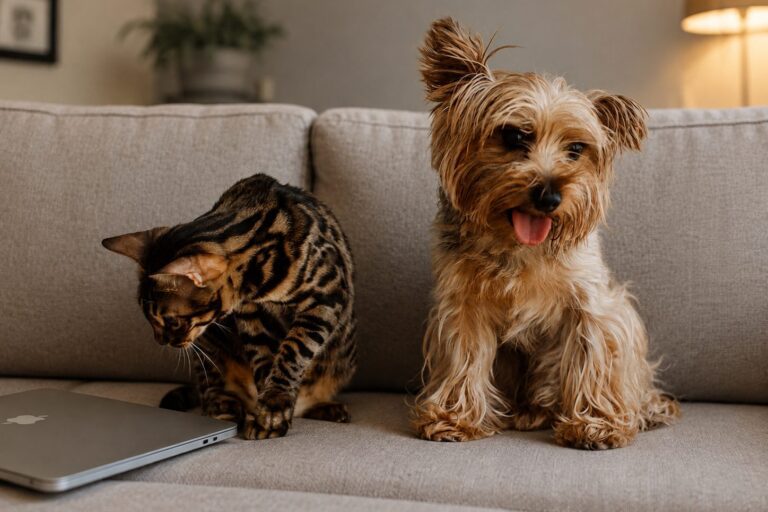
I thought of Lulu at home, my black Siamese-mix supervisor, who yells for attention while carrying a toy mouse and then acts outraged if I move wrong. Cats are tiny lawyers with fur. Every one of them has terms and conditions.
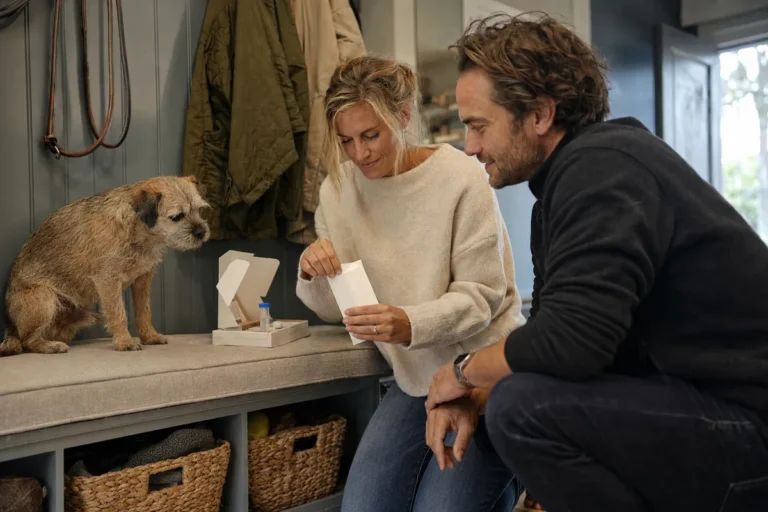
Maria had wanted to scan Mija for a microchip before assuming anything about her. Maybe she had been dumped. Maybe she was lost. Maybe she had a person somewhere who was still looking.
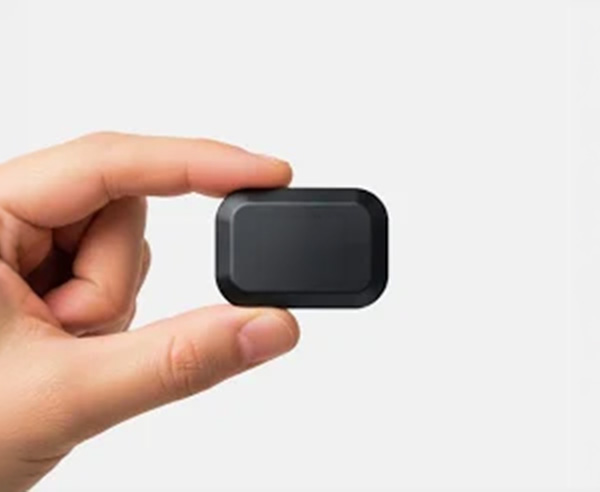
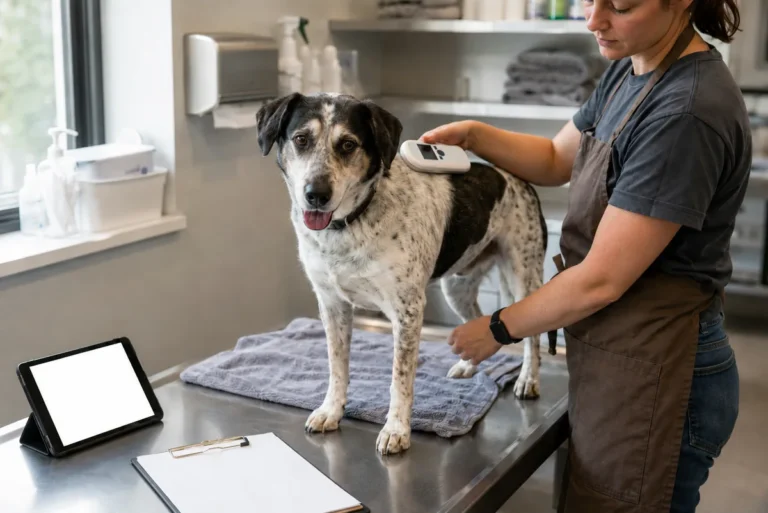
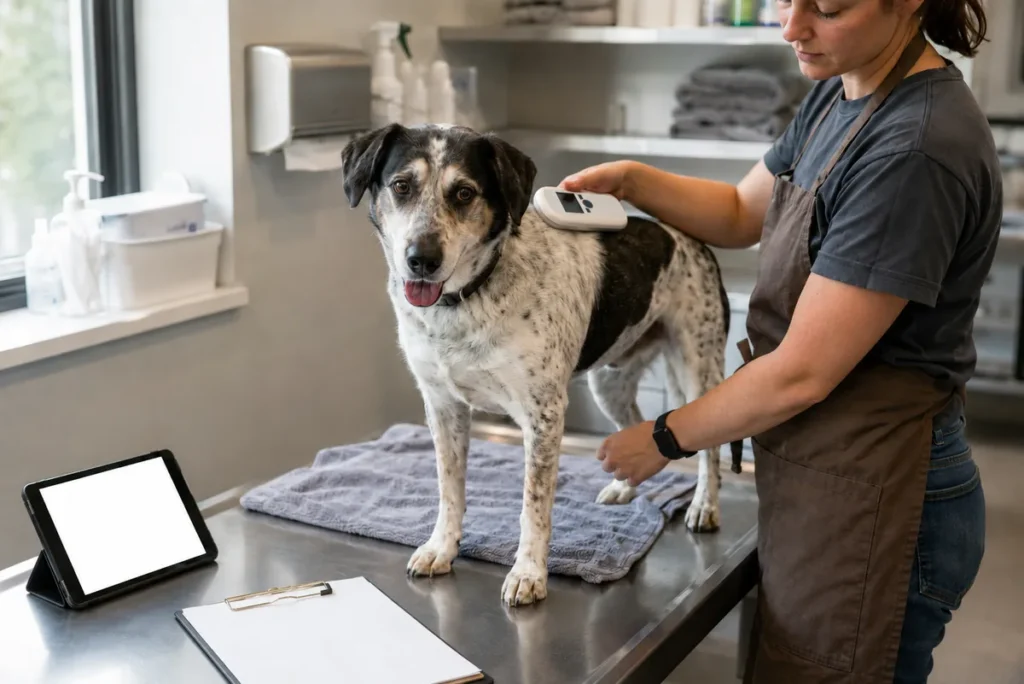
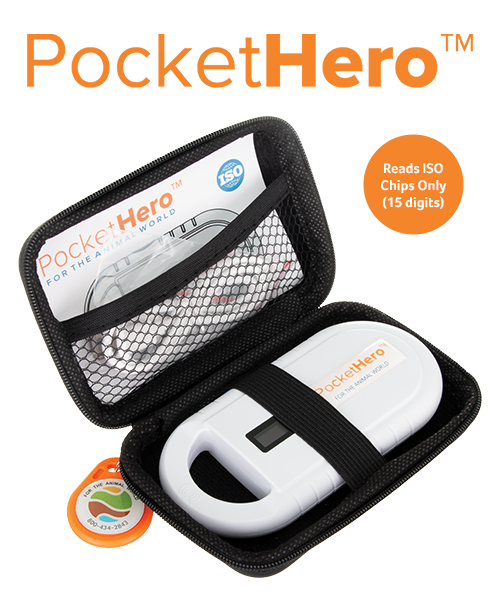
Maria already had a compact handheld microchip scanner she liked. Yes, it was pet tech, so I had questions. From what I remember, she liked that it was easy to keep with her supplies and useful when a cat was in a carrier, calm, or close enough to scan.
Mija was none of those things.
She had what Maria called a two-step boundary. Mija would approach the food, maybe chirp, maybe sit with her tail wrapped around her paws like she was considering citizenship. But when Maria leaned in with the handheld scanner, Mija moved away.
Not running. Not panicking. Just resetting the relationship.
Five feet. Every time.
I never really thought much about pet microchip scanners because I had mentally filed them under equipment for professionals. More vet counter than consumer pet tech. Maria made me realize there is a blurry line between a professional and a person who accidentally becomes responsible. I had been picturing scanning under perfect circumstances: find cat, contain cat, hold scanner over cat. The wider category map is in Complete Guide to Pet Microchip Scanners , but Maria was showing me the parking-lot version.
The second scanner made sense for one very specific reason
Maria eventually bought a longer stick scanner because she needed more distance. She kept it in the trunk of her car. It looked less like a fun gadget and more like a professional tool.
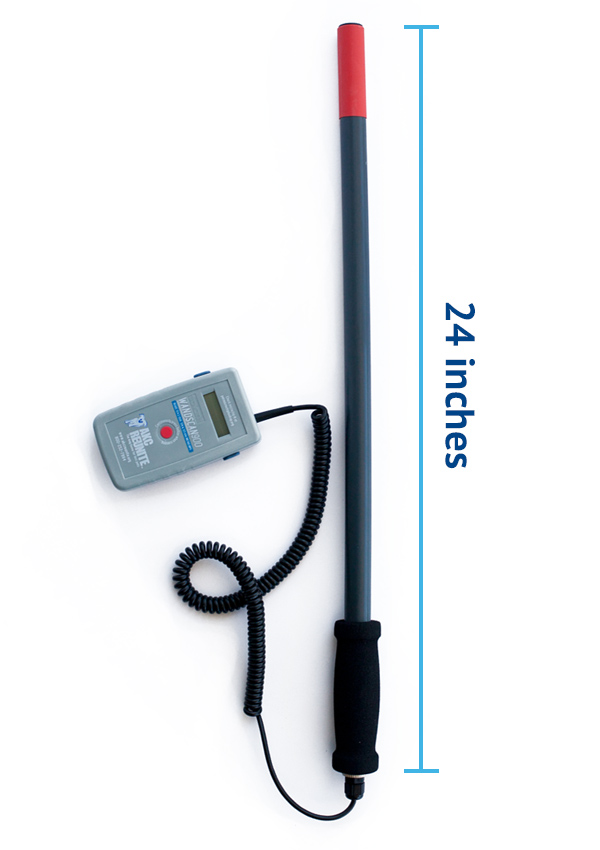
She liked the idea of being able to check one of the cats in the field without being right on top of them. With Mija, the stick scanner gave her a chance the handheld scanner had not. The scan did not turn up a readable microchip number. That answered the first question without pretending the rest was solved.
Maria thought she could take a bit more time to build trust and figure out the next step.
That was the moment the category clicked for me. A cat chip scanner is not just a scanner. It is a negotiation tool. With a calm cat, the handheld one can make perfect sense. With a cat like Mija, who has decided closeness is a subscription tier you have not unlocked yet, shape becomes the point.
People use awkward names for these things: cat chip reader, chip scanner for cats, chip reader cat, cat RFID reader. The cleaner question is physical. Can you get the reader close enough, or are you solving a distance problem? The animal chip scanner picks get into that handheld-versus-wand split.
The scan came too late for the next problem
Then Maria told me the part that made her want to cry.
The wand helped her scan Mija, but it did not get there soon enough to change what was already happening.
Mija got rounder before Maria got the whole plan together. At first Maria told herself maybe the cat was just eating better. Then Mija appeared with that unmistakable shape, belly low and sides full, and Maria understood the problem had moved ahead without waiting for her schedule, her paycheck, or the right tool.
The kittens at the table were Mija's. That made them Maria's responsibility too.
Tide, Gain, Bounce, and Downy were more than cute grocery-store kittens with excellent laundromat branding. They were the visible result of a missed window. Maria did not say this with self-pity. She said it like a person who had done the math and still had to keep moving.
Mija was eating. Mija was around. Maria still needed to trap her and get her fixed. Now there was another problem: who was the boy?
Maria showed me two blurry photos on her phone, which is apparently the official evidence format of all outdoor-cat situations. The first was Big Orange, a broad-faced orange cat near a parking curb with the energy of a man who had unpaid tickets. The second was The Senator, a black cat staring down from a concrete fence. That cat looked like he had never answered a direct question in his life.
Maria was not sure which one was the father. She was not even sure whether one, both, or neither was the next problem. She just knew she had to figure out who she could trap, when she could get a vet appointment, and how to keep another litter from happening.
People think it is just feeding cats.
Standing there, I understood what she meant. Feeding was the visible part, the part that makes everyone feel good. The real work was the noticing. Who was new. Who was missing. Who was too friendly to ignore but too wary to handle. Which tool gave you a chance without making the animal more afraid.
Maria made the category real
A family stopped at the table while we were talking. A little girl crouched over the box and whispered to Bounce, who briefly lifted his head from whatever small crime he was planning. Maria was back to answering questions: ages, litter-box training, whether they had to go together. She also asked questions back. Other pets? Kittens before? Did they understand kittens become cats with opinions and vet bills?
I stood there holding chips and drinks like an idiot with snacks, watching a woman translate a messy neighborhood problem into small possible next steps.
This is how I ended up researching pet microchip scanners for Barkytech.
Not because I woke up one morning passionate about scanner form factors. Does anyone wake up like that? I started looking because Maria made the category feel less like gear for pure professionals. Her handheld scanner was not wrong. She liked it. It had a place. It was the scanner for the cat you can get close to.
Mija was not that cat.
The app language around this category makes the whole thing sound easier than it is. A cat chip scanner app or cat chip reader app does not turn a phone into a microchip reader. You still need scanner hardware, then the chip number has to be followed through the right registry lookup. Universal Pet Microchip Scanner Guide: ISO, AVID, RFID, and When You Need a Stick Reader explains the chip-language side, and Where to find a Pet Microchip Scanner near you and When to Buy Your Own is useful when borrowing a scanner stops being enough.
Before I left, Downy had finally woken up and was sitting in the food dish like a tiny landlord. Gain looked like someone who had never paid rent and never intended to. Bounce and Tide were tangled together in an argument Bounce appeared to be winning through pure agility.
Maria said they were good kittens. I told her they looked like trouble. She gave me the kind of smile that said those were probably the same thing.
My phone buzzed. My buddy wanted to know whether I had been kidnapped by the salsa aisle.
I told Maria good luck, which felt too small. Good luck is what you say when someone is holding a problem with both hands and you are holding chips.
On the drive back, the lime chips survived. My friend complained that I had taken forever. I gave him the short version: kittens, Maria, scanners, Big Orange, The Senator.
He asked whether I had gone to buy chips and come back with cat chip homework.
Apparently, yes.
The next time someone says they need a chip scanner, I will not picture a grocery store checkout scanner. I will picture Maria and those four kittens, with Mija somewhere behind them keeping five feet, because that was the whole point.
If you want a scanner, try these Barkytech recommendations
If Maria's situation made you realize borrowing a scanner is not always enough, start by thinking about shape before brand. A handheld scanner is easier to store, easier to carry, and often makes sense when the cat is contained, calm, or already close enough to scan. A stick scanner is built for the more awkward version of reality: the outdoor cat who lets you feed her but refuses to let you step inside her personal airspace.
For readers comparing pet microchip scanner options, Barkytech would start here:
- AKC Reunite is worth looking at if you want a scanner option with shelter, rescue, or field-use relevance, especially if reach is part of the problem you are trying to solve.
- Datamars / PetLink belongs on the list if you want to compare scanner hardware within a broader microchip and registry ecosystem.
- AVID is important to understand because chip compatibility is one of the least glamorous but most consequential parts of this category, especially when you are scanning cats with unknown histories.
- Hero / Microchip ID Systems is a practical name to compare if you are looking for a compact handheld scanner for closer-range scanning situations.
The bigger lesson is not that every colony caretaker needs the biggest scanner in the category. It is that the right cat chip scanner depends on the cat you can actually reach. If the cat is in a carrier, a handheld reader may be enough. If the cat is keeping five feet, the stick scanner starts making a lot more sense.