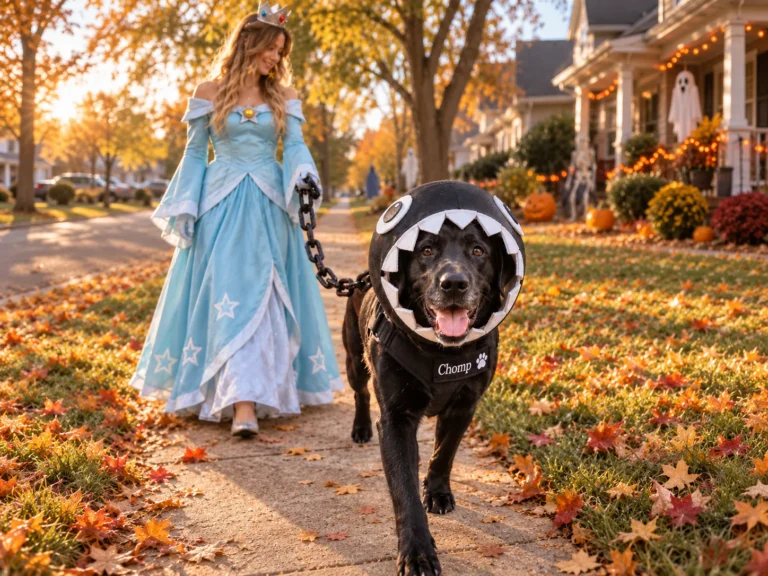
If you want to dress up like your pet for Halloween, generic ears and three whiskers will not do. You are dressing as your cat or dog: the one with the crooked ear, single white sock, and chest patch shaped vaguely like a minor European nation.
Those idiosyncrasies turn yet another black cat into a conversation piece. Copy the judgmental eyebrows, sideways tail, or favorite stolen sock, and people will ask to see the source material. Your pet will recognize intellectual-property theft on sight.
To dress up as your dog or dress up as your cat, make three decisions: head, body, and paws. Everything else is evidence.
Before You Dress Up Like Your Pet, Make a Tiny Identity File
Choose straight-on and side photos in neutral light. Note the features that identify your pet across a room:
- Main coat color
- Largest secondary marking
- Face pattern and muzzle color
- Ear and tail shape
- Coat texture
- One unmistakable detail, such as a white sock, crooked ear, chest blaze, beard, or dramatic eyebrows
Copy contrast before chasing an exact shade. A black back and white chest will read in party lighting. Warm oatmeal versus emotionally distant beige probably will not.
For dogs, silhouette does a lot of the work: Corgi ears, a Schnauzer beard, a Husky-style face mask, or Dalmatian spots. For cats, copy the coat map. Give a tabby its forehead M and stripes, a tuxedo its bib and socks, or a pointed cat darker color on its face, ears, hands, feet, and tail.

Decision One: Makeup or a Giant Papier-Mache Head
Choose makeup if you enjoy recognizing doorways
Start with the largest light or dark areas on your pet’s face. Add smaller patches, then use short, flicked strokes at the edges to suggest fur. Finish with the nose, muzzle line, whisker dots, blaze, brows, or eye patch.
Use products intended for human skin, not the acrylic paint beside your glue gun. The FDA recommends that you patch-test Halloween makeup 24 to 48 hours ahead. Check eye-area restrictions, too. Skip decorative cat-eye contacts unless they were prescribed and properly fitted.
Choose papier-mache if subtlety has failed you personally
The Reddit costume that inspired this section went gloriously specific: an enormous furred copy of the maker’s own black cat. The builder used a light dome, shaped facial forms, papier-mache, synthetic fur, foam ears, a screened viewing hole, and padding.
To build your own:
- Start with a lightweight dome or removable form, never your actual head.
- Tape on light muzzle, cheek, brow, and ear shapes.
- Add overlapping papier-mache strips and let them dry completely.
- Cut generous viewing and ventilation openings.
- Add eyes, nose, ears, whiskers, and the real coat markings.
- Pad the inside so it sits steadily and comes off quickly.
Test the head indoors for a secure fit and full vision, plus good ventilation. Remove it for stairs, streets, and moments when seeing matters more than being mistaken for a six-foot tabby.
Decision Two: Hoodie or Faux-Fur Showpiece
Use a hoodie or onesie for a wearable base
Choose clothing in the main coat color, starting with your closet. You may already own something pet-colored, because living with a shedder turns every outfit into a limited-edition fur blend. If not, try a thrift store for an inexpensive hoodie, sweater, or pair of sweatpants that can survive your creative decisions.
Add the biggest markings with felt, fleece, or removable fabric tape. Put the white chest on the chest, not wherever your crafting confidence happens to peak.
This works well for sleek cats and short-coated dogs. Add ears to the hood and a light stuffed tail at the waistband. You should still be able to sit down despite the hot glue controlling your life.
Use faux fur where it changes the silhouette
Concentrate fur on the hood, shoulders, chest, cuffs, tail, beard, or brows. There is no need to upholster your entire body unless full mascot is the dream.
For curly dog fur, sew yarn loops or pom-poms onto removable cuffs. Give a wiry terrier irregular fringe around the chin and eyebrows. Long-haired cats mostly need cheek tufts, ankle cuffs, a chest ruff, and a fluffy tail.
If you live with a champion shedder, collect clean, dry brushing fur throughout October. Keep it in a paper bag, then attach it to removable felt cuffs or a chest patch with fabric-safe adhesive. This is the wearable version of the running internet joke that your dog sheds enough fur to build another dog. At last, the spare dog has a job. Cats may contribute, although they will deny authorizing the textile harvest.
Keep faux-fur pieces facing in the same pile direction. Mark and cut the backing without mowing through the fibers. Brush trapped fur from the seams, or the costume may look groomed by a ceiling fan.
Decision Three: Human Hands or Full Paws
The practical choice is to keep your hands human. Add a fluffy cuff, paint nails like claws, or copy one white paw with a pale glove. You can still hold a drink and operate a phone, two skills your pet has never respected.
For recognizable paws, glue oval felt pads to inexpensive gloves or mittens. Match the odd foot that ruins an otherwise symmetrical set. Use soft felt claws that will not scratch, snag, or interfere with your grip.
For full paws, cover mittens and boot covers with fur. Leave shoe soles uncovered and keep everything clear of the floor. Looking like your dog is funny. Falling because you gave yourself four decorative snowshoes is paperwork.
Finish With a Collar, Leash, and Suspiciously Specific Prop
An oversized lightweight collar and a tag with your pet’s real name explain the premise immediately. Keep the collar loose. Clip any leash to a belt loop or carry it for photos; nobody should pull you around by the neck.
Dog props include a foam bone, tennis ball, bandana, or favorite plush toy. Cat props include a toy mouse, cardboard box, or feather wand with a short string. Better yet, carry the odd thing your pet always steals: one sock, a dish towel, or the cardboard tube that somehow beat every toy you purchased.
The Last-Minute Version Still Counts
Wear clothes in the main coat color. Add one large felt marking, cardstock ears on a headband, a cosmetic nose, the pet’s name tag, and one toy. Copy the feature people notice first. Congratulations: you are now the authorized low-budget reboot of Kevin.
Get the side-by-side picture before your pet loses interest. Borrow the patience from how to take photos of your dog or how to take photos of your cat. Use good light, keep it short, and let the animal leave whenever it wants.
The final test is simple: if friends recognize your pet before you show them a photo, the costume worked. If your pet stares at you as though you have violated several international treaties, it worked even better.