This is a story about picking a GPS dog collar for Pippi, a very small dog. The first thing you should know about Pippi is that she was named after Pippi Longstocking, and she has accepted the assignment with her whole tiny body.
Pippi is a Papillon, which means she has butterfly ears, a silky coat, the bone structure of a porcelain ornament, and the personality of a camp counselor who has been waiting all morning for everyone else to get excited. She belongs to my friend Sophie, who owns more tiny dog coats than I own weather-appropriate shoes. Some are raincoats. Some have little harnesses built in. One has a collar that makes Pippi look like she is about to attend a museum opening and then sprint through it.
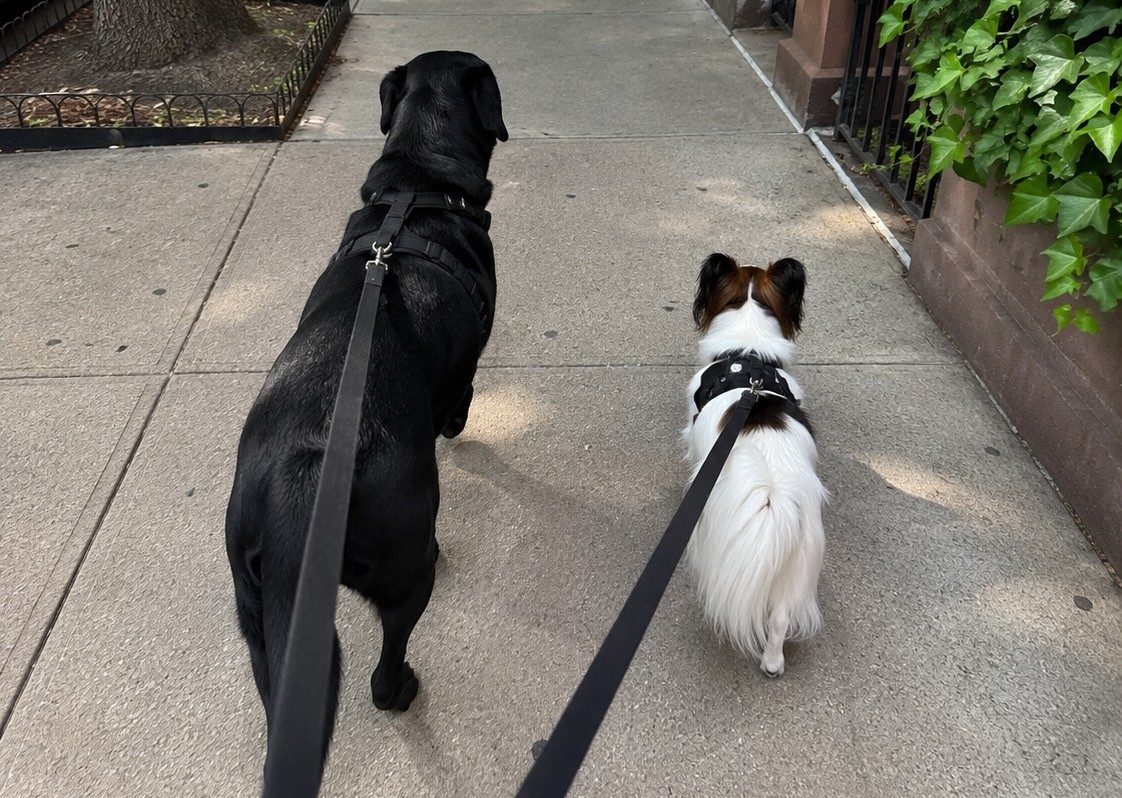
My dog Batman and Pippi get along because they are both outgoing, social, energetic creatures who believe the sidewalk was built for greeting. They don’t really play together in the park, because Batman is a large black Lab and Pippi is the size of a confident croissant. But they like walking together. Batman does his big-dog bounce. Pippi does her fast little Papillon trot. This gives Sophie and me a chance to follow behind and catch up on gossip.
So when Sophie started looking for a gps dog collar for small dogs, I understood why. Pippi may be tiny, but she is not decorative. She is active, joyful, curious, and fast. She is also the kind of dog who turns an entryway into a backstage quick-change area, which is how I ended up watching a tracker fitting become a miniature fashion show.
Pippi was dressed better than both of us
The first try was a Tractive DOG 6. On paper, it made sense. Tractive is a familiar name, the app features were the kind of thing Sophie wanted, and the product was clearly built for dogs. The DOG 6 is meant for dogs above 9 pounds, and Pippi lives close enough to that small-dog border that the product page did not automatically settle the question. She was the kind of tiny dog who made the sizing chart feel like a suggestion, not a verdict.
That is where tiny dogs make shopping annoying. Weight is useful. Neck feel is different. Pippi has a delicate little neck, a breakaway collar for everyday ID-style wear, and a walking setup that already works because her leash clips to a harness or one of her integrated-harness coats.
Sophie did not put the tracker on and declare disaster immediately. That would have been too easy. She adjusted it. She checked the collar position. She watched Pippi walk around the apartment, where Pippi accepted the new hardware with the wary politeness of someone being handed the wrong size hat.
Then we took the test outside.
The first block changed the mood
The walk was only supposed to be a short spin around the neighborhood. This was not a grand product trial. It was Brooklyn field research in the purest form: one friend, one over-accessorized Papillon, one giant Lab trying to understand why the small dog was getting so much attention, and one sidewalk full of people who absolutely noticed Pippi’s coat before they noticed any of us.
The first block was fine. Pippi trotted. Batman sniffed. Sophie relaxed a little.
Then Pippi started doing the thing small dogs do when the equipment is not quite right. She did not collapse theatrically. She did not refuse the walk. She just changed. Her head carriage got a little busier. She gave one shake, then another. She paused near a tree pit and looked back at Sophie as if to say that the committee had concerns.
That is the moment a product photo cannot give you. Product photos show scale. A test walk shows behavior.
If you are comparing dog trackers for small dogs from the couch, Best GPS Tracker for Small Dogs is where I would start. But the sidewalk is where Pippi made the decision feel obvious.
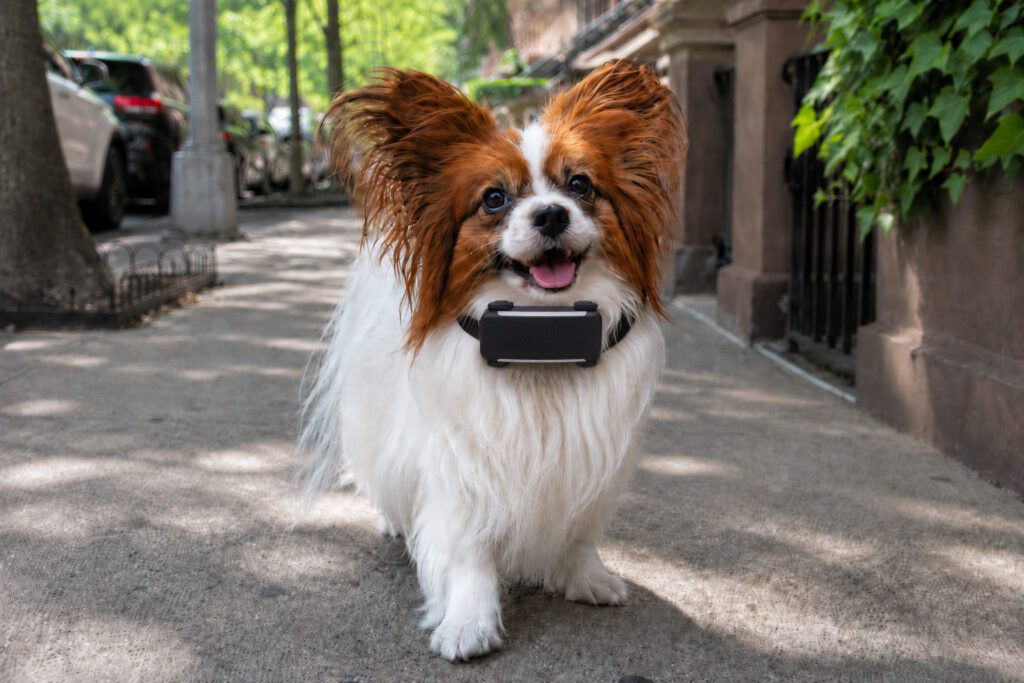
The switch only made sense once Sophie separated the collar from the leash
The DOG 6 was not some giant ridiculous object. It was simply more device than Pippi wanted on that collar. Because Pippi is active and has a delicate neck, Sophie already treats the collar as an ID and backup place, not as the leash-control point. For walks, Pippi is on a harness or one of her little coats with the harness built in.
That separation matters. The collar is not the thing holding her back from traffic. It is the thing carrying identification and, in this case, a location backup.
Once Sophie looked at it that way, the decision got easier. She stopped trying to force a dog-labeled tracker to be the right answer just because Pippi is, very definitely, a dog. She switched to Tractive’s smaller CAT Mini setup, using it as a lighter location device on Pippi’s breakaway collar while keeping leash pressure where it already belonged: on the harness.
This was not Sophie deciding Pippi was a cat. Pippi would never allow the paperwork. It was Sophie admitting that a five-to-ten-pound Papillon sits in a weird practical zone. She has big-dog energy and toy-dog hardware needs. She can keep up on walks, learn quickly, greet everyone, and make Batman look emotionally uncomplicated. But the gear still has to respect her size.
What Pippi taught me about small-dog tracker fit
The second walk felt different before we even reached the first corner, which is usually how you know the answer was never hiding in the specs. Pippi still looked like Pippi: ears high, coat neat, legs moving quickly, ready to be perceived. She was not fussing with the tracker. Sophie was not staring at her neck every six steps. Batman resumed his normal job, which is trying to make brief eye contact with every person who might someday have cheese.
That is what made the lesson stick for me. A gps dog collar for small dogs is not just a smaller version of a big-dog decision. It is a fit decision, a behavior decision, and sometimes a wardrobe decision, because tiny active dogs often already have gear that works. The question is whether the tracker joins the outfit or wrecks it.
Our Complete Guide to GPS Pet Trackers covers the bigger technology choices, and Best GPS Dog Collar and GPS Dog Trackers is useful if you are comparing dog collars across sizes. Pippi’s lesson was narrower and more immediate: if your dog is small enough to be between sizes, do not let the product label do all the thinking.
If Pippi had been a sturdy small dog with a thicker neck, the first setup might have been fine. If she pulled on a collar, this would have been a totally different conversation, and I would have wanted a safer leash arrangement before talking about trackers at all. But Pippi already had a good walking setup. The tracker needed to be the quiet backup, not the main character.
I left that walk thinking that every best gps tracker for small dogs conversation should include a real neighborhood test walk. Put it on. Walk outside. Watch the dog, not just the app. Does the tracker swing? Does the collar twist? Does the dog shake it off emotionally every three steps? Does the beautiful little raincoat still sit where it is supposed to, or has the whole outfit become a structural argument?
Pippi, obviously, passed the fashion portion. The hardware had to catch up.