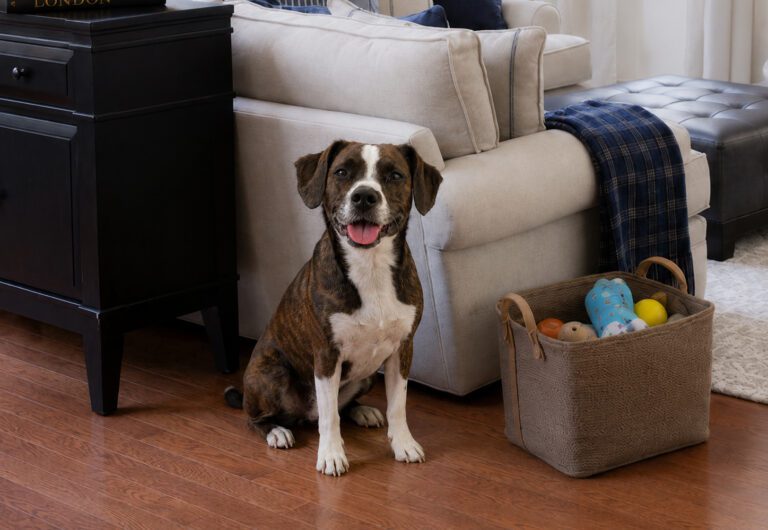
Canine DNA test accuracy can become a family debate the minute the report arrives. One breed makes perfect sense. Another seems impossible. Somebody points at the dog’s ears as decisive evidence. Somebody else is already scrolling through breed photos. The dog, meanwhile, is hoping the envelope contains a snack.
A result you did not expect is not automatically a bad result. It also is not automatically correct. Before anyone appoints the ears as judge and jury, ask what kind of accuracy you are judging. An ancestry estimate, a usable cheek sample, a parentage match, and a health-risk finding rely on different evidence. If you are still choosing among kits, our best dog DNA test comparison walks you through that decision. When you assess canine DNA test accuracy, start by separating these four questions.
“Accurate” can mean four different things
1. Breed-ancestry estimation
An ancestry service compares your dog’s DNA with its own reference animals and uses an algorithm to estimate likely contributions. Results depend on which populations are represented, how closely related breeds are separated, and how the company reports uncertainty. They are estimates, not a direct inventory of labels stored inside your dog.
2. Sample and genotyping quality
The laboratory needs enough clean DNA to read the markers used by the test. Quality controls determine whether that data is usable. A collection problem generally raises the risk of a failed or inconclusive sample and a recollection request; it should not be treated as the routine cause of a polished but surprising breed chart.
3. Identity or parentage verification
A genetic identity profile can distinguish one dog from another. Parentage testing compares the offspring with the possible sire and dam, so the relevant profiles or samples must be available. It can support or exclude that parentage relationship. It does not, by itself, prove breed heritage, purebred status, or registration eligibility.
4. Health-variant detection and clinical significance
A lab may accurately detect a variant while its meaning for this dog remains uncertain. Breed relevance, inheritance, penetrance, age, symptoms, and other causes of disease can all matter. An at-home screen supplies information for veterinary interpretation; it does not diagnose disease or prescribe care.
Separate a swab problem from an ancestry surprise
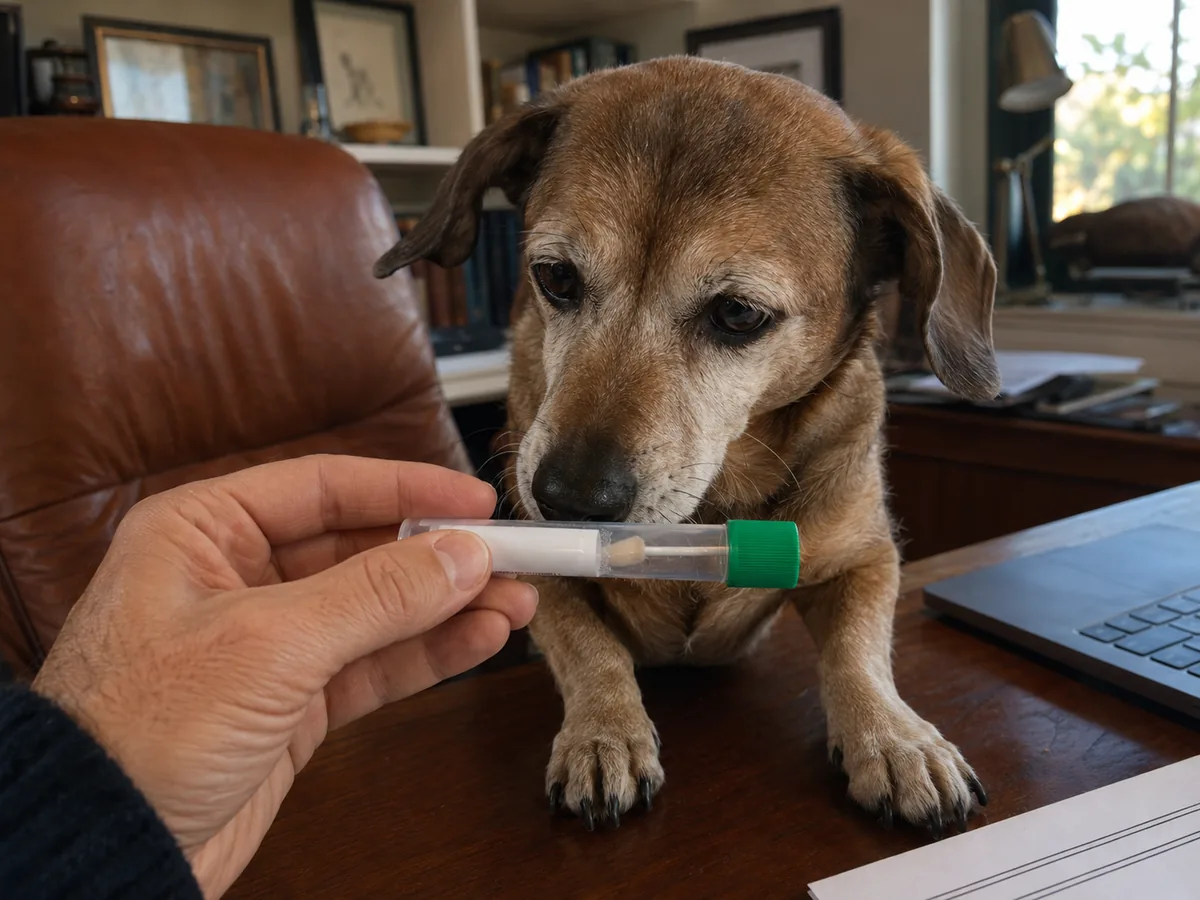
Getting a cheek swab from a dog can be comical right up to the moment everyone is frustrated. Your dog chews the tip, turns away from mouth handling, or licks the last trace of breakfast. Stop before the process becomes a wrestling match. Set up the tube first, move away from other pets, respect the company’s food-free interval, and use the exact collection motion and time printed for that kit.
Embark currently directs owners to swab the cheek pouch and under the tongue for 30–60 seconds. Its support material says insufficient DNA or contamination can fail quality checks and lead to a replacement swab. Wisdom Panel describes activation, cheek collection, drying, mailing, and laboratory quality checks, and says the lab will tell you if the sample does not contain enough high-quality DNA. DNA My Dog’s help center gives its own food, water, other-animal, and replacement guidance.
Those are three company-specific processes, not evidence that one brand is more reliable than another. If support requests recollection, ask what failed and repeat that company’s directions calmly. If the sample passed and the report is simply surprising, investigate the ancestry evidence rather than blaming the swab by default.
A bigger breed list does not settle the argument
Embark, Wisdom Panel, and DNA My Dog advertise breed or reference coverage using different terms and denominators. A list of breeds is not interchangeable with a count that includes breeds, types, and varieties. It also does not reveal reference-sample quality, representation of closely related breeds, reporting thresholds, or how uncertainty is handled.
We therefore would not use a company-reported percentage or the largest advertised count to name a “most reliable dog DNA test.” There is no comparable independent benchmark that supports a universal ranking among these three companies.
When appearance and ancestry disagree, remember that visible features are a small part of inheritance. A mixed-breed dog can look strongly like one ancestor while carrying DNA assigned to several others. The ears still do not get veto power. Small reported components also deserve more caution than the broad pattern. If two companies disagree, compare their labels, methods, confidence explanations, and update history. Do not average the percentages into an answer neither lab produced.
Our Embark Dog DNA Test Review, Wisdom Panel Pet DNA Test Review, and DNA My Dog review explain each report experience without using customer reactions as scientific proof. Families with a particularly tangled backstory can also use our dog DNA test for mixed breeds guide for that narrower choice.
AKC identity, parentage, and health are separate questions
An AKC DNA kit is easy to misunderstand if you want breed ancestry. The standard AKC DNA Profile program creates an identity profile used for registration integrity and parentage work. AKC says that profile does not determine a dog’s breed or provide health results.
AKC DNA + Health is a separate offering with health and trait reporting. The similar name does not turn the standard profile into an ancestry test. For canine parentage testing, the laboratory compares the offspring’s profile with the relevant parents. A match can support biological parentage; registration eligibility and registry rules remain separate matters.
An SOD1 result is not a DM diagnosis
Degenerative myelopathy shows why health “accuracy” needs a second sentence. Some tests identify variants in SOD1 associated with DM risk. An at-risk genotype does not mean the dog currently has DM or will inevitably develop it. Incomplete penetrance, breed background, age, clinical signs, and other neurologic explanations matter.
The UC Davis Veterinary Genetics Laboratory explains those limits in its test interpretation. If a broad kit reports an SOD1 finding, save the exact genotype and report, then share them with your veterinarian. The next step may be clinical observation, a neurologic evaluation, or confirmation, depending on the dog and the decision at stake—not a treatment change made from the dashboard.
A negative panel needs equal restraint. It means the listed variants were not detected as reported. It does not mean the dog is free of genetic disease or protected from future illness, and not every variant on a broad panel will be relevant to every dog.
What to do with the report in your hand
- Confirm the exact product and what it was designed to report.
- Check whether the sample passed quality control or needs recollection.
- Separate the broad ancestry pattern from small or low-confidence components.
- Read the company’s method, reference terminology, limitations, and update policy.
- If you tested twice, keep the reports separate and compare like with like.
- Save consequential health details and take them to your veterinarian.
- Keep observing and training the individual dog you know.
Ancestry percentages do not determine personality, training needs, or medical care. A peer-reviewed behavioral-genetics study found breed ancestry was a weak predictor of behavior in an individual dog. Your dog’s responses, history, health, and relationship with your family are better guides to daily life.
FAQ
Why does canine dna test accuracy feel different from one report to another
Because canine dna test accuracy depends on sample quality, breed complexity, database strength, and the exact question the buyer thinks the report is answering.
Is wisdom panel dog dna test accuracy better than embark dog dna accuracy
Wisdom panel dog dna test accuracy and embark dog dna accuracy are both credible in the mainstream consumer lane. Embark usually makes the deeper all-around case, while Wisdom Panel makes the cleaner mainstream middle-ground case. That is different from saying one wins every possible situation.
What is the most reliable dog dna test if I mostly care about trust
The most reliable dog dna test for most households is usually Embark or Wisdom Panel because those brands pair broad databases with clearer report framing. A reliable dog dna test is one that still makes sense after the reveal, not just one that advertises a big number.
Are canine parentage testing, a canine dna parentage test, or a dna test for dm in dogs the same purchase as a consumer kit
No. Canine parentage testing, a canine dna parentage test, and a dna test for dm in dogs all answer narrower questions than a normal household breed report. The best dna test for genetic health also depends on whether you mean a broad consumer screen or one specific clinical concern.
Should I buy an akc dna kit or akc dna test kit for a mixed-breed household
Usually no. An akc dna kit or akc dna test kit is closer to identity and registry work than to the average household ancestry question.
The bottom line
The trustworthy response to a surprising DNA result is neither instant belief nor instant dismissal. Take a breath. Ask which kind of accuracy matters, whether the laboratory had usable DNA, how the ancestry model explains uncertainty, and what a health variant means for this dog. Canine DNA test accuracy is clearest when you judge each of those questions on its own evidence.
Our Complete Guide to Pet DNA Tests covers dog and cat testing more broadly. Whatever the ancestry chart says, learning something new does not require your family to see a different dog. Close the dashboard, call your dog by the same ridiculous nickname as yesterday, and let the report improve the questions you ask. The dog you already love remains the center of the answer.