The smallest gps tracker for cats sounds like the safe answer until the collar is on the cat. Then the real test starts: does the tracker sit flat, does the breakaway clasp still work, and does your cat move like herself instead of like someone attached a door knocker to her neck?
Cat tracker shopping gets weird because “small” is not the same thing as safe. A tiny gps tracker for cats can still swing, twist, rub, or make grooming harder. A lightweight gps tracker for cats can still be wrong if it blocks a quick-release collar. The AVMA’s policy on free-roaming owned cats is worth reading alongside the fit question, because the collar decision and the outdoor-access decision are the same decision. A no-subscription RF tag can be wonderful near the house and useless if you expected a live map. The best cat tracker for small cats is the one whose method and fit match the cat, not the one that wins a measurement contest.
If you are still choosing products, Best Cat GPS Trackers and Cat Tracking Collars compares the options. The Complete Guide to GPS Pet Trackers explains GPS, RF, and tag-network limits across pets. Think of this page as the dressing-room mirror: make sure the thing actually fits before you trust it outdoors.
Breakaway safety is the first rule
A cat collar should not be judged like a dog collar. Cats climb, squeeze, twist, groom, and slip through tight spaces. That is why cat-safety groups often point owners toward quick-release or snap-opening collars rather than collars that stay trapped under pressure. Cats Protection explains that quick-release collars are the safest cat-collar option, which is exactly the safety issue tracker owners have to respect.
That creates the uncomfortable tracker tradeoff. If the collar releases outdoors, the tracker may stay with the collar while the cat keeps moving. This can feel maddening when you paid for the gadget, but a lost tracker can be the better outcome than a trapped cat. FitBark GPS 2nd Gen, Fi Mini for Cats, and Tabcat V3 all need to be judged through that breakaway lens before features matter.
Weight is only one part of fit
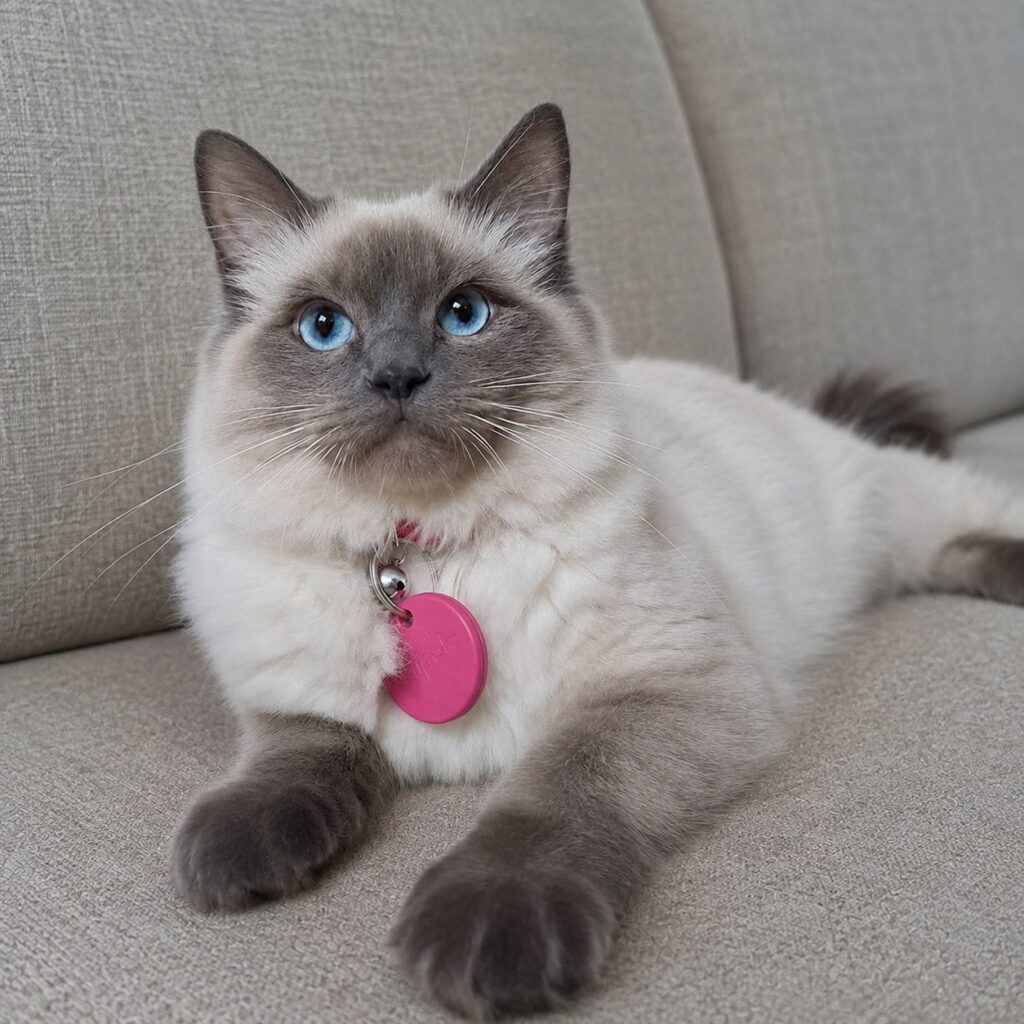
A lightweight gps tracker for cats gives you a better starting point, especially when the product is as light as FitBark GPS 2nd Gen’s stated 16 g body. Fi Mini for Cats also matters because it was made with cats in mind rather than borrowed from dog gear. Tabcat V3 does a different job: it is an RF locator, not GPS, and its appeal is a light tag plus a handheld search method.
But weight does not tell the whole story. Shape decides where the tracker sits. Holder design decides whether it rolls under the chin. Collar width decides whether the tracker crowds the leash ring or ID tag. Fur length, neck size, and grooming behavior all change the result. The smallest cat tracker can still fail if it behaves like a swinging charm on every jump.
Kittens and very small cats need a slower decision
People looking for a gps tracker for kittens or a small animal gps tracker are usually worried for a very understandable reason: they are picturing a tiny animal near an open door and want reassurance now. That is also when it is easiest to ask too much of a gadget.
A kitten’s neck size and tolerance change quickly. A small senior cat may be delicate in a different way. A tracker that is fine on a sturdy adult cat may be wrong for a kitten, rabbit, ferret, or other small animal. If the cat is still growing, medically fragile, or extremely small, ask your veterinarian about collar wear and focus on indoor management before trusting any wearable tracker.
Indoor, supervised outdoor, and roaming cats need different tools
An indoor cat tracker is often about finding the cat in the house or immediately outside a door. A hiding cat may be behind the dryer, in a closet, under a porch, or in the garage you checked twice while being judged from above. Tabcat V3 can make sense here because RF locating is built for nearby searching without a monthly plan.
A supervised outdoor cat may need a lighter setup that helps if the cat slips under a deck or pauses in a neighbor’s hedge. A gps tracker for outdoor cat roaming asks more from the device: battery, app alerts, collar stability, and a tracking method that can handle more distance. Fi Mini for Cats and FitBark GPS 2nd Gen are better examples for that live-GPS question.
How to run the collar test
Do not make the first test an outdoor adventure. Set up the full collar indoors and watch normal behavior. The cat should eat, drink, jump, scratch, groom, nap, and turn her head without the tracker becoming the day’s main character.
Check four things:
- The breakaway clasp still opens cleanly.
- The tracker does not slide under the jaw.
- The holder does not trap fur, block hardware, or hit the chest.
- The cat stops noticing the device after a reasonable adjustment period.
If your cat keeps pawing at the collar, freezes, or grooms around the tracker like she is trying to remove evidence, do not move to outdoor use yet. Refit, choose a lighter device, or switch methods.
Where the current example products fit
FitBark GPS 2nd Gen is the lightweight GPS example. It belongs in the conversation when true GPS matters but weight is the first barrier.
Fi Mini for Cats is the cat-specific GPS example. It is the best fit for owners who want app-based cat GPS and are prepared to manage charging and a subscription.
Tabcat V3 is the RF example. It is not a GPS tracker, and that is not a flaw. For cats who hide nearby, an RF locator can be more useful than a map that tries to explain the cat is somewhere “around here.” The TabCat Cat Tracker Review goes deeper on how that nearby search works.
Other products can be useful for contrast, but they should not receive equal treatment in this safety page. Apple AirTag, Tile, Eufy SmartTrack, SmartTag, and Chipolo are tag-network alternatives, not GPS. The AirTag story, An Apple AirTag Pet Tracker Seemed Perfect Until Her Cat Went Outside, is a useful expectation check before trusting any tag product as outdoor recovery gear.
The practical takeaway
The smallest gps tracker for cats is the right search only after you ask better questions. Can the collar release? Can the cat move normally? Does the method match indoor hiding, supervised outdoor time, or roaming? Are you comfortable locating the collar if the breakaway does its job?
For many cats, the shortlist is simple: FitBark when lightweight GPS matters most, Fi Mini when you want cat-specific GPS in an app, and Tabcat V3 when you want no-subscription help finding a cat close to home. Choose the one your cat can actually wear without filing a formal complaint.