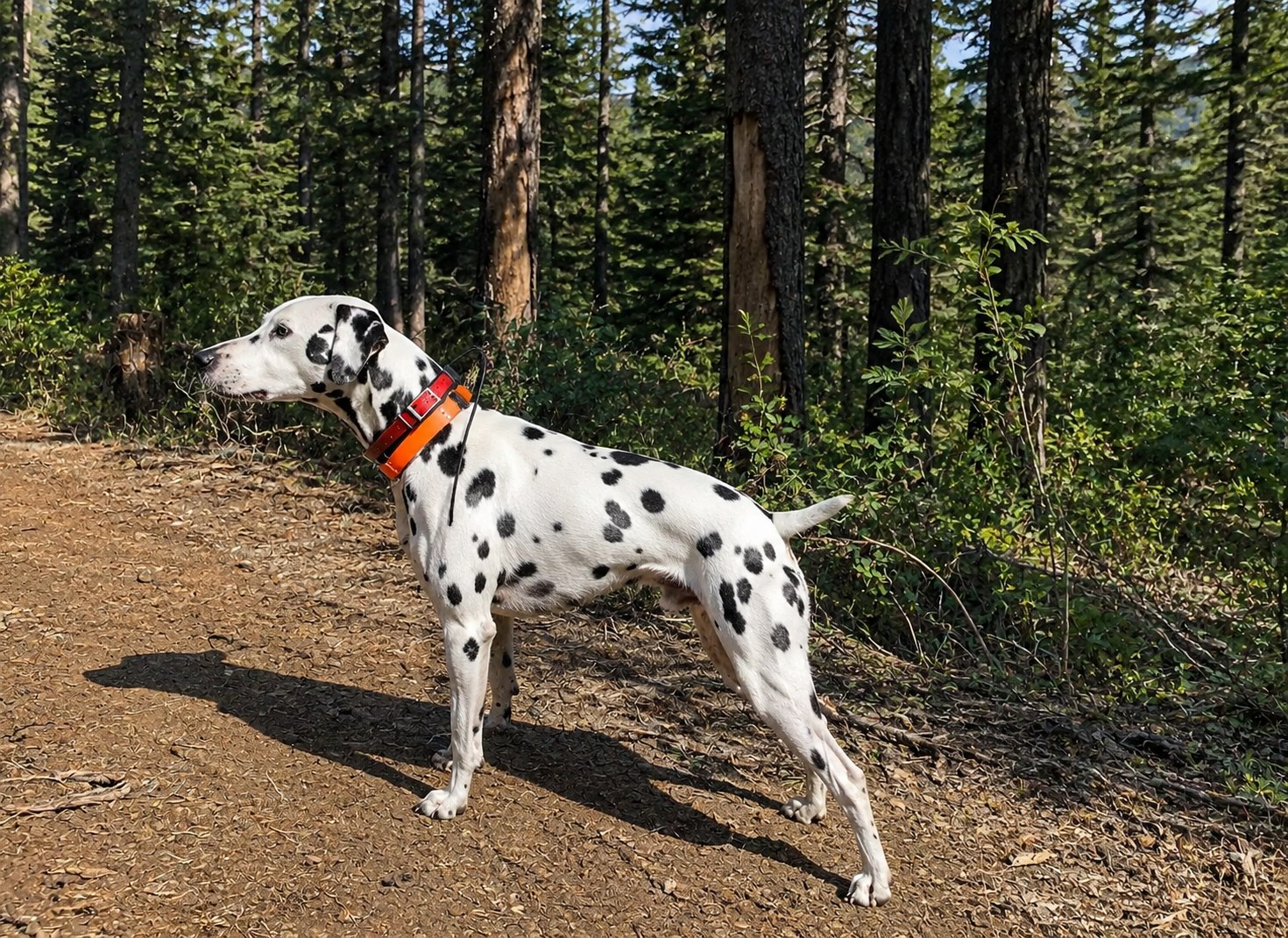
A waterproof dog tracker sounds like the answer when your dog treats every walk like a field study in mud, lake edges, pine needles, wet grass, and whatever smelled interesting behind the picnic area. Water matters, but it is only one part of choosing a GPS tracker for outdoorsy dogs.
Outdoor tracking has to work through the whole messy search: range, maps, terrain, update cadence, collar fit, battery habits, and whether your phone still makes sense when the trail curves, the campsite gets busy, or the large fenced yard suddenly feels much larger than advertised. A waterproof gps tracker for dogs has to be wearable, readable, and charged when the fun turns into a search.
Think hiking, camping, road trips, lake days, cabin weekends, beach walks, and big-yard freedom—the fun stuff, plus the ten minutes when your dog decides the itinerary was merely a suggestion. Garmin, Fi, and Petivity are the primary examples here. For more products, read Best GPS Dog Collar and GPS Dog Trackers. For a quick explanation of how the different tracker types work, start with the Complete Guide to GPS Pet Trackers.
Start with the outing, not the biggest range claim
Dog gps tracker long range searches are understandable. Nobody wants a tracker that gives up when the dog is already out of sight. But the number alone is not the decision. Your dog’s outdoor life determines what “range” means.
On a neighborhood walk, range may mean escape alerts and fast app location. On a trail, it may mean staying oriented as the dog moves through trees or around switchbacks. At a lake house, it may mean water exposure and a device you can read from the dock, driveway, or back porch. In a very large yard, it may mean knowing which side of the tree line or shed the dog reached before you start walking. A waterproof dog tracker helps in all four cases, but only after you have answered the range question honestly.
Garmin is for map-heavy outdoor confidence
Garmin belongs in this article because it is the strongest outdoor and mapping example in the current set. Garmin positions Alpha LTE and related dog-tracking hardware for situations where the owner needs more than a simple escape alert. The point is not that every outdoorsy pet dog needs Garmin. The point is that some outdoor scenarios become map problems fast.
Garmin is most relevant when the dog can move out of sight in places where terrain matters: wooded trails, open land, campgrounds, shoreline paths, and big outdoor properties. It is also the option where collar weight, device setup, and the learning curve deserve extra attention. If Garmin is on your shortlist, the Garmin Dog Tracker Review is the deeper review to read.
Fi is for the integrated everyday outdoor collar
Fi is built for a different kind of outdoor dog. It is the integrated smart dog collar for owners who want daily wear, app alerts, Lost Dog Mode, and health/activity data in one system. If your dog wears one main collar from weekday walks to weekend hikes, Fi’s simplicity is the appeal.
The outdoor limit is that Fi is still an app-centered smart collar, not a dedicated field-map system. It can be excellent for dogs whose outdoor adventures remain within realistic coverage and app expectations. It is less suited to owners who need rugged map confidence far from normal routines.
Petivity adds the everyday GPS and activity option
Petivity belongs in this updated set because it gives dog owners a GPS/activity tracker that can attach to a collar or harness and is positioned for everyday dog use. For outdoorsy dogs, that means walks, parks, big yards, camping weekends, and wet-grass mornings rather than specialized field handling.
Petivity lists its dog tracker for dogs 10 lb and up, with waterproofing, activity tracking, and an app, which makes it relevant to owners who want a gps tracking device for dogs without jumping into rugged Garmin gear. The fit test still matters. A tracker that works on a collar at home may sit differently on a harness under a raincoat or life jacket.

Waterproof is not the same as outdoor-proof
Waterproof dog tracking collar language is important, but it can make owners stop reading too early. Dogs do not only encounter clean water. They encounter mud, sand, snow, tall wet grass, puddles of questionable origin, wet brush, and the full-body shake that sends half the lake onto your pants.
A waterproof dog tracker still has attachment points, charging contacts, casing seams, and collar hardware. Official waterproof ratings help you compare, but they do not guarantee every outdoor day will be tidy. Read the product’s water rating, then look at the rest of the setup: how the tracker attaches, whether it can rotate, whether the collar dries comfortably, and whether the dog can wear it through the whole outing without rubbing.
Update cadence and battery are a pair
A real time dog gps tracker comparison is really a battery comparison too. Frequent updates feel reassuring during a search, but active tracking uses power. A tracker that looks calm during normal monitoring may drain faster when you switch into emergency mode or when signal conditions are hard.
Before a hike, camping trip, or lake day, charge the tracker and the phone. Check that the app is logged in. Make sure the right people get alerts. If the dog has a habit of morning door-dashing, do not let the tracker live permanently at 12 percent battery because “we only use it on weekends.” Outdoorsy dogs do not schedule their nonsense around charging discipline.
Training features need a firm boundary
Some outdoor dog-tracking systems live near training-collar hardware. Treat that boundary seriously. Tone, vibration, stimulation, correction, or remote training controls are training decisions, not casual recovery extras.
For many pet-dog owners, the right answer is a location tracker without training features. If a product includes training controls, understand what they do, whether you need them, and whether you are qualified to use them responsibly. A GPS tracker is not a substitute for recall work, leash habits, conditioning, or a safer outdoor plan. The AVMA makes the same point about the low-tech layer underneath the gadget: keep your dog’s ID and microchip registration current so reuniting never depends on one battery.
The practical buying test
Picture the worst realistic outdoor moment. The dog is not beside you. You are looking at your phone with wet hands, one shoe in mud, and the confidence of someone who brought snacks but not quite enough sense. What do you need next?
If you need map context across outdoor terrain, Garmin moves up. If you need the cleanest daily collar that also handles weekend adventures, Fi moves up. If you want an everyday dog GPS/activity tracker for walks, parks, water-adjacent chaos, and large-yard routines, Petivity deserves a real look.
Then test the physical setup before trusting it. Walk the dog. Let the dog run, shake, sniff, roll, splash, and climb into the car. Check whether the tracker shifted, rubbed, or became the focus of the outing. A waterproof gps tracker for dogs is useful only if the dog can wear it and you can read it when the day gets messy.