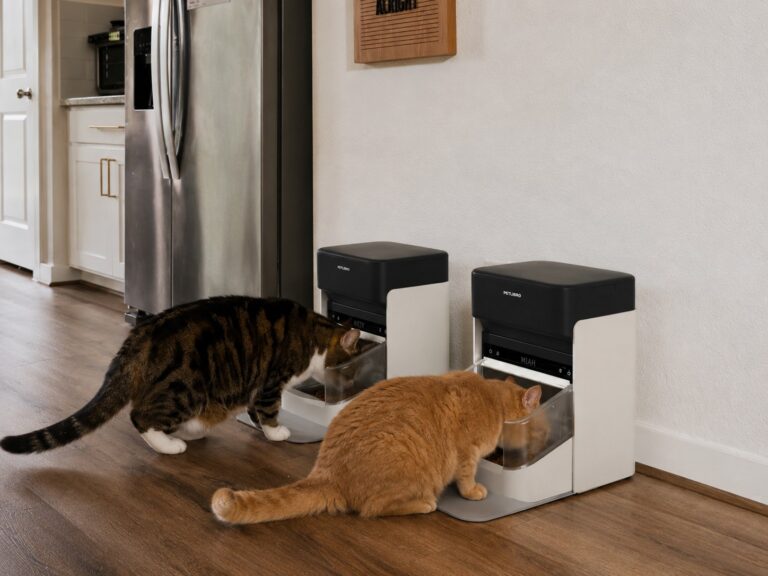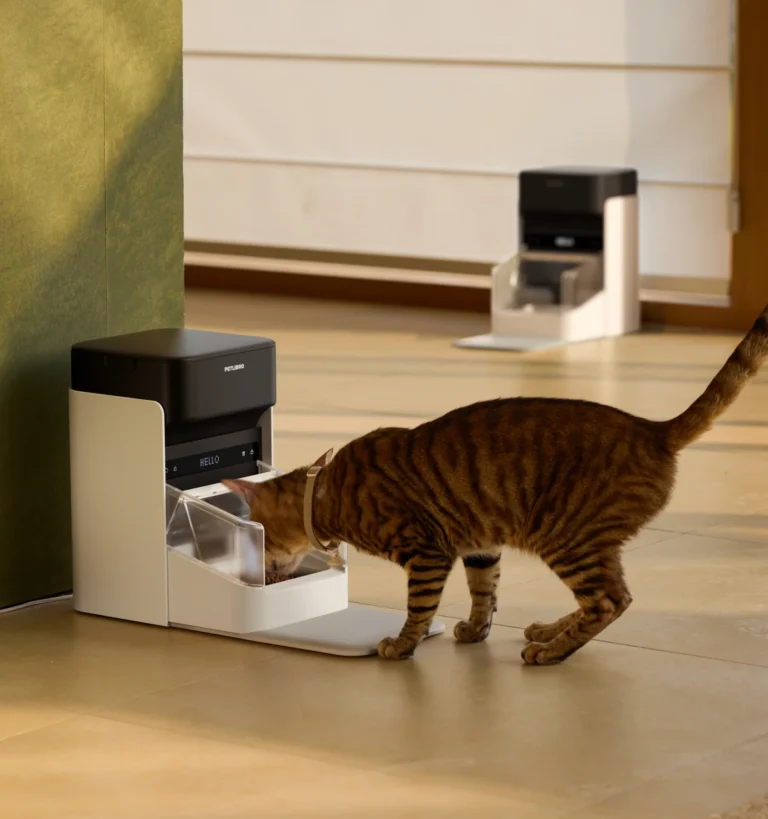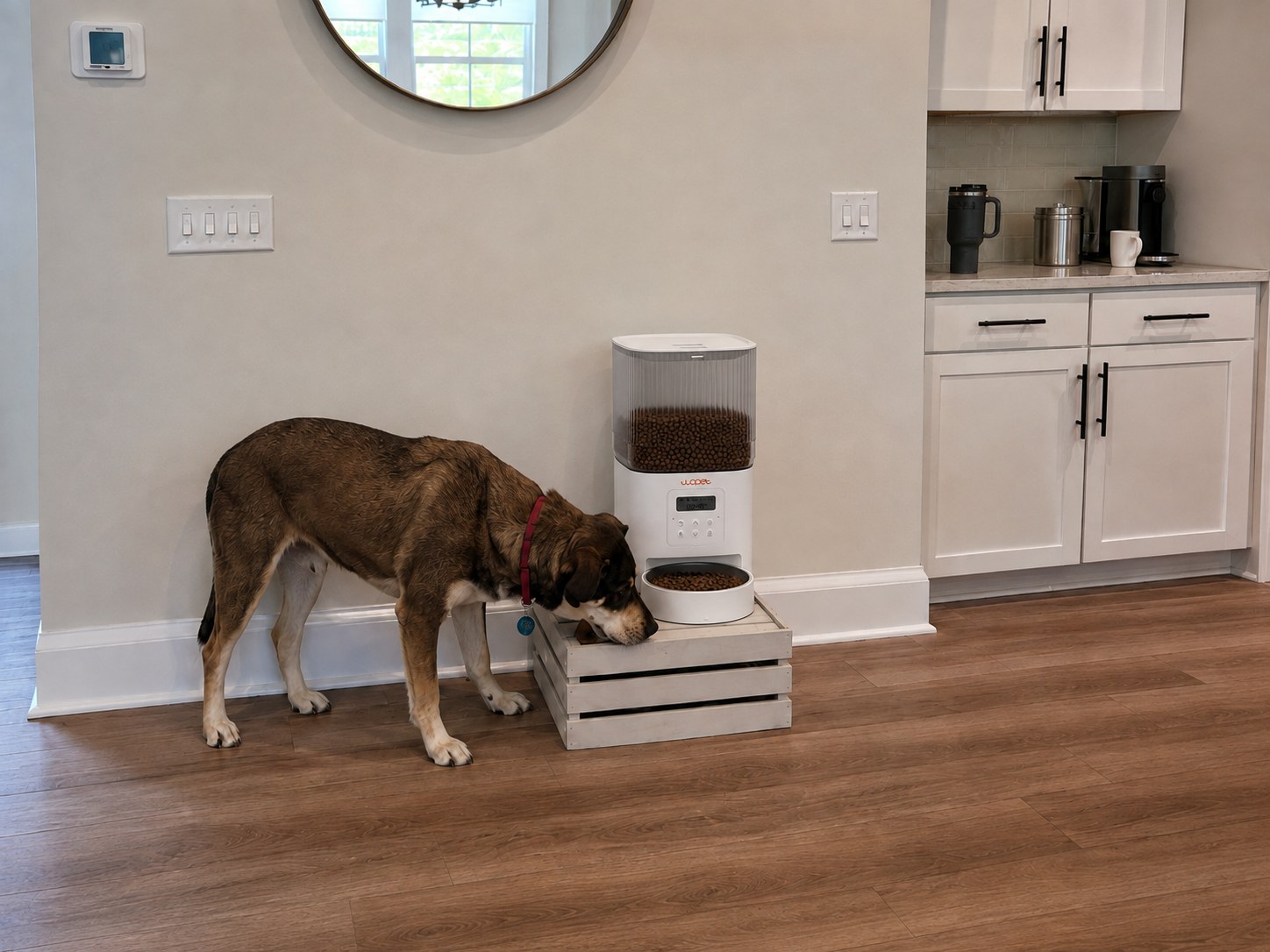
The real test of a programmable pet feeder is not whether the app says “meal served.” It is whether food lands in the bowl at the expected time, in an amount that makes sense, and whether your pet feels comfortable enough to eat it. That matters at 5 a.m., when your cat is campaigning for breakfast, and at 7 p.m., when traffic has turned a normal workday into a late dinner.
Inside the feeder, a clock tells a motor when to move food or reveal a compartment. You still need to know what survives an outage, how much food moves, and who can reach it.
Will dinner still happen on time?
A basic timed feeder stores meal times through controls on the unit. A connected programmable pet feeder uses an app to create the schedule, but the finished schedule may be saved locally on the feeder. If it is, feeding can continue when internet access disappears even though remote changes, video, and alerts stop. Power is separate: a feeder can remember dinner perfectly and still lack the power to serve it.
Petlibro’s current Granary 2 Series is a useful example. The company says scheduled meals continue offline while app control is unavailable. Every model includes a built-in bowl scale and rechargeable emergency backup. Camera and pet-recognition features, along with company-estimated backup duration, vary by model.
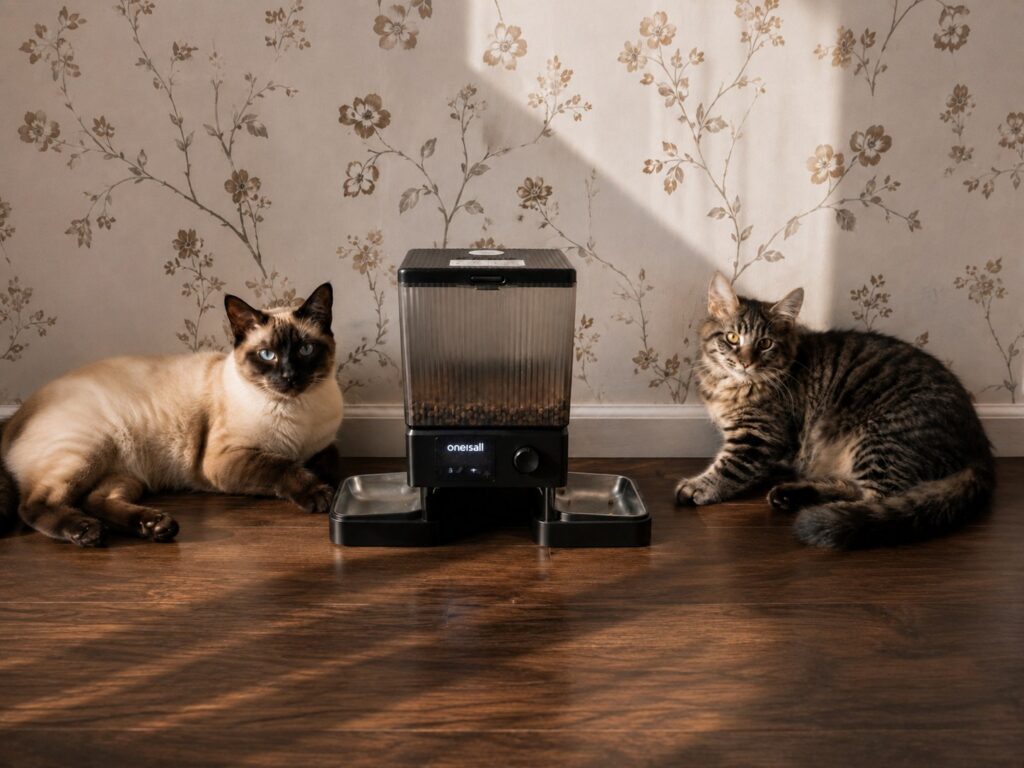
Oneisall’s current 3.5 L app feeder plugs in and accepts separately purchased backup batteries. Oneisall says scheduled dispensing continues on batteries while the app remains unavailable. Our Oneisall automatic feeder review looks closer.
Backup behavior still differs among feeders: batteries may run scheduled meals, preserve only the clock, or provide no backup at all. Only the first of those keeps dinner moving during an outage. If the maker documents a backup check, run it while you are home and watching. Petlibro’s support for specific Granary models, for example, directs owners troubleshooting a no-dispense problem to use the manual-feed control and observe the rotor after confirming normal setup. That is safer and more informative than a blanket instruction to unplug your router or cut wall power.
How much food will actually land?
Most dry-food hopper feeders use an impeller, paddle wheel, auger, or segmented drum. The motor turns through a set number of steps and releases kibble into a chute. The portion number on the screen is not automatically grams, calories, a tablespoon, or the amount your veterinarian recommended.
Food changes the output. Small dense pellets pack differently from broad airy pieces. Long shapes can bridge at the opening. Crumbs settle into gaps, and oily coatings change friction. Even a feeder that dispenses consistently may deliver a different weight after you change recipes.
We suggest weighing several test servings with your pet’s actual kibble, then calculating an average. This is our practical check, not a veterinary or manufacturer standard. Repeat it after changing food, cleaning and reassembling the mechanism, or seeing a suspiciously light serving. The medically appropriate daily amount comes from the food’s calorie density, your pet’s body condition and health, and your veterinary plan—not from the feeder’s maximum setting, a distinction reflected in AAHA’s nutrition and weight-management guidance.
Petmate’s Aspen Pet Le Bistro remains a current U.S. example of a battery-powered timed hopper. Petmate lists up to three scheduled meals a day, 1/4–3 cups of dry food per meal, operation on three D-cell batteries, and a removable dishwasher-safe bowl. Those are the product’s settings, not a promise that every animal should eat within that range. Our Petmate automatic feeder review covers its fit and limitations.
Will your pet walk up and eat?
In owner reports, some cats and dogs seem to learn that the motor sound predicts food. Some wait beside the feeder before mealtime. A cautious pet may back away from the noise, moving lid, deep bowl, or unfamiliar smell. Give them time instead of assuming hunger will force acceptance.
Place the quiet, inactive feeder near the familiar feeding area and let your pet investigate. Serve familiar food from its bowl while the mechanism stays still. Then trigger a small supervised meal while you stand far enough away for your pet to remain relaxed. A low, stable bowl may suit a small dog or a cat who avoids a narrow, deep bowl and prefers a broad, shallow dish. A determined eater may paw the chute, pull at the bowl, or conduct a full structural inspection of the hopper. Stability and a secure food path are part of fit.
The feeder should support a dependable routine, not remove people from it. Keep a backup feeding plan and arrange human check-ins when you are away. A camera or notification can reduce uncertainty, but neither replaces someone who can reach the pet when food fails to land.
Can another pet take the meal?
A split dual-bowl feeder sends one delivery into two dishes. It creates two eating positions; it does not guarantee an even division or stop a fast eater from changing sides. A dual-hopper model stores two foods, but separate storage does not reserve either bowl for a particular animal.
A rotating tray exposes one preloaded compartment at a time. Because you fill each compartment, you choose the serving directly. It also bypasses the hopper-and-chute jam path. The tray can still be misaligned, dirty, overdue for reloading, or affected by a motor or lid problem.
Selective-access feeders add another layer, but tag-only and implanted-microchip-compatible models are not interchangeable. Petlibro’s One RFID requires its supplied collar tag and does not read an implanted microchip. SureFeed documents compatibility with common implanted identification microchips or its collar tag. Your pet also needs to be comfortable wearing the required tag or approaching the reader. Our Best Automatic Cat Feeders for Multiple Cats: RFID and Dual-Bowl Options helps with homes where meal stealing, prescription food, or unequal eating speed is the central concern.
Food guarding or tension around a shared bowl deserves more than a clever feeder layout. Separate feeding spaces and calm supervision may be safer and more comfortable, especially when one pet blocks the other or finishes much faster.
What evidence does the feeder give you?
Feeder evidence comes in levels:
- A schedule or app log says the dispense command ran.
- A motor or position sensor says hardware moved, or a jam sensor detected resistance.
- A bowl scale records that food weight increased or later decreased.
- A camera or recognition system associates a pet with an approach.
- A controlled setup combines recognition and weight change closely enough to estimate individual intake.
Each step answers more than the one before it, but conditions still matter. Food can fall outside the bowl. Two pets can enter the frame. A pet can investigate without eating. Newer systems can make useful individual-intake estimates; do not confuse those estimates with a veterinary examination or a universal guarantee.
Why feeders jam—and why cleaning matters
Jams begin where kibble meets the food path. Pieces may exceed the maker’s size limit, mixed shapes can bridge across a chute, oily residue can make surfaces sticky, and crumbs can pack around the wheel. A bowl pushed against the outlet—or a foreign object introduced by a talented snack thief—can add trouble.
Some models detect resistance, reverse the motor, or retry. Those responses may clear a small obstruction; they cannot make incompatible kibble compatible. Follow the stated food dimensions, remove excess crumbs, and clean only the parts and by the methods the manual permits. Let washed parts dry completely. After reassembly, run a supervised cycle before trusting the next scheduled meal.
Wet food needs a separate safety check
A rotating tray may accept wet food when its manufacturer says it does. A lid keeps pests away and slows drying; it is not refrigeration. An ice pack cools passively, while a powered wet-food feeder actively removes heat. Those designs should not share one “safe for hours” promise.
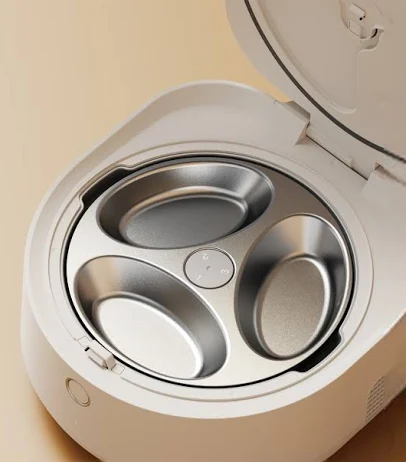
The FDA’s pet-food storage guidance says to promptly refrigerate or discard unused canned and pouched food. Follow the food label and veterinarian’s instructions, clean bowls after use, and do not invent a longer safe duration from a closed lid, cold pack, desiccant, or “freshness” wording.
A supervised test before you rely on it
Before relying on any programmable pet feeder, load the food your pet will actually eat and program a condensed day while you are home. Weigh several low and high servings, watch the food land, and notice whether your pet approaches comfortably. Confirm that another animal cannot take over the bowl. Test the documented Wi-Fi and backup-power behavior, inspect the chute for crumbs, then clean, reassemble, and run one more cycle.
Frequently Asked Questions
Are feeder portions accurate?
They can be consistent, but the displayed unit is rarely a universal food measurement. Calibrate with the actual kibble and recheck periodically.
Will a programmable dog feeder work without Wi-Fi?
A local-control feeder does not need Wi-Fi. A smart model may continue a stored schedule while losing remote features. The exact behavior is model-specific and should be tested.
Can sensors tell whether my pet ate?
Usually not with certainty. They may confirm dispensing or show activity near the bowl. Individual consumption requires observation, controlled access, or another verified tracking method.
Is a jam-proof feeder possible?
No mechanism is completely jam-proof. Correct food size, cleaning, level placement, and routine checks reduce the risk.
The bottom line
Our Complete Guide to Automatic Pet Feeders for Dogs and Cats maps the wider category. Here, the finish line is wonderfully ordinary: dinner arrives, your pet eats without stress, and you know who will step in if the feeder does not keep its promise.