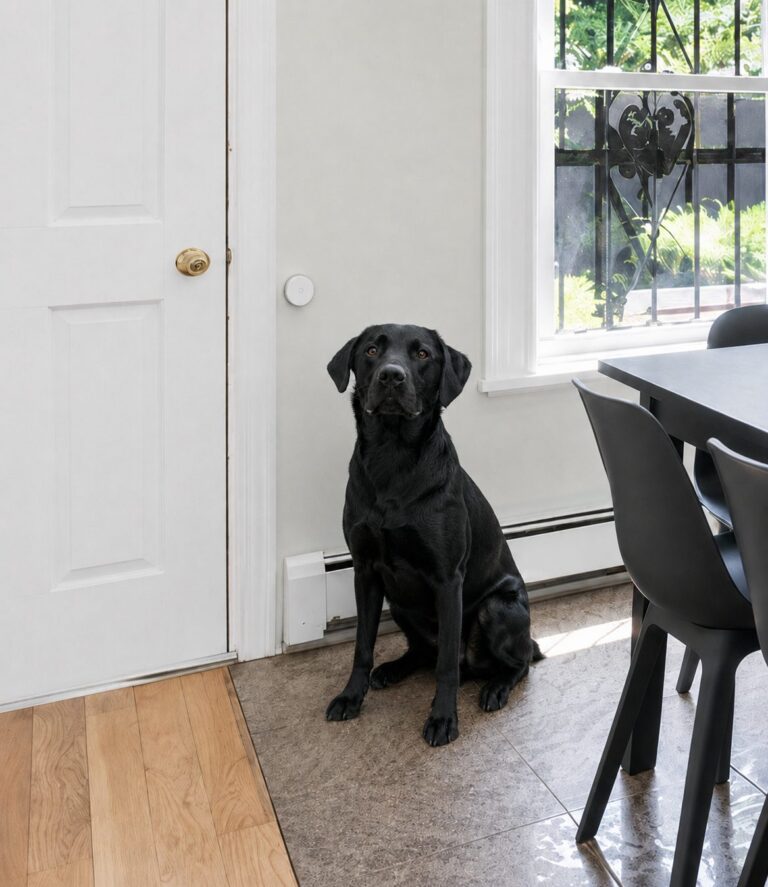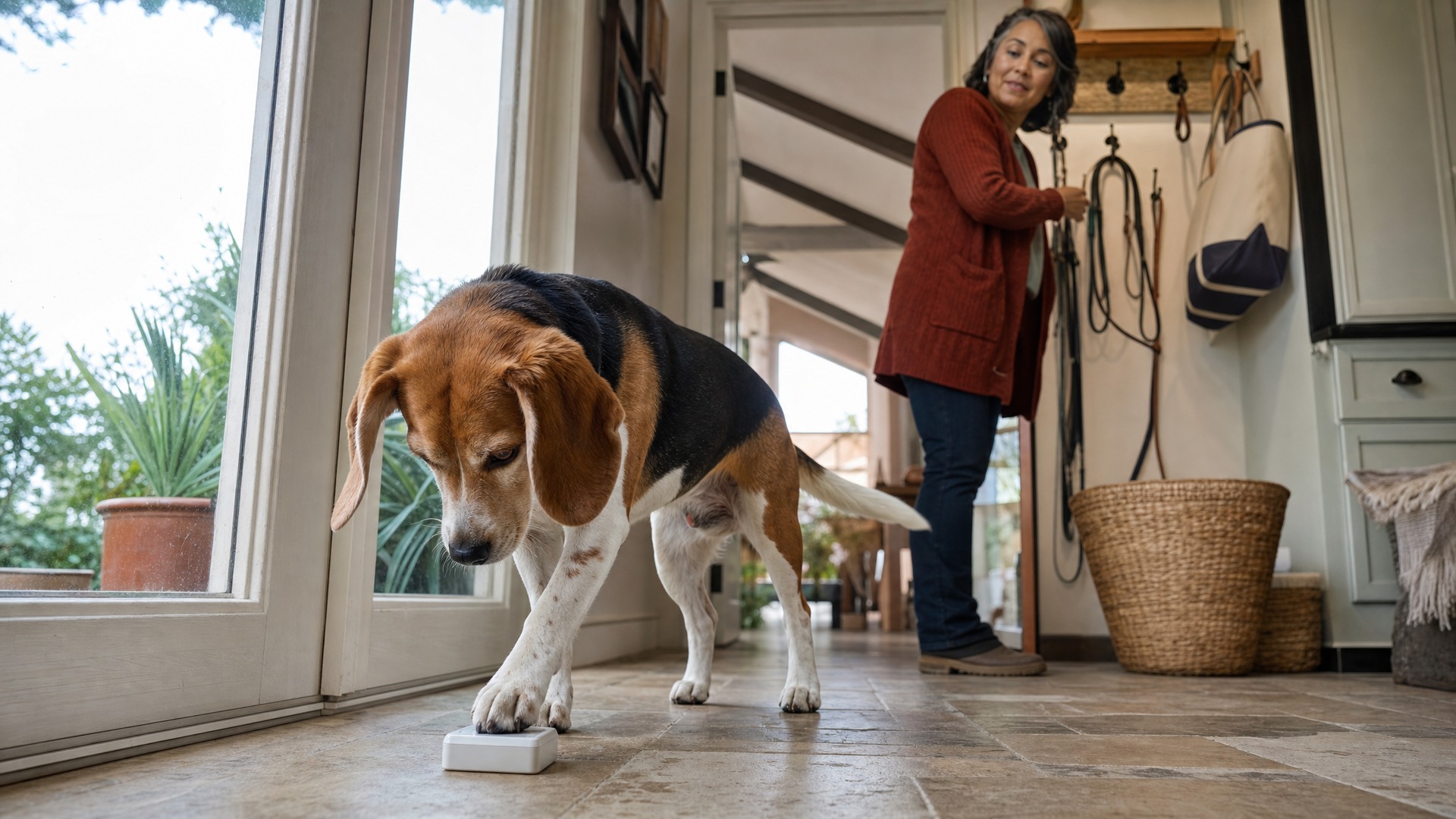
A dog standing at the door can communicate in a dozen charming ways: the stare, the circling, the mysterious single bark, the dramatic nose bump. An outside-request tool gives you both a chance to make that moment a little clearer—and, honestly, a little more fun.
Your job here is to pick the signal that feels natural for your dog and easy for your home to answer with a cheerful, immediate “yes, let’s go.”
Choose a potty bell for the leanest routine
A mechanical dog potty bell is a bell or strap at the exit. Your dog touches it, the bell rings, and you take your dog outside. It’s a direct fit for a puppy or adult dog that needs one consistent signal, and for homes where someone is usually close enough to hear it.
Bell training works best as a short chain. Bring your dog to the door, cue a touch or ring, open the door immediately, and repeat that sequence every time. The bell is not the lesson by itself; the reliable trip outside is. If the bell gets ignored, moved around, or used as a toy without a clear response, the cue gets muddled.
Choose an electronic dog doorbell when the alert must travel
A wireless dog doorbell pairs a pressable button with a receiver or chime. It can be the better outside-request tool when your kitchen is far from the door, a hanging bell is hard to hear, or your home needs a more distinct alert. The Smart Bell from Mighty Paw is an example of this category; read Mighty Paw Smart Bell 2.0 Review for the specific product details.
The practical questions are less glamorous than the product name: can your dog reach the button, can you hear the receiver where you actually work, and does the device stay where the routine happens? A louder signal won’t help if the receiver is poorly placed or nobody responds promptly.
Choose a recordable button for a single named request
A recordable button gives the exit routine a spoken cue, usually “outside.” You hear a particular word rather than a ring, which can be a clean bridge if you like the clarity of a word but have no interest in managing a full board.
Hunger for Words is relevant to this smaller, recordable-button lane. Keep the button near the exit, use the same recording each time, and follow through immediately. The word becomes meaningful in practice because your family ties it to the same event every time.
Choose a full talking-button layout only for a wider goal
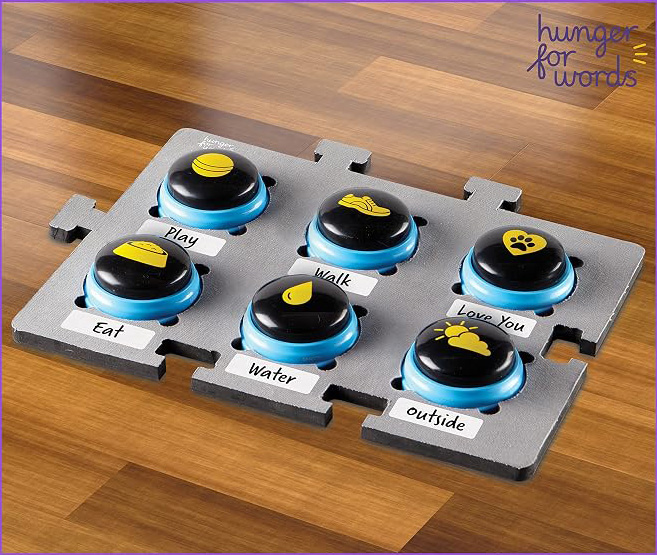
In a full system, outside is one routine word among several: food, play, water, help, or all done might follow later. That can suit a household that wants to explore a carefully expanded vocabulary, but it’s more than you need if your only pain point is an exit request. Best Dog Talking Buttons for Communication handles the broader buying decision, while Talking Dog Buttons explains the category as a whole.
Keep an outside button accessible. If it gets buried in a crowded board, a separate door cue may be kinder to your dog and clearer to everyone in the house.
App-connected options are still door tools
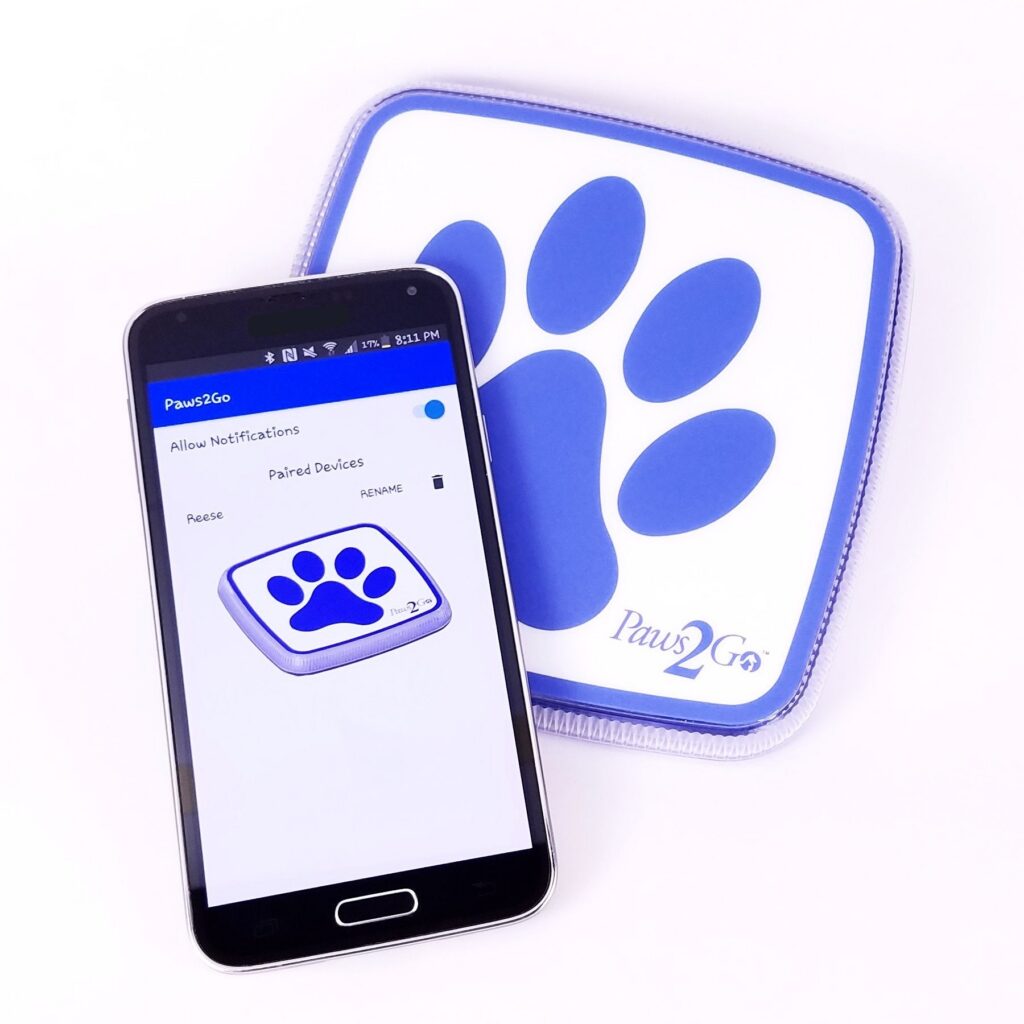
Paws2Go illustrates the app-connected end of the dog-doorbell category. A phone or connected notification can be useful if you want alerts beyond a nearby chime, though it works as a better alert rather than a training shortcut. Your dog still needs a reachable cue, and people still need to respond. For product choices in this dedicated lane, see Best Dog Doorbells and Potty Buttons.
Train the signal in the same order every time
For a bell, begin at the door: guide your dog to touch it, open the door, and go straight outside. For a wireless dog doorbell or a recordable button, follow the same sequence with the device fixed at the exit. Keep the device part of leaving rather than a game practiced in a distant room. A young puppy may need more frequent, human-led trips than a trained signal can provide, so keep your normal potty scheduling in place while the cue develops.
If your dog rings or presses repeatedly, check the routine before assuming the tool is wrong. Was the door opened promptly? Is the cue close to the exit? Has ringing become a way to start outdoor play? Consistent handling matters more than switching formats every few days.
Avoid turning one cue into four competing cues
Resist the urge to hang a bell, install a chime, add an outside button, and build a board all at once. Choose one primary exit signal, establish it, and add another device only when it solves a concrete problem in your home. Multiple cues can be useful later, but an early routine is clearer when you and your dog both know what happens next.
A quick use-case check
Choose a mechanical bell when a simple local noise is enough. Choose a wireless dog doorbell when your household needs a more noticeable alert. Choose a recordable potty button when naming “outside” appeals to you but a wider vocabulary doesn’t. Choose a talking-button system when you genuinely want to build beyond the door.
For that first word, Best Words for Dog Buttons explains why concrete, repeatable cues are easier to model than abstract ones.
Pick the cue that makes your dog feel heard
Whether it’s a jingle, a chime, or a recorded “outside,” the best door cue has a small spark of satisfaction built in: your dog tries something, you understand, and the door opens. The right tool is simply the one that keeps that loop clear for both of you. Keep it playful, keep it consistent, and let a full board remain an optional adventure for the dog who seems eager for more.