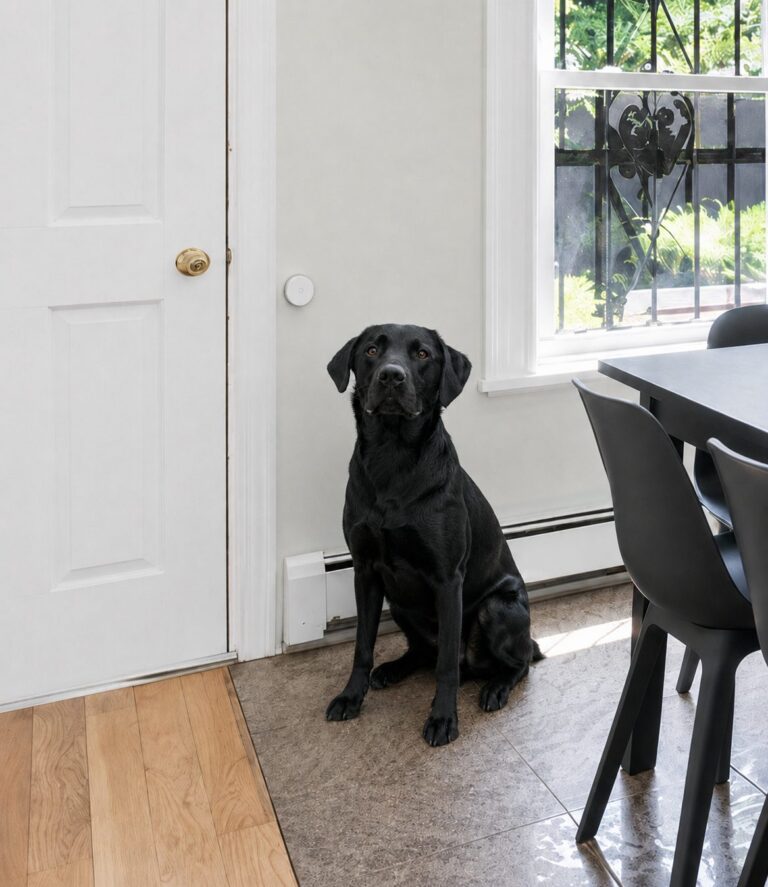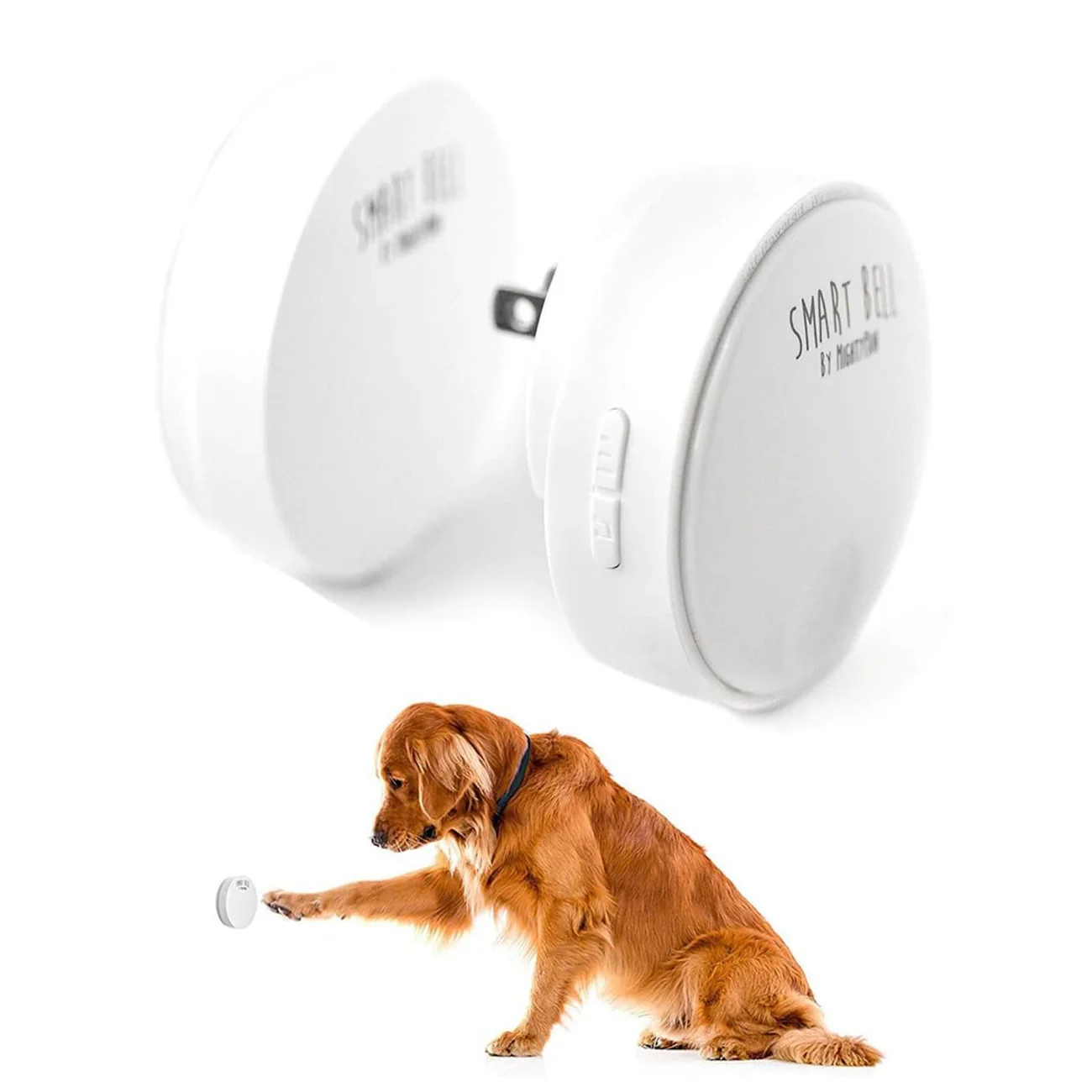
The Mighty Paw dog doorbell exists for one very specific household sentence: “I need to go out.” Your dog touches a wireless activator by the door with a nose or paw, and a receiver inside your home makes the sound. That’s a welcome change if your dog scratches paint, waits silently, or turns a hanging bell into a percussion solo.
Just don’t buy the wrong idea. Smart Bell 2.0 isn’t a talking-button board, a vocabulary builder, or a shortcut through potty training. It’s an electronic outside-request cue. Its success comes down to ordinary details: whether your dog can comfortably activate it, whether the receiver is plugged in where you’ll hear it, and whether everyone in the house responds to the signal the same way.
Smart Bell 2.0 at a glance
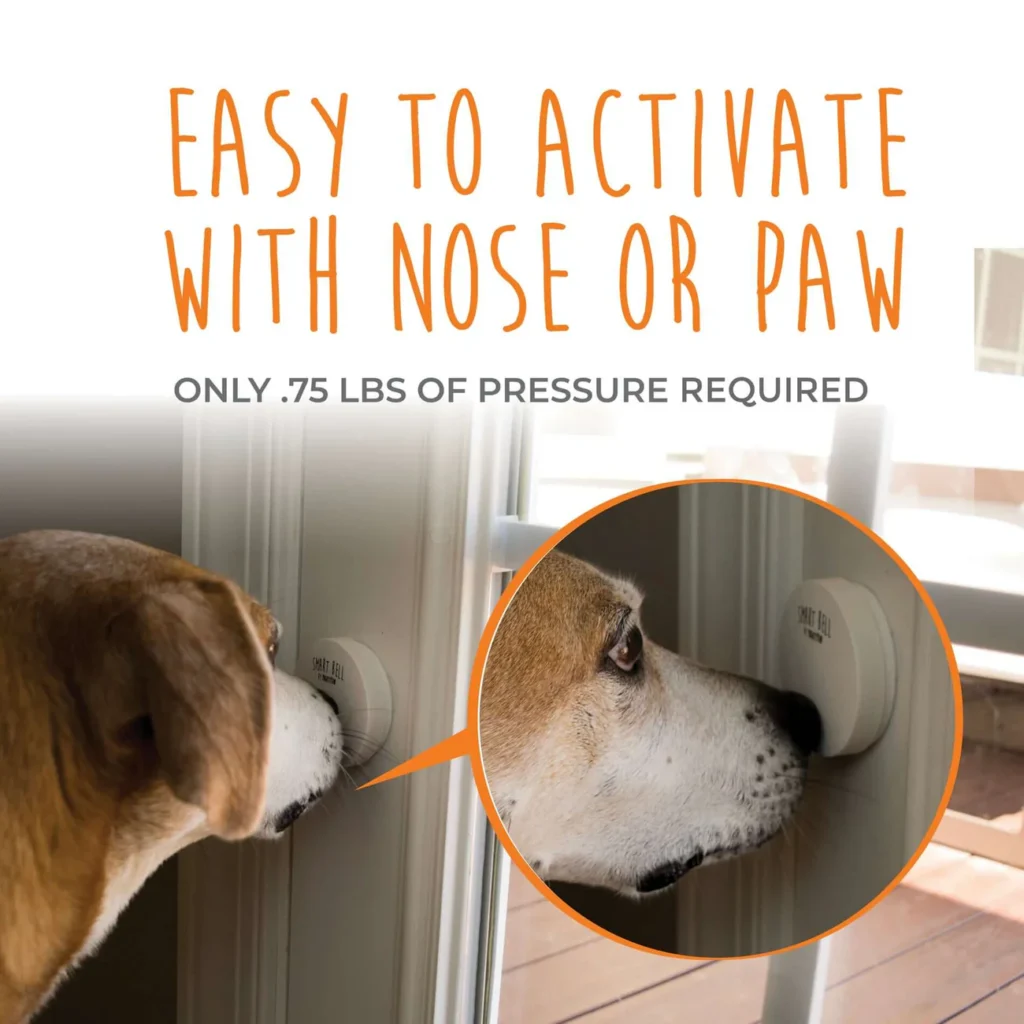
Mighty Paw describes Smart Bell 2.0 as a self-powered wireless activator and plug-in receiver. The current product page lists one- and two-transmitter options, 38 ringtones, four volume settings, water resistance, and a manufacturer claim of up to 1,000 feet indoors. The activator needs about 0.75 pounds of pressure and no battery or charging; the receiver plugs into a standard 110V outlet.
Smart Bell 2.0 is a different product from Mighty Paw Tinkle Bells. Tinkle Bells are mechanical hanging bells; Smart Bell 2.0 creates an electronic sound from a receiver inside your home. Both can address the same potty-request problem, but their mounting, sound, and daily feel differ.
Smart Bell 2.0 options comparison
| Product Name | Pet tech category | Best For | Key Feature | Additional Key Feature | Key Specs | Price Range |
|---|---|---|---|---|---|---|
| Smart Bell 2.0, one transmitter | Electronic potty-request doorbell | One exit door and a simple routine | Self-powered activator | Plug-in indoor receiver | Official page lists 38 tones, four volume levels, and no activator battery | Budget to mid-range |
| Smart Bell 2.0, two transmitters | Multi-location electronic potty-request doorbell | Two doors or inside/outside use | Two activation points | Same receiver-based system | Check exact contents before ordering | Mid-range |
| Smart Bell add-on setup | Electronic doorbell expansion | Homes that need more coverage | Additional activators and receivers can be synced | Placement flexibility | Check compatibility and availability before ordering | Varies |

Quick Verdict
Best For
The Mighty Paw dog doorbell suits you if you want one clear outside-request signal and would rather hear an indoor chime than listen for scratching, whining, or a mechanical bell. It’s strongest in a straightforward one-door routine.
Not For
Pass if you want multiple recorded words, a button-board layout, or a device that will house-train your dog without a consistent routine. It’s also a poor blind buy if your dog is very sound-sensitive or unlikely to press a fixed activator.
Strongest Feature
The separated activator-and-receiver design does the real work: your dog signals at the door while you pick an indoor sound and volume you’ll actually notice.
Biggest Drawback
It has one job. Placement, activation comfort, the receiver outlet, and your response routine matter more than the advertised range. A good device in the wrong spot still leaves you missing the signal.
Closest Alternative
Paws2Go is the closer electronic alternative if you want a broad touch surface and phone alerts, subject to live availability. Hunger for Words Talking Pet Doorbell is the better comparison if you want one outside-request tool alongside that brand’s training ecosystem.
Setup and training fit
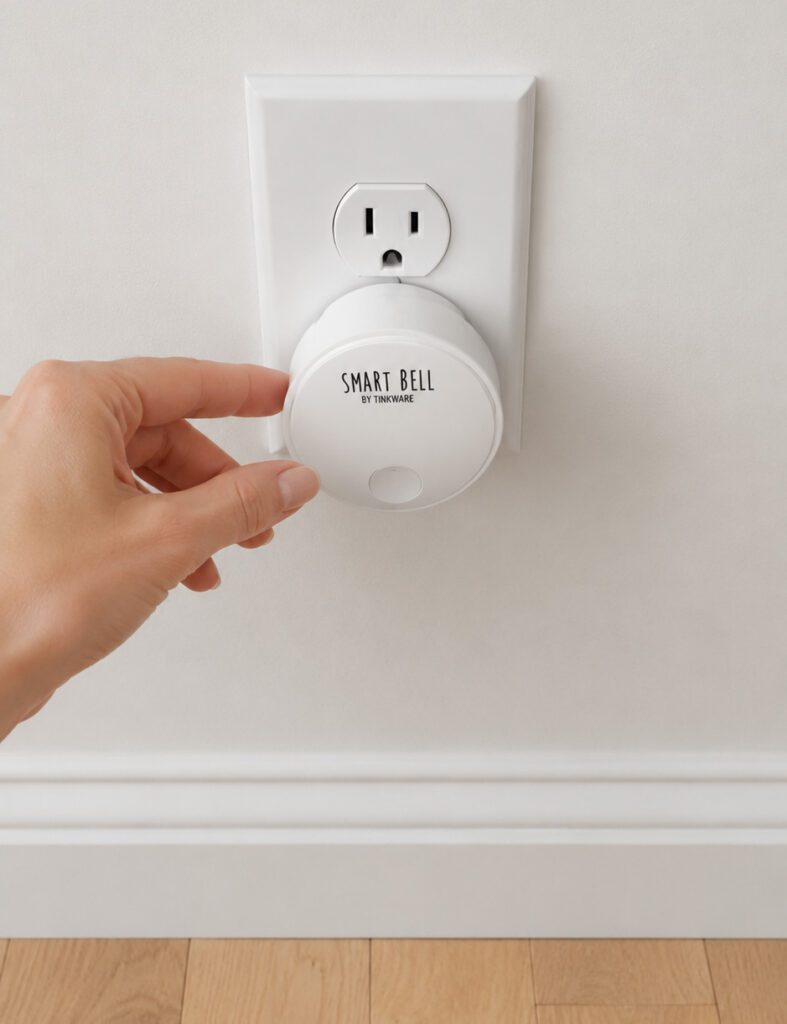
Mighty Paw recommends mounting the activator near or on your exit door, roughly 20 inches high and adjusted for your dog’s size. Test the receiver before you use the adhesive, and do it away from a sound-sensitive dog. The brand notes that the included adhesive may damage drywall and suggests wood, glass, or Command strips instead. That makes your mounting surface a real question if you rent.
Start with a plain loop: touch the activator, go outside, repeat. Don’t make the bell a test your dog has to pass before every potty break. Your dog may still pace, sniff, whine, or ring the device simply because an outside trip sounds appealing. Consistent responses make the signal clearer; the hardware alone doesn’t.
Expect some trial and error. Customer reviews on the brand’s own product page mention a dog startled by the sound, accidental floor presses, and a puppy whose successful activation depended on finding the right location. Those are individual experiences rather than promises about every unit, but they’re a useful prompt to test height and sound before you declare the setup done.
Choose your activation spot before ordering Smart Bell 2.0 from Mighty Paw.
Is it a talking button?
Only in the narrowest sense. Smart Bell 2.0 lets your dog trigger one household request rather than build a vocabulary. dog communication buttons puts it in the broader category, but a multi-word system needs a board, a layout, and a different level of practice. If that’s your goal, go to Best Dog Talking Buttons for Communication instead.
For the outside-request job, compare the routine before the gadget. Hunger for Words Talking Pet Doorbell is a simpler fit if you’re already drawn to that brand’s teaching materials. Paws2Go’s official page lists a touch-sensor surface, visual feedback, recordable sound, and app notifications, though it showed as sold out during this research. Neither one substitutes for a full communication board.
See dog bells for potty training for the difference between these tools. Best Dog Doorbells and Potty Buttons for Outside Requests is the better next step when you’re choosing one.
Where Mighty Paw falls short
The major buyer-regret risk is expecting Smart Bell 2.0 to do more than it does. It won’t give your dog an “outside,” “play,” “water,” and “all done” vocabulary. Its virtue is a single, audible request delivered reliably.
It can be the wrong electronic doorbell even when that single request is exactly what you need. Your wall may not suit the adhesive. One receiver may sit too far from the room where you work or sleep. The maximum-range claim tells you nothing about how your floorplan, a closed door, or a dense wall behaves. Test it in your own routine and verify current bundle details before buying.
FAQ
Does the Mighty Paw Smart Bell 2.0 need batteries?
No. Mighty Paw says the activator is self-powered and needs no battery or charging. The receiver plugs into a standard wall outlet. Confirm live product details before purchase.
Is the Mighty Paw dog doorbell the same as Tinkle Bells?
No. Smart Bell 2.0 is an electronic activator-and-receiver system; Tinkle Bells are mechanical hanging bells. Both can serve the same potty-request purpose, but their setup and sound differ.
Can a puppy use Smart Bell 2.0?
Possibly. Put the activator at a height your puppy can reach, introduce the sound gently, pair a touch with an immediate outside trip, and keep your response consistent.
Can Smart Bell 2.0 work at two doors?
The official page lists a two-transmitter option, and the setup page says additional activators and receivers can be synced. Check the live listing for exact contents and compatibility.
Is an electronic doorbell better than a talking-button board?
They do different work. An electronic doorbell handles one outside request. A talking-button board handles a small or growing vocabulary and asks more of your layout and routine planning.
Final Recommendation Summary
Buy the Mighty Paw dog doorbell when your real problem is a missed outside request and you want a clear electronic cue inside the home. It earns its place when you can choose a sensible activation height, place the receiver where you’ll hear it, and patiently reinforce the same routine.
Skip it if you want a communication board, dislike the adhesive or outlet-dependent setup, or expect a device to train your dog on its own. Smart Bell 2.0 aims to make one request easier to catch, and that’s the right size of promise. For the wider category, start with our guide to dog talking buttons.