My parents got a puppy to keep their older dog company, which is one of those decisions that sounds like a great idea until the puppy eats your favorite slippers, the cushion your mom embroidered for you, and part of a baseboard.
Their older dog is June, a sweet senior spaniel mix who believes retirement should include naps, sun spots, and zero surprise wrestling. My parents had retired and were traveling more. They thought June was getting lonely in the house on her own, so they decided she needed company.
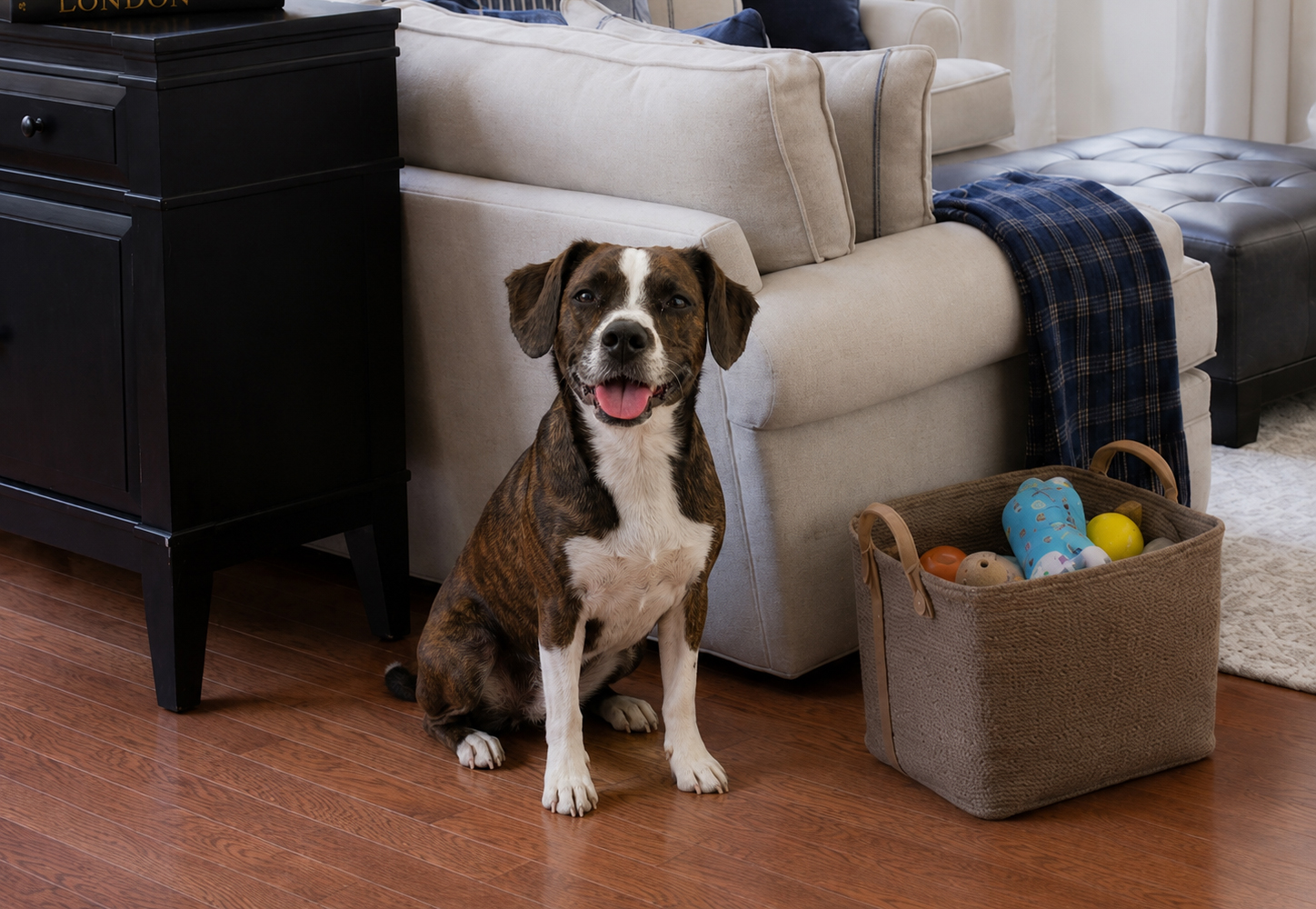
The new puppy was Penny, a bright little chaos object with a white chin, serious ears, and the kind of confidence usually reserved for people who board airplanes before their group is called.
My parents loved her immediately. They also began arguing about what she was immediately.
My dad was convinced Penny was part Boston Terrier because of her face and compact little body. My mom thought beagle because Penny had a nose-first approach to life and could find a crumb under a closed door. They treated this as an ongoing household sport. Penny would chew another cushion and my dad would say, “Boston.” Penny would track one fallen piece of cereal across the kitchen and my mom would say, “Beagle.” June just ran around in circles with her tongue hanging out in her endearing goofy way.
Then the chewing escalated, and the puppy dna breed test went from a fun curiosity to a family intervention with postage.
The crate was not the plan
Penny chewed a remote. Penny chewed the corner of a washable rug. Penny chewed a wooden chair leg with the focus of an artisan. My mom started moving shoes into higher and higher places until the entryway looked like a very nervous boutique.
My dad said “she knows better” more than once, and I had to gently remind him that Penny was a puppy, not a small unpaid intern with a performance review coming.
They started crating her during the day. It was not dramatic or cruel. She had a routine, safe setup, breaks, and actual adult supervision around the bigger choices. But my parents felt bad about it because the whole point had been to make the house feel fuller and happier for June, not to create a tiny correctional facility next to the laundry room.
The puppy DNA idea came from a conversation I overheard at a dog park in the city. Two women I know mostly through our dogs had been talking about rescue-dog DNA testing in general and how their results changed the way they thought about enrichment. Not destiny. Not “my dog is this breed, therefore she must do that.” Just better clues.
So I suggested testing Penny partly to settle my parents’ debate and partly to redirect the conversation away from “Why is Penny being bad?” and toward “What does Penny actually need?”
My dad pretended this was excessive. My mom ordered a general at-home dog DNA test before he finished objecting.
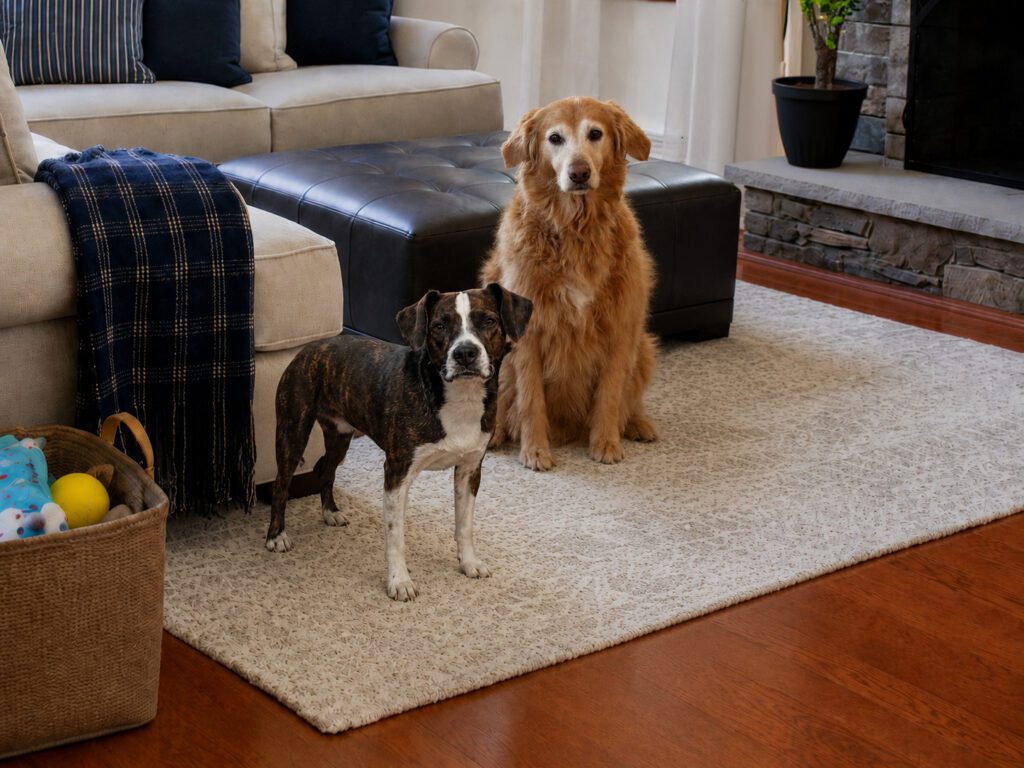
The waiting period became a family sport
If you want the practical timing version of puppy DNA, Puppy DNA Testing: When It Helps and When to Wait is the better guide. In my parents’ house, the waiting period was mostly comedy.
They wanted breed clues without turning the dining room into a research lab. While they waited, my dad said, “You’ll see,” every time Penny made a snorting little noise. My mom said, “Beagle energy,” every time Penny located something edible, formerly edible, or spiritually edible.
I sent them a link about what at-home dog DNA tests can and cannot tell you because I am the kind of daughter who sends links and then pretends I am not managing anyone. The sample process was simple enough in theory: cheek swab, mail it in, wait for results, try not to develop a new personality around tracking the status.
In practice, everyone became weird.
My dad started seeing Boston Terrier in every facial expression. My mom treated every dramatic sniff as evidence. I tried to stay neutral, which is not the same thing as succeeding. Penny tried to chew the return packaging.
When the results came back, neither of them got to be entirely right, which is my favorite kind of family outcome.
The report showed French Bulldog in Penny’s background. It also pointed toward some Beagle, some companion-dog mystery that let my dad keep part of his theory alive, and enough other small-dog chaos to keep everyone humble. My mom celebrated the beagle piece. My dad celebrated anything that felt close to his theory. Penny tried to chew the paper.
The French Bulldog clue changed the question
The French Bulldog clue was the result that changed the house.
Not because it explained everything. It did not. Penny was still a puppy. Puppies chew because they explore the world with their mouths, because teething can be uncomfortable, because boredom is real, and because chair legs are unfortunately available at puppy height.
But the result gave my parents a new way to look at her. French Bulldogs are often described as playful, alert, and adaptable little companion dogs. That did not make Penny’s chewing inevitable or adorable by default. It did make her compact body, big personality, and constant need to do something with her mouth feel less like random rebellion and more like information.
My mom stopped saying, “She is destroying everything.”
My dad stopped saying, “She knows better.”
They started saying, “What can she chew that is actually hers?”
That tiny change helped more than the breed debate did.
Puppy freedom needed a setup
They bought a few appropriate chew toys. They rotated them so Penny did not get bored. They froze one rubber toy with a little puppy-safe filling after checking what made sense for her. They added a food puzzle before the part of the day when Penny usually turned into a carpenter. They moved the good shoes. They gated the kitchen.
They also learned, slowly and with some baseboard trauma, that freedom for a puppy is not the same thing as “the entire house is now your mouth museum.”
If you want the nuts-and-bolts sample side of testing, At-Home Pet DNA Tests: How It Works With Swabs, Blood Tests, and Turnaround Times covers the process better than a family story should. The part my parents needed was more emotional than technical. They needed the report to interrupt their frustration.
June, for the record, was cautiously supportive. She liked Penny better when Penny had her own project. A puppy working on a chew toy is less likely to launch herself at a senior dog who is trying to enjoy the late-morning sun.
After a few weeks, my parents started leaving Penny out of the crate for longer daytime stretches in the puppy-proofed kitchen. Not all day at first. Not with access to every object my mother has ever loved. But enough that the house felt less tense. Enough that Penny could make choices and mostly choose the legal chew. Enough that June could nap nearby without looking like she had filed a formal complaint.
The test did not settle the future
The puppy dna breed test did not solve the puppy.
It did something more useful. It changed the question.
Instead of asking what Penny was going to become, my parents started asking what kind of structure helped her be decent today. That is the best version of puppy genetic testing, honestly. Not predicting the whole dog. Not making every behavior about breed. Just giving the humans one more clue before they decide the dog is being difficult on purpose.
Complete Guide to Pet DNA Tests is the broader place to sort what these reports can and cannot tell you. In my parents’ kitchen, the answer was smaller: Penny needed more legal things to chew, more structure, and fewer opportunities to audition furniture as a snack.
The breed debate continues because my family respects tradition. My dad still sees Boston Terrier in every facial expression. My mom still claims victory every time Penny sniffs something dramatic. But they stopped treating the result like a final answer.
Penny is part French Bulldog, part family argument, part chewing machine, part baby dog who needed better options.
June would add: part too much.
And honestly, fair.
Barkytech recommends these puppy DNA test options
If you want to test your own puppy’s DNA, Barkytech recommends choosing based on the question you actually want answered. Some people want a broad breed mix. Some want health and trait context. Some want a more genetics-heavy report they can save and revisit as their puppy grows. The best puppy dna test is not always the one with the longest report. It is the one that answers your actual question without making the results feel more certain than they are.
For a fuller shopping breakdown, start with Best Dog DNA Test Kit . For the shorter version, these are the three puppy DNA options Barkytech would compare first.
Embark
Embark is a strong place to start if you want a deeper dog DNA report and are especially interested in breed mix, ancestry-style context, traits, and health-screening information. It is a better fit for pet parents who know they will actually read the details rather than skim the breed pie chart, text everyone in the family chat, and then forget the login exists.
For puppy genetic testing, Embark makes the most sense when you want a broader picture of what might be useful as your dog grows. The important part is still restraint. A DNA report can give you clues about breed background and genetic markers, but it should not replace your vet, your trainer, or the dog standing in front of you doing something extremely specific with a sock.
Wisdom Panel
Wisdom Panel is worth comparing if your main goal is a clear breed breakdown with a report that feels easy to understand. For a lot of families, that is the real win. They do not need a graduate seminar in canine genetics. They need enough breed context to understand why their puppy looks like three dogs wearing one tiny costume.
Wisdom Panel can be a good fit for people who want puppy DNA results that are approachable and useful without turning the whole experience into a research project. If your household debate is mostly “what is this dog?” and “why does everyone think they are right?” this is the lane to consider.
Orivet
Orivet is the option Barkytech would look at when you want a more genetics-forward report and are comfortable with a slightly more serious-feeling testing experience. It may appeal to dog owners who want breed information, health-related genetic context, and a more detailed record they can discuss with a vet if something in the report raises a question.
Orivet is not the casual curiosity pick for every puppy owner. It is better for the person who likes documentation, wants more context, and is willing to read beyond the fun breed reveal. That can be useful, especially when you want the report to become part of a longer-term puppy care file rather than a one-night family group chat event.
No matter which kit you choose, the healthiest way to use a puppy DNA report is as a clue, not a verdict. Penny did not become easier because a report explained her. She became easier because the people around her stopped treating mystery as misbehavior and started giving her a setup that made sense.