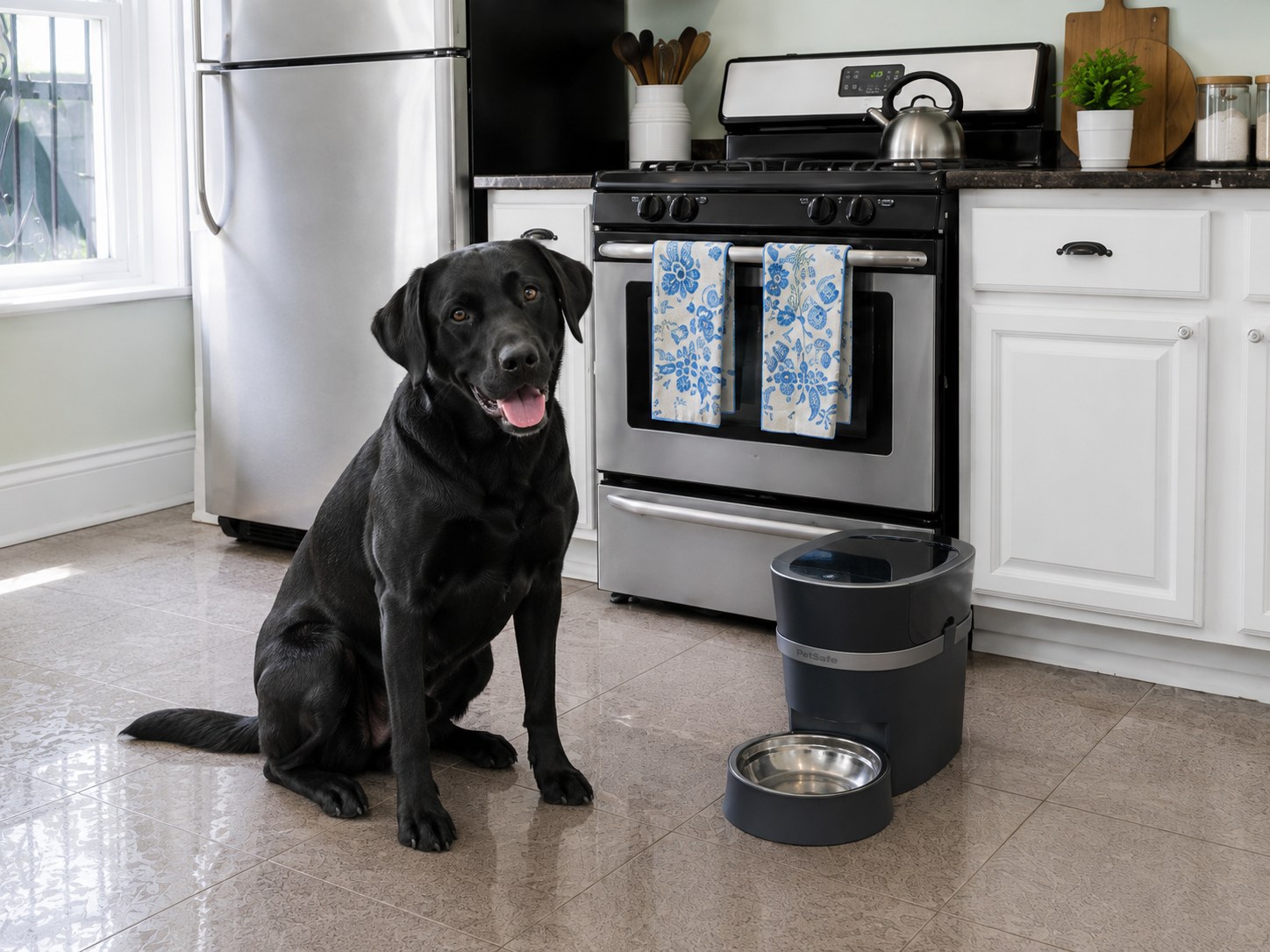
At exactly 8:30 on Friday morning, my timed dog feeder began dropping kibble into Batman’s bowl.
This would have been unremarkable except that I had fed him breakfast about 20 minutes earlier.
Batman lifted his head from the kitchen floor and moved toward the feeder with impressive purpose. He did not look surprised. He looked like a man whose table was ready.
“Absolutely not,” I said, stepping between him and what was about to become breakfast number two.
Batman stopped and looked at me.
It was not the face of a dog caught doing something wrong. It was the face of a customer encountering an unexpected change in service.
I picked up the bowl, opened the feeder app, and saw the daily schedule still sitting there: one meal at 8:30 a.m.
Then I realized my mistake.
The conference loophole
Batman normally eats breakfast at 8:30, right around the time I leave for work. Our morning has a rhythm so established that neither of us really thinks about it. Walk. Home. Leash off. Quick belly rub. Food. Me out the door. Batman has several strong opinions about my calendar, but he supports this part.
My conference ran Tuesday through Thursday, and I had to leave earlier than usual. I did not want his breakfast time moving around just because mine had, so on Monday night I programmed one 8:30 meal in the PetSafe Smart Feed Automatic Pet Feeder.
Keeping his meal steady while my morning moved was exactly what I wanted from an automatic pet feeder.
I checked the schedule. I checked the amount. I felt deeply organized, which is the kind of mood a programmable dog feeder is supposed to create.
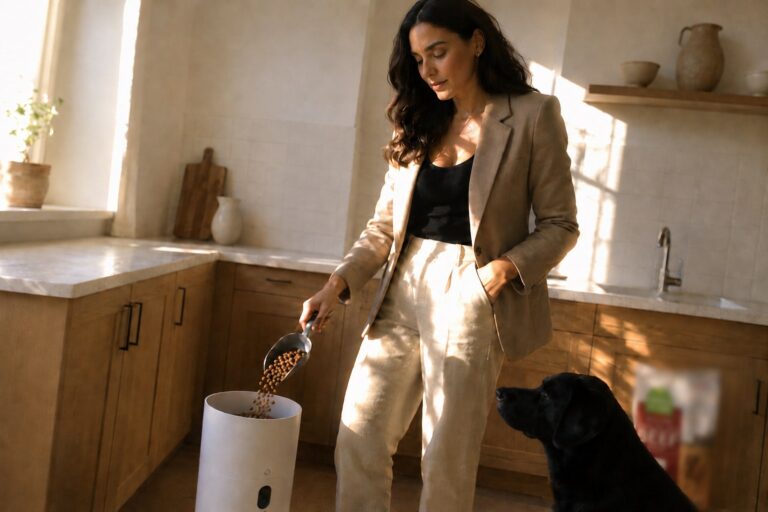
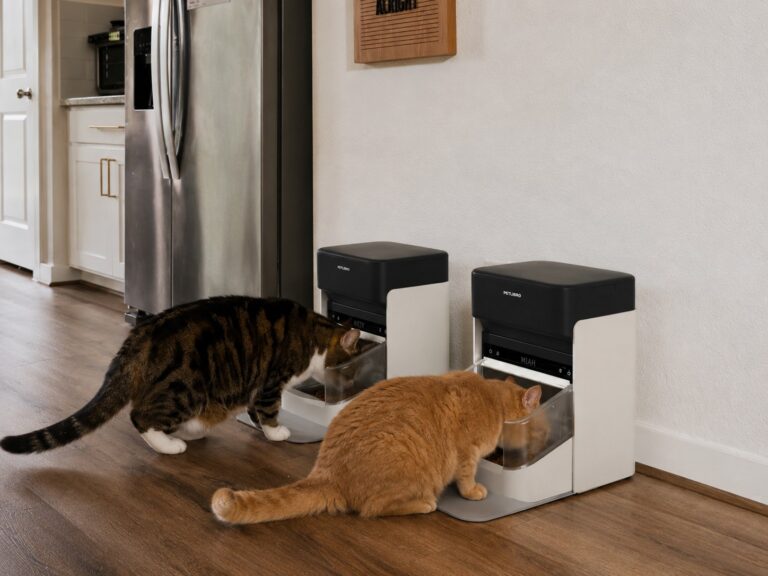
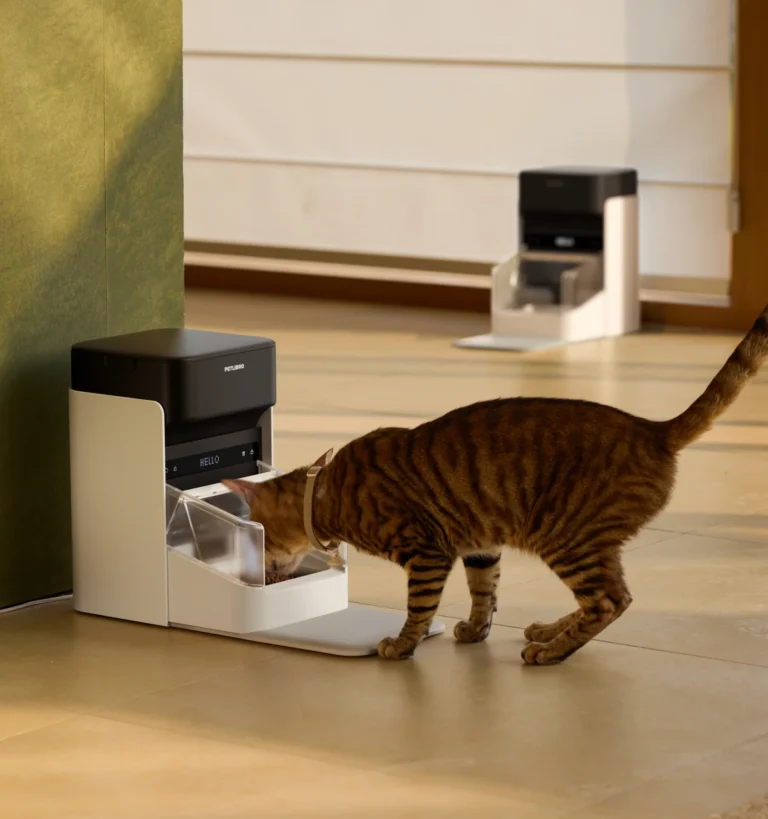
The feeder was already tucked into the protected kitchen nook where Batman could not conduct any more of his nose-based furniture experiments. PetSafe markets this model for cats and small-to-medium dogs, so shopping for a large dog automatic feeder is its own question. The mistake this week was mine.
Tuesday morning, we took our walk early. We came back, I unclipped the leash, and my body followed the routine it had followed hundreds of times.
I scooped Batman’s food into his regular bowl.
He ate.
I grabbed my bag and left before 8:30.
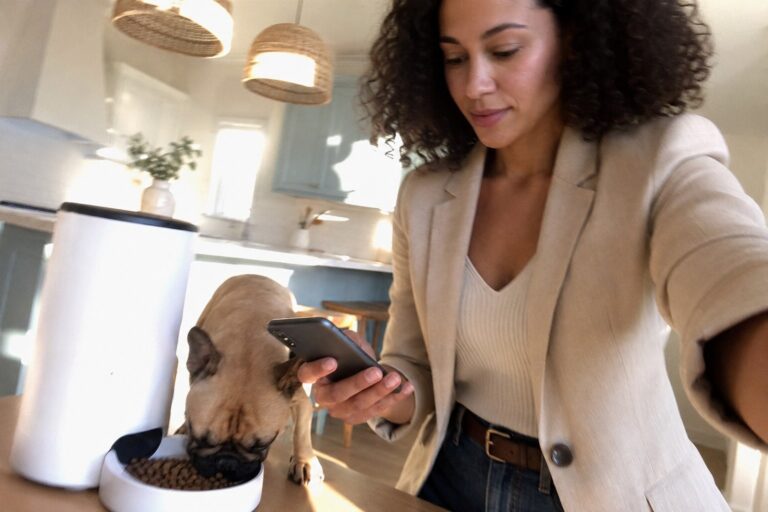
Later that morning, my phone showed the expected confirmation that the feeder had dispensed his scheduled meal. I saw it between conference sessions and felt reassured. Breakfast had happened on time. Excellent. One part of the morning had gone exactly according to plan.
The problem was that breakfast had happened on time after breakfast had already happened early.
I did the same thing Wednesday.
Early walk. Leash off. Scoop. Bowl. Conference badge. Out the door.
At 8:30, another expected confirmation.
Thursday was identical, except I was tired enough to put my coffee next to Batman’s leash and spend a full minute looking for it. I still remembered to feed the dog. I still forgot that I had assigned that job to a machine.
Then Friday arrived. I was working from home, so we went back to our normal walk time. We came inside, I fed Batman by hand, and I started making coffee.
At 8:30, the feeder made its familiar mechanical sound.
That was the moment the whole week rearranged itself in my head.
Two reliable systems had the same job
Batman knew he was getting a good thing, but he was very casual about it. He did not jump at the noise or approach cautiously. He headed toward the bowl with the practiced confidence of a dog checking in for a standing appointment.
I looked through the feeder’s recent activity. There were the 8:30 dispenses from Tuesday, Wednesday, Thursday, and now Friday. The conference confirmations had accurately told me that the feeder did its job.
The record showed what an automatic feeder’s schedule and activity log can show: the machine’s activity. It could not tell me that I had also served food in a separate bowl before leaving.
I had not watched Batman eat those Tuesday-through-Thursday dispenses, so I cannot say precisely what happened to every piece of kibble. I can say that I served him breakfast by hand each morning, the feeder recorded its scheduled activity later, and Batman greeted Friday’s second serving like this was not a new development.
I had spent three conference mornings feeling proud of my automatic dog feeder with a timer while Batman was apparently enjoying conference benefits.
I was lucky. My mistake lasted only a few days, but it would have been easy for it to go longer without me noticing.
To be clear, Batman did not trick me. Batman is a good-natured soul but has no food filter. If one trusted system puts down breakfast and a second trusted system puts down more breakfast, he is not going to interrupt either one with an administrative concern.
The feeder had worked. My habit had worked. That was the problem.
Breakfast needed one owner
I briefly considered turning the schedule off whenever I planned to be home and turning it back on for office days. Then I pictured myself trying to remember whether next Tuesday was a feeder morning, a Kate morning, a late-start morning, or a special exception created at 8:27 while wearing one shoe.
No.
Breakfast needed one owner.
From then on, the timed dog feeder would handle Batman’s dry breakfast at 8:30 every day. Office day, conference day, work-from-home Friday, weekend morning—it did not matter. If I was standing in the kitchen after our walk, my job was to leave the scoop alone.
I kept dinner for myself. Batman eats wet food in the evening, and I serve it manually in a separate bowl. It never goes into the feeder. That gave our routine a clean line I could remember without consulting a flowchart: the feeder owns breakfast; I own dinner.
Batman adjusted immediately because he is the sort of dog who can adjust to anything as long as it comes with walkies and belly rubs. The new rule only closed the conference loophole.
Now, when we come home from our morning walk, he may glance toward the kitchen. I may glance toward the scoop. But at 8:30, the feeder handles breakfast exactly as scheduled, and I do not help.
At dinner, Batman still supervises me personally.
Some responsibilities are apparently too important to automate.
If your own breakfast plan needs an owner before it needs a machine, the Complete Guide to Automatic Pet Feeders for Dogs and Cats helps assign the job.