The first time I understood why normal people fall into dog dna test reviews, I was sitting on a bench at a dog park in Brooklyn while someone else’s rescue dog tried to unionize the tennis balls.
Not fetch them. Not chase them. Organize them.
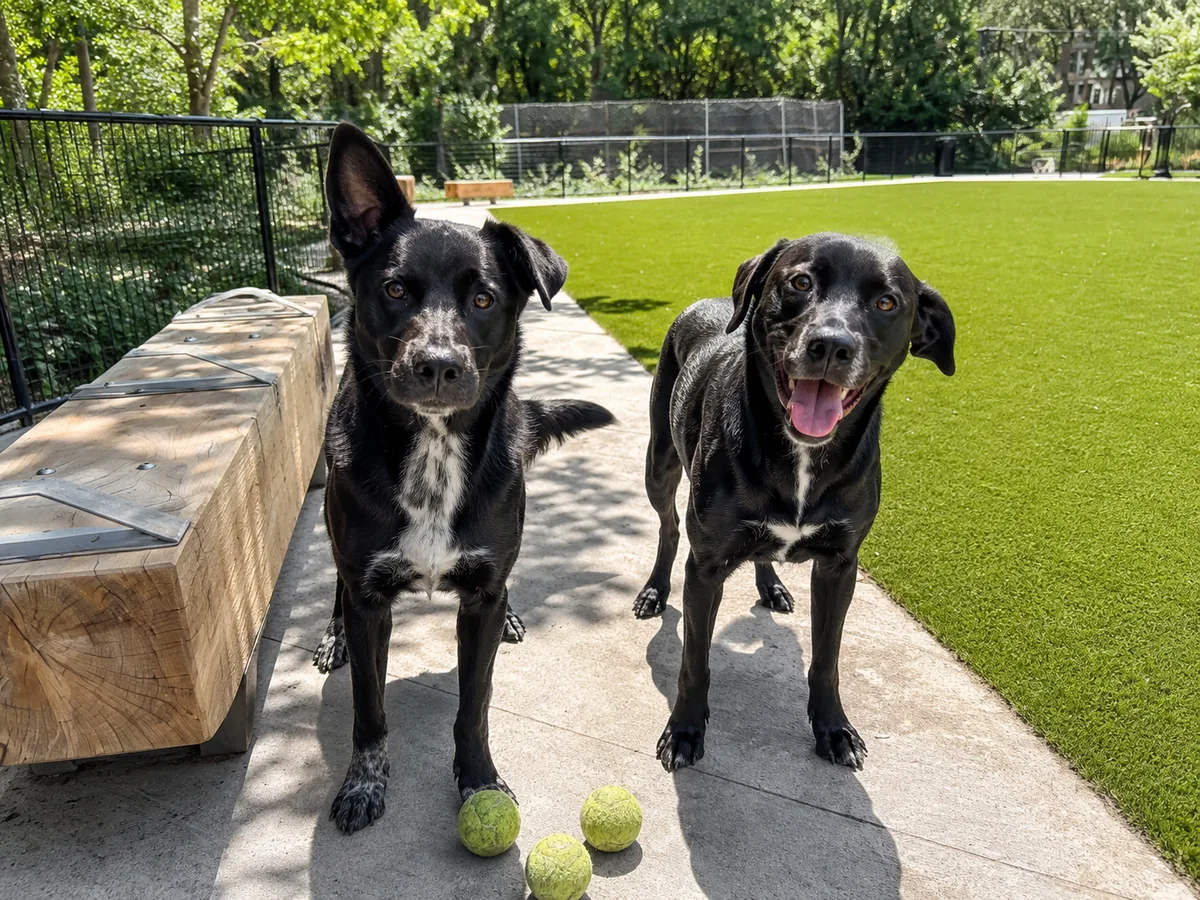
Roo, a medium black-and-white rescue with one upright ear and one ear still exploring its personal brand, had collected three tennis balls from three separate dogs and arranged them in a dusty corner near the fence. Batman, my black Lab, sat beside me with the solemn face of a dog who supports toys but does not support admin.
Roo’s owner, Maya, sighed with the tired affection of a woman who had explained this before. Leah, another dog-park friend, started laughing because her dog Millie looked almost like Roo from across the run and wanted nothing more than to destroy Roo’s filing system by playing fetch with the nearest ball.
That was how I found myself listening to two dog-park moms compare Embark and Wisdom Panel results like they were swapping neighborhood gossip.
The bench where dog theories get humbled
Dog-park friendships are their own little category of relationship. I know Maya’s coffee order, Leah’s dog-voice, and which dog in the run cannot be trusted near a soft frisbee. I don’t know either woman’s last name or phone number.
Maya adopted Roo after a short foster stretch that became permanent because Roo slept under her desk during one thunderstorm and made the decision emotionally impossible. The rescue had called Roo a Lab mix, which in Brooklyn often means “she has four legs and a hopeful face.” Maya expected some pit bull, maybe some shepherd, maybe a little Lab.
The Embark Breed + Health report surprised her because it pointed to a meaningful herding mix: Australian Cattle Dog, Border Collie, American Pit Bull Terrier, Labrador Retriever, German Shepherd, and the usual rescue-dog confetti around the edges. Maya did not treat that like a court ruling. She treated it like a clue Roo had been handing her with muddy paws.
Roo was not just energetic. She liked order. She circled dogs who were playing too wildly. She moved toys into piles. She brought Maya collections of stray sticks with the seriousness of a tiny night manager. After reading more about herding breeds and working dogs, Maya stopped asking only, “How do I make her quit?” and started asking, “What job can I give her that is not managing every dog in this park?”
So Roo got assignments.
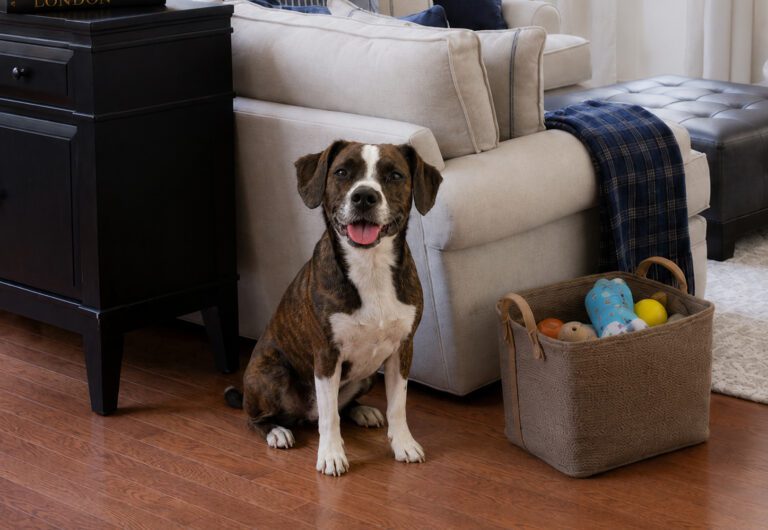
At home, Maya told us she tasked Roo with collecting toys at the end of the day and dropped them into her toy basket. Maya hid treats for short find-it games. Roo learned little routines with a beginning, middle, and end. It did not make her less Roo. It made her a slightly less self-appointed foreman of other people’s tennis balls.
Two similar dogs, two different owner manuals
Leah’s dog Millie looked close enough to Roo that strangers sometimes asked whether they were litter mates. Same medium size. Same glossy dark coat. Same white flash on the chest. Same rescue-dog expression that says, “I contain multitudes and probably swallowed mulch once.”
But Millie’s Wisdom Panel Essential results leaned differently: Labrador Retriever, Golden Retriever, American Pit Bull Terrier, Beagle, Boxer, and a few smaller mystery pieces. Leah said the report made her laugh because Millie had been telling on herself the whole time. She wanted something in her mouth constantly. A ball. A soft toy. A mitten. Once, the end of a baguette from Leah’s tote bag, carried through the apartment like she had finally been hired by a very relaxed bakery.
Before the test, Leah had filed that under stubborn rescue-dog weirdness. Afterward, she saw more of a retriever question. Was Millie asking for more purposeful fetch? More trade games? More chances to carry something allowed instead of freelancing her own inventory?
The answer was yes.
Millie still had opinions. She still believed every ball in the dog park had entered the public domain. But she settled faster after real fetch than after random running. Leah started bringing one ball Millie was allowed to obsess over and ending sessions with a short carry home. It was not magic. It was better listening.
If you are comparing the products behind that kind of story, Best Dog DNA Test Kit is the practical place to sort the broader options, including simpler dog-only brands like DNA My Dog. Embark Dog DNA Test Review and Wisdom Panel Pet DNA Test Review go deeper on the two brands Maya and Leah actually used.
The useful part is not the breed label
The silly version of a dog DNA result is the one that lets a person stop paying attention. “She’s part herding breed, so she is bossy.” “He’s part retriever, so he steals socks.” “The report said this, so now the whole dog makes sense.”
That is too tidy. Dogs are not little spreadsheets with tails.
The useful version is more subtle. A dog hereditary test or a broader report can give an owner better context for the questions they ask. Genetic health testing for dogs can flag things to save for a vet conversation without becoming a diagnosis. Breed results can suggest enrichment ideas without turning into personality law. Report scope, database size, and sample quality still matter, which is why Canine DNA Test Kit Accuracy: Sample Quality, Databases, and Report Scope is worth reading if you are tempted to treat any percentage like a prophecy.
What changed for Maya and Leah was not that their dogs became different after the results arrived. Roo had already been Roo. Millie had already been Millie. The report just made each woman notice a different need.
For Roo: give the busy brain a job before she appoints herself commissioner of park toys.
For Millie: give the mouthy, fetching, carrying instinct an approved outlet before she promotes a baguette to emotional support object.
I still have not tested Batman
I should admit here that I have not tested Batman. He is a black Labrador Retriever with the social confidence of a cruise director and the snack judgment of a dog who would endorse every food group if “sidewalk bagel” counted as one. If I ever do test him, I half expect the report would say: Lab, Lab, more Lab, and a small percentage of “believes everyone came here to see him.”
That is not the point, though.
The point is that watching Maya and Leah made dog breed dna test reviews feel less like silly indulgent overthinking and more like a familiar dog-parenting problem. We all narrate our dogs. We decide they are stubborn, sensitive, dramatic, athletic, lazy, brilliant, needy, or secretly part whatever breed would make the funniest group-chat update. Sometimes we are right. Sometimes we are just making the story too neat.
Complete Guide to Pet DNA Tests is the better place for the whole category map, especially if you are still deciding whether a test belongs in your house at all. From the bench, the smaller lesson was enough for me: a DNA report is useful when it makes you more curious about the dog in front of you, not less.
On the walk home, Batman found a stick and carried it for a block and a half with the pride of a dog who had discovered infrastructure.
I still do not know what his DNA would say.
For now, “excellent boy with questionable object judgment” remains my most trusted result.