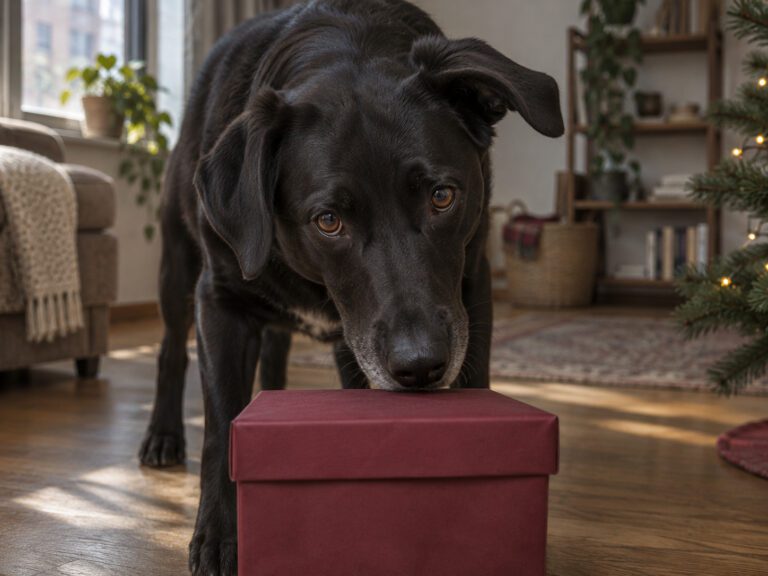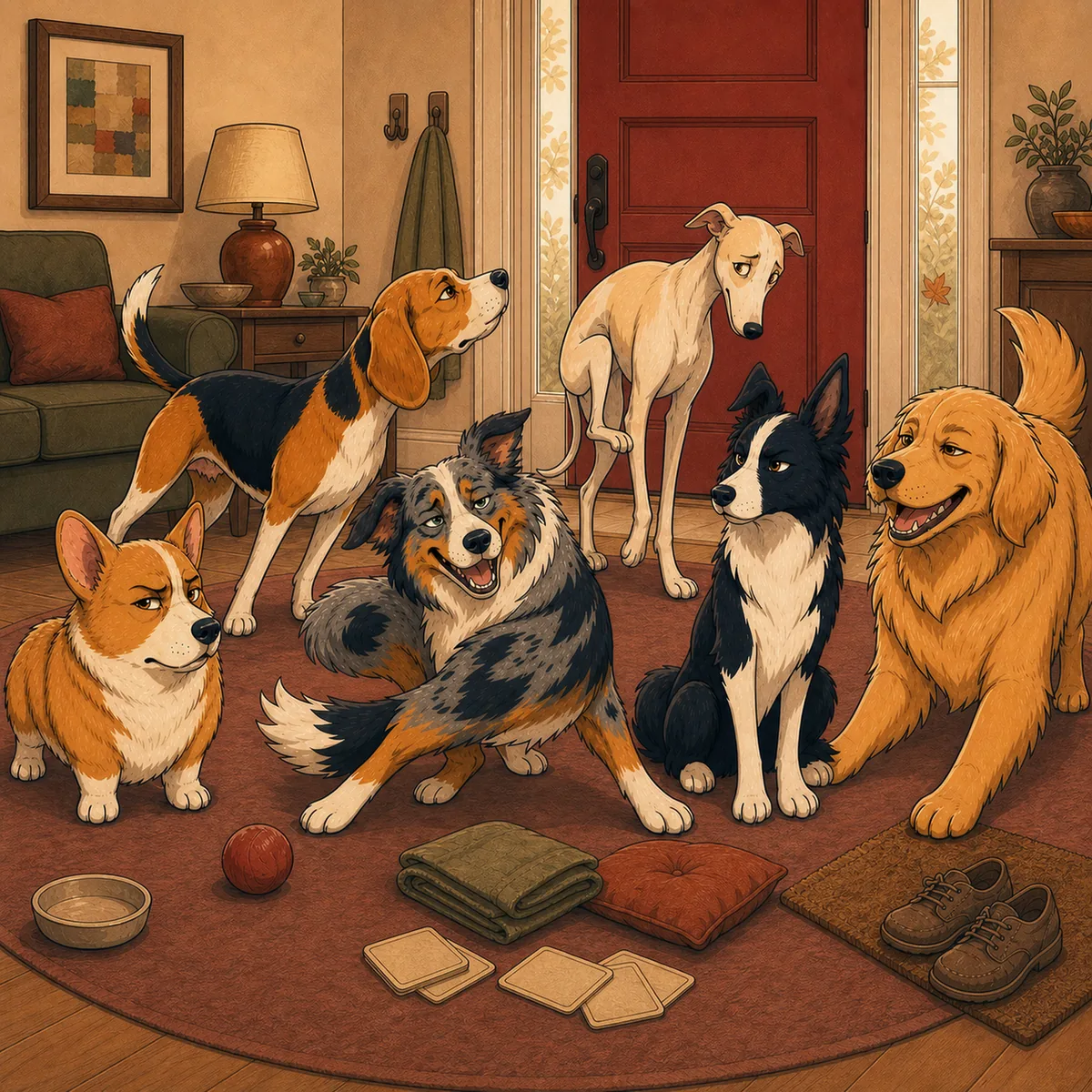
The first time soundboard buttons for dogs enter a home, the dog does not become a tiny podcast host.
The dog becomes more itself, now with audio.
That is the funny little trap of dog communication buttons. The human imagines vocabulary. The dog sees a new household object with consequences. A button can mean food, outside, play, help, all done, or the ancient canine concept of “please address this vague situation immediately.”
For anyone new to talking dog buttons, the most useful starting point is not the viral fantasy. Bunny the dog buttons, Stella dog buttons, and a husky pushing buttons to talk can make the whole thing feel possible, but they are not a promise. A dog button soundboard mostly reveals the dog already living in the house.
Some dogs approach it like a student. Some approach it like a vending machine with feelings. Some paw at three buttons and look delighted because the floor now has sound effects.
None of these personalities is a diagnosis. Dogs change with age, training, confidence, routine, and whatever happened five minutes ago near the front door. Still, every dog owner knows the truth: the board reveals the brand.
1. The Snack Litigator

The Snack Litigator does not press the food button. The Snack Litigator files a motion.
This dog watches the human model “food” once and immediately understands that the household has introduced a new administrative process. Every meal becomes a case. Every treat delay becomes a grievance. Every empty bowl is entered into evidence.
First word: Food.
Favorite word: More.
Product match: Hunger for Words.
Why it fits: this dog needs structure before the board becomes a 24-hour buffet hotline. The Hunger for Words starter set is a small four-button recordable setup, which is plenty for concrete early words like food, water, outside, and all done. The Hunger for Words starter set review is the deeper product read for anyone whose dog has already unionized around dinner.
Teaching this dog may look easy at first, which is exactly the trap. Food-motivated dogs care deeply about cause and effect. Press button, receive attention. Press near dinner, maybe receive dinner. Press with dramatic eye contact, possibly receive history’s most deserved snack.
“All done” matters here as much as “food.” Without a clear end point, the Snack Litigator will continue appealing the decision until bedtime.
What not to overinterpret: repeated food presses do not mean the dog is starving, making a moral argument, or requesting a tasting menu. Sometimes the dog has learned that the button produces a reaction, and reaction is delicious.
2. The Doorbell Lawyer
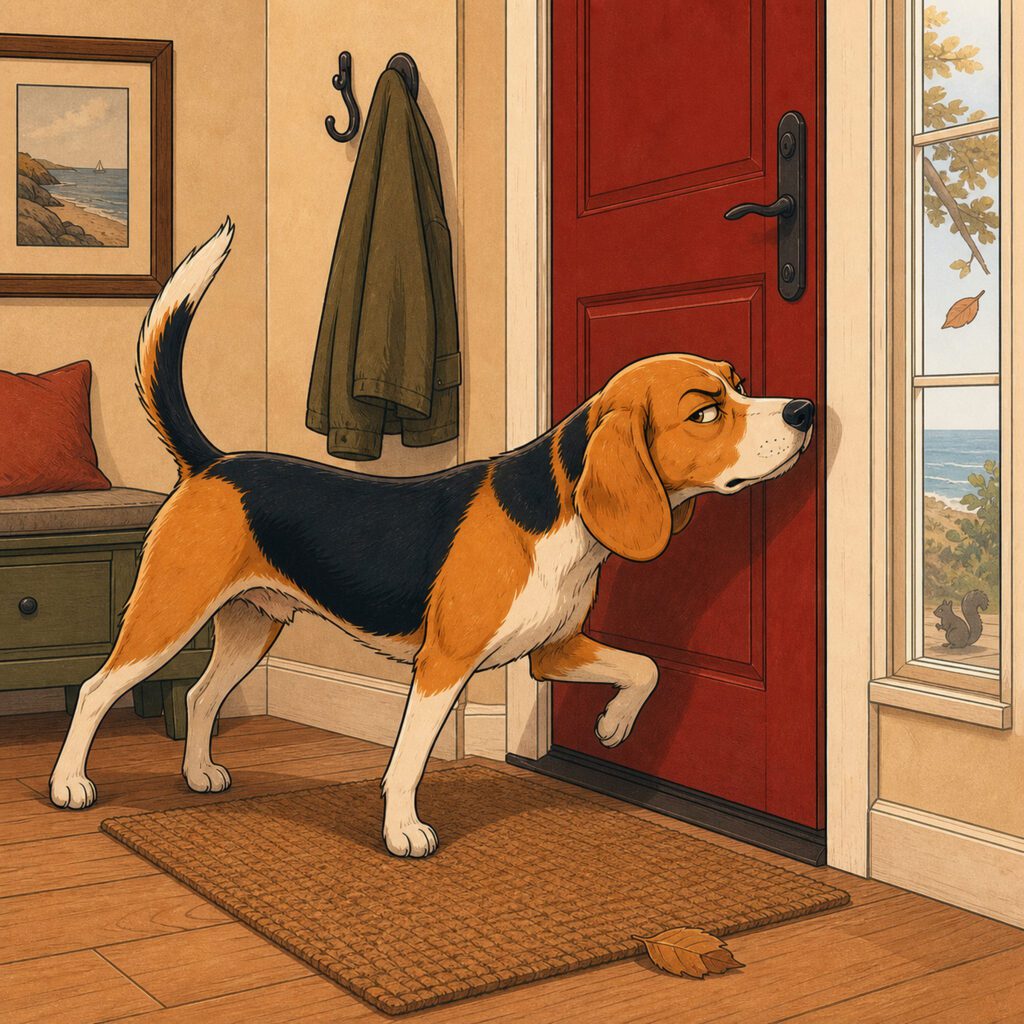
The Doorbell Lawyer discovers “outside” and immediately becomes a municipal committee.
This dog does not need an entire wall of dog soundboard buttons. This dog needs one powerful concept: exit access. Outside is not a word. Outside is a policy position. Outside is a way of life. Outside is currently being denied by management.
First word: Outside.
Favorite word: Now.
Product match: Mighty Paw.
Why it fits: the Doorbell Lawyer is a single-issue voter. A dedicated electronic dog doorbell keeps the request narrow: the dog taps a transmitter near the door with a nose or paw, and the human hears the chime inside. The Mighty Paw Smart Bell review is useful because this is not trying to be a full soundboard. It is one clear outside signal with one job.
Teaching this dog often begins beautifully. The button becomes a clean request. The dog asks, the door opens, the potty trip happens, and everybody briefly believes technology has solved domestic life.
Then the Doorbell Lawyer discovers loopholes.
Outside for potty. Outside for squirrels. Outside for wind. Outside because a leaf moved. Outside because the last outside trip raised unresolved questions. Outside because the human opened a laptop and clearly needed supervision.
What not to overinterpret: pressing “outside” does not always mean urgent bathroom need. It can mean boredom, curiosity, habit, or a request for a change of scenery. The button starts the conversation. It does not finish it.
3. The Chaos Poet
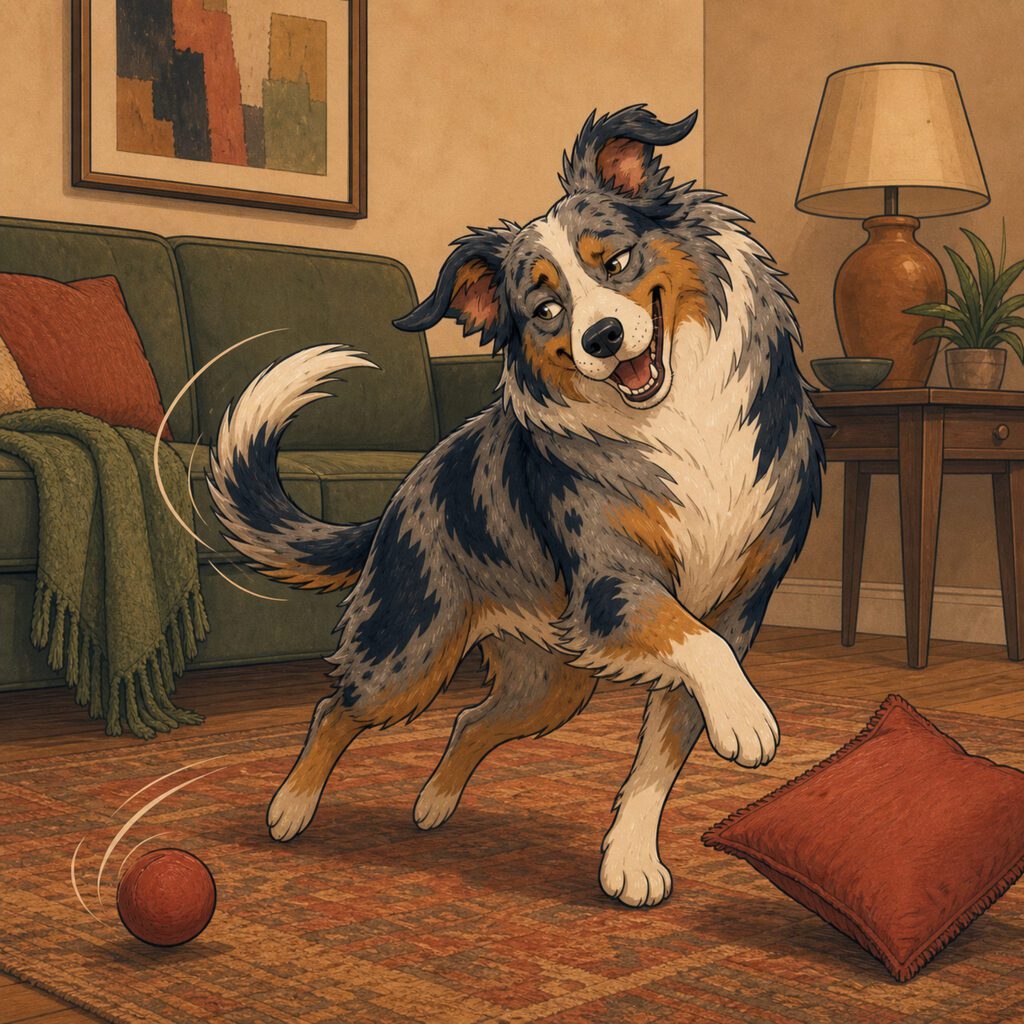
The Chaos Poet experiences buttons as language, music, sport, and interior design challenge.
This dog sees a board and brings big theater-kid-at-recess energy. One paw lands on play. Another clips outside. A tail swipes a blank button. The dog looks thrilled by the soundscape and possibly ready for an encore.
First word: Play.
Favorite word: Again.
Product match: Learning Resources.
Why it fits: the Chaos Poet needs a simple sandbox before the whole setup becomes a paw-operated DJ booth. Learning Resources Recordable Answer Buzzers are large, loose, recordable classroom buttons, not a pet-specific soundboard system. That simplicity is the point. Four big buttons can be spaced apart, kept to concrete words, and used as a low-commitment practice setup before the dog graduates to something more structured. The Learning Resources review explains where those classroom buzzers make sense for dogs and where they do not.
Teaching this dog is joyful, loud, and not especially linear. The Chaos Poet may love pressing before understanding the words. That is not failure. That is a dog discovering that the floor now makes custom noises.
The trick is to make the early setup almost boring. Four buttons. Wide spacing. Short sessions. Clean routines. A giant board is basically a festival lineup for paws.
What not to overinterpret: a dramatic multi-button sweep is not automatically a sentence. It may be excitement, poor spacing, paw size, slippery setup, or a dog who thinks cause and effect is fun even before meaning settles in.
4. The Sensitive Soul

The Sensitive Soul approaches the board like it might have terms and conditions.
This dog stands nearby, watches the human press a button, hears the recording, and takes one thoughtful step backward to process the entire proposal. The board is new. The sound is new. Everyone looking at the dog is extremely new. Thank you, no further comments at this time.
First word: Help.
Favorite word: All done.
Product match: FluentPet.
Why it fits: this dog needs a stable, organized, beginner-sized setup. FluentPet’s Speak Up! kit uses recordable buttons and HexTiles, which can keep the board from sprawling across the floor like a haunted control panel. The product does not magically create confidence. A calm layout and controlled vocabulary just give a cautious dog less to manage. The FluentPet review is the place to dig into that system more seriously.
Teaching this dog may feel slow compared with the Snack Litigator or Straight-A Student. That is fine. A cautious dog is still learning while watching. The first nose tap may take days. The first confident press may feel like a major household holiday.
Small wins matter here. Quiet room. Comfortable volume. One or two words. No audience. No pressure to perform.
What not to overinterpret: hesitation does not mean the dog is uninterested or incapable. The sound, placement, surface, or human energy may need adjustment. The Sensitive Soul is not failing the board. The board may need to pass the vibe check.
5. The Straight-A Student

The Straight-A Student watches the model once and asks where the syllabus lives.
This dog has teacher’s-pet energy in the most literal possible form. Eye contact? Excellent. Pattern recognition? Thriving. Human approval? Delicious. The Straight-A Student may make the whole dog communication buttons project look easier than it is, which is sweet and dangerous for the owner’s ego.
First word: Outside or play, depending on the routine.
Favorite word: Help.
Product match: FluentPet.
Why it fits: this is the dog whose owner will actually care about patterns. A connected FluentPet setup with a base and app capture can help the household notice trends in button presses without pretending the app is a translator. It is for the person who will look at the log and say, “Interesting, every play press happens after dinner,” instead of simply admiring the cute little dashboard.
Teaching this dog feels satisfying. Sometimes too satisfying. A very trainable dog can learn the performance of button use quickly, especially when the owner is clear and responsive. The dog may press the right word and then watch the human’s face for confirmation. That does not make the learning fake. It does mean the owner should stay humble about cueing.
What not to overinterpret: a fast learner does not prove the board is easy, universal, or evidence of human-like language. The Straight-A Student is good at reading routines and people. That is impressive enough.
6. The Social Director
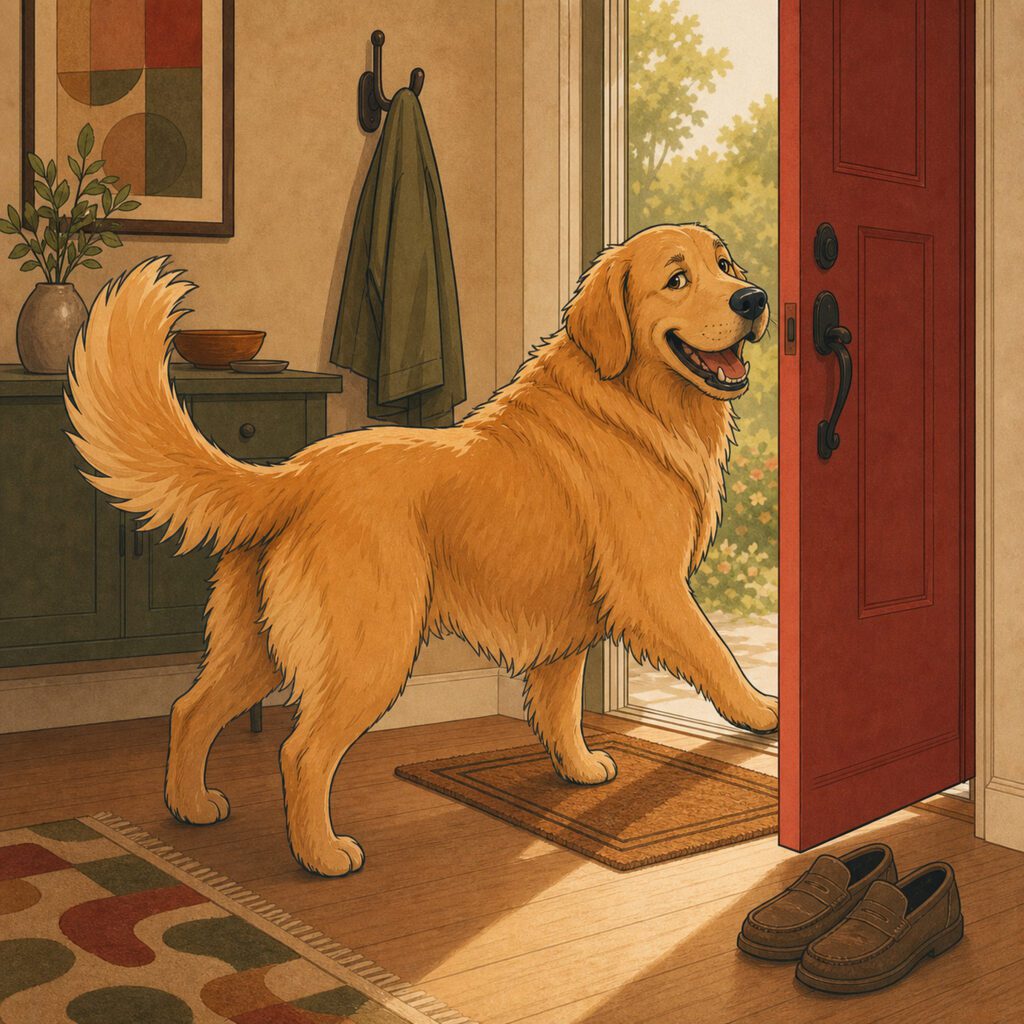
The Social Director believes buttons exist so the household can finally coordinate its calendar around the dog’s public.
This dog loves people, dogs, guests, greetings, arrivals, departures, and the small thrill of being perceived. The board becomes less of a vocabulary project and more of a group chat with paws.
First word: Friend.
Favorite word: Play, or later maybe love if the household uses that word carefully and consistently.
Product match: Hunger for Words.
Why it fits: the Social Director may outgrow a tiny starter set once the basics are steady. Concrete social words — friend, play, outside, names, water, help, all done — create space for the dog’s actual routines without launching straight into a giant board that turns every visitor into a communications committee.
Teaching this dog is warm and funny because the Social Director wants the board to involve everybody. Guests arrive and the dog presses friend. A leash appears and the dog presses play. Someone sits down and the dog stands near the board radiating main character energy.
The owner still has to keep the words grounded. Names can work when the dog has repeated, real-world context for them. Friend can work if it consistently predicts a person or dog interaction. Love is trickier. It may be meaningful inside a routine, but a soft-looking press does not prove a complex emotional confession.
What not to overinterpret: a social dog pressing people words does not mean the dog is narrating a full emotional life. It may mean the dog has learned that people, greetings, and attention are button-worthy events. That is plenty.
The board reveals the dog
The point of these types is not to sort every dog into a permanent personality house and buy accordingly. The point is to notice what the dog is already showing.
A food-motivated dog may need fewer snack-adjacent words and stronger boundaries. A door-focused dog may need one dedicated outside button more than a full soundboard. An excitable dog may need spacing and fewer choices. A cautious dog may need quiet practice. A highly trainable dog may need the owner to watch for accidental cueing. A social dog may need concrete people and activity words before anyone gets poetic about feelings.
The best dog soundboard buttons setup starts with the actual dog, not the fantasy dog from the internet. Dog Talking Button Boards, Mats, and Soundboards can help with layout, while Best Words for Dog Buttons is the better next stop for choosing first words. Readers who want product options can use Best Dog Talking Buttons for Communication after they know which personality is currently living in their kitchen.
Start smaller. Watch behavior. Keep words concrete. Let the board fit the dog in front of it.
Then prepare emotionally for the fact that the first word may still be food.